


 Order Status & Returns
 Gift Cards
 Help Center
 1-800-345-4545
Ignition, Electrical & Tuning
Ignition parts and automotive electrical parts decide whether your engine fires cleanly, starts on the first turn and keeps every accessory powered. This category covers coils, distributors, plug wires, starters, alternators, batteries, wiring, sensors, tuning electronics and drag-racing gear for street, strip and restoration builds. Use the Add a Vehicle selector to filter by year, make and model or VIN, so you only see parts that fit.
Show More
What Ignition Parts Does Your Engine Need?
Most engines need five core ignition parts working together. These are the electrical parts of spark ignition engine operation, and each one hands energy to the next.
- Spark plugs ignite the air-fuel mixture in each cylinder.
- Ignition coils step battery voltage up to the high voltage a plug needs.
- Plug wires carry that voltage from the coil or distributor to each plug.
- A distributor routes spark to the correct cylinder on older engines.
- An ignition control module tells the coil when to fire.
When you replace one weak link, check the others too, since a new coil can't make up for a cracked wire or a worn plug. Browse ignition systems by part type, including crank triggers, ignition kits and spark plugs. If you're planning your first upgrade, start with our guide to performance ignition basics.
Upgrading Ignition Coils, Boxes and Distributors
Upgrade your coil, ignition box and distributor as a matched set, so each part supports the next. Bigger-displacement engines need more spark voltage, so choose an ignition coil sized for your engine and power level. Check that your module and wiring can handle a high-output coil before you install one.
A capacitive discharge (CD) ignition box fires multiple sparks at lower rpm. That helps burn the mixture more completely at idle and low speed, where a big cam or rich tune can foul plugs. If you're still running breaker points, electronic triggers replaced them years ago, and conversion modules let you keep your points distributor in place.
MSD Ignition offers coils, CD boxes and distributors that work as a system. Mallory also offers distributors, coils and other ignition system parts for domestic V8 builds. Whichever brand you choose, confirm your distributor fits your engine family and matches your camshaft gear material.
Spark Plug Wires and Ignition Timing Considerations
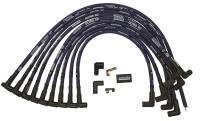
Choose spark plug wires by core type first, then confirm your timing once the new parts are in. Spiral-wound, or suppression, wires reduce electrical interference compared with solid-core wires. That matters when you run electronic ignition, an engine computer or a radio.
Route each wire away from headers and secure it with separators or looms. Heat and vibration can wear through a jacket and cause a misfire that's hard to trace. Moroso offers plug wire sets and wire separators for street and race builds.
After a coil, distributor or wire swap, check base timing with a timing light and verify your advance curve. Too much advance can cause detonation, and too little leaves power on the table. If you run fuel injection or a programmable ignition, computer tuning and monitors let you adjust timing maps and watch engine data as you drive.
Charging and Starting: Starters, Alternators and Batteries
Your starter, alternator and battery need to match your engine's compression and your total electrical load. Higher-compression engines take more effort to crank, so confirm your starter is rated for your build. Check flywheel or flexplate tooth count and bolt pattern before you order.
Next, add up every load you've added, such as electric fans, fuel pumps, lights and audio. Pick an alternator with output to spare, and compare its output at idle as well as its peak rating. Our guide on how to choose the correct amperage alternator walks through the math.
Browse starters and alternators by mounting style and output. Then pick up cables, terminals and battery boxes in batteries, terminals and wire. If you relocate the battery to the trunk, step up the cable gauge, since longer runs need heavier wire to carry starting current.
Wiring, Relays, Switches, Sensors and Race Electronics
Clean wiring keeps every other upgrade working, so start any electrical project with a solid harness and good grounds. An automotive wiring harness built for your chassis replaces brittle factory wiring and adds circuits for new accessories. Run high-current loads like fans and fuel pumps through relays, so your switches only carry a small trigger current.
Crimp or solder every connection, then seal it with heat-shrink tubing. You'll find harnesses, fuse panels and toggles under automotive wiring, relays and switches. Racers adding a cutoff can follow our guide on how to wire a battery disconnect switch.
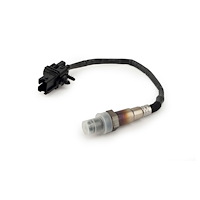
Replace worn automotive sensors to keep your gauges and engine computer reading correctly. Common replacements include oxygen, coolant-temperature and oil-pressure sensors. Bracket racers can dial in launches and track conditions with delay boxes, weather stations and practice trees.

ADD A VEHICLE TO GUARANTEE PARTS FIT
See products that fit



![74158 Battery Cable Terminal Kit [1-Gauge Wire, 3/8 in. Diameter Stud]](https://www.jegs.com/images/mini_100/700/710/710-74158.jpg)
![74158 Battery Cable Terminal Kit [1-Gauge Wire, 3/8 in. Diameter Stud]](https://www.jegs.com/images/mini_200/700/710/710-74158.jpg)
![74165 Battery Cable Terminal Kit [1-Gauge Wire, 5/16 in. Diameter Stud]](https://www.jegs.com/images/mini_100/700/710/710-74165.jpg)
![74165 Battery Cable Terminal Kit [1-Gauge Wire, 5/16 in. Diameter Stud]](https://www.jegs.com/images/mini_200/700/710/710-74165.jpg)
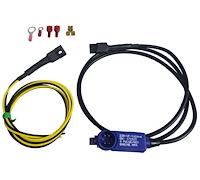
![74169 Battery Cable Terminal Kit [2-Gauge Wire, 3/8 in. Diameter Stud]](https://www.jegs.com/images/mini_100/700/710/710-74169.jpg)
![74169 Battery Cable Terminal Kit [2-Gauge Wire, 3/8 in. Diameter Stud]](https://www.jegs.com/images/mini_200/700/710/710-74169.jpg)
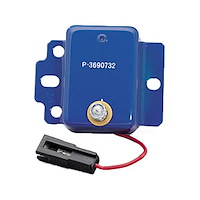


![19540147 LS2/LS3 Engine Controller Kit for GM Gen IV LS Crate Engines [Plug-and-Play, Standalone]](https://www.jegs.com/images/mini_100/800/809/809-19540147.jpg)
CHEVROLET PERFORMANCE
19540147 LS2/LS3 Engine Controller Kit for GM Gen IV LS Crate Engines [Plug-and-Play, Standalone]
Part Number: 809-19540147
 Ships Today
 Lowest price guarantee
![19540147 LS2/LS3 Engine Controller Kit for GM Gen IV LS Crate Engines [Plug-and-Play, Standalone]](https://www.jegs.com/images/mini_200/800/809/809-19540147.jpg)
CHEVROLET PERFORMANCE
19540147 LS2/LS3 Engine Controller Kit for GM Gen IV LS Crate Engines [Plug-and-Play, Standalone]
Part Number: 809-19540147
Ships TodayLowest Price Guarantee![Distributor Housing Shim Kit [1.290 In. Id, 1.830 In. Od, Incl. 1 0.030 In. Shim/1 0.060 In. Shim/1 0.100 In. Shim]](https://www.jegs.com/images/mini_100/700/710/710-26150.jpg)
MOROSO
Distributor Housing Shim Kit [1.290 In. Id, 1.830 In. Od, Incl. 1 0.030 In. Shim/1 0.060 In. Shim/1 0.100 In. Shim]
Part Number: 710-26150
Ships TodayLowest price guarantee![Distributor Housing Shim Kit [1.290 In. Id, 1.830 In. Od, Incl. 1 0.030 In. Shim/1 0.060 In. Shim/1 0.100 In. Shim]](https://www.jegs.com/images/mini_200/700/710/710-26150.jpg)
MOROSO
Distributor Housing Shim Kit [1.290 In. Id, 1.830 In. Od, Incl. 1 0.030 In. Shim/1 0.060 In. Shim/1 0.100 In. Shim]
Part Number: 710-26150
Ships TodayLowest Price Guarantee

SPEEDMASTER
OEM Alternator Bracket Mounting Adapter E1AZ10A336A Ford Mustang Small Block 289-351W Windsor
Part Number: 746-PCE529.1001
Ships on 12/14/2026Lowest price guarantee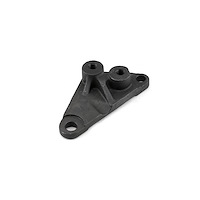
SPEEDMASTER
OEM Alternator Bracket Mounting Adapter E1AZ10A336A Ford Mustang Small Block 289-351W Windsor
Part Number: 746-PCE529.1001
Ships on 12/14/2026Lowest Price Guarantee
![SW76576 Pressure Switch 10 PSI [Normally Open, 1/8 in. NPT] Single Circuit](https://www.jegs.com/images/mini_100/700/728/728-sw76576.jpg)
STEWART WARNER
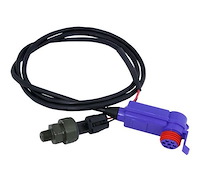
SW76576 Pressure Switch 10 PSI [Normally Open, 1/8 in. NPT] Single Circuit
Part Number: 728-SW76576
Ships TodayLowest price guarantee![SW76576 Pressure Switch 10 PSI [Normally Open, 1/8 in. NPT] Single Circuit](https://www.jegs.com/images/mini_200/700/728/728-sw76576.jpg)
STEWART WARNER
SW76576 Pressure Switch 10 PSI [Normally Open, 1/8 in. NPT] Single Circuit
Part Number: 728-SW76576
Ships TodayLowest Price Guarantee
Frequently Asked Questions About Ignition Parts
What are the signs of a bad ignition coil?
A failing coil often shows up as misfires under load, hard starting, a rough idle or a loss of power. On fuel-injected vehicles, you may also see a check-engine light with misfire codes. Test the coil's resistance against the manufacturer's spec before you replace it.
How often should spark plug wires be replaced?
There's no single interval, so follow your vehicle or wire manufacturer's recommendation. Replace wires sooner if you see cracked or burned jackets, corroded terminals or a misfire that follows one wire. Many builders also install new wires when they upgrade to a high-output coil.
Do I need a new coil when I install a CD ignition box?
Not always, but your coil must be compatible with the box. Many CD boxes work with a stock-style coil, though a matched high-output coil lets you use more of the box's output. Check the box manufacturer's coil recommendations before you buy.
What size alternator do I need for an electric fan and fuel pump?
Add up the current draw of your fan, fuel pump and every other accessory, then choose an alternator that exceeds that total with reserve. Check each part's specs for its draw, since needs vary by model. Compare output at idle too, because electric fans often run while you're stopped in traffic.
How do I know which ignition parts fit my vehicle?
Use the Add a Vehicle selector on this page and enter your year, make and model or your VIN. The product grid then shows parts that fit your vehicle. For engine swaps or custom builds, check each product's specs against your engine and distributor type.