


 Order Status & Returns
 Gift Cards
 Help Center
 1-800-345-4545

Catalytic Converters & Systems
Catalytic converters clean up your exhaust before it leaves the tailpipe, and this category lists more than 11,000 options for cars and trucks. You can shop direct-fit, universal, manifold and high flow catalytic converters, plus CARB compliant and federal EPA compliant units. Add your vehicle by year, make and model or VIN to narrow the list to parts that fit your ride.
Show More
High Flow Catalytic Converters for Modified Engines
A high flow catalytic converter uses a less dense substrate to cut exhaust backpressure on modified engines. Stock converters commonly use about 400-600 cells per square inch. High-flow designs commonly drop to about 100-300 cells, which leaves more open area for exhaust gas.
You'll see most of the benefit on engines with forced induction, bigger cams or other airflow upgrades. On a stock engine with factory airflow, you probably won't feel much difference. If you're running a turbo or supercharger, a high-flow converter reduces the restriction downstream of the engine, which matters more as boost goes up.
A converter upgrade often happens alongside other exhaust work. Compare cat-back vs. axle-back exhaust systems to plan the pipes, mufflers and tips behind the converter. Before you buy, check your state's emissions rules, since compliance varies by unit and by state.
Direct-Fit vs Universal Catalytic Converters
A direct fit catalytic converter bolts into the factory location, while a universal catalytic converter requires cutting and welding. A direct-fit converter uses the correct flanges and hangers for a specific vehicle. Applications here include Jeep Wrangler, Ford/Lincoln, Chevrolet/GMC, Dodge Ram 1500, Mercedes-Benz, BMW and the 1986-1991 Chevrolet Corvette.
MagnaFlow accounts for most listings in this category. JEGS vehicle-specific replacement converters are labeled by position, such as front, rear, center or left/driver side. They cover models like the Ford F150, Ford Escape and Toyota Prius, and aFe Power offers a direct-fit converter too.
A universal converter fits many vehicles, but only if the inlet and outlet diameter match your pipe. Listed sizes include 2 in. round and 2.25 in. angled in/out.
Learn how to measure exhaust inlet and outlet diameter before you order. If you don't have welding tools, plan on a shop to handle the install.
CARB Compliant vs EPA Compliant Catalytic Converters
You need a CARB compliant catalytic converter in California and CARB-adopting states, while an EPA compliant catalytic converter is for vehicles registered elsewhere. A CARB-approved converter carries an Executive Order (EO) number. That number confirms the part is approved for your vehicle.
Federal/EPA units are often called 49-state converters. They aren't legal on vehicles registered in California or states that follow CARB rules. If you're unsure which rules apply, check with your state's emissions program before you order, since the wrong unit can mean a failed inspection.
An OBD-II catalytic converter also has to keep your onboard monitors happy. If the converter can't meet the system's efficiency checks, you'll likely see a check engine light.
This category includes a Universal California OBD-II Compliant unit for builds that need a weld-in, CARB-approved option. You can also browse all catalytic converter and emissions parts to find related components.
Understanding MagnaFlow Converter Grades
MagnaFlow grades separate converters by application and emissions compliance, so the right grade depends on your vehicle and where it's registered. Here's what you'll find in this category.
- Standard Grade converters
- HM Grade converters
- OEM Grade converters
- California Grade CARB Compliant converters
- Federal/EPA Compliant converters
- Stainless steel construction on select units
- Manifold catalytic converters for select BMW models
Don't choose a grade by name alone. Check each listing's fitment notes and compliance label against your vehicle and state. A grade that's right for one vehicle may not be approved for another, even on a similar model or engine.
Manifold converters mount at the exhaust manifold, close to the engine. That makes them specific to the engine they're built for, so confirm the engine code before you order. If you're replacing more than the converter, browse headers and exhaust parts for the rest of the system.
Catalytic Converter Replacement Tips
Catalytic converter replacement usually starts with a diagnosis, since a failing converter often points to another engine problem. Common signs include a check engine light, a rattle under the vehicle, a rotten-egg smell and a failed emissions test.
A clogged converter can also cause sluggish acceleration. Read about why an engine loses power under load to rule out other causes. Fix misfires, oil burning or coolant leaks first, or they can damage the new converter.
Use the Add a Vehicle tool to filter by year, make and model or VIN. Then check the listing for the converter position, such as front or rear, and confirm the compliance label matches your state.
While the old unit is out, inspect the exhaust pipe-to-converter parts and replace any that are worn. Converter shields, including skid plates for models like the Tacoma, add protection from road debris.

ADD A VEHICLE TO GUARANTEE PARTS FIT
See products that fit

ADD A VEHICLE TO GUARANTEE PARTS FIT
See products that fit
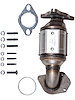
JEGS
Catalytic Converter Fit Select 2017-2020 Buick Envision, AWD/FWD, 2014-2019 Chevy Impala, 2013-2016 Malibu/Limited FWD w/2.5L I4
Part Number: 555-77009
 Ships on 10/22/2026
 Lowest price guarantee
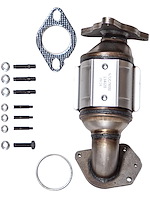
JEGS
Catalytic Converter Fit Select 2017-2020 Buick Envision, AWD/FWD, 2014-2019 Chevy Impala, 2013-2016 Malibu/Limited FWD w/2.5L I4
Part Number: 555-77009
Ships on 10/22/2026Lowest Price Guarantee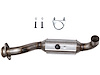
JEGS
Catalytic Converter Fits Select 2015-2020 Ford F-150 Lariat Crew Cab Pickup, 4WD w/2.7L V6 [Left]
Part Number: 555-77017
Ships on 10/26/2026Lowest price guarantee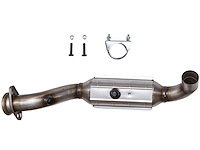
JEGS
Catalytic Converter Fits Select 2015-2020 Ford F-150 Lariat Crew Cab Pickup, 4WD w/2.7L V6 [Left]
Part Number: 555-77017
Ships on 10/26/2026Lowest Price Guarantee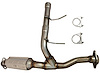
JEGS
Catalytic Converter Fits Select 2015-2017 Ford F-150 King Ranch Crew Cab Pickup, 4WD w/5.0L V8 [Right]
Part Number: 555-77021
Ships on 10/26/2026Lowest price guarantee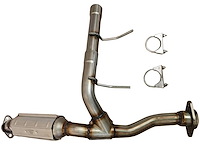
JEGS
Catalytic Converter Fits Select 2015-2017 Ford F-150 King Ranch Crew Cab Pickup, 4WD w/5.0L V8 [Right]
Part Number: 555-77021
Ships on 10/26/2026Lowest Price Guarantee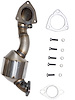
JEGS
Catalytic Converter Fits Select 2013-2019 Ford Explorer AWD/FWD, 2014-2019 Police Interceptor 3.5L V6 [Front Right]
Part Number: 555-77027
Ships on 10/26/2026Lowest price guarantee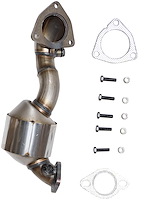
JEGS
Catalytic Converter Fits Select 2013-2019 Ford Explorer AWD/FWD, 2014-2019 Police Interceptor 3.5L V6 [Front Right]
Part Number: 555-77027
Ships on 10/26/2026Lowest Price Guarantee
JEGS
Catalytic Converter Fits Select 2013-2019 Ford Escape FWD/AWD 1.5L/1.6L I4 [Front]
Part Number: 555-77029
Ships on 10/26/2026Lowest price guarantee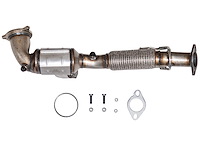
JEGS
Catalytic Converter Fits Select 2013-2019 Ford Escape FWD/AWD 1.5L/1.6L I4 [Front]
Part Number: 555-77029
Ships on 10/26/2026Lowest Price Guarantee
JEGS
Catalytic Converter Fits Select 2013-2021 Buick Encore AWD/FWD, 2015-2021 Chevy Trax AWD/FWD 1.4L I4 [Rear]
Part Number: 555-77033
Ships on 10/28/2026Lowest price guarantee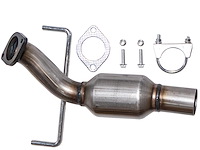
JEGS
Catalytic Converter Fits Select 2013-2021 Buick Encore AWD/FWD, 2015-2021 Chevy Trax AWD/FWD 1.4L I4 [Rear]
Part Number: 555-77033
Ships on 10/28/2026Lowest Price Guarantee
JEGS
Catalytic Converter Fits Select 2016-2021 Mitsubishi Outlander Sport AWD/FWD 2.0L I4 [Front]
Part Number: 555-77039
Ships on 10/26/2026Lowest price guarantee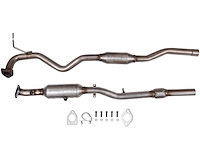
JEGS
Catalytic Converter Fits Select 2016-2021 Mitsubishi Outlander Sport AWD/FWD 2.0L I4 [Front]
Part Number: 555-77039
Ships on 10/26/2026Lowest Price Guarantee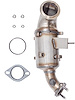
JEGS
Catalytic Converter Fits Select 2012-2017 Ford Edge, Explorer, Taurus, Special Police, Lincoln MKT, AWD/FWD w/2.0L I4 [Rear]
Part Number: 555-77043
Ships on 10/26/2026Lowest price guarantee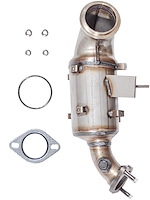
JEGS
Catalytic Converter Fits Select 2012-2017 Ford Edge, Explorer, Taurus, Special Police, Lincoln MKT, AWD/FWD w/2.0L I4 [Rear]
Part Number: 555-77043
Ships on 10/26/2026Lowest Price Guarantee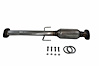
JEGS
Catalytic Converter Fits Select 2000-2004 Toyota Tacoma Crew Cab Pickup, 4WD/RWD w/3.4L V6 [Rear]
Part Number: 555-77045
Ships on 10/26/2026Lowest price guarantee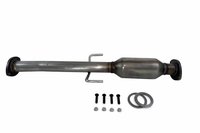
JEGS
Catalytic Converter Fits Select 2000-2004 Toyota Tacoma Crew Cab Pickup, 4WD/RWD w/3.4L V6 [Rear]
Part Number: 555-77045
Ships on 10/26/2026Lowest Price Guarantee
JEGS
Catalytic Converter Fits Select 2006-2013 Pontiac Vibe, Scion tC, and Toyota Corolla w/2.4L I4 Engine
Part Number: 555-77047
Ships on 10/26/2026Lowest price guarantee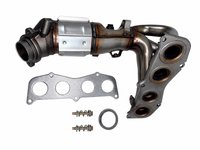
JEGS
Catalytic Converter Fits Select 2006-2013 Pontiac Vibe, Scion tC, and Toyota Corolla w/2.4L I4 Engine
Part Number: 555-77047
Ships on 10/26/2026Lowest Price Guarantee
JEGS
Catalytic Converter Fits Select 2011-2016 Hyundai Elantra/GT, Kia Forte/Coupe/Forte 5, FWD 1.8L/2.0L I4 [Rear]
Part Number: 555-77057
Ships on 10/26/2026Lowest price guarantee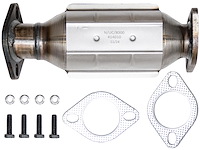
JEGS
Catalytic Converter Fits Select 2011-2016 Hyundai Elantra/GT, Kia Forte/Coupe/Forte 5, FWD 1.8L/2.0L I4 [Rear]
Part Number: 555-77057
Ships on 10/26/2026Lowest Price Guarantee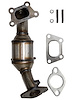
JEGS
Catalytic Converter Fits Select 2018-2024 Buick Enclave, 2018-2023 Chevy Traverse AWD/FWD 3.6L V6 [Front Left]
Part Number: 555-77061
Ships on 10/23/2026Lowest price guarantee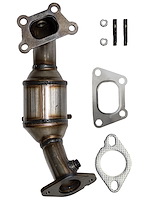
JEGS
Catalytic Converter Fits Select 2018-2024 Buick Enclave, 2018-2023 Chevy Traverse AWD/FWD 3.6L V6 [Front Left]
Part Number: 555-77061
Ships on 10/23/2026Lowest Price Guarantee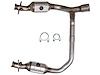
JEGS
Catalytic Converter Fits Select 2006-2008 Dodge Ram 1500 Laramie Crew Cab Pickup, 4WD w/4.7L V8 [Front Y}
Part Number: 555-77069
Ships on 10/26/2026Lowest price guarantee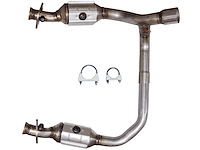
JEGS
Catalytic Converter Fits Select 2006-2008 Dodge Ram 1500 Laramie Crew Cab Pickup, 4WD w/4.7L V8 [Front Y}
Part Number: 555-77069
Ships on 10/26/2026Lowest Price Guarantee
JEGS
Catalytic Converter Fits Select 2005-2010 Hyundai Santa Fe, Kia Sportage w/2.7L V6 Engine, Radiator Side [Front Left]
Part Number: 555-77071
Ships on 10/26/2026Lowest price guarantee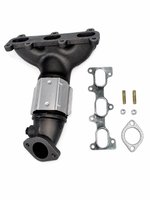
JEGS
Catalytic Converter Fits Select 2005-2010 Hyundai Santa Fe, Kia Sportage w/2.7L V6 Engine, Radiator Side [Front Left]
Part Number: 555-77071
Ships on 10/26/2026Lowest Price Guarantee
JEGS
Catalytic Converter Fits Select 2010-2012 Subaru Impreza, Legacy, Outback w/2.5L Engine [Rear]
Part Number: 555-77073
Ships on 10/26/2026Lowest price guarantee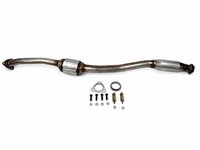
JEGS
Catalytic Converter Fits Select 2010-2012 Subaru Impreza, Legacy, Outback w/2.5L Engine [Rear]
Part Number: 555-77073
Ships on 10/26/2026Lowest Price Guarantee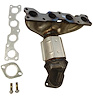
JEGS
Catalytic Converter Fits Select 2013-2016 Hyundai Santa Fe Sport, 2014-2015 Kia Sorento AWD/FWD 2.4L I4 [Front]
Part Number: 555-77075
Ships on 10/26/2026Lowest price guarantee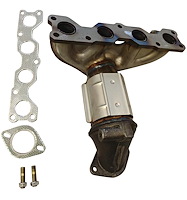
JEGS
Catalytic Converter Fits Select 2013-2016 Hyundai Santa Fe Sport, 2014-2015 Kia Sorento AWD/FWD 2.4L I4 [Front]
Part Number: 555-77075
Ships on 10/26/2026Lowest Price Guarantee
JEGS
Catalytic Converter Fits Select 2009-2012 Toyota Highlander w/2.7L I4 Engine [Front]
Part Number: 555-77077
Ships on 10/26/2026Lowest price guarantee
JEGS
Catalytic Converter Fits Select 2009-2012 Toyota Highlander w/2.7L I4 Engine [Front]
Part Number: 555-77077
Ships on 10/26/2026Lowest Price Guarantee
JEGS
Catalytic Converter Fits Select 2008 Ford F-150 FX2 Crew Cab Pickup, RWD w/4.6L V8 [Left]
Part Number: 555-77079
Ships on 10/26/2026Lowest price guarantee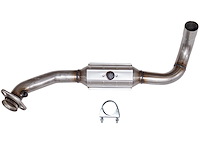
JEGS
Catalytic Converter Fits Select 2008 Ford F-150 FX2 Crew Cab Pickup, RWD w/4.6L V8 [Left]
Part Number: 555-77079
Ships on 10/26/2026Lowest Price Guarantee
JEGS
Catalytic Converter Fits Select 2009-2014 Nissan Cube FWD 1.8L I4 [Front]
Part Number: 555-77083
Ships on 10/23/2026Lowest price guarantee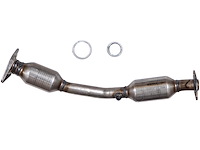
JEGS
Catalytic Converter Fits Select 2009-2014 Nissan Cube FWD 1.8L I4 [Front]
Part Number: 555-77083
Ships on 10/23/2026Lowest Price Guarantee
JEGS
Catalytic Converter Fits 2007-2008 Dodge Caliber, 2007-2017 Jeep Compass/Patriot w/2.4L 4cyl, 2007-2008 Jeep Patriot w/2.0L 4cyl
Part Number: 555-77088
Ships on 12/22/2026Lowest price guarantee
JEGS
Catalytic Converter Fits 2007-2008 Dodge Caliber, 2007-2017 Jeep Compass/Patriot w/2.4L 4cyl, 2007-2008 Jeep Patriot w/2.0L 4cyl
Part Number: 555-77088
Ships on 12/22/2026Lowest Price Guarantee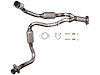
JEGS
Catalytic Converter Fits Select 2008-2010 Jeep Commander Sport, 4WD/RWD w/3.7L V6 [Front Y]
Part Number: 555-77089
Ships on 10/26/2026Lowest price guarantee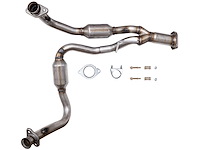
JEGS
Catalytic Converter Fits Select 2008-2010 Jeep Commander Sport, 4WD/RWD w/3.7L V6 [Front Y]
Part Number: 555-77089
Ships on 10/26/2026Lowest Price Guarantee
JEGS
Catalytic Converter Fits Select 2011-2012 Jeep Cherokee, Dodge Durango Citadel, AWD & RWD w/3.6L V6 [Left]
Part Number: 555-77093
Ships on 10/26/2026Lowest price guarantee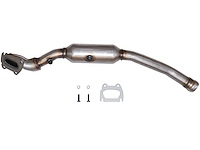
JEGS
Catalytic Converter Fits Select 2011-2012 Jeep Cherokee, Dodge Durango Citadel, AWD & RWD w/3.6L V6 [Left]
Part Number: 555-77093
Ships on 10/26/2026Lowest Price Guarantee
JEGS
Catalytic Converter Fits Select 1996-2002 Ford Crown Vic, Lincoln Town Car, Mercury Grand Marquis w/4.6L V8 Engine
Part Number: 555-77105
Ships on 10/26/2026Lowest price guarantee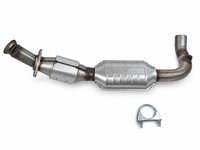
JEGS
Catalytic Converter Fits Select 1996-2002 Ford Crown Vic, Lincoln Town Car, Mercury Grand Marquis w/4.6L V8 Engine
Part Number: 555-77105
Ships on 10/26/2026Lowest Price Guarantee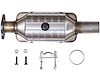
JEGS
Catalytic Converter Fits Select 2010-2012 Ford Fusion, 2010-2011 Mercury Milan AWD/FWD 2.5L I4 [Rear]
Part Number: 555-77113
Ships on 10/26/2026Lowest price guarantee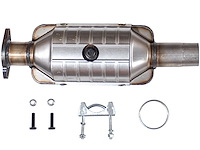
JEGS
Catalytic Converter Fits Select 2010-2012 Ford Fusion, 2010-2011 Mercury Milan AWD/FWD 2.5L I4 [Rear]
Part Number: 555-77113
Ships on 10/26/2026Lowest Price GuaranteeFrequently Asked Questions About Catalytic Converters
How long do catalytic converters last?
A healthy catalytic converter often lasts for much of a vehicle's life. Engine problems such as misfires, oil burning or coolant leaks can shorten that life quickly. Fixing those problems is the easiest way to protect a new converter.
What causes a catalytic converter to fail?
Most failures come from contamination or overheating. Oil or coolant entering the exhaust can coat the substrate, and misfires or a rich fuel mixture can overheat it. Road debris and impacts can also crack or break the converter.
Will a new catalytic converter fix a P0420 code?
Sometimes, but not always. P0420 means the system sees catalyst efficiency below its threshold, and a faulty oxygen sensor or exhaust leak can trigger the same code. Diagnose those first so you don't replace a converter that still works.
Do I need to replace both catalytic converters on a dual-exhaust V6 or V8?
Not always. If codes or testing point to one bank, you may only need to replace that converter. If both are old or the engine problem affected both banks, replacing them as a pair keeps the system balanced.
Do aftermarket catalytic converters need a break-in or O2 sensor reuse?
Break-in steps vary by manufacturer, so follow the instructions included with your converter. You can usually reuse oxygen sensors that are in good condition. If your sensors are old or contaminated, replacing them can help prevent false readings.