


 Order Status & Returns
 Gift Cards
 Help Center
 1-800-345-4545

Running Boards, Side Bars & Steps
Running boards give you a solid step into a tall truck or SUV while shielding the body from mud and road debris. This category brings together about 2,400 products, including nerf bars, side steps, power running boards, and rock sliders. Add your vehicle's year, make, and model to see the options that fit your build.
Show More
Running Boards vs. Nerf Bars vs. Side Steps
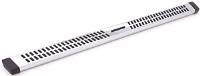
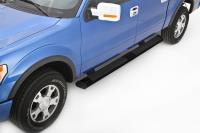
The main difference is shape: running boards are wide, flat platforms, while nerf bars and side steps are narrower. Each style balances coverage, clearance, and looks in its own way. Here's how they compare:
- Running boards are usually aluminum or fiberglass, sit closed off with no gap to the body, and use wide ends to block mud.
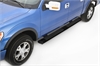
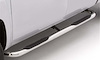
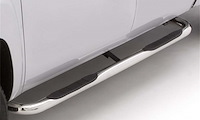
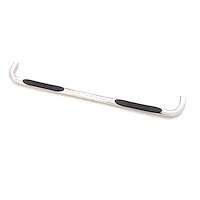
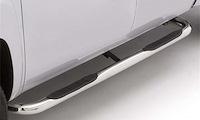
- Nerf bars are tubular, round or oval, and come in stainless steel, aluminum, or powder-coated steel.
- Side steps, like Go Rhino Dominator DT side steps, give you a dedicated foothold at each door.
- Step sliders, like the Body Armor 4x4 REVO step slider for Toyota Tacoma, pair a step with rocker protection.
If you're new to the category, read up on what running boards are and how they work. Daily drivers often lean toward full-length boards for coverage. Trail rigs tend to favor nerf bars or sliders that stay tight to the body.
Power Running Boards and Electric Steps
Power running boards extend to give you a step, then retract out of the way. Because they move, they need electrical wiring to extend and retract, so plan for extra install time.
Rough Country power running boards use a dual electric motor. Applications include the Nissan Titan, Chevy Colorado and GMC Canyon crew cab, and Ford Bronco. Lighted power boards add a lit step for getting in and out after dark.
Own a Toyota Tundra Double Cab? The Go Rhino E1 electric running board kit is built for that truck. Power boards tuck away when they're not in use. That makes them a smart fit if you want an easy step without a fixed board below the doors. Read the install notes on each listing so you know what the wiring job involves before you order.
Materials and Finishes for Pickup Truck Steps
Most pickup truck steps are aluminum, fiberglass, stainless steel, or powder-coated steel. Your choice comes down to weight, finish, and how hard you'll use them. Here's what each option brings:
- Aluminum boards, like Rough Country HD2 aluminum running boards for Canyon and Colorado crew cabs, keep weight down.
- Fiberglass is a common running board material for a full-width, closed-off step.
- Stainless steel and powder-coated steel are common on tubular nerf bars for a polished or painted look.
- Bedliner-coated finishes, like Go Rhino RB30 slim line boards for the Jeep Wrangler JK, add a textured, rugged surface.
Want a factory look? Steelcraft STX100 and STX300 running boards offer an OEM-style design. For crossovers, the Dee Zee NXc running boards kit includes mounting brackets for the Ford Escape. If you're unsure, match the finish to your bumpers and trim so the whole truck looks consistent.
How to Choose Running Boards for Your Truck or SUV
Start with fitment. Use the Add a Vehicle tool to enter your year, make, and model, so you only see boards that fit. It's a simple way to avoid ordering parts for the wrong truck.
Next, match the cab size. Boards are sized to the cab, so a crew cab set won't fit a double cab truck. Listings like the Go Rhino E1 for Tundra Double Cab or Rough Country HD2 for Colorado crew cab spell this out.
Then think about ground clearance and how you drive. Slim boards like Go Rhino RB20 keep a low profile for street trucks and SUVs. If you hit the trail, a step slider protects the rockers while giving you a step. Most installs are no-drill and use existing frame holes, while power boards also need wiring.
Running Board Brands and Matching Exterior Accessories
Along with the brands above, you'll find nerf bars and steps from Westin, Lund, and ARIES. Restoring a classic? Auto Metal Direct reproduction running board sets fit 1953-56 Ford F100 and F250 trucks. They're a direct option when you want original-style boards for a period-correct restoration.
Running boards are one piece of a bigger build, so browse our exterior accessories to finish the look. Cover your cargo with tonneau covers and truck bed covers. Up front, add off-road bumpers and grille guards.
Pair your boards with truck mud flaps and splash guards and fender flares to help keep mud and spray off the sides of your truck. For more ideas, see our list of must-have aftermarket truck accessories. When you're ready, add your vehicle and shop running boards now.

ADD A VEHICLE TO GUARANTEE PARTS FIT
See products that fit

ADD A VEHICLE TO GUARANTEE PARTS FIT
See products that fit

JEGS
Truck Cab Inside Step Riser for 1961-1966 Ford F-Series Trucks [Left/Driver Side]
Part Number: 555-95582
 Ships on 11/05/2026
 Lowest price guarantee

JEGS
Truck Cab Inside Step Riser for 1961-1966 Ford F-Series Trucks [Left/Driver Side]
Part Number: 555-95582
Ships on 11/05/2026Lowest Price Guarantee
JEGS
Truck Cab Inside Step Riser for 1961-1966 Ford F-Series Trucks [Right/Passenger Side]
Part Number: 555-95583
Ships on 11/05/2026Lowest price guarantee
JEGS
Truck Cab Inside Step Riser for 1961-1966 Ford F-Series Trucks [Right/Passenger Side]
Part Number: 555-95583
Ships on 11/05/2026Lowest Price Guarantee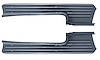
AUTO METAL DIRECT
435-4553-P Running Board Set LH/RH Pair 53-56 Ford F100 F250 Short Bed
Part Number: 106-435-4553-P
Ships TodayFree shippingLowest price guarantee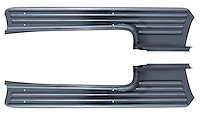
AUTO METAL DIRECT
435-4553-P Running Board Set LH/RH Pair 53-56 Ford F100 F250 Short Bed
Part Number: 106-435-4553-P
Ships TodayFree shippingLowest Price Guarantee
ROUGH COUNTRY
SRB151977A HD2 Aluminum Running Boards, Crew Cab, Chevy/GMC Canyon/Colorado
Part Number: 834-SRB151977A
Ships on 11/02/2026Free shippingLowest price guarantee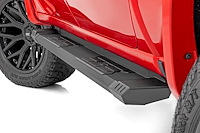
ROUGH COUNTRY
SRB151977A HD2 Aluminum Running Boards, Crew Cab, Chevy/GMC Canyon/Colorado
Part Number: 834-SRB151977A
Ships on 11/02/2026Free shippingLowest Price Guarantee
ROUGH COUNTRY
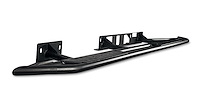
PSR055110 Power Running Boards, Dual Electric Motor, Nissan Titan 2WD/4WD
Part Number: 834-PSR055110
Ships on 11/06/2026Free shippingLowest price guarantee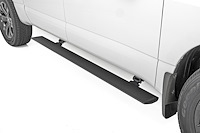
ROUGH COUNTRY
PSR055110 Power Running Boards, Dual Electric Motor, Nissan Titan 2WD/4WD
Part Number: 834-PSR055110
Ships on 11/06/2026Free shippingLowest Price Guarantee
RAPTOR SERIES
2103-0355BT 6.5 in Sawtooth Slide Track Running Boards, Black Aluminum, 15-23 Ford F-150, 17-23 F-250/F-350 Super Duty SuperCab
Part Number: 838-2103-0355BT
Ships TodayLowest price guarantee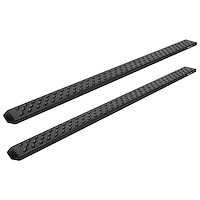
RAPTOR SERIES
2103-0355BT 6.5 in Sawtooth Slide Track Running Boards, Black Aluminum, 15-23 Ford F-150, 17-23 F-250/F-350 Super Duty SuperCab
Part Number: 838-2103-0355BT
Ships TodayLowest Price Guarantee
RAPTOR SERIES
2101-0041BT 6.5 in Sawtooth Slide Track Running Boards, Black Aluminum, Fits Select Chevy Silverado/GMC Sierra 1500/2500/3500
Part Number: 838-2101-0041BT
Ships TodayLowest price guarantee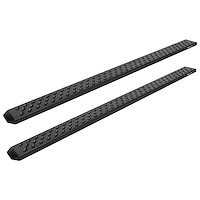
RAPTOR SERIES
2101-0041BT 6.5 in Sawtooth Slide Track Running Boards, Black Aluminum, Fits Select Chevy Silverado/GMC Sierra 1500/2500/3500
Part Number: 838-2101-0041BT
Ships TodayLowest Price Guarantee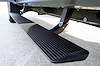
AMP RESEARCH
75113-01A PowerStep Automatic Running Boards, 1999-2006 GM Silverado/Sierra 1500/2500/3500, Extended/Crew Cab
Part Number: 045-75113-01A
Ships TodayLowest price guarantee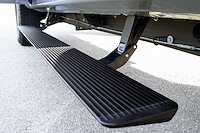
AMP RESEARCH
75113-01A PowerStep Automatic Running Boards, 1999-2006 GM Silverado/Sierra 1500/2500/3500, Extended/Crew Cab
Part Number: 045-75113-01A
Ships TodayLowest Price Guarantee
AMP RESEARCH
77122-01A PowerStep XL Electric Running Boards, 1.5 in. Additional Drop, Fits 2007-2018 Jeep Wrangler JK, 4-Door
Part Number: 045-77122-01A
Ships TodayLowest price guarantee
AMP RESEARCH
77122-01A PowerStep XL Electric Running Boards, 1.5 in. Additional Drop, Fits 2007-2018 Jeep Wrangler JK, 4-Door
Part Number: 045-77122-01A
Ships TodayLowest Price Guarantee
AMP RESEARCH
77133-01A PowerStep XL Electric Running Boards, 1.5 in. Additional Drop, Fits Select Jeep Wrangler JL, Gas Only, 2-Door
Part Number: 045-77133-01A
Ships TodayLowest price guarantee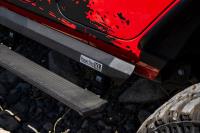
AMP RESEARCH
77133-01A PowerStep XL Electric Running Boards, 1.5 in. Additional Drop, Fits Select Jeep Wrangler JL, Gas Only, 2-Door
Part Number: 045-77133-01A
Ships TodayLowest Price Guarantee
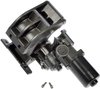
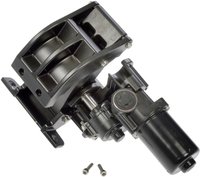
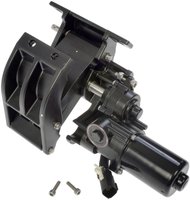

DORMAN PRODUCTS
747-955 Power Running Board Motor; 2015-2020 Cadillac; 2015-2020 Chevrolet; 2015-2020 GMC
Part Number: 326-747-955
Ships TodayLowest price guarantee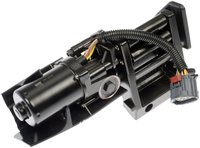
DORMAN PRODUCTS
747-955 Power Running Board Motor; 2015-2020 Cadillac; 2015-2020 Chevrolet; 2015-2020 GMC
Part Number: 326-747-955
Ships TodayLowest Price Guarantee
Frequently Asked Questions About Running Boards
Are running boards meant to be stepped on?
Yes. Running boards are built to give you a step into and out of a tall truck or SUV. They also help shield the body from mud and debris. Check each listing for the weight rating of the board you choose.
What are high-clearance running boards?
High-clearance running boards and step sliders sit tight to the body or frame to help preserve ground clearance. They're popular on lifted trucks and trail rigs, where a low board can hang up on rocks. Step sliders also add rocker protection.
How do you install running boards?
Most running boards are a no-drill install that bolts brackets to existing holes in the frame. Mount the brackets first, then attach the boards and square them up before final tightening. Power running boards also need electrical wiring to extend and retract.
How do you remove running boards?
Removal is the reverse of installation. Unbolt the boards from the mounting brackets, then remove the brackets from the frame. On power running boards, disconnect the wiring before you unbolt anything.
How much weight can running boards hold?
Weight ratings vary by design, material, and mounting, so check each listing before you buy. As an example, one lighted power running board set in this category has 4 steps and is rated at 600 lbs.