


 Order Status & Returns
 Gift Cards
 Help Center
 1-800-345-4545

Cargo Carriers & Racks
Cargo rack setups give you more room to haul gear when your cabin, trunk or truck bed is already full. This category covers rooftop cargo carriers, roof rack cross bars, roof baskets, hitch cargo carriers, and truck ladder racks, bed racks and cab racks. You can filter by part type, material, bed length and drilling requirements to find a carrier that fits your vehicle and the way you haul.
Show More
Types of Cargo Racks and Carriers
A cargo rack mounts to your roof, your hitch receiver or your truck bed, and the mount style decides what you can haul. Roof-mount gear includes hard-shell rooftop cargo carriers, aluminum cross bars and open roof baskets. Hitch-mount carriers slide into a 2 in. receiver and hold gear behind your vehicle.
Truck owners get a few more options. Ladder racks, bed racks and cab racks handle long, bulky or awkward loads that won't fit flat in the bed. Some setups combine pieces, like a rooftop carrier sold as a kit with cross bars.
You'll find more than 2,100 products in this category, including JEGS rooftop carriers, cross bars and baskets. It sits within our wider exterior accessories lineup, so you can outfit the rest of your vehicle while you shop. Use the Brand, Material and Overall Length filters to narrow the list fast.
Rooftop Cargo Carriers and Roof Rack Cross Bars
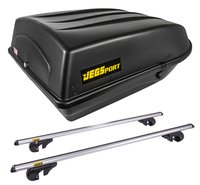
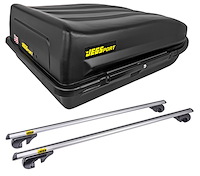
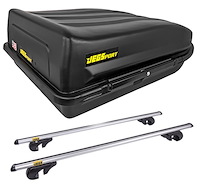
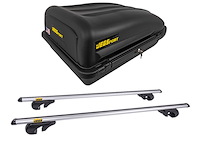
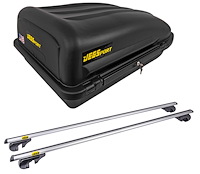
A rooftop cargo carrier gives you enclosed, lockable storage on top of your vehicle, and roof rack cross bars give it a place to mount. JEGS 10 cu. ft. and 18 cu. ft. rooftop cargo carriers use a lockable, weatherproof hard shell with a 110 lb. carrying capacity.
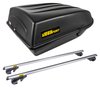
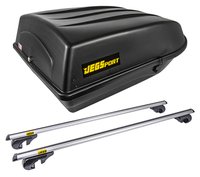
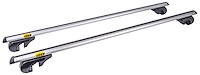
Need bars too? Carrier kits pair a rooftop box with 47 in. or 52 in. aluminum cross bars. You can also buy 47 in. and 52 in. aluminum cross bar sets on their own.
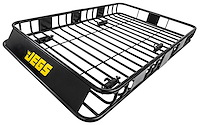
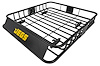
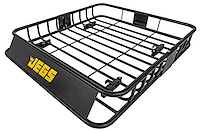
For open-top hauling, roof rack cargo baskets come in 46x39 in. and 64x39 in. sizes. A basket handles coolers, duffel bags and odd-shaped gear that won't fit in a closed box.
Before your next road trip, read our car roof storage guide. Then follow our tips on how to pack a rooftop cargo box to spread weight evenly and use every inch of space.
Hitch Cargo Carriers for 2 In. Receivers
A hitch cargo carrier slides into your 2 in. receiver and carries gear behind your vehicle at waist height. The hitch-mount cargo carrier rack in this category holds up to 500 lb. and has a black powder-coated finish. Loading at that height is easier on your back than lifting heavy gear onto the roof.
Hauling a dirt bike? The aluminum receiver-mount dirt bike carrier is rated for 400 lb. Make sure the combined weight of the bike and carrier stays within the tongue weight rating of your hitch and vehicle.
Strap every load down with ratchet tie-down straps so nothing shifts at highway speed. If you need pins, clips or other hardware for your receiver, browse our receiver hitch accessories. Our hitch cargo carrier buying guide covers more ways to haul with your hitch before you buy.
Truck Ladder Racks, Bed Racks and Cab Racks
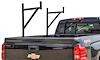
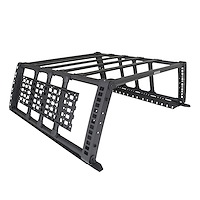
Truck ladder racks, bed racks and cab racks lift long or bulky cargo above the bed, so you keep floor space free for other gear. Heavy-duty truck ladder rack arms adjust between 19 1/2 in. and 32 3/4 in. to clear different loads. A 4-post universal truck rack uses black steel tubing for long items like ladders and lumber.
Building an overland rig? The ARB 4x4 BASE Cab Rack Platform measures 49x45 in. and is made from textured black aluminum. The Go Rhino XRS Overland Xtreme Rack is another option for overland-style builds.
If you also run one of our tonneau covers and truck bed covers, confirm the rack clears it before you order. You can round out the build with truck bed and tailgate accessories. Camping from your truck? Our truck and SUV tents pair well with a rack that carries the rest of your gear.
How to Choose the Right Cargo Rack
The right cargo rack matches your vehicle, your load and how you'll use it. Start with these checks before you add one to your cart:
- Pick a mount style that fits your vehicle, whether that's the roof, a 2 in. receiver or the truck bed.
- Compare rated capacity, such as 110 lb. for a rooftop carrier or 500 lb. for a hitch carrier.
- Choose a material, such as aluminum or steel, and a finish like black powder coat.
- Measure your truck's bed length and filter by it.
- Check whether drilling is required and whether mounting hardware is included.
Think about access too. A rooftop box keeps gear enclosed but sits overhead, while a hitch carrier stays low and easy to load. Truck racks free up bed space but add height, so check garage and drive-through clearance.
Already own a carrier? Replacement latches and hardware are listed here, so you can keep it in service longer.

ADD A VEHICLE TO GUARANTEE PARTS FIT
See products that fit

ADD A VEHICLE TO GUARANTEE PARTS FIT
See products that fit
JEGS
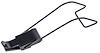
Replacement Front Latch for JEGS Rooftop Cargo Carrier [18 Cu. Ft.]
Part Number: 555-90098-6
 Ships Today
 Lowest price guarantee
JEGS
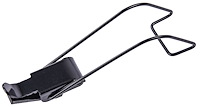
Replacement Front Latch for JEGS Rooftop Cargo Carrier [18 Cu. Ft.]
Part Number: 555-90098-6
Ships TodayLowest Price Guarantee
JEGS
4-Post Universal Truck Rack Front & Rear [Steel Tubing | Black Finish]
Part Number: 555-71110
Ships TodayLowest price guarantee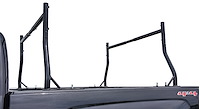
JEGS
4-Post Universal Truck Rack Front & Rear [Steel Tubing | Black Finish]
Part Number: 555-71110
Ships TodayLowest Price Guarantee
JEGS
Horizontal and Vertical Roof Rail Weather Seals for 1987-1992 Chevrolet Camaro, Pontiac Firebird Convertibles
Part Number: 555-91951
Ships TodayLowest price guarantee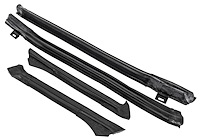
JEGS
Horizontal and Vertical Roof Rail Weather Seals for 1987-1992 Chevrolet Camaro, Pontiac Firebird Convertibles
Part Number: 555-91951
Ships TodayLowest Price Guarantee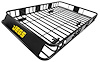

JEGS
18 cu. ft. Weather Proof Rooftop Cargo Carrier, Heavy-Duty Hard shell Lockable Storage w/110 lb. Carrying Capacity
Part Number: 555-90093
Ships TodayLowest price guarantee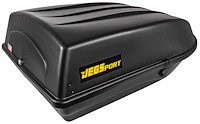
JEGS
18 cu. ft. Weather Proof Rooftop Cargo Carrier, Heavy-Duty Hard shell Lockable Storage w/110 lb. Carrying Capacity
Part Number: 555-90093
Ships TodayLowest Price Guarantee
JEGS
18 Cubic ft. Rooftop Cargo Carrier, Heavy-Duty Weatherproof Lockable Hard Shell Storage w/110 lb. Carrying Capacity
Part Number: 555-90109
Ships TodayLowest price guarantee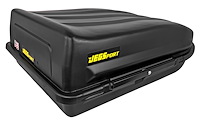
JEGS
18 Cubic ft. Rooftop Cargo Carrier, Heavy-Duty Weatherproof Lockable Hard Shell Storage w/110 lb. Carrying Capacity
Part Number: 555-90109
Ships TodayLowest Price Guarantee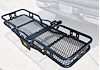
JEGS
Hitch-Mount Cargo Carrier Rack fits 2 in. Receiver Hitches, 500 lb. Capacity [Black Powder-Coated]
Part Number: 555-90094
Ships TodayLowest price guarantee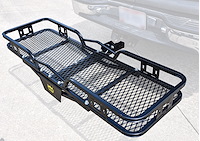
JEGS
Hitch-Mount Cargo Carrier Rack fits 2 in. Receiver Hitches, 500 lb. Capacity [Black Powder-Coated]
Part Number: 555-90094
Ships TodayLowest Price Guarantee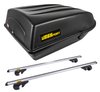
JEGS
Heavy Duty Truck Ladder Rack Arms Adjust from 19 1/2 in. to 32 3/4 in.
Part Number: 555-71105
Ships TodayLowest price guarantee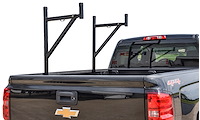
JEGS
Heavy Duty Truck Ladder Rack Arms Adjust from 19 1/2 in. to 32 3/4 in.
Part Number: 555-71105
Ships TodayLowest Price Guarantee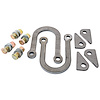
JEGS
10 Cubic ft. Rooftop Cargo Carrier, Heavy-Duty Weatherproof Lockable Hard Shell Storage w/110 lb. Carrying Capacity
Part Number: 555-90097
Ships TodayLowest price guarantee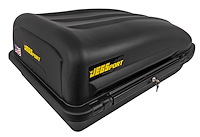
JEGS
10 Cubic ft. Rooftop Cargo Carrier, Heavy-Duty Weatherproof Lockable Hard Shell Storage w/110 lb. Carrying Capacity
Part Number: 555-90097
Ships TodayLowest Price Guarantee


JEGS
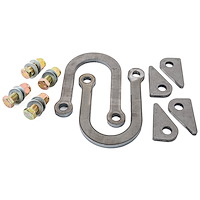
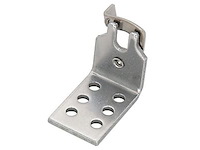
Replacement Hardware for JEGSport Cargo Carriers 555-90109 and 555-90097
Part Number: 555-90098-1
Ships TodayLowest price guarantee
JEGS
Replacement Hardware for JEGSport Cargo Carriers 555-90109 and 555-90097
Part Number: 555-90098-1
Ships TodayLowest Price Guarantee
ARB 4X4
BASE Cab Rack Platform, 49 in. x 45 in. [Textured Black Aluminum]
Part Number: 378-1770060
Ships on 11/09/2026Free shippingLowest price guarantee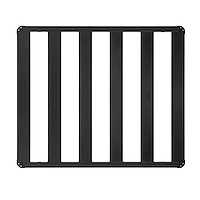
ARB 4X4
BASE Cab Rack Platform, 49 in. x 45 in. [Textured Black Aluminum]
Part Number: 378-1770060
Ships on 11/09/2026Free shippingLowest Price Guarantee
Frequently Asked Questions About Cargo Racks
How do you attach a cargo box to a roof rack?
Most hard-shell cargo boxes clamp to your roof rack cross bars with mounting hardware that wraps around each bar. Center the box front to back and side to side, then tighten each clamp evenly. Recheck the clamps after the first few miles and before every trip.
Can a rooftop carrier scratch your roof?
A carrier mounted on cross bars shouldn't touch your roof, but grit trapped under rack feet or pads can scuff the paint. Clean the roof and every contact point before you install the rack. Once the box is loaded, make sure it still clears the roof surface.
Can you use a roof cargo carrier without a roof rack?
A hard-shell rooftop cargo carrier needs cross bars to mount securely. If your vehicle doesn't have them, a carrier kit with cross bars gives you both pieces in one order. Confirm the bars fit your roof before you buy.
Does a rooftop cargo carrier affect fuel economy?
Yes, a rooftop carrier adds aerodynamic drag, which can lower your fuel economy, especially at highway speeds. Taking the carrier off when you're not using it helps you get that mileage back.
How do you secure cargo in a roof basket or hitch carrier?
Tie the load down at several points with tie-down straps so nothing shifts or lifts in the wind. Place heavier items low and centered, and keep the load within the carrier's rated capacity. Check strap tension every time you stop.