


 Order Status & Returns
 Gift Cards
 Help Center
 1-800-345-4545
Drag Race Weather Stations & Equipment
A drag racing weather station measures the air at your pit so you can see how conditions affect your car's performance. Temperature, barometric pressure and humidity change through the day, and each shift can move your ET. Choose from handheld meters, portable analyzers and trailer-mounted stations built for bracket racers, class racers and Jr. Dragster families.
Show More
What Does A Drag Racing Weather Station Measure?
A drag racing weather station measures temperature, barometric pressure and relative humidity, then turns those readings into numbers that show how much power your engine can make. Those three inputs are the core of every unit. Most stations also calculate values that make the raw data easier to use at the track.
- Density altitude, a single number that describes air density
- Air density ratio and horsepower correction factor
- Grains of water, dew point and vapor pressure
- Wind speed and wind direction on models with a wind sensor
- Percent oxygen and oxygen altitude on select oxygen-sensor models
Higher density altitude means thinner air, and thinner air means slower ETs. Tracking these readings run to run helps you understand why your car slowed down or picked up.
You'll find these units alongside other bracket tools in our delay boxes, weather stations and practice trees category.
Handheld Vs. Trailer-Mounted Racing Weather Stations
A handheld weather station is portable and affordable, while a trailer-mounted weather station stays in place and samples the air all day. Handheld meters fit in your pocket or toolbox and take readings wherever you're standing. For accurate numbers, keep a handheld unit in the shade and out of the car, since sunlight and engine heat skew the temperature.
Trailer-mounted stations use a pole-mounted sensor that watches conditions continuously. Many can send text updates or pages, so you'll see the air change while you're in the staging lanes. Portable analyzers sit between the two, with an internal fan that pulls fresh air across the sensors.
If you run a few weekends a year, a handheld may be enough. If you chase points every weekend, a trailer-mounted station saves time and keeps a steady log. Pair either one with delay boxes and practice trees to build a complete bracket setup.
How ET Prediction And Density Altitude Help Your Dial-In
Density altitude and ET prediction help you set a dial-in that matches the air your car will run in. When density altitude rises, the air is thinner, your engine makes less power and your ET slows, so your dial-in needs to go up. When it drops, the car picks up and you'll dial down.
ET prediction software compares current weather to a database of your own runs, then estimates your next time. That database is the key. A station needs a record of your runs before its predictions become reliable, so log every pass with the weather, ET and any notes about the car.
Air is only part of the picture. Track temperature affects traction, and traction changes how your car leaves and how consistent it runs. Learn how tire choice plays into that with our guide to drag radials vs. slicks.
Weather Station Brands At JEGS: Kestrel, Computech And Altronics
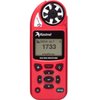
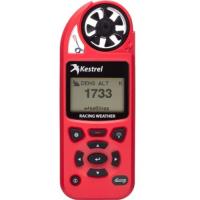
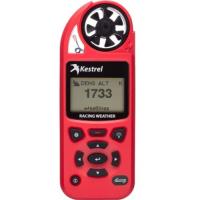
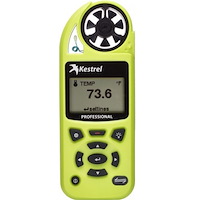
JEGS carries racing weather stations from three brands. Kestrel offers the Kestrel Handheld Racing Weather Meter with 14 total measurements. It reads moisture content in grains, air density, relative air density, relative humidity, temperature, barometric pressure and wind speed, with a 1600-point data log.
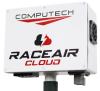
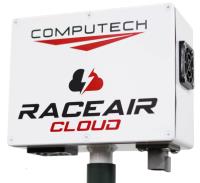
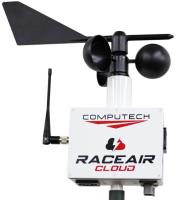
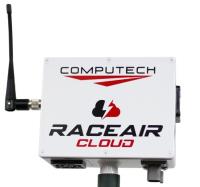
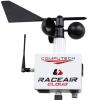
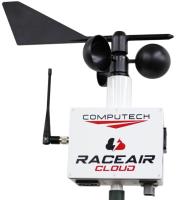
Computech Systems builds the RaceAir line. RaceAir Cloud trailer stations add text messaging, which requires internet, plus optional paging and a 40 ft extension cable. The RaceAir Pro is portable, with automatic air sampling and ET prediction programs for throttle stop, run completer and carburetor jetting.
The RaceAir Weather Analyzer is a portable, fan-aspirated unit that calculates correction factor, density altitude and grains.
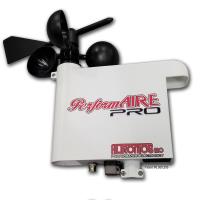
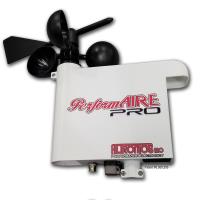
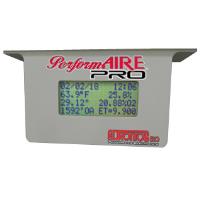
Altronics makes the PerformAIRE PRO Weather Station. It measures temperature, humidity, barometric pressure, grains of water, dew point and horsepower correction factor, plus percent oxygen on O2 models. Paired with RaceWORKS software, it handles ET and throttle-stop prediction and sends paging or smartphone messages.
How Much Does A Racing Weather Station Cost?
Racing weather station price depends on the type, with handheld meters costing the least and trailer-mounted systems with texting costing the most. Here's how current JEGS prices break down.
- Kestrel handheld racing weather meters at $309 and $369
- Altronics PerformAIRE PRO with wind sensor at $1,124.99
- Altronics PerformAIRE PRO with oxygen and wind sensor at $1,349.99
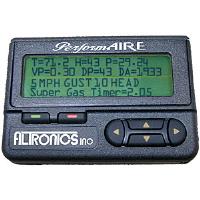
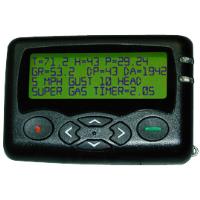
- Altronics PerformAIRE PRO with paging system and wind sensor at $2,024.99
- Computech RaceAir Cloud trailer stations with texting between $1,349.95 and $2,999.95
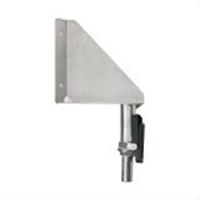
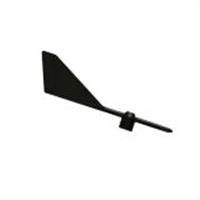
Budget for accessories too. JEGS stocks a RaceAir wind meter vane assembly for $54.95, a 40 ft extension cable for $149.95 and a storage mount for $99.95. A PerformAIRE PRO pager runs $251.99.
Start with the tool that fits your racing schedule, then shop our full lineup of ignition, electrical and tuning parts to round out your program. For setup and strategy tips, read our bracket racing tech articles.

ADD A VEHICLE TO GUARANTEE PARTS FIT
See products that fit

ADD A VEHICLE TO GUARANTEE PARTS FIT
See products that fit
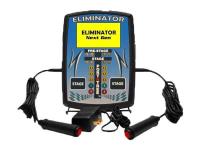
COMPUTECH SYSTEMS
RaceAir Cloud Page Weather Station with Text, Paging, Trailer Kit 3310-T
Part Number: 248-3310-T
 Ships Tomorrow
 Lowest price guarantee
COMPUTECH SYSTEMS
RaceAir Cloud Page Weather Station with Text, Paging, Trailer Kit 3310-T
Part Number: 248-3310-T
Ships TomorrowLowest Price Guarantee
Frequently Asked Questions About Drag Racing Weather Stations
Can I Use A Phone Weather App Instead Of A Weather Station?
Free track-weather apps are handy for a quick look, but they report conditions from a remote source away from your pit. The air where your car runs can differ from what a distant sensor shows. A weather station reads conditions right where you are, which gives your dial-in better data.
Where Should I Place My Weather Station At The Track?
Place it in the shade, away from the car, engine heat and hot pavement. For a trailer-mounted station, mount the sensor on its pole where it gets steady airflow. Take readings in the same spot each time so your data stays consistent.
How Many Runs Does A Weather Station Need Before Predictions Are Accurate?
There's no fixed number, because it depends on how many passes you log across different conditions. The station needs a database of your own runs before its predictions become reliable. Log every pass with the weather, ET and notes, and your predictions improve as that record grows.
Do Jr. Dragster Racers Need A Weather Station?
A weather station helps Jr. Dragster racers the same way it helps bracket racers, by showing how air changes affect ET. Jr. Dragster racing rewards consistent times, so knowing whether conditions are slowing the car or picking it up leads to smarter dial-in calls. A handheld meter is an affordable way for families to start logging data.
What Is The PerformAIRE Weather Station?
The PerformAIRE PRO is a racing weather station from Altronics. It measures temperature, humidity, barometric pressure, density altitude and horsepower correction factor, with percent oxygen and oxygen altitude on O2 models. With RaceWORKS software, it predicts ET and throttle-stop settings and can send paging or smartphone messages.