


 Order Status & Returns
 Gift Cards
 Help Center
 1-800-345-4545
Transmission Mounts & Crossmembers
Transmission mounts secure your transmission to the chassis, soak up vibration, and keep your driveshaft aligned so power flows smoothly to the wheels. Shop here for rubber, polyurethane, and solid mounts, plus transmission crossmembers and mount bushings built for daily drivers and high-torque race builds. You'll find parts from trusted brands sized for your year, make, and model.
Show More
What Does A Transmission Mount Do?
A transmission mount holds your transmission firmly to the chassis or crossmember while absorbing the vibration it makes under load. Think of it as the link between a heavy, moving driveline and the rest of your vehicle. It handles a few jobs at once. First, it secures the transmission so it doesn't shift around under hard acceleration or cornering. Second, it isolates vibration and noise, keeping that harshness out of the cabin. Third, it maintains driveshaft alignment, which protects your U-joints, output shaft, and slip yoke from uneven wear. When the mount is doing its job, power transfers cleanly from the transmission to the driveshaft and back to the wheels. When it's worn or broken, that alignment slips and vibration spikes. You'll find mounts and crossmembers for street and strip in our transmission and drivetrain parts, so you can match the right piece to your build.
Signs Of A Bad Transmission Mount
A bad transmission mount usually shows up as new vibration, noise, or movement you didn't feel before. Catching it early keeps a small problem from turning into real drivetrain damage. Watch for these common bad transmission mount symptoms:
- Excessive vibration through the floor, shifter, or seat, especially at idle or under acceleration.
- Clunking or banging when you shift into gear or lift off the throttle.
- Transmission misalignment or sag, sometimes with the driveshaft angle looking noticeably off.
- Reduced performance and handling as the driveline shifts around instead of staying planted.
Worn engine mounts and transmission mounts share a lot of these symptoms, so it helps to check both before you order. For a quick diagnosis walkthrough, read how to tell if your motor mounts are worn out and inspect each mount by hand to confirm which one has failed.
Types Of Transmission Mounts And Crossmembers
Transmission mounts and crossmembers come in a few core styles, each built for a different balance of comfort and control. Here's what you'll find in this category:
- Rubber replacement mounts that match the OE feel with quiet, compliant isolation.
- Polyurethane mounts that firm things up, control torque, and resist oil and heat.
- Solid or race mounts that lock the transmission down for maximum control.
- Transmission crossmembers, the structural bars that support the mount and tie into the frame.
- Transmission mount bushings that rebuild or upgrade an existing mount instead of replacing it.
You'll see options from Energy Suspension, Anchor Industries, Trans Dapt, and Nolathane, covering stock replacements and performance upgrades. Browse the full lineup in transmission mounts and adapters to compare fitments and brands side by side before you buy.
Rubber Vs. Polyurethane Vs. Solid Transmission Mounts
The right material comes down to how you drive and how much noise you'll trade for extra control. Rubber mounts are the OE-style choice: they're quiet, soak up vibration, and keep a stock ride comfortable, which makes them great for daily drivers. The tradeoff is that soft rubber flexes under high torque and wears faster with heat and oil exposure. A polyurethane transmission mount sits in the middle. It's firmer than rubber, so it controls torque and keeps the driveline planted, and it holds up well against oil, heat, and age. You'll feel a bit more vibration than stock, but not much. Solid transmission mounts, usually steel or billet, give you maximum control by locking the transmission in place. That's ideal for drag and race builds where alignment matters more than comfort, though you'll trade for more noise and vibration in the cabin. Match the material to your priorities and you'll be happy with the result.
How To Choose The Right Transmission Mount For Your Vehicle
Start by matching the mount to your exact year, make, and model, because fitment drives every other decision. From there, confirm your transmission type, since an automatic and a manual often use different mounts and crossmembers. Next, check the mount position your vehicle needs: rear, left or driver side, upper, or lower, since one vehicle can use more than one. Then pick your material based on how you drive, using the comparison above. The fastest way to filter out parts that won't fit is our Add-a-Vehicle tool, which narrows the catalog to parts made for your setup. If you're swapping in a different transmission, you may also need transmission adapters to bolt everything together. For deeper background on installs and diagnosis, browse our transmission and drivetrain tech articles. Ready to order? Add your vehicle, compare your options, and shop transmission mounts that fit your build.

ADD A VEHICLE TO GUARANTEE PARTS FIT
See products that fit

ADD A VEHICLE TO GUARANTEE PARTS FIT
See products that fit
![Solid Transmission Mount [1 3/4 in. H x 5 1/2 in. W x 2 1/4 in. D]](https://www.jegs.com/images/mini_100/500/555/555-64060.jpg)
JEGS
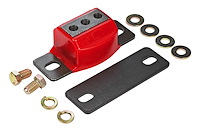
Solid Transmission Mount [1 3/4 in. H x 5 1/2 in. W x 2 1/4 in. D]
Part Number: 555-64060
 Ships Tomorrow
 Lowest price guarantee
![Solid Transmission Mount [1 3/4 in. H x 5 1/2 in. W x 2 1/4 in. D]](https://www.jegs.com/images/mini_200/500/555/555-64060.jpg)
JEGS
Solid Transmission Mount [1 3/4 in. H x 5 1/2 in. W x 2 1/4 in. D]
Part Number: 555-64060
Ships TomorrowLowest Price Guarantee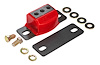
![Rubber Transmission Mount [1 3/4 in. H x 5 1/4 in. W x 2 1/4 in. D]](https://www.jegs.com/images/mini_100/500/555/555-64062.jpg)
JEGS
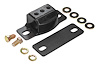
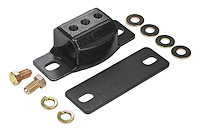
Rubber Transmission Mount [1 3/4 in. H x 5 1/4 in. W x 2 1/4 in. D]
Part Number: 555-64062
Ships TomorrowLowest price guarantee![Rubber Transmission Mount [1 3/4 in. H x 5 1/4 in. W x 2 1/4 in. D]](https://www.jegs.com/images/mini_200/500/555/555-64062.jpg)
JEGS
Rubber Transmission Mount [1 3/4 in. H x 5 1/4 in. W x 2 1/4 in. D]
Part Number: 555-64062
Ships TomorrowLowest Price Guarantee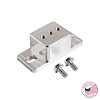
HAWKS MOTORSPORTS
CBW-179 Solid Transmission Mount, GM TH350/TH400/Powerglide/700R4/4L60E/4L80E/T56, Billet Aluminum
Part Number: 199-CBW-179
Ships TomorrowLowest price guarantee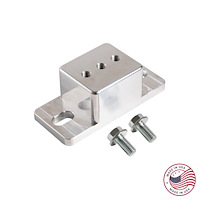
HAWKS MOTORSPORTS
CBW-179 Solid Transmission Mount, GM TH350/TH400/Powerglide/700R4/4L60E/4L80E/T56, Billet Aluminum
Part Number: 199-CBW-179
Ships TomorrowLowest Price Guarantee
SILVER SPORT TRANSMISSIONS
Isolator Mount Rubber SST A41 GM Tremec TKX Magnum Conversion Kits
Part Number: 833-ISG-622378
Ships TomorrowLowest price guarantee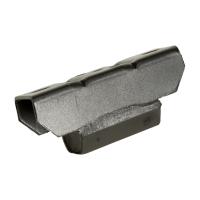
SILVER SPORT TRANSMISSIONS
Isolator Mount Rubber SST A41 GM Tremec TKX Magnum Conversion Kits
Part Number: 833-ISG-622378
Ships TomorrowLowest Price Guarantee![HP8730 Transmission Mount for Ford AOD [Heavy-Duty Polyurethane]](https://www.jegs.com/images/mini_100/500/512/512-hp8730.jpg)
HUGHES PERFORMANCE
HP8730 Transmission Mount for Ford AOD [Heavy-Duty Polyurethane]
Part Number: 512-HP8730
Ships on 10/13/2026Lowest price guarantee![HP8730 Transmission Mount for Ford AOD [Heavy-Duty Polyurethane]](https://www.jegs.com/images/mini_200/500/512/512-hp8730.jpg)
HUGHES PERFORMANCE
HP8730 Transmission Mount for Ford AOD [Heavy-Duty Polyurethane]
Part Number: 512-HP8730
Ships on 10/13/2026Lowest Price Guarantee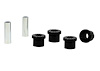
NOLATHANE
REV098.0004 Transmission Mount Bushing, Rear for 1970-1973 Nissan 240Z, 1974-1975 Nissan 260Z, 1975-1978 Nissan 280Z
Part Number: 622-REV098.0004
Ships on 10/16/2026Lowest price guarantee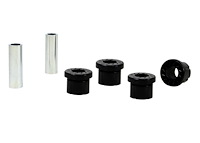
NOLATHANE
REV098.0004 Transmission Mount Bushing, Rear for 1970-1973 Nissan 240Z, 1974-1975 Nissan 260Z, 1975-1978 Nissan 280Z
Part Number: 622-REV098.0004
Ships on 10/16/2026Lowest Price Guarantee
MOROSO
Solid Transmission Mount, 87-92 Mustang, T-Bird, and Other Fords w/A.O.D or 5-spd Transmission
Part Number: 710-62602
Ships on 10/13/2026Lowest price guarantee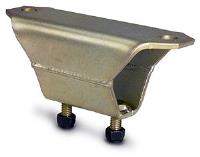
MOROSO
Solid Transmission Mount, 87-92 Mustang, T-Bird, and Other Fords w/A.O.D or 5-spd Transmission
Part Number: 710-62602
Ships on 10/13/2026Lowest Price Guarantee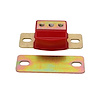
TOP STREET PERFORMANCE
81103 Transmission Mount, Polyurethane, Zinc Coated
Part Number: 743-81103
Ships on 10/21/2026Lowest price guarantee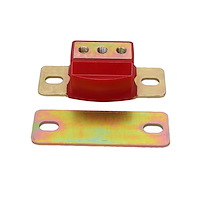
TOP STREET PERFORMANCE
81103 Transmission Mount, Polyurethane, Zinc Coated
Part Number: 743-81103
Ships on 10/21/2026Lowest Price Guarantee
TOP STREET PERFORMANCE
81108 Transmission Mount, 1.5" Polyurethane, GM 1 or 2-Bolt, Zinc (Sold Individually)
Part Number: 743-81108
Ships on 10/13/2026Lowest price guarantee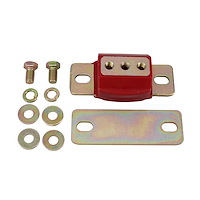
TOP STREET PERFORMANCE
81108 Transmission Mount, 1.5" Polyurethane, GM 1 or 2-Bolt, Zinc (Sold Individually)
Part Number: 743-81108
Ships on 10/13/2026Lowest Price Guarantee
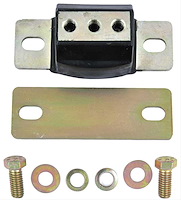

FAIRCHILD AUTOMOTIVE
Automatic Transmission Mount 1984-1999 Jeep Cherokee XJ & 1988-1992 Jeep Comanche MJ
Part Number: 443-D4115
Ships on 10/14/2026Lowest price guarantee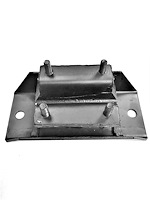
FAIRCHILD AUTOMOTIVE
Automatic Transmission Mount 1984-1999 Jeep Cherokee XJ & 1988-1992 Jeep Comanche MJ
Part Number: 443-D4115
Ships on 10/14/2026Lowest Price Guarantee
OMIX-ADA
This transmission mount from Omix-ADA fits manual and automatic transmissions found in 07-11 Jeep Wranglers JK.
Part Number: 440-19005.20
Ships on 10/13/2026Lowest price guarantee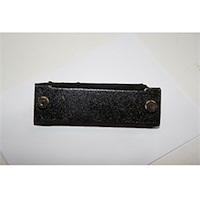
OMIX-ADA
This transmission mount from Omix-ADA fits manual and automatic transmissions found in 07-11 Jeep Wranglers JK.
Part Number: 440-19005.20
Ships on 10/13/2026Lowest Price Guarantee
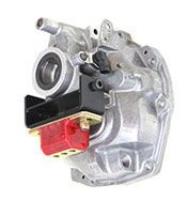
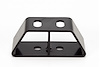
G FORCE PERFORMANCE PRODUCTS
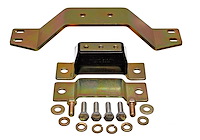
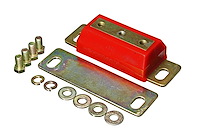
GF-GMTM-SB2 Transmission Mount Spacer-Block for 1963-2001 GM RWD Applications
Part Number: 472-GF-GMTM-SB2
Ships TomorrowLowest price guarantee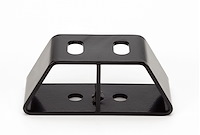
G FORCE PERFORMANCE PRODUCTS
GF-GMTM-SB2 Transmission Mount Spacer-Block for 1963-2001 GM RWD Applications
Part Number: 472-GF-GMTM-SB2
Ships TomorrowLowest Price Guarantee
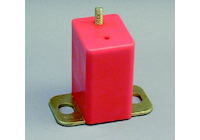

![2253 Transmission Mount for 1960-1982 Ford, Lincoln, and Mercury Models [Rear]](https://www.jegs.com/images/mini_100/0/053/053-2253.jpg)
ANCHOR INDUSTRIES
2253 Transmission Mount for 1960-1982 Ford, Lincoln, and Mercury Models [Rear]
Part Number: 053-2253
Ships TomorrowLowest price guarantee![2253 Transmission Mount for 1960-1982 Ford, Lincoln, and Mercury Models [Rear]](https://www.jegs.com/images/mini_200/0/053/053-2253.jpg)
ANCHOR INDUSTRIES
2253 Transmission Mount for 1960-1982 Ford, Lincoln, and Mercury Models [Rear]
Part Number: 053-2253
Ships TomorrowLowest Price Guarantee![2126 Transmission Mount for 1955-1957 Chevrolet Bel Air, One-Fifty Series, and Two-Ten Series [Right/Passenger Side]](https://www.jegs.com/images/mini_100/0/053/053-2126.jpg)
ANCHOR INDUSTRIES
2126 Transmission Mount for 1955-1957 Chevrolet Bel Air, One-Fifty Series, and Two-Ten Series [Right/Passenger Side]
Part Number: 053-2126
Ships TomorrowLowest price guarantee![2126 Transmission Mount for 1955-1957 Chevrolet Bel Air, One-Fifty Series, and Two-Ten Series [Right/Passenger Side]](https://www.jegs.com/images/mini_200/0/053/053-2126.jpg)
ANCHOR INDUSTRIES
2126 Transmission Mount for 1955-1957 Chevrolet Bel Air, One-Fifty Series, and Two-Ten Series [Right/Passenger Side]
Part Number: 053-2126
Ships TomorrowLowest Price Guarantee![2512 Transmission Mount for 1965-1990 Chrysler, Dodge, and Plymouth Models [Rear]](https://www.jegs.com/images/mini_100/0/053/053-2512.jpg)
ANCHOR INDUSTRIES
2512 Transmission Mount for 1965-1990 Chrysler, Dodge, and Plymouth Models [Rear]
Part Number: 053-2512
Ships TomorrowLowest price guarantee![2512 Transmission Mount for 1965-1990 Chrysler, Dodge, and Plymouth Models [Rear]](https://www.jegs.com/images/mini_200/0/053/053-2512.jpg)
ANCHOR INDUSTRIES
2512 Transmission Mount for 1965-1990 Chrysler, Dodge, and Plymouth Models [Rear]
Part Number: 053-2512
Ships TomorrowLowest Price Guarantee![2119 Transmission Mount for 1953-1964 Ford F-100, F-250, and F-350 [Upper, Left/Driver Side, Right/Passenger Side]](https://www.jegs.com/images/mini_100/0/053/053-2119.jpg)
ANCHOR INDUSTRIES
2119 Transmission Mount for 1953-1964 Ford F-100, F-250, and F-350 [Upper, Left/Driver Side, Right/Passenger Side]
Part Number: 053-2119
Ships TomorrowLowest price guarantee![2119 Transmission Mount for 1953-1964 Ford F-100, F-250, and F-350 [Upper, Left/Driver Side, Right/Passenger Side]](https://www.jegs.com/images/mini_200/0/053/053-2119.jpg)
ANCHOR INDUSTRIES
2119 Transmission Mount for 1953-1964 Ford F-100, F-250, and F-350 [Upper, Left/Driver Side, Right/Passenger Side]
Part Number: 053-2119
Ships TomorrowLowest Price Guarantee
Frequently Asked Questions About Transmission Mounts
How Much Does It Cost To Replace A Transmission Mount?
The part itself typically runs about $10 to $110 at JEGS, depending on the brand, material, and your vehicle. If you have a shop do the work, professional labor adds to that total. Transmission crossmembers cost more than a basic mount because they're larger structural pieces.
Is A Transmission Mount The Same As A Crossmember?
No, they're two different parts that work together. The mount is the rubber, polyurethane, or solid isolator that cushions the transmission. The crossmember is the structural bar that spans the frame and gives the mount something to bolt to. Many mounts attach directly to the crossmember.
Can You Drive With A Bad Transmission Mount?
You might get by short-term, but it isn't recommended. A failing mount causes excess vibration and lets the transmission shift out of alignment. Over time that can damage your driveshaft, U-joints, and other drivetrain parts, so it's smart to replace it soon.
How Long Do Transmission Mounts Last?
Lifespan varies with material and how you use the vehicle. Rubber mounts tend to wear over the years as heat, oil, and load break the rubber down. Polyurethane and solid mounts generally last longer, especially under the high torque of a performance or race build.