


 Order Status & Returns
 Gift Cards
 Help Center
 1-800-345-4545
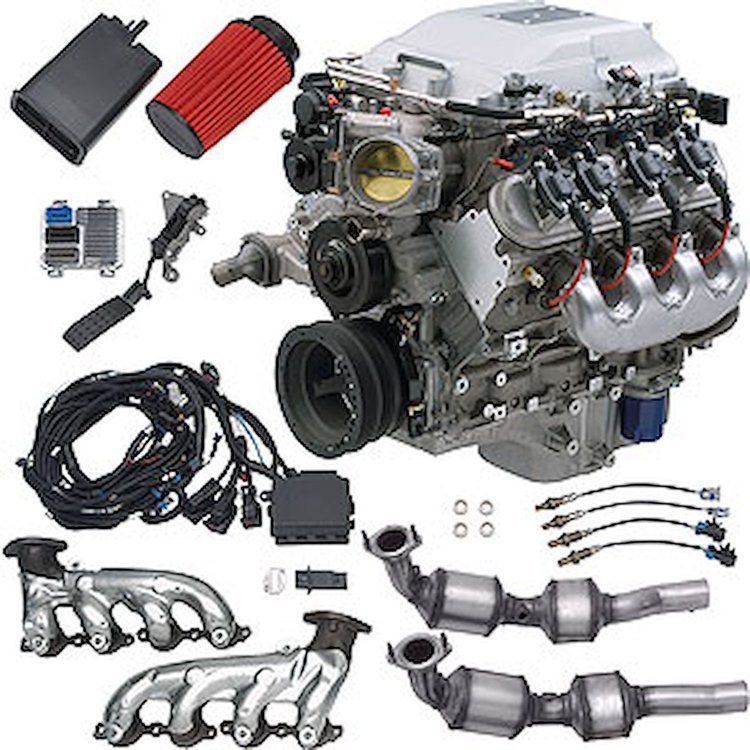
This product is no longer available. Please call customer service for assistance at 1-800-345-4545.
E-ROD supercharged 6.2L LSA engine features a unique aluminum cylinder block that houses a forged steel crankshaft, and durable reciprocating parts, with integrated piston-cooling oil jets. High-flow cylinder heads support the airflow enabled by the sixth-generation 1.9L supercharger with high-twist 4-lobe rotors. The advanced rotor design broadens the supercharger's effective range, providing tire-shredding low-RPM torque and high-RPM horsepower.
E-ROD LSA 6.2L TECH SPECS:
- Engine Type: LS-Series Gen IV Small-Block V-8
- Displacement: 376 ci (6.2L)
- Bore x Stroke: 4.065 x 3.622 in. (103.250 x 92 mm)
- Block: Cast-aluminum with six-bolt, cross-bolted main caps
- Crankshaft: Forged steel with eight-bolt flange
- Connecting Rods: Powdered metal
- Pistons: Hypereutectic aluminum
- Camshaft Type: Hydraulic roller
- Valve Lift: .492 in. intake / .480 in. exhaust
- Camshaft Duration (@.050 in.): 198-degree intake / 216-degree exhaust
- Cylinder Heads: L92 style port; 'as cast' with 68-cc chambers
- Valve Size: 2.160 in. intake / 1.590 in. exhaust
- Compression Ratio: 9.1:1
- Rocker Arms: Investment-cast, roller trunnion
- Rocker Arm Ratio: 1.7:1
- Recommended Fuel: 92 octane
- Maximum Recommended rpm: 6600
- Reluctor Wheel: 58X
- Balanced: Internal
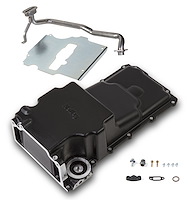
- THIS INSTALLED OIL PAN WILL NOT WORK WITH MUSCLE CAR LS ENGINE SWAPS. OIL PAN CHANGE IS REQUIRED FOR MUSCLE CAR LS ENGINE SWAPS.
Notes
- The E-ROD Engine Control Module is designed for stand-alone performance in older vehicles. Power, ground sources, high-pressure fuel pump, and electric cooling fan are all that's needed to get the vehicle running.
- Chevrolet Performance recommends a 65 psi (450 kPa) fuel pump for the LSA.
- The specially calibrated engine controller does not engage a number of features associated with production-model systems, which eliminates the possibility of trouble codes. It also has an SES (service engine soon) LED indicator embedded in the fuse box.
- LSA engine is the same size and mounts the same as other LS-Series engines
Required for Installation
- Fuel tank
- Fuel lines (recirculating or returnless)
- Fuel pump
- Fuel tank vent line from the tank to the evaporative emissions canister
- Pure line from the canister to the engine purge solenoid
- Air induction system that incorporates the mass airflow sensor
- Exhaust system behind the catalytic converters
- A compatible front end accessory drive kit is required
Engine Break-In Procedure
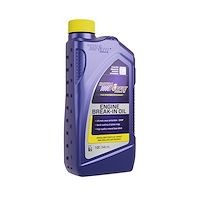
Use only engine oil that meets dexos1 specifications. For track events or competitive driving, use Mobil 1 15W-50 engine oil. Fill the engine with oil and follow the proper engine priming procedure. Also check and fill as required any other necessary fluids such as coolant, power steering fluid, etc.
Start the engine and listen for any unusual noises. If no unusual noises are noted, run the engine at approximately 1000 RPM until normal operating temperature is reached. The engine should be driven at varying loads and conditions for the first 30 miles or one hour without wide open throttle (WOT) or sustained high RPM accelerations. Run five or six medium throttle (50%) accelerations to about 4000 RPM and back to idle (0% throttle) in gear. Run two or three hard throttle (WOT 100%) accelerations to about 4000 RPM and back to idle (0% throttle) in gear.
Change the engine oil and filter. Inspect the oil and the oil filter for any foreign particles to ensure that the engine is functioning properly. Drive the next 500 miles (12 to 15 engine hours) under normal conditions. Do not run the engine at its maximum rated engine speed. Also, do not expose the engine to extended periods of high load. Change the oil and filter again, inspect the oil and oil filter for any foreign particles to ensure that the engine is functioning properly.
Items You Need
ROYAL PURPLE
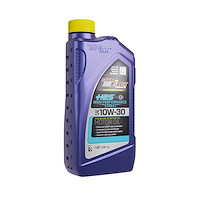
HPS High-Performance Street Motor Oil 10W30, 1-Quart
Part Number : 831-31130
ROYAL PURPLE
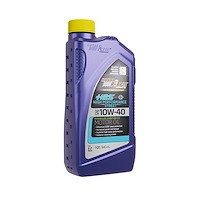
HPS High-Performance Street Motor Oil 10W40, 1-Quart
Part Number : 831-31140