

 Order Status & Returns
 Gift Cards
 Help Center
 1-800-345-4545
 Vehicle Info Needed
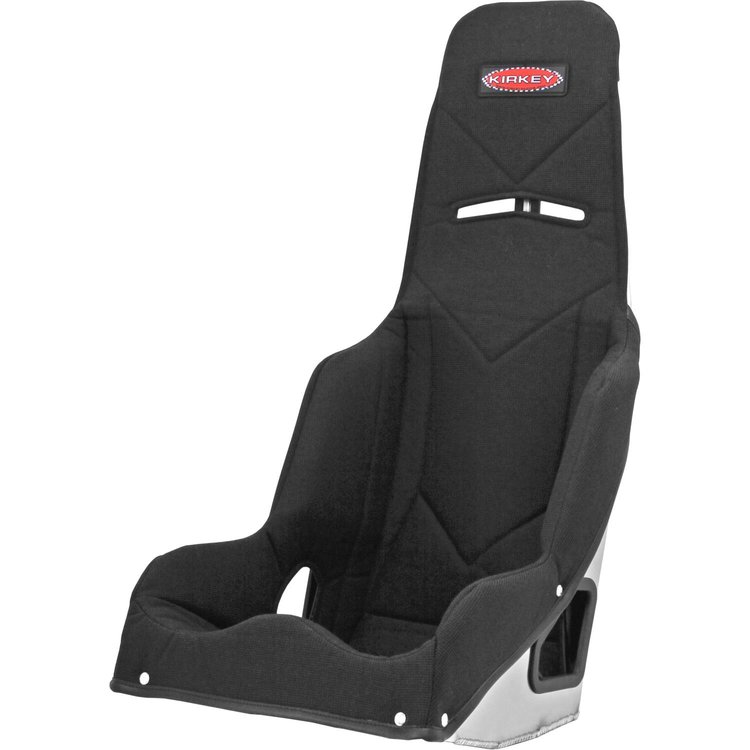
5518511 Pro Street Drag Seat Cover, 55 Series 18.5 in. Hip
 Ships Tomorrow
 Lowest Price Guarantee
Kirkey 5518511 Pro Street Drag Seat Cover, 55 Series Features:
- Fully padded quilted cover
- Snaps on for easy removal and installation
- Double stitched belt openings for added strength
- Extra stitching and material on all stress points
- Contoured high-density foam bottom for leg and thigh support
- Extra high-density foam on rib supports for added comfort
FAQ:
What is the widest Kirkey seat?
- The widest Kirkey seat is the Pro Drag Seat, specifically designed to offer ample width and support for drivers seeking a spacious and comfortable drag racing experience.
How do you measure a Kirkey drag seat?
- To accurately measure a Kirkey drag seat, determine the width by measuring across the top of the seat from the outer edges. Additionally, measure the seating area's depth and consider the overall seat dimensions for compatibility with your vehicle.
How much does a 55 series Kirkey weigh?
- The weight of a 55 series Kirkey seat may vary based on specific model configurations and materials. Typically, Kirkey 55 series seats are known for their lightweight construction, ensuring reduced weight while providing durability and performance.
How do you clean a Kirkey seat cover?
- To clean a Kirkey seat cover, use a mild detergent with water and a soft-bristled brush or cloth to gently scrub the surface. Avoid harsh chemicals or abrasive cleaning agents that could damage the material. Rinse thoroughly and allow the seat cover to air dry completely.
Safety-Minded Racing Seats and Covers
Kirkey's 55 Series Aluminum Pro Street Drag Seats contain a layback design that works well in any drag, door slammer, or pro-street car (replaces the 41 Series Seats). Kirkey seats are constructed with .100 in. thick 5052-grade aluminum and are TIG-welded outside & MIG-welded inside for added strength. With a reinforced headrest and raised front seat for leg and thigh support. Each unit has an offset aluminum extrusion around the perimeter of the seat for added strength and safety.
Show More
The Edelbrock 1406 vs 1906: Carburetor Comparison is essential for enthusiasts deciding between two of the most popular square-bore performance carburetors on the market. Both models are engineered for reliable street performance, smooth throttle response, and consistent fuel delivery—but subtle differences in calibration, finish, and application focus make each one better suited to specific builds. Understanding the Edelbrock 1406 vs 1906 carburetor comparison helps ensure you select the right airflow capacity and configuration for your engine combination.
Carburetor choice directly impacts drivability, idle quality, and overall horsepower potential. Whether you’re restoring a classic muscle car or upgrading a weekend cruiser, selecting the proper performance carburetor ensures optimal air/fuel mixture and torque output across the RPM range.
Performance Benefits & Key Features
Both the Edelbrock 1406 and 1906 carburetors are designed around a 600 CFM airflow rating, making them ideal for small block and mild big block applications. Performance enthusiasts often evaluate carburetors based on CFM sizing, choke configuration, metering calibration, and material construction. The 1406 is widely recognized for its electric choke setup and street-friendly calibration, while the 1906 offers similar airflow with enhanced finish and detailing for show-quality engine bays.
These carburetors feature lightweight aluminum construction for improved heat resistance and durability compared to older cast designs. Their air valve secondary design helps maintain smooth acceleration without bogging, supporting strong mid-range torque capacity and responsive throttle feel.
Ideal for street performance builds, restoration projects, daily drivers, and light drag racing applications, both models deliver dependable performance with straightforward tuning adjustments. For engines in the 350–400 cubic inch range, a 600 CFM carburetor provides balanced airflow without overwhelming smaller displacement combinations.
Fitment, Compatibility & Applications
In the Edelbrock 1406 vs 1906 carburetor comparison, fitment remains consistent—both are designed for square-bore 4-barrel intake manifolds commonly found on GM, Ford, and Mopar V8 engines. Popular applications include Chevrolet Camaro, Chevelle, Nova, Ford Mustang, Dodge Challenger, and classic trucks configured for carbureted induction systems.
These carburetors integrate seamlessly into restoration builds seeking period-correct appearance and modern reliability. Proper sizing ensures compatibility with stock or mildly upgraded camshaft and cylinder head combinations.
If you’re weighing your options between proven street performance carburetors, explore the Edelbrock 1406 vs 1906 carburetor comparison at JEGS and choose the configuration that best matches your engine, driving style, and build goals.
Items You Need
![Heavy-Duty Nitrile Gloves [7 mils Thick, Large]](https://www.jegs.com/images/mini_200/500/555/555-1124.jpg)
![Microfiber Towels, Oversized [16 in. x 16 in.]](https://www.jegs.com/images/mini_200/500/555/555-80190.jpg)
JEGS
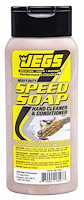
Speed Soap Hand Cleaner, Heavy-Duty Walnut Shell, 14 oz. Squeeze Bottle
Part Number : 555-72338
JEGS
Part Number : 555-72338
ITEM YOU MAY ALSO CONSIDER