


 Order Status & Returns
 Gift Cards
 Help Center
 1-800-345-4545

Headers & Exhaust Systems
Exhaust systems at JEGS include cat-back, axle-back and header-back kits, plus headers, mufflers, catalytic converters and exhaust tips. You'll find about 47,000 parts for street cars, muscle cars, Jeeps, trucks and diesels in one place. Shop by configuration, material, pipe diameter and sound level to build a system that fits your vehicle and your goals.
Show More
What Types of Exhaust Systems Can You Choose From?
Most performance exhaust systems come in three configurations: axle-back, cat-back and header-back. An axle-back kit replaces the mufflers and tips behind the rear axle. A cat-back exhaust replaces everything behind the catalytic converters, while a header-back system starts at the header collectors.
Axle-back kits change the fewest parts, and header-back kits replace the most. A cat-back exhaust sits in the middle, giving you new pipes and mufflers without touching your factory converters. Examples include the Corsa Sport axle-back for 2011-2014 Mustang GT and the Borla ATAK cat-back for the Grand Cherokee SRT 6.4L.
Our guide to the types of exhaust systems and how to choose one breaks down each option in more detail. When you're ready, shop exhaust system kits for your car or truck.
How Do You Choose Headers for an Exhaust System?
Pick headers by material, primary tube size and length, then match them to your engine and how you drive. An exhaust system with headers replaces the factory manifolds right where exhaust leaves the engine.
Mild-steel headers cost the least but have the shortest life. Stainless steel lasts longer, though it can turn blue near the flange. Ceramic coating also extends life and lowers underhood temperatures.
For a street engine under 400 ci, primary tubes of 1 1/2 to 1 5/8 in. are a common starting point. Shorty headers install more easily and often bolt in place of the manifolds. Long-tube headers make more high-end power, but they move the catalytic converters rearward.
Read A Buyer's Guide to Exhaust Headers before you order, then shop exhaust headers for your engine. Add fresh exhaust gaskets to seal the header flanges and collectors.
Which Mufflers Deliver the Sound You Want?
The muffler type you pick sets both the sound and the restriction of your exhaust. Most designs fall into three groups, each with a distinct sound:
- Chambered mufflers deliver a deep muscle-car tone.
- Turbo mufflers produce a quieter sound.
- Straight-through mufflers and glasspacks offer the least restriction and the loudest sound.
Think about how often you drive the car before you pick the loudest option. You'll also choose between aluminized and stainless construction. Common inlet and outlet sizes are 2.25, 2.5, 3, 3.5 and 4 in., so match the muffler to your pipe diameter.
Flowmaster options include the Super HP-2, Pro Series and FlowMonster 409 stainless mufflers.
Compare each design in our muffler types guide to exhaust sound and performance. Then shop performance mufflers by sound and size.
What Pipe Size Does a Custom Exhaust System Need?
Size your pipe to your horsepower. For a gas V8 under 500 hp, run a single 3 in. or dual 2.5 in. system. Above 500 hp, step up to a single 3.5 or 4 in. pipe or dual 3 in. pipes.
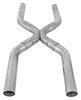
On dual systems, an H-pipe or X-pipe connects the two sides. These crossovers balance exhaust pulses between the cylinder banks, improve scavenging and make the system quieter. Add one to your build with H- and X-pipe exhaust kits.
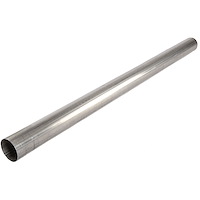
A custom exhaust system built from components also needs the right hardware. Pair aluminized tailpipes with exhaust clamps, hangers and accessories to join each section and secure it under the vehicle. Plan the full route and measure twice before you cut any tubing.
How Do Catalytic Converters and Exhaust Tips Finish Your Build?
Catalytic converters handle emissions, and exhaust tips finish the look at the bumper. Check your state's emissions rules before you replace or relocate a converter.
Long-tube headers move converters rearward, so plan converter placement when you upgrade headers. The MagnaFlow lineup includes a universal converter that's California OBD-II compliant.
When you're shopping converters, match the inlet and outlet size to your pipe and confirm the part is approved for your vehicle. Shop catalytic converters and emissions systems to compare universal and vehicle-specific options.
Tips are the last piece of the system and the part people see. Polished stainless tips come in clamp-on and weld-on styles.
Clamp-on tips mount without welding, and weld-on tips attach permanently. Browse polished stainless exhaust tips to match your tailpipe diameter and style.
How Do You Choose Exhaust Systems for Trucks and Diesels?
Exhaust systems for trucks follow the same horsepower sizing rules as cars, while diesel systems often run pipe up to 6 in. in diameter. Start with your engine, your power level and the configuration you want. If your truck runs a gas V8, the under-500 hp and over-500 hp sizing above applies.
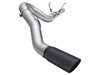
Gas truck and SUV owners can choose a cat-back exhaust, such as the Dynomax Ultra Flo for 2007-2008 Tahoe and Yukon. Jeep Wrangler owners can look at the MagnaFlow Street Series cat-back. Each one replaces the pipes and mufflers behind the converters.
Larger pipe needs matching clamps, tips and gaskets, so size every component to the same diameter. Confirm your engine and model year before you order. Then shop diesel exhaust parts for your truck.



ADD A VEHICLE TO GUARANTEE PARTS FIT
See products that fit


JEGS
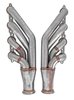
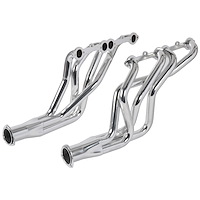
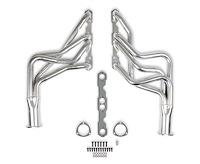
Ceramic Coated Long Tube Headers for 1964-1989 GM Passenger Cars with Small Block Chevy 265-400 ci
Part Number: 555-30051
 Ships Today
 Lowest price guarantee
JEGS
Ceramic Coated Long Tube Headers for 1964-1989 GM Passenger Cars with Small Block Chevy 265-400 ci
Part Number: 555-30051
Ships TodayLowest Price Guarantee
JEGS
GM LS Engine Swap Headers for 1964-1988 GM A/F/G/X Body [Polished Finish]
Part Number: 555-300172
Ships TodayLowest price guarantee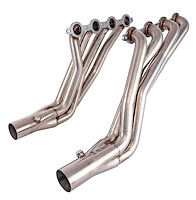
JEGS
GM LS Engine Swap Headers for 1964-1988 GM A/F/G/X Body [Polished Finish]
Part Number: 555-300172
Ships TodayLowest Price Guarantee
JEGS
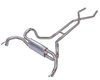
30525 - Header-Back Dual Exhaust Kit for 1978-1988 GM G-Body [2-1/2 in.]
Part Number: 555-30525
Ships TodayLowest price guarantee
JEGS
30525 - Header-Back Dual Exhaust Kit for 1978-1988 GM G-Body [2-1/2 in.]
Part Number: 555-30525
Ships TodayLowest Price Guarantee
JEGS
Header-Back Dual Exhaust Kit for 1970-1981 GM F-Body, 1970-1974 GM X-Body [2-1/2 in.]
Part Number: 555-30583
Ships TodayLowest price guarantee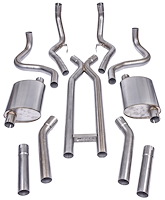
JEGS
Header-Back Dual Exhaust Kit for 1970-1981 GM F-Body, 1970-1974 GM X-Body [2-1/2 in.]
Part Number: 555-30583
Ships TodayLowest Price Guarantee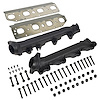
BD DIESEL
1041467 Left/Driver Side & Right/Passenger Side Exhaust Manifolds for 2019-2024 Ram (DT) Trucks w/5.7L Hemi Engine
Part Number: 151-1041467
Ships TodayLowest price guarantee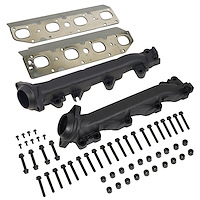
BD DIESEL
1041467 Left/Driver Side & Right/Passenger Side Exhaust Manifolds for 2019-2024 Ram (DT) Trucks w/5.7L Hemi Engine
Part Number: 151-1041467
Ships TodayLowest Price Guarantee
JEGS
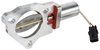
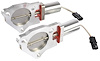
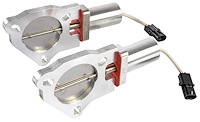
Electric Exhaust Cutouts for 2 1/2 in. O.D. Dual Exhaust Systems
Part Number: 555-30881
Ships TodayLowest price guarantee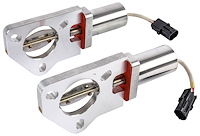
JEGS
Electric Exhaust Cutouts for 2 1/2 in. O.D. Dual Exhaust Systems
Part Number: 555-30881
Ships TodayLowest Price Guarantee
JEGS
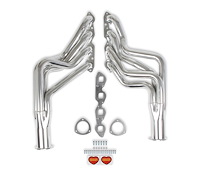
Long Tube Headers for 1988-1995 GM 2WD and 4WD Trucks [Small Block Chevy]
Part Number: 555-30066
Ships TodayLowest price guarantee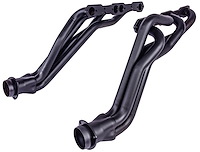
JEGS
Long Tube Headers for 1988-1995 GM 2WD and 4WD Trucks [Small Block Chevy]
Part Number: 555-30066
Ships TodayLowest Price Guarantee
JEGS
Long Tube Headers Fits Select 1967-1992 GM 2WD and 4WD Trucks [Small Block Chevy]
Part Number: 555-30055
Ships TodayLowest price guarantee
JEGS
Long Tube Headers Fits Select 1967-1992 GM 2WD and 4WD Trucks [Small Block Chevy]
Part Number: 555-30055
Ships TodayLowest Price Guarantee
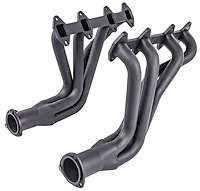
JEGS
Manifold-Back Dual Exhaust Kit for 1973-1987 Chevrolet/GMC 1/2, 3/4, 1-Ton Truck 4WD [Small Block Chevy]
Part Number: 555-89003
Ships TodayLowest price guarantee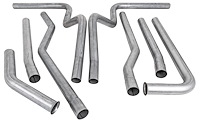
JEGS
Manifold-Back Dual Exhaust Kit for 1973-1987 Chevrolet/GMC 1/2, 3/4, 1-Ton Truck 4WD [Small Block Chevy]
Part Number: 555-89003
Ships TodayLowest Price Guarantee
JEGS
30528 - Header-Back Dual Exhaust Kit for GM F-Body, X-Body [2-1/2 in.]
Part Number: 555-30528
Ships TodayLowest price guarantee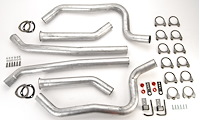
JEGS
30528 - Header-Back Dual Exhaust Kit for GM F-Body, X-Body [2-1/2 in.]
Part Number: 555-30528
Ships TodayLowest Price Guarantee
BD DIESEL
1041463 Left/Driver Side & Right/Passenger Side Exhaust Manifolds for 2009-2024 Ram Classic (DS) Trucks w/5.7L Hemi Engine
Part Number: 151-1041463
Ships TodayLowest price guarantee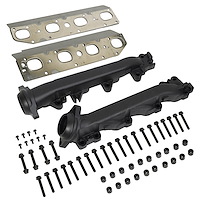
BD DIESEL
1041463 Left/Driver Side & Right/Passenger Side Exhaust Manifolds for 2009-2024 Ram Classic (DS) Trucks w/5.7L Hemi Engine
Part Number: 151-1041463
Ships TodayLowest Price Guarantee
JEGS
Painted Long Tube Headers for 1968-1974 Big Block Chevy/GMC Trucks
Part Number: 555-30059
Ships TodayLowest price guarantee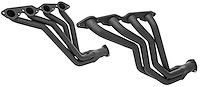
JEGS
Painted Long Tube Headers for 1968-1974 Big Block Chevy/GMC Trucks
Part Number: 555-30059
Ships TodayLowest Price Guarantee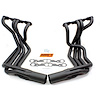

HOOKER HEADERS
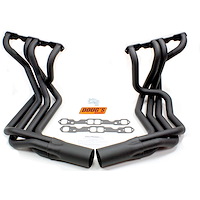
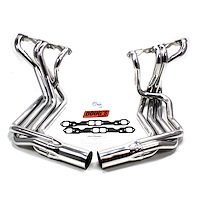
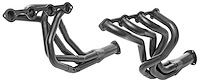
2224-3 Super Competition Long Tube Sidemount Headers 1963-1982 Corvette with Small Block Chevy 265-400
Part Number: 520-2224-3
Ships TodayLowest price guarantee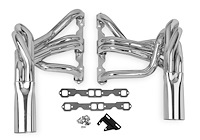
HOOKER HEADERS
2224-3 Super Competition Long Tube Sidemount Headers 1963-1982 Corvette with Small Block Chevy 265-400
Part Number: 520-2224-3
Ships TodayLowest Price Guarantee
JBA
6966S Long Tube Headers for 2005-2020 Dodge Charger/300C/Magnum 5.7/6.1/6.2/6.4L, 2008-2020 Dodge Challenger 5.7/6.1/6.2/6.4L
Part Number: 578-6966S
Ships TodayLowest price guarantee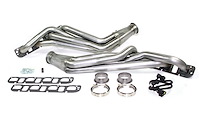
JBA
6966S Long Tube Headers for 2005-2020 Dodge Charger/300C/Magnum 5.7/6.1/6.2/6.4L, 2008-2020 Dodge Challenger 5.7/6.1/6.2/6.4L
Part Number: 578-6966S
Ships TodayLowest Price Guarantee
Frequently Asked Questions About Exhaust Systems
How Much Do Exhaust Systems Cost?
Prices vary by configuration, material, brand and vehicle fit. An axle-back kit replaces fewer parts than a header-back system, and materials like mild steel, aluminized and stainless steel also affect price. Check the current price on each product listing.
Are Long-Tube Headers Street Legal?
Long-tube headers typically aren't street legal because they move the catalytic converters rearward. Check your state's emissions rules before you buy. Shorty headers often bolt in place of the factory manifolds and install more easily.
Can I Clean a Clogged Catalytic Converter or Muffler?
JEGS tech guidance recommends replacing a clogged catalytic converter or muffler rather than cleaning it internally. Replace the part and inspect the gaskets and clamps around it at the same time.
How Do I Confirm an Exhaust Part Fits My Vehicle?
Use the Add a Vehicle tool to enter your year, make and model before you shop. Then check each product's fitment details before you order. For universal parts like tips, clamps and some converters, confirm your pipe diameter too.
Can I Install an Exhaust System Myself?
It depends on the system and the tools you have. Clamp-on parts and shorty headers are easier for home installs, while weld-on components need welding equipment. If you have questions, call the JEGS tech team at 1-800-345-4545.