


 Order Status & Returns
 Gift Cards
 Help Center
 1-800-345-4545
Exhaust Systems and Parts
Exhaust systems shape how your engine breathes, sounds and fits under the vehicle, so the right kit depends on your car and your goals. JEGS carries over 7,500 exhaust system kits, including cat-back, axle-back, header-back, crossmember-back and direct-fit replacement systems. This guide explains each style, the materials and layouts available, and the exhaust parts you'll need to finish the job.
Show More
What Types of Exhaust Systems Can You Buy?
You can buy four main styles of exhaust systems, and each one replaces a different length of pipe. Pick a style based on how much of the factory system you want to keep and how much work you want to do.
- Cat-back systems replace everything behind the factory catalytic converters, including pipes, mufflers and tips.
- Axle-back systems replace only the over-axle pipes, mufflers and tips, and the rest stays stock.
- Header-back systems start at the headers and replace everything to the tailpipes.
- Crossmember-back systems start at the transmission crossmember and replace everything behind it.
JEGS also carries direct-fit replacement exhaust systems that follow factory routing, which helps when you're replacing a rusted or damaged system. Kits come in single and dual layouts, and some ship without mufflers so you can choose your own sound. Check which style your vehicle's listing shows before you compare brands.
How Does a Cat-Back Exhaust System Compare to an Axle-Back?
A cat-back exhaust system replaces more pipe than an axle-back, so it gives you more power gain. An axle-back exhaust swaps only the over-axle pipes, mufflers and tips, and it leaves the piping ahead of the rear axle stock. Both styles connect behind the factory converter, so your stock catalytic converter stays in place either way.
That makes an axle-back the simpler job when you mainly want new mufflers and tips. A cat-back makes more sense when you want better flow through the whole rear section of the system. Expect a cat-back to take longer to install, since it includes more tubing and more joints.
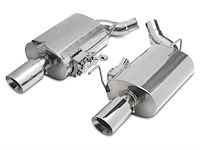
You can see both approaches from Corsa. The Corsa Sport cat-back fits the 2010-2013 Camaro SS, and the Corsa Sport axle-back fits the 2011-2014 Mustang GT. For a deeper breakdown, read our guide to cat-back vs. axle-back exhaust systems.
Which Exhaust Material and Layout Fit Your Build?
Choose stainless steel if you want stronger corrosion resistance and a longer-lasting finish. Aluminized steel usually costs less up front, but its coating can wear over time on wet or salted roads. Stainless steel is a smart pick for show cars and vehicles you plan to keep for years.
Next, pick a layout. A single exhaust routes everything through one pipe and keeps installation simple. A dual exhaust gives each cylinder bank of a V-engine its own pipe.
An X-pipe or H-pipe crossover links the two sides to balance exhaust pulses. Each crossover style also changes the exhaust note, so match it to the sound you're after.
For example, the Pypes Performance Exhaust stainless crossmember-back system is a dual exhaust with X-pipe for the 1966-1971 Fairlane. If your dual system doesn't include a crossover, you can add one from our H-pipe and X-pipe exhaust kits.
Which Performance Exhaust Brands Does JEGS Carry?
JEGS carries performance exhaust systems from Borla, Corsa, Flowmaster, MagnaFlow, Pypes and AWE Exhaust. Their kits cover classic muscle cars, modern performance cars, Jeeps and full-size trucks. Shop by brand when you already know the sound or fitment you want.
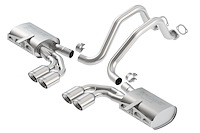
Borla offers the ATAK cat-back for the Jeep Grand Cherokee SRT 6.4L and an axle-back for the 1997-2004 C5 Corvette. Flowmaster's American Thunder header-back exhaust fits 1964-1967 GM A-Body V8s. You'll also find the MagnaFlow Street Series cat-back and the AWE 0FG cat-back for the RAM 1500 3.0TT.
Each brand builds its systems around its own muffler designs, so sound and feel vary between kits. If you're deciding between two well-known names, our Borla vs. Flowmaster exhaust comparison walks through the differences. Compare a few kits for your vehicle before you decide.
What Exhaust Parts Do You Need to Finish Your Build?
Many installs need a few supporting exhaust parts, so plan them with your system before you order. Start with what the kit includes, then fill the gaps. Check whether your kit includes clamps and tips or expects you to reuse factory hardware.
If your kit ships without mufflers, you'll need to pick your own mufflers to set the tone. Our guide to muffler types and exhaust sound explains how each design changes the note. Older or modified vehicles may also need new exhaust clamps to seal joints and stop leaks at slip-fit connections.
Add exhaust tips sized to your bumper openings and the look you want. For header-back builds, confirm that your headers match the kit's collector size and leave enough ground clearance. When your parts list is set, shop all headers and exhaust parts now to complete the system.

ADD A VEHICLE TO GUARANTEE PARTS FIT
See products that fit

ADD A VEHICLE TO GUARANTEE PARTS FIT
See products that fit
![Ultra Flo Welded Cat-Back Single Exhaust System for 2007-2008 Chevrolet Tahoe, GMC Yukon w/4.8L, 5.3L [Natural]](https://www.jegs.com/images/mini_100/200/289/289-39436.jpg)
DYNOMAX
Ultra Flo Welded Cat-Back Single Exhaust System for 2007-2008 Chevrolet Tahoe, GMC Yukon w/4.8L, 5.3L [Natural]
Part Number: 289-39436
 Ships on 10/19/2026Free shipping
 Lowest price guarantee
![Ultra Flo Welded Cat-Back Single Exhaust System for 2007-2008 Chevrolet Tahoe, GMC Yukon w/4.8L, 5.3L [Natural]](https://www.jegs.com/images/mini_200/200/289/289-39436.jpg)
DYNOMAX
Ultra Flo Welded Cat-Back Single Exhaust System for 2007-2008 Chevrolet Tahoe, GMC Yukon w/4.8L, 5.3L [Natural]
Part Number: 289-39436
Ships on 10/19/2026Free shippingLowest Price Guarantee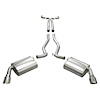
CORSA
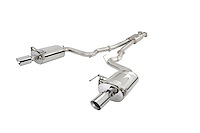
14954 Sport Cat-Back Exhaust System 2010-2013 Chevrolet Camaro SS & Converitble 6.2L
Part Number: 255-14954
Ships TodayFree shippingLowest price guarantee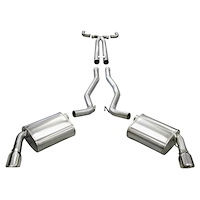
CORSA
14954 Sport Cat-Back Exhaust System 2010-2013 Chevrolet Camaro SS & Converitble 6.2L
Part Number: 255-14954
Ships TodayFree shippingLowest Price Guarantee![Cat-Back Exhaust System for Select Late-Model Jeep Grand Cherokee SRT 6.4L [ATAK]](https://www.jegs.com/images/mini_100/100/157/157-140633cb.jpg)
BORLA
Cat-Back Exhaust System for Select Late-Model Jeep Grand Cherokee SRT 6.4L [ATAK]
Part Number: 157-140633CB
Ships TodayFree shippingLowest price guarantee![Cat-Back Exhaust System for Select Late-Model Jeep Grand Cherokee SRT 6.4L [ATAK]](https://www.jegs.com/images/mini_200/100/157/157-140633cb.jpg)
BORLA
Cat-Back Exhaust System for Select Late-Model Jeep Grand Cherokee SRT 6.4L [ATAK]
Part Number: 157-140633CB
Ships TodayFree shippingLowest Price Guarantee
SHAFERS CLASSIC REPRODUCTIONS
73051 1960-1964 Chevrolet Full-Size Exhaust System
Part Number: 910-73051
Ships TodayFree shippingLowest price guarantee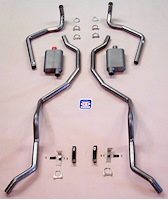
SHAFERS CLASSIC REPRODUCTIONS
73051 1960-1964 Chevrolet Full-Size Exhaust System
Part Number: 910-73051
Ships TodayFree shippingLowest Price Guarantee
FLOWMASTER
American Thunder Header-Back Exhaust System 1964-1967 GM A-Body V8
Part Number: 389-817412
Ships TodayFree shippingLowest price guarantee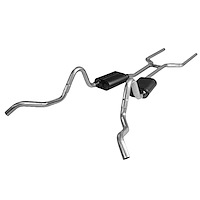
FLOWMASTER
American Thunder Header-Back Exhaust System 1964-1967 GM A-Body V8
Part Number: 389-817412
Ships TodayFree shippingLowest Price Guarantee

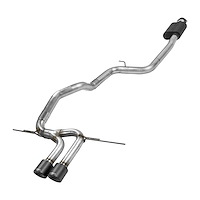
CORSA
14316BLK Sport Axle-Back Exhaust System 2011-2014 Ford Mustang GT, 2011-2013 Boss 302 5.0L
Part Number: 255-14316BLK
Ships TodayFree shippingLowest price guarantee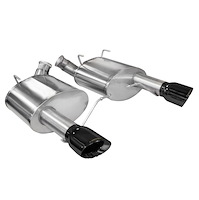
CORSA
14316BLK Sport Axle-Back Exhaust System 2011-2014 Ford Mustang GT, 2011-2013 Boss 302 5.0L
Part Number: 255-14316BLK
Ships TodayFree shippingLowest Price Guarantee
SHAFERS CLASSIC REPRODUCTIONS
84000 1966-1974 Bronco V8 302 Single Exhaust System
Part Number: 910-84000
Ships TodayFree shippingLowest price guarantee
SHAFERS CLASSIC REPRODUCTIONS
84000 1966-1974 Bronco V8 302 Single Exhaust System
Part Number: 910-84000
Ships TodayFree shippingLowest Price Guarantee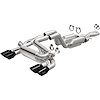
MAGNAFLOW
19598 Street Series Cat-Back Performance Exhaust System Fits Select Jeep Wrangler
Part Number: 642-19598
Ships TomorrowFree shippingLowest price guarantee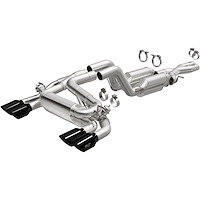
MAGNAFLOW
19598 Street Series Cat-Back Performance Exhaust System Fits Select Jeep Wrangler
Part Number: 642-19598
Ships TomorrowFree shippingLowest Price Guarantee
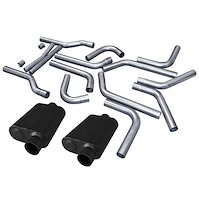
MAGNAFLOW
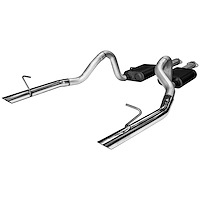
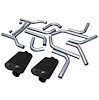
15701 Street Series Cat-Back Performance Exhaust System Fits Select Chevrolet, GMC Models
Part Number: 642-15701
Ships TodayLowest price guarantee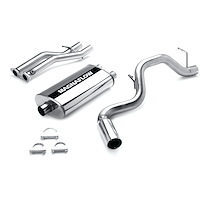
MAGNAFLOW
15701 Street Series Cat-Back Performance Exhaust System Fits Select Chevrolet, GMC Models
Part Number: 642-15701
Ships TodayLowest Price Guarantee
BORLA
140893CB ATAK Cat-Back Exhaust System Fits Select Jeep Wrangler Rubicon 392 JLU 6.4L V8
Part Number: 157-140893CB
Ships TodayLowest price guarantee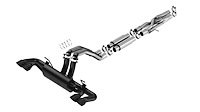
BORLA
140893CB ATAK Cat-Back Exhaust System Fits Select Jeep Wrangler Rubicon 392 JLU 6.4L V8
Part Number: 157-140893CB
Ships TodayLowest Price Guarantee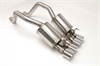
BILLY BOAT
Performance Cat-Back Gen 3 Fusion Exhaust 2006-13 Corvette C6 Z06/ZR1
Part Number: 071-FCOR-0561
Ships on 02/01/2027Lowest price guarantee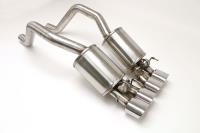
BILLY BOAT
Performance Cat-Back Gen 3 Fusion Exhaust 2006-13 Corvette C6 Z06/ZR1
Part Number: 071-FCOR-0561
Ships on 02/01/2027Lowest Price Guarantee
JEGS
Cat-Back Exhaust System for 1987-1993 Mustang LX/GT 5.0L and 1993 Cobra
Part Number: 555-30400
Ships on 10/19/2026Lowest price guarantee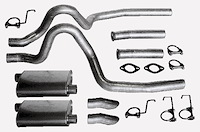
JEGS
Cat-Back Exhaust System for 1987-1993 Mustang LX/GT 5.0L and 1993 Cobra
Part Number: 555-30400
Ships on 10/19/2026Lowest Price Guarantee
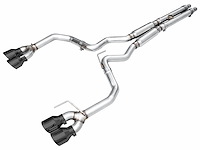
CORSA
21006BLK Xtreme Cat-Back Exhaust System 2017-2019 Dodge Challenger R/T 5.7L V8 - Black Tips
Part Number: 255-21006BLK
Ships on 12/22/2026Lowest price guarantee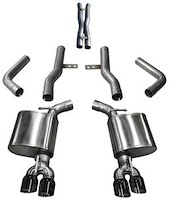
CORSA
21006BLK Xtreme Cat-Back Exhaust System 2017-2019 Dodge Challenger R/T 5.7L V8 - Black Tips
Part Number: 255-21006BLK
Ships on 12/22/2026Lowest Price Guarantee
AWE EXHAUST
AWE SwitchPath Exhaust System for 2019+ Mercedes-Benz W205 AMG C63/S Sedan - Dynamic Performance Exhaust cars (no tips)
Part Number: 090-3025-11006
Ships on 10/23/2026Lowest price guarantee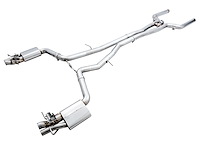
AWE EXHAUST
AWE SwitchPath Exhaust System for 2019+ Mercedes-Benz W205 AMG C63/S Sedan - Dynamic Performance Exhaust cars (no tips)
Part Number: 090-3025-11006
Ships on 10/23/2026Lowest Price Guarantee
CORSA
21001GNM Active Valved Cat-Back Exhaust System 2018-2019 Ford Mustang GT Fastback 5.0L
Part Number: 255-21001GNM
Ships on 12/22/2026Lowest price guarantee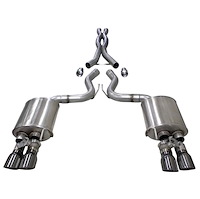
CORSA
21001GNM Active Valved Cat-Back Exhaust System 2018-2019 Ford Mustang GT Fastback 5.0L
Part Number: 255-21001GNM
Ships on 12/22/2026Lowest Price Guarantee
Frequently Asked Questions About Exhaust Systems
Does a Cat-Back Exhaust System Affect Emissions Compliance?
A cat-back system keeps the factory catalytic converter, so your main emissions hardware stays in place. Emissions and noise rules still vary by state. Check the product listing and your local regulations before you buy.
Which Is Louder, a Cat-Back or an Axle-Back?
Volume depends mostly on the muffler design and pipe size each kit uses. A cat-back changes more of the system, so it can alter the sound more than an axle-back. Read each product's sound description to compare kits for your vehicle.
Can I Install an Exhaust System Kit at Home?
Many bolt-on cat-back and axle-back kits go in with basic hand tools and safe vehicle support. Header-back and weld-in systems can take more time or need professional welding. Always support the vehicle securely before you work underneath it.
How Do I Know an Exhaust System Fits My Vehicle?
Use the JEGS Add a Vehicle fitment tool to enter your year, make, model and engine. Your results then show exhaust system kits listed for your vehicle. Double-check the product notes for transmission, drivetrain or body-style limits before you order.
Do I Need a Tune After Installing a Performance Exhaust?
It depends on your vehicle and how much of the system you change. Check the manufacturer's installation notes first, since some kits list tuning recommendations. If you're unsure, ask a qualified tuning shop before you drive hard.