


 Order Status & Returns
 Gift Cards
 Help Center
 1-800-345-4545
Turbo Kits & Turbos
Turbochargers use exhaust gas to spin a turbine that drives a compressor, packing more air into your engine so it can make more power. You'll find standalone turbos, complete turbo kits, and diesel and replacement units for street, strip, and towing builds. Use the Add a vehicle selector to narrow results to parts that fit your car or truck.
Show More
How to Choose Turbochargers for Your Build
Start with your power goal. A larger turbo can support more power, but it takes longer to spool, so you'll feel more lag before boost comes in. A smaller turbo responds quicker but runs out of airflow sooner at high rpm.
Next, pick a layout: the twin-turbo vs single turbo choice comes down to packaging, response, and budget. One turbo keeps plumbing simple, while two smaller units can spool faster and suit V-engine layouts. Twin-scroll and variable geometry designs are other options covered in our guide to the different types of turbochargers.
Then check the A/R ratio and inlet flange so the turbo matches your manifold. A mismatched flange means extra adapters or fabrication work. Use the Add a vehicle selector to filter by fitment, and browse all superchargers and turbochargers if you're still comparing power adders.
Turbo Kits vs Standalone Turbochargers
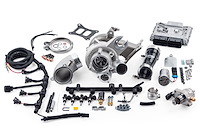
Turbo kits bundle the parts you need to add boost to your engine. A typical turbocharger kit includes the turbo, intercooler, wastegates, blow-off valves, piping, and manifolds. A vehicle-specific kit needs less custom fabrication, so it's the faster path for most street builds.
The Chevrolet Performance Performance Turbocharger Upgrade Kit is one kit available in this category. It's a good fit if you want matched components from one source. Read our turbo kit basics guide to see how each component works together before you order.
A standalone turbo makes sense when you're building a custom system or upgrading an existing setup. You'll choose the manifold, wastegate, and piping yourself, which gives you more control but adds fabrication time. Before you buy, review our guide on how to buy a turbo kit online for tips on comparing your options.
Billet and Cast Turbochargers for Performance Builds
A billet turbocharger uses a compressor wheel machined from solid stock, while a cast wheel is formed in a mold. VS Racing offers billet T-Series and S400 Series turbos plus cast GT-Series units. Many VS Racing designs use an external wastegate, so you'll mount a separate wastegate on the exhaust manifold.
These examples show how flange type and A/R vary across the category:
- 7875 billet turbo with a T4 inlet flange and 0.96 A/R
- 88 mm billet S400 turbo with a T6 flange and 1.32 A/R
- 62/62 dual V-band turbo with a 2.5 in. inlet and reverse rotation
- Cast GT-Series turbo with a 0.83 A/R
- Turbosmart TS-1 62/62 V-band turbo with a 0.82 A/R and internal wastegate
Match the inlet flange to your manifold, whether it's T3, T4, T6, or V-band. Then choose a larger A/R for top-end flow or a smaller A/R for quicker spool.
Diesel and Replacement Turbochargers
A diesel turbocharger has to handle heavy loads and sustained boost, especially when you're towing. BD Diesel offers Iron Horn Cummins turbo kits for 2003-2007 Dodge 5.9L and 2007.5-2018 6.7L engines. You'll also find the Screamer HX35, S400 heavy-duty turbos, and a remanufactured Duramax L5P turbo for 2020-2023 trucks.
If your factory unit has failed, a replacement turbocharger gets you back on the road without redesigning the system. Rotomaster offers a replacement turbocharger for select Buick and Cadillac applications. Use the Add a vehicle selector to confirm the part matches your year, make, model, and engine.
When you're choosing between stock-style and upgraded diesel turbos, consider your power goals and any tuning or fueling changes. A larger unit can support more power but may need other upgrades to run correctly. Have your engine code handy, since some models share body styles but use different turbos.
Supporting Parts for a Turbo Setup
A turbo needs supporting hardware to make reliable boost. Shop turbocharger accessories for the parts that install, control, and protect your turbo. Heat management matters too, and BD Diesel T4 turbo blankets help contain heat in the engine bay.
Wastegates and blow-off valves manage boost pressure, so size them to your turbo and target boost level.
Compressing air makes it hot, so most builds add an intercooler to cool the charge before it reaches the engine. Browse intercoolers and heat exchangers to match core size to your power goals. A cooler charge is denser, which helps your engine make consistent power.
Don't overlook fuel, oil, and tuning. More air needs more fuel, and the turbo needs a steady oil supply and drain. Plan these upgrades with your turbo so the whole system works together, then shop the turbochargers on this page.

ADD A VEHICLE TO GUARANTEE PARTS FIT
See products that fit

ADD A VEHICLE TO GUARANTEE PARTS FIT
See products that fit
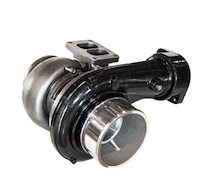
![TS-1 Performance Turbocharger 62/62 V-Band 0.82 AR [Internal Wastegate]](https://www.jegs.com/images/mini_100/900/911/911-26262bvb082i.jpg)
TURBOSMART
TS-1 Performance Turbocharger 62/62 V-Band 0.82 AR [Internal Wastegate]
Part Number: 911-26262BVB082I
 Ships on Oct 19, 2026
 Lowest price guarantee
![TS-1 Performance Turbocharger 62/62 V-Band 0.82 AR [Internal Wastegate]](https://www.jegs.com/images/mini_200/900/911/911-26262bvb082i.jpg)
TURBOSMART
TS-1 Performance Turbocharger 62/62 V-Band 0.82 AR [Internal Wastegate]
Part Number: 911-26262BVB082I
Ships on Oct 19, 2026Lowest Price Guarantee![VSR7875NXT96O Next Gen 7875 Billet T-Series Turbocharger, T4 Inlet Flange, 0.96 A/R Ratio [External Wastegate]](https://www.jegs.com/images/mini_100/600/661/661-j000003.jpg)
VS RACING
VSR7875NXT96O Next Gen 7875 Billet T-Series Turbocharger, T4 Inlet Flange, 0.96 A/R Ratio [External Wastegate]
Part Number: 661-J000003
Ships on Oct 19, 2026Lowest price guarantee![VSR7875NXT96O Next Gen 7875 Billet T-Series Turbocharger, T4 Inlet Flange, 0.96 A/R Ratio [External Wastegate]](https://www.jegs.com/images/mini_200/600/661/661-j000003.jpg)
VS RACING
VSR7875NXT96O Next Gen 7875 Billet T-Series Turbocharger, T4 Inlet Flange, 0.96 A/R Ratio [External Wastegate]
Part Number: 661-J000003
Ships on Oct 19, 2026Lowest Price Guarantee![VSR400-X80 80 mm Billet S400 Series Turbocharger, T6 Inlet Flange, 1.32 A/R Ratio [External Wastegate]](https://www.jegs.com/images/mini_100/600/661/661-st07-400-x80.jpg)
VS RACING
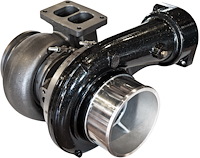
VSR400-X80 80 mm Billet S400 Series Turbocharger, T6 Inlet Flange, 1.32 A/R Ratio [External Wastegate]
Part Number: 661-ST07-400-X80
Ships on Oct 19, 2026Lowest price guarantee![VSR400-X80 80 mm Billet S400 Series Turbocharger, T6 Inlet Flange, 1.32 A/R Ratio [External Wastegate]](https://www.jegs.com/images/mini_200/600/661/661-st07-400-x80.jpg)
VS RACING
VSR400-X80 80 mm Billet S400 Series Turbocharger, T6 Inlet Flange, 1.32 A/R Ratio [External Wastegate]
Part Number: 661-ST07-400-X80
Ships on Oct 19, 2026Lowest Price Guarantee![480-S75 80 NG Aero Billet S400 Series Turbocharger, T4 Inlet Flange, 1.1 A/R Ratio [External Wastegate]](https://www.jegs.com/images/mini_100/600/661/661-st07-480-x75.jpg)
VS RACING
480-S75 80 NG Aero Billet S400 Series Turbocharger, T4 Inlet Flange, 1.1 A/R Ratio [External Wastegate]
Part Number: 661-ST07-480-X75
Ships on Oct 19, 2026Lowest price guarantee![480-S75 80 NG Aero Billet S400 Series Turbocharger, T4 Inlet Flange, 1.1 A/R Ratio [External Wastegate]](https://www.jegs.com/images/mini_200/600/661/661-st07-480-x75.jpg)
VS RACING
480-S75 80 NG Aero Billet S400 Series Turbocharger, T4 Inlet Flange, 1.1 A/R Ratio [External Wastegate]
Part Number: 661-ST07-480-X75
Ships on Oct 19, 2026Lowest Price Guarantee![VSRTB7665BLT 76/65 Billet T-Series Turbocharger, T4 Inlet Flange, 0.81 A/R Ratio [External Wastegate]](https://www.jegs.com/images/mini_100/600/661/661-vsrtb7665blt.jpg)
VS RACING
VSRTB7665BLT 76/65 Billet T-Series Turbocharger, T4 Inlet Flange, 0.81 A/R Ratio [External Wastegate]
Part Number: 661-VSRTB7665BLT
Ships on Oct 19, 2026Lowest price guarantee![VSRTB7665BLT 76/65 Billet T-Series Turbocharger, T4 Inlet Flange, 0.81 A/R Ratio [External Wastegate]](https://www.jegs.com/images/mini_200/600/661/661-vsrtb7665blt.jpg)
VS RACING
VSRTB7665BLT 76/65 Billet T-Series Turbocharger, T4 Inlet Flange, 0.81 A/R Ratio [External Wastegate]
Part Number: 661-VSRTB7665BLT
Ships on Oct 19, 2026Lowest Price Guarantee

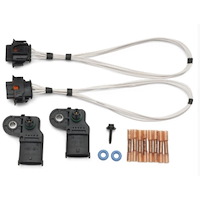
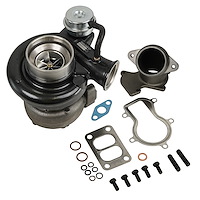
BD DIESEL
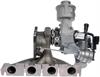
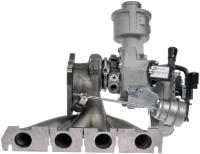
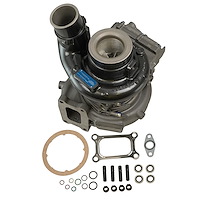
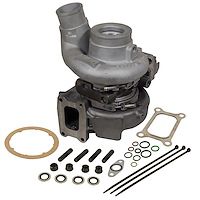
1045778 6.7L Cummins Turbo Stock Replacement Dodge 2013-2018 Pick-up HE300VG
Part Number: 151-1045778
Ships on Oct 19, 2026Lowest price guarantee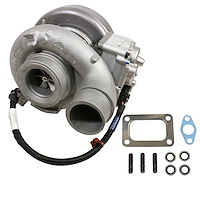
BD DIESEL
1045778 6.7L Cummins Turbo Stock Replacement Dodge 2013-2018 Pick-up HE300VG
Part Number: 151-1045778
Ships on Oct 19, 2026Lowest Price Guarantee
ROTOMASTER
M1040106N Replacement Turbocharger Select Buick Envision, Buick Regal Sportback, Buick Regal, Buick Regal TourX, Cadillac CTS
Part Number: 464-M1040106N
Ships on Oct 19, 2026Lowest price guarantee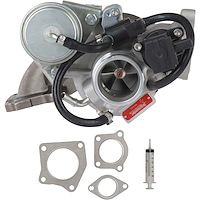
ROTOMASTER
M1040106N Replacement Turbocharger Select Buick Envision, Buick Regal Sportback, Buick Regal, Buick Regal TourX, Cadillac CTS
Part Number: 464-M1040106N
Ships on Oct 19, 2026Lowest Price Guarantee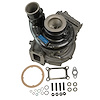
Frequently Asked Questions About Turbochargers
What does A/R ratio mean on a turbo?
A/R compares a housing's cross-sectional area to the distance from that area's center to the turbo's centerline. A smaller A/R spools quicker for faster response, while a larger A/R flows more at high rpm. Turbos in this category include A/R options such as 0.82 and 1.32.
What's the difference between an internal and external wastegate?
An internal wastegate is built into the turbine housing, like the one on the Turbosmart TS-1. An external wastegate mounts separately on the exhaust manifold and routes exhaust gas around the turbine. External units take more plumbing but give you more boost control on high-power builds.
Do I need an intercooler with a turbo?
Most turbo builds benefit from one. Compressing air raises its temperature, and hotter air is less dense and more prone to detonation. An intercooler cools the charge so your engine can make more power safely.
What is a reverse rotation turbo?
A reverse rotation turbo spins in the opposite direction of a standard unit. It's used in twin setups so the two turbos mirror each other and the plumbing lines up on each side of the engine. Check the rotation listed on each product before you order a pair.
Can I turbocharge a naturally aspirated engine?
Yes, if you plan for the full system. You'll need a manifold, intercooler, piping, wastegate, fuel upgrades, and tuning, and many builders also strengthen internals for higher boost. A complete turbo kit simplifies the job by grouping the main components.