


 Order Status & Returns
 Gift Cards
 Help Center
 1-800-345-4545
Race Car Window Nets & Kits
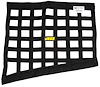
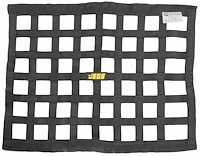
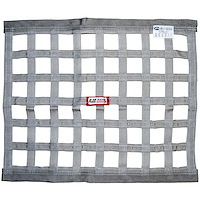
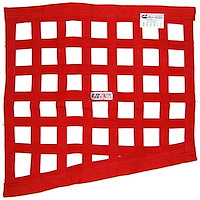
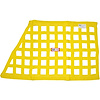
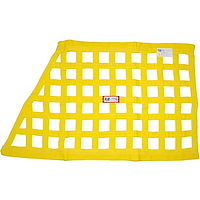
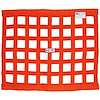
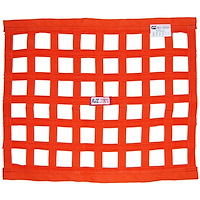
Race car window nets keep your arms and head inside the cockpit and help block debris when things go wrong on track. You'll find ribbon and mesh styles, SFI 27.1-certified and non-SFI options, plus kits and latches to finish the install. Filter by SFI rating, material, color, size, brand and part type to find the net that fits your car and your rulebook.
Show More
What Do Race Car Window Nets Do?
Race car window nets keep your arms, hands and head inside the car during a crash or rollover. They also help block debris from coming through the driver's window opening.
In a hard hit, your body wants to follow the car's momentum. Without a net, an arm can swing out the window and get pinned or struck. That's why the net works as part of a system. Pair it with properly mounted racing seat belts and harnesses and arm, head and neck restraints that keep you planted in the seat.
Many sanctioning bodies and tracks require a window net, and some spell out the type, rating and mounting method. Rules change by class and by season, so check your current rulebook before you buy. On a new build, plan the net, mounts and latch around your cage layout. Shop all roll bar padding and window nets to outfit the whole cockpit.
Ribbon vs. Mesh Racing Window Nets
Ribbon and mesh nets do the same job, but they differ in construction and look. Here's how the main styles compare:
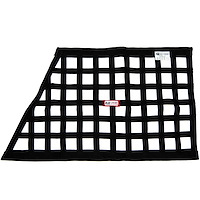
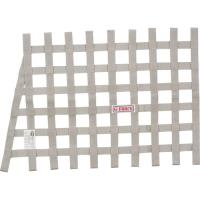
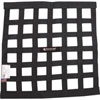
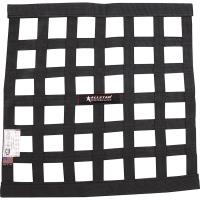
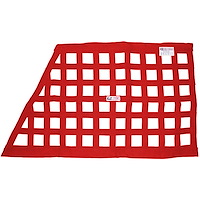
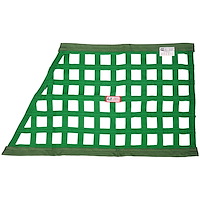
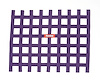
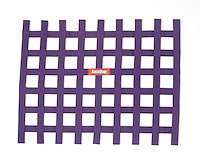
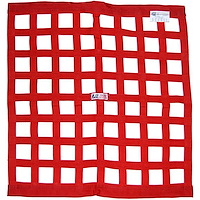
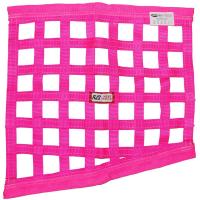
- Ribbon window nets use woven strips of webbing laid out in a grid pattern.
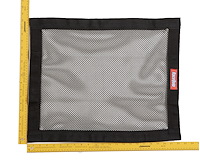
- Mesh window nets use netting with smaller openings between the strands.
- Angle, square, oblong and trapezoid shapes help you match different window openings.
You'll see both styles across the lineup. G-Force offers an Angle Ribbon Window Net, while Allstar Performance makes a square ribbon net and an oblong SFI 27.1 net. RJS Racing Equipment builds a Grand National ribbon net rated to SFI 27.1.
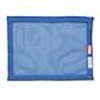
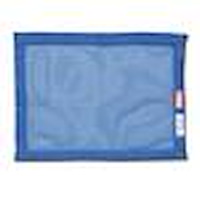
If you want mesh, RaceQuip window nets include an SFI 27.1 mesh net that measures 15 in. H x 18 in. W. Other common sizes include 18 x 24 in. and 18 x 18 in. Whichever you choose, measure your opening before you pick a ribbon window net or a mesh window net.
SFI 27.1 vs. Non-SFI Window Nets
An SFI 27.1 window net is certified to the SFI Foundation's window net specification and carries a label to prove it. A non-SFI net isn't certified, so it only makes sense where your rules don't call for a rating.
Tech inspectors look for that label. If your rulebook calls for SFI 27.1, a non-SFI net won't pass, no matter how clean the install is. Some classes and tracks leave the choice to you, and that's where a non-SFI net can fit your budget. Prices vary by style and rating, so compare options with the SFI Rating filter on this page.
SFI-rated gear also has date-based certification. The label shows when the net was made, and that date decides how long it stays legal for competition. Before you buy a new net or reuse an old one, read up on how long SFI-rated parts last before recertification. It's an easy check that can save you a failed inspection.
How to Choose a Window Net Kit and Mounting Hardware
Start with the rules, then work through fit and hardware. Check these points before you add a window net kit to your cart:
- Measure the window opening and compare it to the listed net dimensions.
- Match the SFI rating to what your sanctioning body requires.
- Confirm how the net attaches to your cage and door bars.
- Choose a window net latch that you and safety crews can release quickly.
A bare net assumes you already have mounting hardware in the car. If you don't, plan for a window net mounting kit and a quick-release latch. RJS offers an installation kit for oblong window nets, and you'll find more mount kits and latches in window net mounts.
Mount the net tight enough that it can't balloon out in a crash, but make sure it releases cleanly when you need out. While you're working in the cockpit, review race harness requirements and expiration rules for your belts too.
Window Nets for Oval, Drag, Sprint Car and Quarter Midget Racing
The right net depends on the car you run and the rules you race under. Oval-track stock cars often use a NASCAR-style window net or a ribbon net built for full-bodied cars.
Simpson offers a trapezoid 16 x 27 in. NASCAR-style net, and the RJS Grand National net is another ribbon option rated to SFI 27.1. Drag racers running door cars should check their class rules, since net requirements often depend on the car and how fast it runs. Simpson also makes a driver net made to fit Corvette.
Open-cockpit cars have their own options. Simpson sprint car driver nets are SFI rated for sprint car use, and RaceQuip offers a quarter midget (QMA) roof cage net for young racers. Your net is only one layer of protection, so check race helmet ratings and regulations for your class too. Shop all race car window nets on this page, then round out your gear with racing helmets and accessories.

ADD A VEHICLE TO GUARANTEE PARTS FIT
See products that fit

ADD A VEHICLE TO GUARANTEE PARTS FIT
See products that fit

 Lowest price guarantee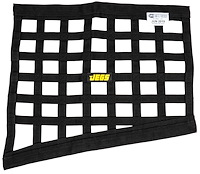
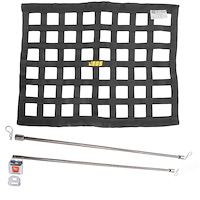
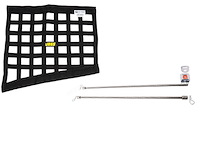
![Wheelie Bar Net 12 in. L x 48 in. H [Black]](https://www.jegs.com/images/mini_100/500/555/555-70047.jpg)
![Wheelie Bar Net 12 in. L x 48 in. H [Black]](https://www.jegs.com/images/mini_200/500/555/555-70047.jpg)
Frequently Asked Questions About Race Car Window Nets
How much do race car window nets cost?
Race car window nets on this page run roughly $20 to $220. Prices vary by style, size, brand and SFI rating. If your car doesn't have mounts or a latch yet, budget for that hardware too.
Are window nets required for racing?
Many sanctioning bodies and tracks require a window net, especially for full-bodied cars. Requirements for rating, style and mounting vary by class. Check your current rulebook or ask your tech inspector before you buy.
Which side of the car does a window net go on?
A window net goes in the driver's window opening, which is the left side on most race cars. Some classes also call for a net on the passenger side. Your rulebook will tell you where nets are required for your car.
How do I measure for a racing window net?
Measure the height and width of the window opening where the net will mount. Compare those numbers to the listed net sizes, such as 18 x 24 in. or 18 x 18 in. Factor in your mounting hardware so the net sits tight once it's installed.
What do race cars use for windows?
Many race cars swap glass for Lexan or polycarbonate windows because they're lightweight and impact-resistant. Others run an open window opening with a net covering the driver's side. Check your class rules for window material and net requirements before you buy.