


 Order Status & Returns
 Gift Cards
 Help Center
 1-800-345-4545
Carburetor Spacers
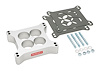
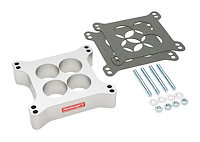
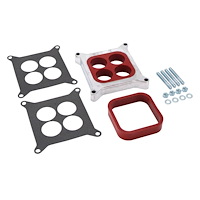
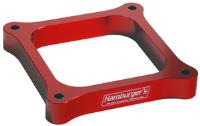
A carburetor spacer raises your carb off the intake manifold to add plenum volume, tune airflow, and cut heat transfer into the carburetor. This category covers open, 4-hole, ported, and tapered spacers in phenolic, aluminum, and wood, in 1/4", 1/2", 1", and 2" heights for 4150/4160 square-bore, 4500 Dominator, 2-bbl, and AFB/AVS flanges. You'll find trusted performance brands and fitment-focused options, all backed by the JEGS Price Match Guarantee.
Show More
How Does a Carburetor Spacer Work?
A carburetor spacer sits between the carburetor and the intake manifold, raising the carb and changing how the air/fuel charge enters the plenum. Depending on its design, it can add plenum volume, keep flow divided by bore, or slow heat transfer into the carb. That makes a carb spacer one of the simplest tuning parts you can bolt on.
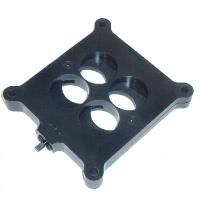
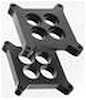
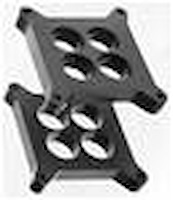
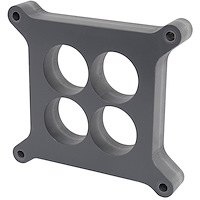
An open carb spacer increases plenum area, which tends to help midrange and upper-rpm power. A 4-hole carb spacer keeps flow split through individual bores, which generally improves part-throttle operation and builds low-end and midrange torque. Phenolic and wood spacers add a third benefit by insulating the carb from engine heat.
A spacer doesn't replace carb tuning, though. After you install one, check idle, mixture, and throttle response with our carburetor tuning guide. If you're still sorting out the fundamentals, these answers to common carburetor questions are a good place to start.
Open vs. 4-Hole vs. Tapered Carb Spacers: What's the Difference?
The right style depends on where you want power: part-throttle response and low-end torque, or midrange and top-end pull. Each design shapes airflow differently, so match the spacer to how you drive. Here's how the main carb spacer styles compare.
- An open carb spacer adds plenum volume for more midrange and top-end horsepower.
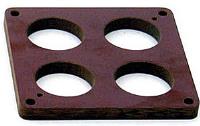
- A 4-hole carb spacer generally improves part-throttle operation and builds low-end and midrange torque.
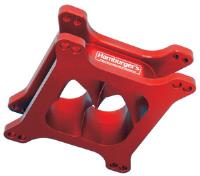
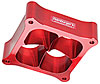
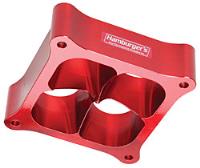
- A tapered carb spacer uses angled bores to transition flow from the carburetor into the manifold.
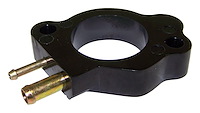
- A ported spacer adds vacuum port connections for hoses and accessories.
Not sure which style fits? A 4-hole spacer suits a street car that spends most of its time at part throttle. An open spacer suits an engine that lives at higher rpm.
You'll also find specialty designs for specific setups. Allstar Performance offers Hi-Flow 4-hole and Hi-Flow open spacers, plus carb shear plates for 4500-flange carbs. Holley offers a 12-degree wedge plate for square-bore carburetors.
Which Carburetor Spacer Material Is Best?
If heat control is your priority, choose phenolic or wood. Aluminum makes sense when insulation isn't your main goal and you want a machined metal part. Here's how each material compares.
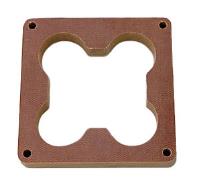
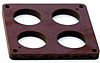
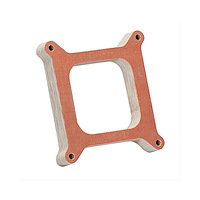
- A phenolic carburetor spacer lowers heat transfer from the intake manifold to the carb.
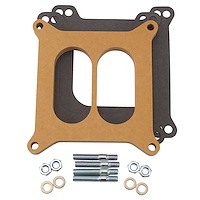
- Wood spacers, such as the Edelbrock wood design line, also insulate the carb from engine heat.
- Plastic or bakelite spacers are another insulating option for square-bore carburetors.
- An aluminum carb spacer, in billet 6061-T6 or cast form, transfers heat rather than blocking it.
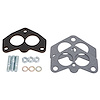
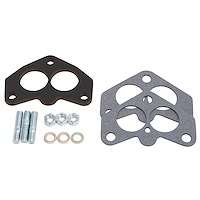
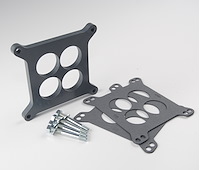
JEGS phenolic spacers include gaskets and mounting hardware, so you can install them without hunting for extra parts. Mr. Gasket covers both materials, with phenolic open spacers and aluminum spacers in 1" open, 2" open, and 1" ported versions.
Match the material to your goal before you pick a height. A cooler carb is the main reason to choose an insulating spacer. Pick aluminum for its airflow design, since it won't insulate the carb.
How Do You Choose the Right Carb Spacer Height and Flange?
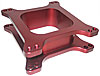
Start with the flange, then pick the height. Your spacer must match your carburetor's base pattern: Holley 4150/4160 square-bore, 4500 Dominator, Holley 2-bbl, or AFB/AVS.
If your carb and manifold don't share a pattern, you'll need carburetor adapter plates instead of a standard spacer. Many sizes come in both ported and non-ported versions, so decide whether you need extra vacuum sources before you order.
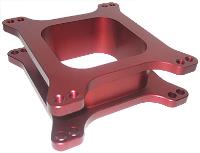
Heights here include 1/4", 1/2", 1", and 2". A taller spacer adds more plenum volume, but it also raises the carb and air cleaner more.
So is a 2" spacer better than a 1"? Only if your hood clearance and your combination can use the extra volume. Different spacer heights let you fine-tune your combination to track or altitude conditions, so think about where you'll run the car.
Still choosing a carb? Browse our performance carburetors and read up on how to choose the right carburetor before you settle on a spacer.
What Should You Check Before Installing a Carb Spacer?
Check clearance first. A spacer raises the carburetor, so measure the space between your air cleaner and the underside of the hood before you order. Even a 1" spacer can create a clearance problem under a low hood.
Next, confirm the flange pattern on both the spacer and your carb. A mismatch can leave bores partly blocked or bolt holes out of line.
Also check whether your spacer includes gaskets, since you'll need a seal on each side. If you're adding a ported spacer, plan your vacuum hose routing before the carb goes back on.
Finally, plan to retune. A spacer changes plenum volume and airflow, so your idle and mixture settings may need adjusting after installation. Start with a baseline, make one change at a time, and test drive between adjustments.
Shop all carburetors and accessories to complete your fuel system upgrade.

ADD A VEHICLE TO GUARANTEE PARTS FIT
See products that fit

ADD A VEHICLE TO GUARANTEE PARTS FIT
See products that fit

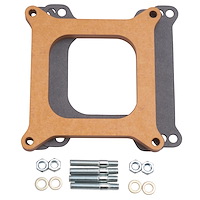


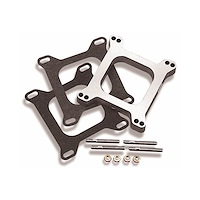
![8 Degree Carburetor Wedge Plate for Circle Track, Quad Adaption C Carb [Natural Aluminum]](https://www.jegs.com/images/mini_100/700/750/750-5045-b.jpg)
OFFENHAUSER
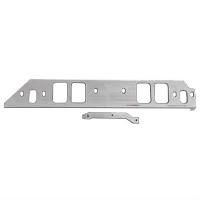
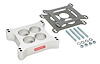
8 Degree Carburetor Wedge Plate for Circle Track, Quad Adaption C Carb [Natural Aluminum]
Part Number: 750-5045-B
 Ships on 10/21/2026
 Lowest price guarantee
![8 Degree Carburetor Wedge Plate for Circle Track, Quad Adaption C Carb [Natural Aluminum]](https://www.jegs.com/images/mini_200/700/750/750-5045-b.jpg)
OFFENHAUSER
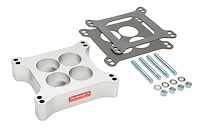
8 Degree Carburetor Wedge Plate for Circle Track, Quad Adaption C Carb [Natural Aluminum]
Part Number: 750-5045-B
Ships on 10/21/2026Lowest Price Guarantee



Frequently Asked Questions About Carburetor Spacers
Do Carburetor Spacers Add Horsepower?
They can, but results depend on your combination. Cam, manifold, carb size, and tuning all affect what a spacer delivers. Plan to retune after installation to get the most from it.
Can You Stack Carburetor Spacers?
Yes. Stacking or combining spacer types is common, such as pairing an open spacer with a 4-hole spacer. Check the total height against your hood clearance before you commit.
Will a Carb Spacer Help With Heat Soak?
A phenolic or wood spacer can help, because both insulate the carb from intake manifold heat. An aluminum spacer transfers heat, so it won't do much for heat soak.
Do You Need Longer Carb Studs With a Spacer?
Often, yes. A taller spacer raises the carb, so your existing studs may be too short to fully thread the nuts. Measure the combined height of the spacer, gaskets, and carb base before you buy studs.
Can You Use a Phenolic Spacer on a Manifold With a Heat Crossover?
Not with JEGS phenolic spacers. They're not for use with stock manifolds that have heat crossovers. Check your manifold design before you order.