


 Order Status & Returns
 Gift Cards
 Help Center
 1-800-345-4545
Coolant Overflow Tanks & Expansion Catch Cans
Coolant overflow tanks catch the coolant your radiator pushes out as it heats up, then return it as the engine cools. This JEGS category covers radiator overflow tanks, coolant recovery tanks, pressurized expansion tanks, OE-style reservoirs, and transmission and oil catch cans. You'll find universal aluminum and plastic tanks for custom builds along with direct-fit reservoirs for specific cars and trucks.
Show More
What a Coolant Overflow Tank Does
A coolant overflow tank holds coolant that expands out of your radiator as it heats up, then returns it as the engine cools. It's a non-pressurized tank, so the pressure cap sits on the radiator. When pressure climbs past the cap's rating, coolant flows through the cap and into the tank.
As the engine cools, the radiator pulls that coolant back in, which keeps the core full and helps keep air out of the system. That's why the tank and cap work as a pair, so check your radiator caps when you replace a tank. A worn seal or weak spring can let coolant leave early or keep it from returning.
A system that can't hold its coolant level can also lead to a P2181 cooling system performance code on later-model vehicles. When you're ready to finish the job, shop JEGS radiators and radiator components for tanks, hoses, and hardware.
Overflow Tank vs. Coolant Expansion Tank
An overflow tank only stores extra coolant, while a coolant expansion tank is pressurized and part of the circulating system. On an expansion tank, also called a degas bottle, the pressure cap sits on the tank itself. Coolant circulates through it whenever the engine runs.
An overflow tank, often called a coolant recovery tank, sits outside that loop. It only receives coolant through the radiator cap and sends it back as the engine cools. Because the two designs handle pressure differently, you can't swap one for the other without changing where the cap lives.
Start by finding your factory pressure cap. If it's on the radiator, you need an overflow tank, and if it's on the reservoir, you need a pressurized expansion tank. Dorman Products offers both types, including a heavy-duty pressurized reservoir for 2001-2011 Freightliner trucks and a non-pressurized reservoir for 1984-1988 Toyota models.
For a custom aluminum upgrade, Mishimoto offers an aluminum coolant expansion tank.
Coolant Overflow Tank Materials and Styles
Most coolant overflow tanks here are aluminum or plastic, and your pick comes down to finish, mounting space, and how you want coolant handled. Aluminum tanks come in polished, powder-coated, and anodized finishes for a clean engine bay. Plastic tanks are a simple, functional choice.
Here are examples of the sizes and styles you'll find:
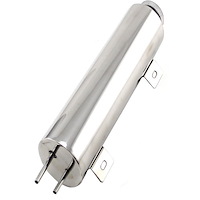
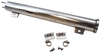
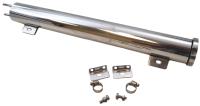
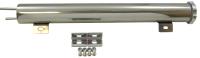
- Champion Cooling Systems radiator overflow tank, 2 in. D x 13 in. L, polished or black powder-coated
- Proform billet aluminum radiator overflow canisters, 6-3/4" tall x 3" diameter, anodized black
- Allstar Performance plastic non-recovery overflow tank with a drain
- Canton Racing Products coolant recovery tanks in 8-1/2" x 7" x 4" and 8" x 5" x 4" sizes
Measure your mounting area before you order, since tall, narrow canisters and box-style tanks fit very different spaces. A non-recovery tank with a drain holds coolant until you empty it by hand.
Choosing a Universal or Direct-Fit Radiator Overflow Tank
Choose a universal radiator overflow tank for custom builds and a direct-fit reservoir when you want a factory-style replacement. Universal tanks, like the Moroso 2-quart catch/overflow/recovery tank, mount wherever you have room. Direct-fit reservoirs match the original mounting points and hose locations for a specific vehicle.
This category includes OE coolant reservoirs for select Dodge Challenger and Charger models and an overflow tank for the 2001-2007 GM 6.6L Duramax. Confirm your year, make, model, and engine before you order a direct-fit part.
For a universal tank, plan the hose route from your radiator neck and pick a spot that's easy to see and fill. If you're upgrading to one of our performance radiators, our guide to installing an aluminum radiator in a classic car covers fitment. You may also need new thermostats, housings, and hoses to finish the swap.
Transmission and Oil Catch Cans
Transmission and oil catch cans collect fluid or oil vapor that would otherwise vent onto the ground or into your intake. A transmission overflow catch can captures fluid pushed out of the transmission vent. This category includes transmission overflow catch cans and deep pan kits for GM Powerglide and TH400 automatics.
An oil catch can mounts in the PCV line and separates oil from crankcase vapor before it reaches the intake. Mishimoto also offers baffled PCV-side oil catch cans for the 2017 and newer Honda Civic Type R.
You'll also find replacement caps, hardware, and billet coolant reservoir cap covers for Corvette LT2 and Z06 applications. These parts let you refresh the pieces around your tank, and billet cap covers give the engine bay a finished look. Shop all cooling, heating, and A/C parts to complete your system.

ADD A VEHICLE TO GUARANTEE PARTS FIT
See products that fit

ADD A VEHICLE TO GUARANTEE PARTS FIT
See products that fit
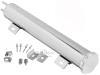
CHAMPION COOLING SYSTEMS
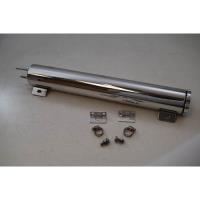
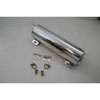
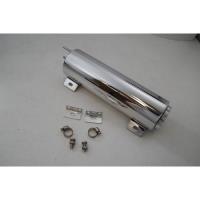
Radiator Overflow Tank 2 in. D x 13 in. L - Polished Finish
Part Number: 166-OF2X13
 Ships on Oct 19, 2026
 Lowest price guarantee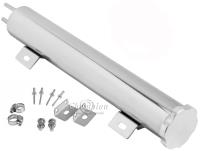
CHAMPION COOLING SYSTEMS
Radiator Overflow Tank 2 in. D x 13 in. L - Polished Finish
Part Number: 166-OF2X13
Ships on Oct 19, 2026Lowest Price Guarantee
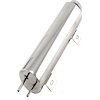
![Universal Aluminum Coolant Overflow Tank [Polished Finish]](https://www.jegs.com/images/mini_100/700/746/746-pce188.1019.jpg)
![Universal Aluminum Coolant Overflow Tank [Polished Finish]](https://www.jegs.com/images/mini_200/700/746/746-pce188.1019.jpg)

MISHIMOTO
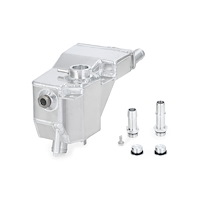
MMBCC-CTR-17PBERD2 Baffled Oil Catch Can, PCV Side, fits Honda Civic Type R 2017+
Part Number: 690-811580032660
Ships on Oct 19, 2026Lowest price guarantee
MISHIMOTO
MMBCC-CTR-17PBERD2 Baffled Oil Catch Can, PCV Side, fits Honda Civic Type R 2017+
Part Number: 690-811580032660
Ships on Oct 19, 2026Lowest Price Guarantee
MISHIMOTO
MMBCC-CTR-17PBEBK2 Baffled Oil Catch Can, PCV Side, fits Honda Civic Type R 2017+
Part Number: 690-811580032653
Ships on Oct 19, 2026Lowest price guarantee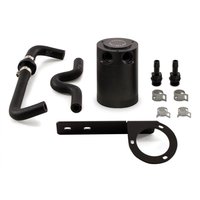
MISHIMOTO
MMBCC-CTR-17PBEBK2 Baffled Oil Catch Can, PCV Side, fits Honda Civic Type R 2017+
Part Number: 690-811580032653
Ships on Oct 19, 2026Lowest Price Guarantee

DORMAN PRODUCTS
603-320 Non-Pressurized Coolant Reservoir; 2000-2009 Honda S2000
Part Number: 326-603-320
Ships on Oct 19, 2026Lowest price guarantee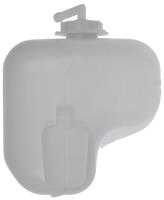
DORMAN PRODUCTS
603-320 Non-Pressurized Coolant Reservoir; 2000-2009 Honda S2000
Part Number: 326-603-320
Ships on Oct 19, 2026Lowest Price Guarantee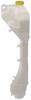
DORMAN PRODUCTS
603-810 Non-Pressurized Coolant Reservoir; 2002-2006 Honda Cr-v
Part Number: 326-603-810
Ships on Oct 19, 2026Lowest price guarantee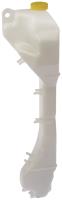
DORMAN PRODUCTS
603-810 Non-Pressurized Coolant Reservoir; 2002-2006 Honda Cr-v
Part Number: 326-603-810
Ships on Oct 19, 2026Lowest Price Guarantee
DORMAN PRODUCTS
603-436 Fan Shroud with Integrated Coolant Reservoir; 2006 Toyota Sienna
Part Number: 326-603-436
Ships on Oct 19, 2026Lowest price guarantee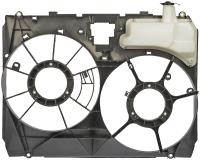
DORMAN PRODUCTS
603-436 Fan Shroud with Integrated Coolant Reservoir; 2006 Toyota Sienna
Part Number: 326-603-436
Ships on Oct 19, 2026Lowest Price Guarantee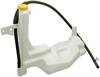
DORMAN PRODUCTS
603-610 Non-Pressurized Coolant Reservoir; 1999-2000 Nissan Pathfinder
Part Number: 326-603-610
Ships on Oct 19, 2026Lowest price guarantee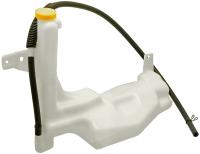
DORMAN PRODUCTS
603-610 Non-Pressurized Coolant Reservoir; 1999-2000 Nissan Pathfinder
Part Number: 326-603-610
Ships on Oct 19, 2026Lowest Price Guarantee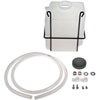
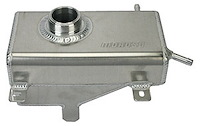
![Coolant Overflow Tank for 1965-1968 Ford Mustang [Aluminum]](https://www.jegs.com/images/mini_100/200/204/204-2803.jpg)
SCOTT DRAKE
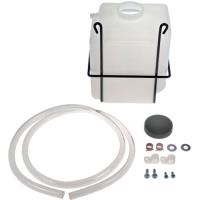
Coolant Overflow Tank for 1965-1968 Ford Mustang [Aluminum]
Part Number: 204-2803
Ships on Oct 19, 2026Lowest price guarantee![Coolant Overflow Tank for 1965-1968 Ford Mustang [Aluminum]](https://www.jegs.com/images/mini_200/200/204/204-2803.jpg)
SCOTT DRAKE
Coolant Overflow Tank for 1965-1968 Ford Mustang [Aluminum]
Part Number: 204-2803
Ships on Oct 19, 2026Lowest Price Guarantee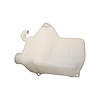
BROTHERS TRUCKS
OFJ0080 Coolant Overflow Tank 1974-1980 Chevy/GMC C/K Series Truck, Blazer/Jimmy & Suburban, White
Part Number: 543-OFJ0080
Ships on Oct 19, 2026Lowest price guarantee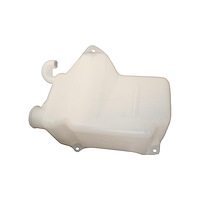
BROTHERS TRUCKS
OFJ0080 Coolant Overflow Tank 1974-1980 Chevy/GMC C/K Series Truck, Blazer/Jimmy & Suburban, White
Part Number: 543-OFJ0080
Ships on Oct 19, 2026Lowest Price Guarantee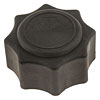
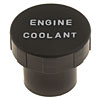
DORMAN PRODUCTS
82596 Coolant Cap; 1982-1989 Buick; 1982-1988 Cadillac; 1982-1994 Chevrolet; 1982-1988 Oldsmobile; 1982-1994 Pontiac
Part Number: 326-82596
Ships on Oct 19, 2026Lowest price guarantee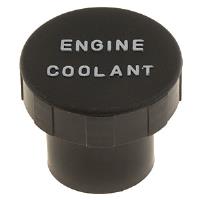
DORMAN PRODUCTS
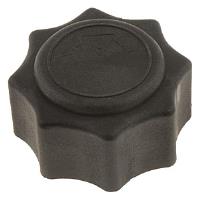
82596 Coolant Cap; 1982-1989 Buick; 1982-1988 Cadillac; 1982-1994 Chevrolet; 1982-1988 Oldsmobile; 1982-1994 Pontiac
Part Number: 326-82596
Ships on Oct 19, 2026Lowest Price GuaranteeFrequently Asked Questions About Coolant Overflow Tanks
Should you fill the coolant overflow tank?
Yes, fill it to the cold fill line and leave the space above that line empty. The tank needs room for the coolant that expands out of the radiator as the engine heats up. Check the level with the engine cold for an accurate reading.
Why is coolant coming out of the overflow tank?
Some coolant moving into the tank is normal as the engine warms up. Coolant spilling out of the tank usually points to overfilling, a worn radiator cap, or an engine that's running hot. Our guide on how to find and fix coolant leaks can help you narrow down the cause.
What are the signs of a bad coolant overflow tank?
Common signs include coolant that keeps running low, overheating, and a sweet antifreeze smell. Inspect plastic tanks for cracks or brittle spots, and check the cap for damage. Replace a cracked tank or broken cap before the problem spreads to the rest of the cooling system.
Why is my overflow tank empty but the radiator full?
This usually means coolant isn't moving between the radiator and the tank. Check the hose from the radiator neck to the tank for cracks, kinks, or loose clamps. A worn radiator cap seal can also keep coolant from flowing out and back as the engine heats and cools.
How do you install a coolant overflow tank?
Mount the tank with the supplied brackets or hardware in a spot that's easy to reach and clear of exhaust heat. Run a hose from the radiator neck's overflow fitting to the tank inlet and clamp both ends. Fill the tank to the cold line, run the engine up to temperature, and check for leaks.