


 Order Status & Returns
 Gift Cards
 Help Center
 1-800-345-4545
Rod, Main, Cam, And Engine Bearings
Engine bearings in this category include rod, main, and cam bearing sets that carry your crankshaft and camshaft on a thin oil film. You'll find standard and undersize sets, coated race sets, and narrowed rod bearings for platforms like GM LS, small-block Ford, and big-block Chevy. Match the bearing type, size, and clearance to your crank and block, and your rebuild starts on solid footing.
Show More
What Do Rod Bearings Do in Your Engine?
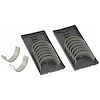
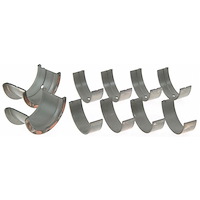
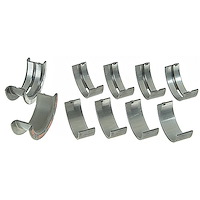
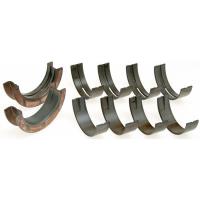
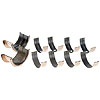
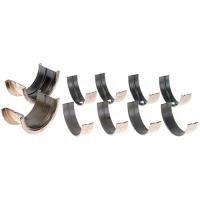
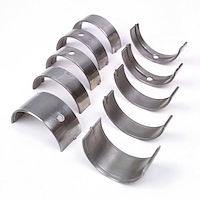
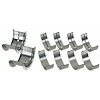
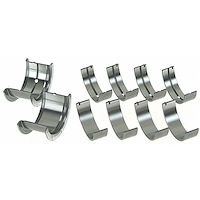
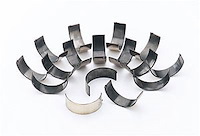
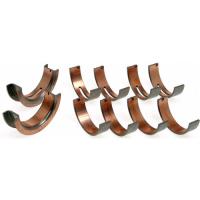
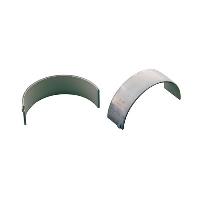
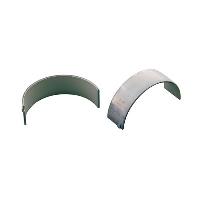
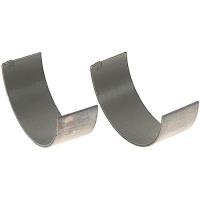
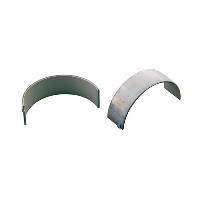
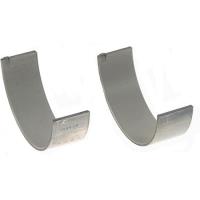
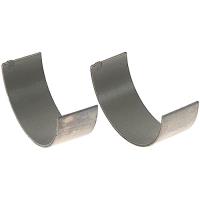
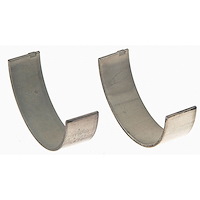
Rod bearings sit between each connecting rod's big end and the crankshaft rod journal, carrying combustion loads on a pressurized oil film. Our connecting rod bearings come as two-piece insert shells, sold in sets matched to a specific engine family. Before you order, confirm the engine, displacement, and model years so the set matches your journals.
You'll find sets from ACL Bearings for engines like the 1965-96 Ford truck 240-300 six-cylinder and the Chevrolet 262ci (4.3L) V8. Sealed Power covers Ford 390/427/428 engines, large-journal Chevy and GM engines, and older GMC 3.7L and Chrysler 3.9L/4.1L engines. Narrowed sets, like ACL's 8B663HN-STD race rod set, are available for cranks that need them.
Rod bearings only work as well as the rod they're clamped in. Proper rod bolt stretch helps keep the big-end bore round, so read why rod bolts matter in an engine build before final assembly.
How Do Crankshaft Bearings Support the Bottom End?
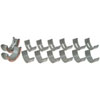
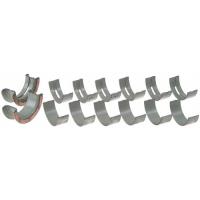
Crankshaft bearings, also called main bearings, support the crank in the block's main bores and keep it centered as it spins. Like rod bearings, they're two-piece shells.
Main sets also include the thrust bearing, which controls crankshaft end play. Check end play during assembly to confirm the thrust bearing suits your crank.
Chevrolet Performance offers main bearings for LS7 and LS9 engines. ACL race main sets cover big-block Chevy, GM LS Gen III/IV, and Toyota 1JZ-GE applications. Confirm your block and crank generation before you order.
Some race main sets add design changes for specific needs. ACL's GM LS Gen III/IV race set uses a 70-degree oil groove, and its 1JZ-GE set comes coated. For small-block rebuilds, you'll also find ACL's Duraglide main set for 1962-98 Ford 255-289-302 V8s and Sealed Power sets for small-block Chevy and Ford.
What Should You Know About Cam Bearings?
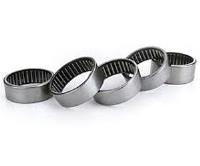
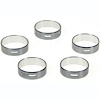
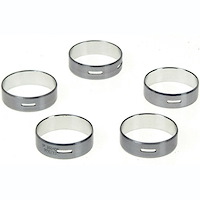
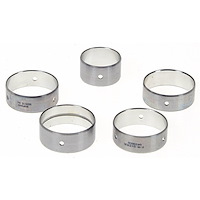
Cam bearings support the camshaft in cam-in-block engines, and they're usually one-piece bearings pressed into the block's cam bores. You'll find them in our camshaft bearings subcategory, including complete sets from Clevite MAHLE.
An ill-fitting cam bearing can damage the camshaft. It can also lead to damage on the main and rod bearings, so a careless install puts the whole bottom end at risk. Follow the set's instructions for bearing position, since some engines use different bearings for different bores.
For roller camshaft builds, Dart offers a universal PTFE-coated roller cam bearing set. The PTFE coating adds protection against dry starts, such as the first startup on a fresh engine. Install cam bearings before the crankshaft goes in, and confirm the oil holes line up with the block's oil passages.
How Do You Size Engine Bearings and Set Bearing Clearance?
Size your engine bearings to your measured crankshaft journals. Standard bearings fit a stock-size crank, while undersize bearings fit a crank that's been ground to clean up its journals.
Part numbers on this page use a simple suffix code:
- STD means standard size for an unground crankshaft.
- -10 means .010-inch undersize for a crank ground .010 inch.
- -20 means .020-inch undersize for a crank ground .020 inch.
- .25 mm means a metric undersize, roughly equal to .010 inch.
Bearing clearance is the oil gap between the bearing and the journal. A dial bore gauge and micrometer measure it more accurately than plastic gauge. Plastic gauge is still useful as a quick check.
ACL also offers race rod sets with an extra .001 inch of oil clearance for builds that call for a looser fit. If you'd rather skip the machining and measuring, read how to choose the right short block for your horsepower goals.
Should You Choose Coated or Standard Bearings for Street or Race?
Choose standard bearings for most stock rebuilds and street engines, and step up to race or coated sets as rpm and load climb. Late-model production engines typically use bi-metal aluminum bearings. Tri-metal (lead-copper) bearings are widely used in performance builds.
Coated sets, such as ACL's coated race rod and main sets, add dry-start protection for high-rpm engines and engines that sit between events. If your engine sees hard track use or long storage, a coated set is worth considering. Lunati also offers rod bearings, main bearings, and bearing spacers for performance builds.
Not sure where your build lands? Our budget vs. performance engine build guide walks through the tradeoffs, and you can browse matching parts across engines and components.
Once your measurements are in hand, shop engine bearings on this page by type, size, and engine family.

ADD A VEHICLE TO GUARANTEE PARTS FIT
See products that fit


 Lowest price guarantee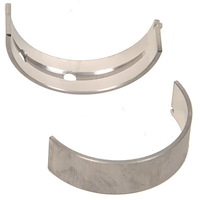
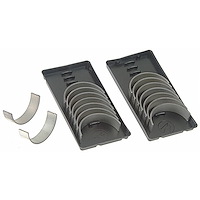
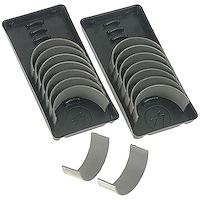

![Connecting Rod Bearings [Big Block Chrysler 350-440, 426 Hemi -.010 in.]](https://www.jegs.com/images/mini_100/800/844/844-8-2320cp10.jpg)
![Connecting Rod Bearings [Big Block Chrysler 350-440, 426 Hemi -.010 in.]](https://www.jegs.com/images/mini_200/800/844/844-8-2320cp10.jpg)


Frequently Asked Questions About Engine Bearings
What Causes a Spun Bearing?
A spun bearing happens when a shell rotates in its housing bore instead of staying locked in place. Oil starvation, excessive clearance, overheating, and debris in the oil are common causes. After a bearing spins, have the crank journal and housing bore inspected before you order replacements.
Should I Replace Cam Bearings During a Rebuild?
Most builders replace cam bearings any time the block is stripped, cleaned, or machined. Worn or ill-fitting cam bearings can damage the camshaft and the main and rod bearings. Use a proper cam bearing installation tool and check oil hole alignment as you go.
Do I Need Narrowed or Chamfered Bearings?
Some crankshafts need chamfered or narrowed bearings to clear the journal fillet radius. The wrong bearing on these cranks can make edge contact and seize. Check your crankshaft maker's specs, then look for sets with "narrowed" or "chamfered" in the product name.
Can I Reuse Old Engine Bearings?
Reusing old bearings in a rebuild isn't recommended. Used bearings have worn to their original journals, and they can hold embedded debris you can't see. New bearings cost far less than repairing a damaged crankshaft.
How Many Bearings Come in a Set?
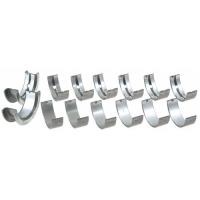
It depends on the engine and the set type. A rod bearing set typically includes one pair of shells per connecting rod, so a V8 set covers eight rods. A main set covers each main journal, including the thrust bearing.