


 Order Status & Returns
 Gift Cards
 Help Center
 1-800-345-4545
Portable Battery Chargers for Cars & Trucks
Portable battery chargers for vehicles keep your car and truck batteries charged, topped off, and ready whether you're recharging a dead battery or holding voltage through winter storage. You'll find 6V, 12V, and 16V options, from smart multi-stage chargers and trickle chargers to maintainers and multi-bank units that watch over several batteries at once. Match the charger to your battery type and how fast you need power, and you'll never get stranded by a flat battery again.
Show More
What Does a Portable Battery Charger Do?
A portable battery charger does two jobs: it brings a low or dead battery back up to proper voltage, and it holds that voltage steady while your vehicle sits parked. When you're driving, the alternator keeps the battery topped off, so the charger's real value shows up when the engine's off. A car that sits for weeks, a project build between drives, or a classic in winter storage will slowly lose charge, and that's where a charger or maintainer earns its keep. Hook one up and it restores the battery, then switches to a low, steady output that prevents a slow drain from leaving you stranded. Knowing your target voltage helps you read the results correctly; our car battery voltage guide explains that a fully charged 12V battery reads about 12.6 volts at rest. Once you know where your battery stands, picking the right charger gets a lot simpler.
What Types of Portable Battery Chargers Can You Shop?
You've got several types to choose from, each built for a different job and battery setup:
- Trickle chargers and maintainers (1-3 amps) that hold voltage during long-term storage.
- Smart multi-stage chargers that automatically handle 6V and 12V batteries.
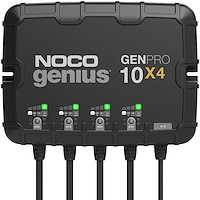
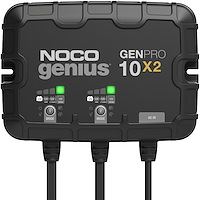
- Multi-bank chargers with up to 10 banks for maintaining several batteries at once.
- Onboard chargers built for race cars, boats, and powersports.
- High-frequency and 16-volt chargers made for AGM and racing batteries.
- Chargers with an engine-start or jump-start boost for a quick launch.
If you're running a shop or a fleet and weighing capacity, our 4-bank vs 5-bank vs 10-bank battery tender chargers guide breaks down how many banks you actually need. Round out your setup with battery maintenance tools for cleaning terminals and keeping connections tight.
How Do You Choose the Right Amperage and Voltage?
Start with voltage, then choose amperage for speed. Match the charger's voltage to your battery: most cars and trucks run 12V, classic vehicles often use 6V, and race or AGM setups frequently call for 16V. Get the voltage right first, because a mismatch won't charge properly and can damage the battery. Amperage controls how fast the battery fills back up. A trickle charge at 1-3 amps takes roughly 12-24 hours and is gentle on the battery, a standard 4-10 amp charge runs about 8-10 hours, and a fast 15-30 amp charge can finish in 2-4 hours when you're in a hurry. Slower charges are easier on battery life, while higher amperage gets you back on the road quicker. If you want the full breakdown, our how long it takes to charge a car battery article walks through the details. Pick the amperage that fits your schedule and how often you drive.
Battery Charger vs. Maintainer vs. Trickle Charger: What's the Difference?
Here's the quick answer: a charger refills a depleted battery, a maintainer monitors and tops off the battery automatically, and a trickle charger delivers a slow, steady low-amp charge over time. The lines blur because many modern units do more than one job, but the intent is different. Reach for a charger when a battery is drawn down and you need it back to full. Choose a maintainer when a vehicle sits for long stretches and you want it ready to start without thinking about it. A trickle charger sits in between, feeding a small current that offsets natural self-discharge. The key safety feature on maintainers and smart chargers is float mode: once the battery is full, the unit drops to a maintenance output so it won't overcharge or cook the battery. Browse the full battery chargers and maintenance selection to compare these options side by side and match one to how you use your vehicle.
Which Portable Battery Charger Brands Does JEGS Carry?
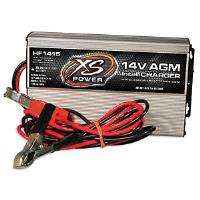
JEGS carries trusted charging brands so you can match a proven unit to your battery. Shop Battery Tender for maintainers and multi-bank units known for set-and-forget storage charging. Look to NOCO for compact smart chargers that handle 6V and 12V batteries and pack in engine-start boost on select models. Schumacher Chargers covers everything from portable garage chargers to higher-amp units for faster recharges. For high-performance and racing setups, XS Power Batteries pairs with AGM and 16-volt charging needs. Each brand brings its own strengths, so start with your battery type and voltage, then narrow by amperage and the number of banks you need. When you're ready to build out the rest of your bench, shop the full Tools & Garage gear lineup for everything that keeps your project moving. Get the right charger now and keep every battery in your garage ready to go.

ADD A VEHICLE TO GUARANTEE PARTS FIT
See products that fit

ADD A VEHICLE TO GUARANTEE PARTS FIT
See products that fit
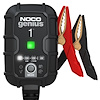

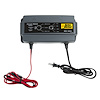
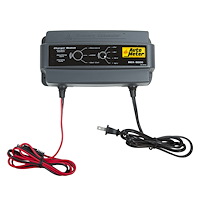
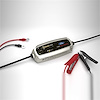
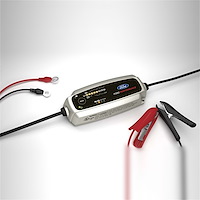


XS POWER BATTERIES
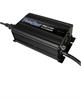
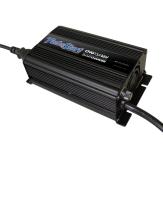
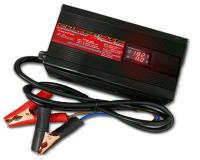
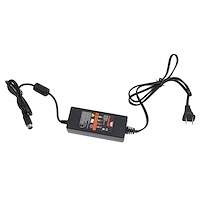
LI1215 12V High-Frequency Lithium Battery IntelliCharger
Part Number: 703-LI1215
 Ships Tomorrow
 Lowest price guarantee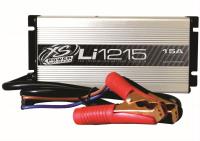
XS POWER BATTERIES
LI1215 12V High-Frequency Lithium Battery IntelliCharger
Part Number: 703-LI1215
Ships TomorrowLowest Price Guarantee


NOCO
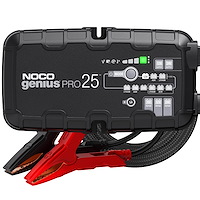
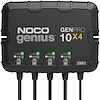
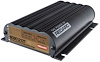
GENPRO10X3 GeniusPro Series 3-Bank 30 Amp Onboard Battery Charger
Part Number: 080-GENPRO10X3
Ships TomorrowLowest price guarantee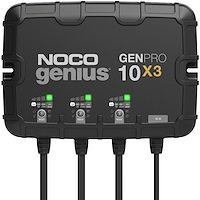
NOCO
GENPRO10X3 GeniusPro Series 3-Bank 30 Amp Onboard Battery Charger
Part Number: 080-GENPRO10X3
Ships TomorrowLowest Price Guarantee

AEM ELECTRONICS
30-8401S Battery Management System Satellite, BMS Satellite Module for VCU
Part Number: 017-30-8401S
Ships on 10/13/2026Lowest price guarantee
AEM ELECTRONICS
30-8401S Battery Management System Satellite, BMS Satellite Module for VCU
Part Number: 017-30-8401S
Ships on 10/13/2026Lowest Price Guarantee
AEM ELECTRONICS
30-8401M Battery Management System Master, BMS Master Module for VCU
Part Number: 017-30-8401M
Ships on 10/13/2026Lowest price guarantee
AEM ELECTRONICS
30-8401M Battery Management System Master, BMS Master Module for VCU
Part Number: 017-30-8401M
Ships on 10/13/2026Lowest Price Guarantee
![Charging Post Bracket Remote Two Double D Holes 90 deg [Steel, Natural]](https://www.jegs.com/images/mini_100/0/049/049-all60064.jpg)
ALLSTAR PERFORMANCE
Charging Post Bracket Remote Two Double D Holes 90 deg [Steel, Natural]
Part Number: 049-ALL60064
Ships on 10/13/2026Lowest price guarantee![Charging Post Bracket Remote Two Double D Holes 90 deg [Steel, Natural]](https://www.jegs.com/images/mini_200/0/049/049-all60064.jpg)
ALLSTAR PERFORMANCE
Charging Post Bracket Remote Two Double D Holes 90 deg [Steel, Natural]
Part Number: 049-ALL60064
Ships on 10/13/2026Lowest Price Guarantee
Frequently Asked Questions About Portable Battery Chargers for Vehicles
Can you use a portable battery charger on AGM and lithium batteries?
It depends on the charger. Many smart chargers handle standard lead-acid and AGM batteries, and some are selectable for lithium as well. Always check the charger's supported battery types before you connect it, because using the wrong mode can damage a lithium or AGM battery.
Can a portable battery charger jump start a car?
Only if the model includes an engine-start or jump-start boost function. A standard charger or maintainer isn't designed to deliver the burst of current needed to crank an engine. If your unit lacks that feature, charge the battery first, then start the vehicle.
How much do portable car battery chargers cost?
Prices range widely based on capacity and features. A basic maintainer starts a little over $35, while a multi-battery charging station can run more than $1,000. Where you land depends on amperage, the number of banks, and whether you need smart charging or racing-grade output.
Is it safe to leave a battery maintainer connected long term?
Yes, as long as it's a smart maintainer. These units automatically switch to float mode once the battery is full, delivering just enough current to hold the charge without overcharging. That's exactly what makes them ideal for vehicles in long-term storage.
What voltage should a fully charged car battery read?
A healthy 12V battery reads about 12.6 volts at rest with the engine off. With the engine running and the alternator charging, you should see over 13.5 volts. Readings well below 12.6 volts at rest suggest the battery is discharged and needs a charge.