


 Order Status & Returns
 Gift Cards
 Help Center
 1-800-345-4545
High Performance Driveshafts
Performance driveshafts send your engine's power from the transmission to the rear end, and this category has the parts to build a stronger driveline. You'll find aluminum driveshafts, U-joints, slip and pinion yokes, center support bearings, safety loops, and U-joint straps and girdles. Whether you're upgrading a street car or prepping a drag car, start by matching parts to your transmission, rear end and power level.
Show More
Performance Driveshafts and Driveshaft Parts in This Category
This category covers complete performance driveshafts plus the yokes, joints, bearings and safety hardware that connect them. Each piece has to work with the others, so it helps to shop the driveline as a system. Start with the subcategory that matches the part you're replacing or upgrading:
- Driveshafts and components for complete shafts and replacement shaft parts
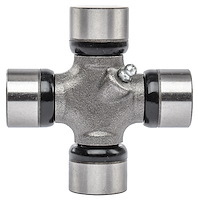
- U-joints for connecting shafts and yokes, including greaseable 1350-series joints
- Driveshaft yokes for slip, pinion and flange-style connections
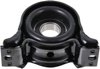
- Carrier and center support bearings for two-piece driveshaft setups
- Driveshaft safety loops for containing a broken shaft or failed U-joint
- U-joint straps and girdles for clamping U-joint caps at the pinion yoke
If you're building a complete drivetrain package, browse our full selection of transmission and drivetrain parts too. You'll find the transmissions and rear-end components your new driveshaft connects.
Aluminum vs Steel vs Carbon Fiber Driveshafts
Choose aluminum for light weight and RPM capability, steel or chromoly for strength, and carbon fiber for minimal weight and vibration damping. Each material balances cost, strength and weight differently, so match it to how you drive.
Aluminum is lighter than steel and has a higher critical speed at a given tube diameter. That makes it a popular upgrade for street performance cars and many bracket cars. The Quarter Master aluminum driveshaft with a 50-inch center-to-center length is one example in this category.
Steel and chromoly driveshafts are stronger and tolerate dings and debris better than aluminum. That durability matters for high-torque launches and heavy-duty use where the shaft takes repeated shock loads.
Carbon fiber weighs less than either metal, and it damps driveline vibration well. It costs more, though, and it's sensitive to impact damage. For more on component choices, see our brakes and drivetrain tech articles.
How to Measure for a Replacement Driveshaft
Measure with the suspension at ride height, from the transmission tailshaft seal or slip yoke to the centerline of the pinion yoke U-joint. An accurate number sets proper slip yoke engagement as the suspension moves. A wrong measurement can leave the yoke too shallow or let it bottom out.
Follow these steps before you order a new shaft:
- Support the car at the wheels or axle so the suspension sits at ride height
- Note your transmission model and rear end, such as a Turbo 400 with a Ford 9-inch
- Measure from the tailshaft seal to the pinion U-joint centerline
- Repeat the measurement and record it before you shop
Driveline angles matter as much as length. If you've changed ride height, motor mounts or rear suspension, your old angles may no longer work. Check your pinion and transmission angles with our driveline angle guide for rear-wheel drive and drag racing before you install the new shaft.
Choosing Slip Yokes, Pinion Yokes and U-Joint Series
Choose a slip yoke by transmission model and output spline count, and choose a pinion yoke by rear end and U-joint series. The U-joint series must match at every connection, or the parts won't fit together.
For automatics, Moser Engineering offers transmission yokes for Turbo 400 and Powerglide applications. Sonnax adds a TH400 slip yoke, plus 6-bolt and 8-bolt aluminum adapter flange yokes for 1350-series U-joints.
Strange Engineering builds transmission yokes in 2-piece chromoly, nodular iron and cast iron, along with an S-Series pinion yoke. Dana Spicer covers slip yokes and the greaseable SVL 1350 Series U-joint.
The 1350 series is a common step up from the smaller 1310 for higher-torque builds. Before you order, check the cap diameter and span of your current joints. That way your new driveshaft, yokes and U-joints all line up on the first try.
Driveline Safety and Vibration Control
Secure your U-joints, contain a failed shaft and keep angles and balance in check to control vibration. These steps protect your car, your rear end and you.
Moroso heavy-duty U-joint straps fit Dana 60 and Ford 9-inch rear ends with a 1350 yoke, giving the caps a secure hold. Moroso also offers U-joint girdles for the Ford 9-inch.
A safety loop wraps the front of the shaft, so a broken joint can't let it whip into the floor or drop to the ground. On two-piece shafts, a worn center support bearing is a common vibration source. Dana Spicer offers an SVL 1610 Series center support bearing for these setups.
Vibration usually points to worn U-joints, poor balance or incorrect angles. Out-of-balance tires can feel the same, so rule them out first. If your car shakes at speed, start by diagnosing a car that shakes at highway speeds before you replace parts.

ADD A VEHICLE TO GUARANTEE PARTS FIT
See products that fit

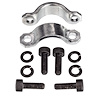
JEGS
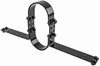
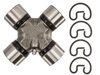
Universal Joint Strap Kit Fits Select 1980-2012 American Motors, Dodge, Ford, GMC, Honda, Jeep, Lincoln, Mazda, Mercury Models
Part Number: 555-60623
 Ships Tomorrow
 Lowest price guarantee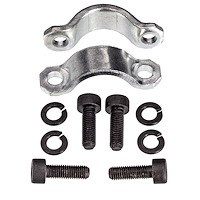
JEGS
Universal Joint Strap Kit Fits Select 1980-2012 American Motors, Dodge, Ford, GMC, Honda, Jeep, Lincoln, Mazda, Mercury Models
Part Number: 555-60623
Ships TomorrowLowest Price Guarantee

![Ford 9 in. Pinion Yoke, Forged Steel [28 Spline, 1310 Series]](https://www.jegs.com/images/mini_100/500/555/555-60632.jpg)
![Ford 9 in. Pinion Yoke, Forged Steel [28 Spline, 1310 Series]](https://www.jegs.com/images/mini_200/500/555/555-60632.jpg)
![Steering U-Joint 3/4 in. DD x 1 in.-48 Spline [Nickel-Plated]](https://www.jegs.com/images/mini_100/500/555/555-607005.jpg)
![Steering U-Joint 3/4 in. DD x 1 in.-48 Spline [Nickel-Plated]](https://www.jegs.com/images/mini_200/500/555/555-607005.jpg)
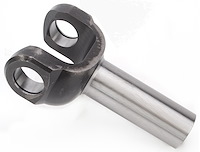
![Ford Transmission Slip Yoke [31 Spline]](https://www.jegs.com/images/mini_100/500/555/555-60672.jpg)
![Ford Transmission Slip Yoke [31 Spline]](https://www.jegs.com/images/mini_200/500/555/555-60672.jpg)
![GM Transmission Slip Yoke [27 Spline]](https://www.jegs.com/images/mini_100/500/555/555-60675.jpg)
![GM Transmission Slip Yoke [27 Spline]](https://www.jegs.com/images/mini_200/500/555/555-60675.jpg)

JEGS
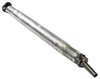
Aluminum Rear Driveshaft for 1967-1969 Chevrolet Camaro, Pontiac Firebird w/TH400, Muncie M-22, Richmond Super T-10
Part Number: 555-60687
Ships on 12/18/2026Lowest price guarantee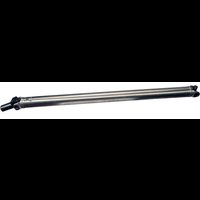
JEGS
Aluminum Rear Driveshaft for 1967-1969 Chevrolet Camaro, Pontiac Firebird w/TH400, Muncie M-22, Richmond Super T-10
Part Number: 555-60687
Ships on 12/18/2026Lowest Price Guarantee
![Transmission Slip Yoke and U-Joint Kit [Ford 31-Spline 1350 Series]](https://www.jegs.com/images/mini_100/500/555/555-60672k.jpg)
![Transmission Slip Yoke and U-Joint Kit [Ford 31-Spline 1350 Series]](https://www.jegs.com/images/mini_200/500/555/555-60672k.jpg)
![Ford 9 in.Pinion Yoke & U-Joint Kit w/ Billet Caps [28 Spline, 1350 Series]](https://www.jegs.com/images/mini_100/500/555/555-60630k1.jpg)
![Ford 9 in.Pinion Yoke & U-Joint Kit w/ Billet Caps [28 Spline, 1350 Series]](https://www.jegs.com/images/mini_200/500/555/555-60630k1.jpg)
![Ford 9 in. Pinion Yoke & U-Joint Kit w/ U-Bolts [28 Spline, 1350 Series]](https://www.jegs.com/images/mini_100/500/555/555-60630k2.jpg)
![Ford 9 in. Pinion Yoke & U-Joint Kit w/ U-Bolts [28 Spline, 1350 Series]](https://www.jegs.com/images/mini_200/500/555/555-60630k2.jpg)
![Steering U-Joint 3/4 in. DD x 3/4 in.-30 Spline [Nickel-Plated]](https://www.jegs.com/images/mini_100/500/555/555-607001.jpg)
![Steering U-Joint 3/4 in. DD x 3/4 in.-30 Spline [Nickel-Plated]](https://www.jegs.com/images/mini_200/500/555/555-607001.jpg)

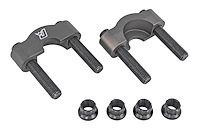
JEGS
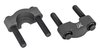
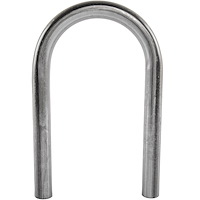
U-Joint Girdle 1955-1982 Chevy with U-Bolts & Dana 60 with U-Bolts
Part Number: 555-60602
Ships TodayLowest price guarantee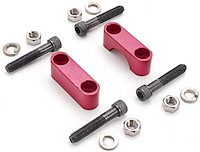
JEGS
U-Joint Girdle 1955-1982 Chevy with U-Bolts & Dana 60 with U-Bolts
Part Number: 555-60602
Ships TodayLowest Price Guarantee![Steering U-Joint 3/4 in. DD x 3/4 in.-36 Spline [Nickel-Plated]](https://www.jegs.com/images/mini_100/500/555/555-607002.jpg)
![Steering U-Joint 3/4 in. DD x 3/4 in.-36 Spline [Nickel-Plated]](https://www.jegs.com/images/mini_200/500/555/555-607002.jpg)
![Ford 9 in. Pinion Yoke & U-Joint Kit w/ Billet Caps [28 Spline, 1350 Series]](https://www.jegs.com/images/mini_100/500/555/555-60630k3.jpg)
![Ford 9 in. Pinion Yoke & U-Joint Kit w/ Billet Caps [28 Spline, 1350 Series]](https://www.jegs.com/images/mini_200/500/555/555-60630k3.jpg)
![Steering U-Joint 3/4 in. DD x 3/4 in.-36 Spline [Black]](https://www.jegs.com/images/mini_100/500/555/555-607012.jpg)
![Steering U-Joint 3/4 in. DD x 3/4 in.-36 Spline [Black]](https://www.jegs.com/images/mini_200/500/555/555-607012.jpg)
![Adjustable Driveshaft Safety Loop [Universal]](https://www.jegs.com/images/mini_100/500/555/555-60662.jpg)
![Adjustable Driveshaft Safety Loop [Universal]](https://www.jegs.com/images/mini_200/500/555/555-60662.jpg)
JEGS
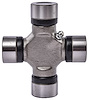
Greasable U-Joint 1310 to 1330 Conversion Series Combination
Part Number: 555-60635
Ships on 10/20/2026Lowest price guarantee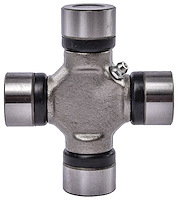
JEGS
Greasable U-Joint 1310 to 1330 Conversion Series Combination
Part Number: 555-60635
Ships on 10/20/2026Lowest Price Guarantee![Driveshaft Loop and Crossmember [Meets NHRA/IHRA Requirements]](https://www.jegs.com/images/mini_100/500/555/555-60668.jpg)
![Driveshaft Loop and Crossmember [Meets NHRA/IHRA Requirements]](https://www.jegs.com/images/mini_200/500/555/555-60668.jpg)
Frequently Asked Questions About Performance Driveshafts
Does a performance driveshaft add horsepower?
No, a driveshaft doesn't make power at the engine. A lighter shaft reduces rotating mass, and a stronger one helps more of your power reach the rear end reliably. The real gain is durability when you've raised power beyond what the stock shaft was built for.
What is driveshaft critical speed?
Critical speed is the RPM where a spinning driveshaft starts to flex and whip from its own vibration. It depends on the shaft's length, tube diameter and material. Your driveshaft RPM at full speed should stay safely below that point, so share your gear ratio, tire size and expected speed when you order.
Do I need a driveshaft safety loop for drag racing?
In many cases, yes. NHRA and other sanctioning bodies require a driveshaft loop once a car reaches certain performance levels or runs certain tires. Rules vary by class, so check your current rulebook and talk with your track's tech inspector before race day.
How often should U-joints be replaced or inspected?
Inspect U-joints at every oil change on a street car and after every race event. Look for play in the caps, rust-colored dust, clicking on takeoff or new vibration. Grease serviceable joints on schedule, and replace any joint that shows wear.
Can I reuse my yokes with a new driveshaft?
Often you can, as long as the spline count and U-joint series match the new shaft. Check the slip yoke's seal surface for grooves and the pinion yoke ears for wear or damage. If either shows wear, replace it to protect your new seals and joints.