

 Order Status & Returns
 Gift Cards
 Help Center
 1-800-345-4545
Product Discontinued
Currently Unavailable
This product is no longer available. Please call customer service for assistance at 1-800-345-4545.
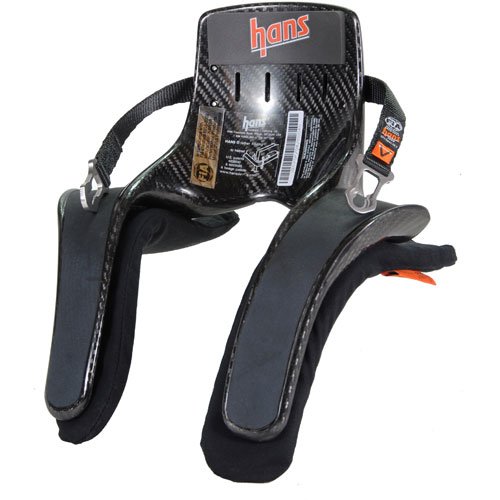
Post Anchors
- HANS Professional
- SFI 38.1 Certified
- 30-Degree Medium
- Post Anchor Tethers
- For SAH Certified Helmets
Use The Same HANS That Your Favorite NASCAR Driver Uses
The Professional Series HANS device is THE helmet restraint device for NASCAR racers across the country. The Professional Series is designed to be ultra lightweight, and ultra strong. The device is constructed from high modulus carbon fiber. This material is super strong, and capable of keeping your head in place in most racing accidents. Made In USA Features
- SFI 38.1 And/or FIA 8858-2010 Certified
- Ultra Lightweight, Ultra Strong Carbon Fiber Material
- NASCAR Approved
- Available In 4 Angles And 4 Sizes
Show More
NOTE: This is a high-speed video replayed in slow motion. The elapsed times on the video are marking points for the slow motion replay. Five seconds in this video equate to 100 milliseconds in real time. (An eye blink lasts 400 milliseconds.)
1-Second Mark: The torso is held in the seat by properly tightened belts. Helmets are properly fastened.
2-Second Mark: The torso begins to move forward due to belt elongation and compression of the dummy.
3-Second Mark:
1-Second Mark: The torso is held in the seat by properly tightened belts. Helmets are properly fastened.
2-Second Mark: The torso begins to move forward due to belt elongation and compression of the dummy.
3-Second Mark:
- (Top) The unrestrained head begins to pitch forward. The elongation of the belts allows the dummy's torso to slide further forward in the seat.
- (Bottom) The friction rubber on the legs of the HANS has engaged the belts to straighten and load the tethers, enabling the helmet and head to move with the torso. The HANS keeps the head and helmet in normal relationship to the torso despite the elongation of the belts.
4-Second Mark: - (Top) The neck loading increases as the unrestrained head reaches maximum excursion, increasing tension in the neck beyond the threshold for serious or fatal injury.
- (Bottom) The HANS continues to be held in place by the friction rubber on the legs during the forward movement of the torso. The tethers straighten fully and remain substantially horizontal, keeping the head in normal relationship to the torso.
5-Second Mark: - (Top) Instrumentation in dummy confirms the neck tension threshold for a serious or fatal injury - 4,000 Newtons - has been crossed.
- (Bottom) The HANS restrains the head and instrumentation in dummy confirms neck tension is kept far below the threshold for serious or fatal injury.
Part TypeHead and Neck Restraint
Product LineHANS Device Professional Series
BrandHANS PERFORMANCE PRODUCTS
Part CategoryPerformance Parts
Part FitmentUniversal
Vendor Part NumberDK11331-311S
Package Qty1
Package TypeEA
No Questions
No Reviews
Some parts are not legal for use in California or other states with similar laws / regulations