


 Order Status & Returns
 Gift Cards
 Help Center
 1-800-345-4545
Valve Spring Shims, Spacers & Seats
Valve spring shims are thin steel washers that sit under the spring to set installed height and seat pressure. This category also covers spring seat locators, retainers, valve locks and rotator eliminators. Use this page to pick the right thickness, check coil bind and match every part to your springs.
Show More
What Valve Spring Shims Do
Valve spring shims reduce valve spring installed height, which raises seat pressure without changing the spring. Installed height is the distance from the spring seat to the underside of the retainer with the valve closed. Each valve can measure a little different after machining, so shims let you even out seat load across the head.
That matters most when you swap cams or springs. A spring's rated seat pressure is only accurate at the installed height its maker lists. If your measured height runs taller, the spring runs softer than rated and can let the valve float at high rpm.
Shims also let you fine-tune pressure for your specific combination. Our camshafts and valvetrain parts category covers the full system. The understanding valve springs guide explains how rate, seat load and open load work together. Start there if you're matching new performance valve springs to a cam.
How To Set Valve Spring Installed Height With Shims
Measure each valve with a spring height micrometer, then add shims until you hit the spring maker's installed height spec. Install the retainer and locks without the spring, pull the retainer up firmly and read the gap. Subtract the target height from your reading to get the shim thickness that valve needs.
Next, confirm coil bind clearance at full lift. Subtract max valve lift from your installed height, then compare that number to the spring's coil bind height. Keep at least about .050" of clearance, and confirm the exact figure with your spring maker.
Valve lift depends on your cam and rocker ratio, so pull numbers from your cam card. Our how to choose a camshaft guide covers lift and duration. The camshaft lobe fundamentals guide explains how lobe lift becomes valve lift through the rocker arms.
Need more installed height instead of less? Shims can't add height, so use +.050 valve locks or a different retainer.
Valve Spring Shim Thickness And Kit Options
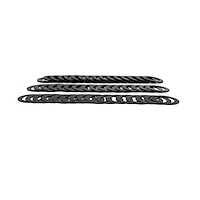
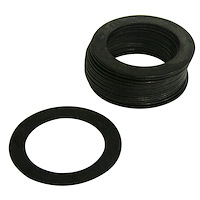
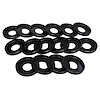
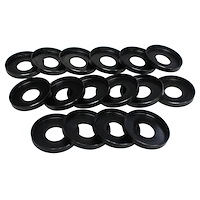
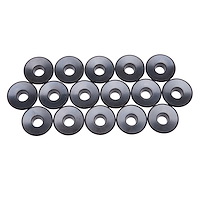
Most valve spring shims come in .015", .030" and .060" thicknesses, and you can combine them to hit an exact installed height. A valve spring shim kit lets you shim a full head without ordering sizes one at a time. Match the shim's OD and ID to your spring and guide boss.
Shim options in this category include:
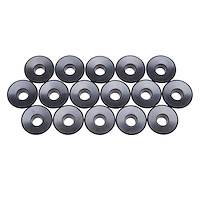
- COMP Cams Valve Spring Shim .015" (249-4739-16) for fine adjustments on individual valves.
- COMP Cams Valve Spring Shim .030" (249-4745-16) for larger corrections after seat or valve work.
- Howards Cams Valve Spring Shim Kit 1.500 in. for shimming a full set of springs in one order.
Use one thicker shim instead of a stack of thin ones when you can. If you're mixing sizes, put the thin shim between the thicker shim and the head, not directly under the spring. Buying springs too? Shop valve spring kits now to pair springs and hardware in one order.
Spring Seat Locators, Spacers And Cups
Spring seat locators, also called ID locators, center the spring on the head and protect the seat from wear. They're common on aluminum heads, where a steel spring can gall the soft spring seat. A cup-style seat does the same job by holding the spring's outside diameter.
COMP Cams Spring ID Locators measure .060" thick, so include that thickness in your installed height reading. Shims go under the locator or cup, never on top of it. Match the locator ID to your guide boss and the OD to your spring.
Some builders call shims valve spring spacers, and the same measuring rules apply. Check every valve, since one reading won't cover the whole head.
Running a big block Chevy with factory exhaust rotators? The COMP Cams Big Block Chevrolet Exhaust Rotator Eliminator (.300") takes the rotator's place under an aftermarket spring. Re-measure installed height after you install one, since it changes the stack under the spring.
Retainers, Locks And Other Valve Spring Components
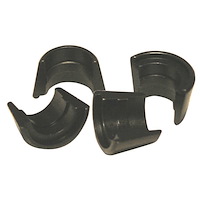
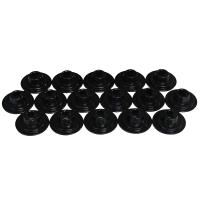
Valve spring retainers and valve locks hold the spring on the valve stem, and their angles must match. A 7-degree lock needs a 7-degree retainer, and a 10-degree lock needs a 10-degree retainer. Retainer material also affects valvetrain weight and durability, so match it to your rpm range.
Retainer and lock options in this category include:
- Manley titanium and H-13 tool-steel retainers, plus 7- and 10-degree valve locks.
- PAC Racing Springs titanium retainers for reduced valvetrain weight.
- Isky Racing Cams chrome-moly 7-degree valve locks.
- Melling retainers for beehive springs on small-block Chevy Vortec heads.
- Edelbrock valve spring retainers.
- Chevrolet Performance valve stem lock kits.
A new retainer can change installed height, so re-measure after any swap. Check retainer-to-seal clearance at full lift too. When your valvetrain plan is set, shop camshafts now to finish the combination.

ADD A VEHICLE TO GUARANTEE PARTS FIT
See products that fit

ADD A VEHICLE TO GUARANTEE PARTS FIT
See products that fit


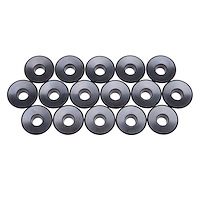
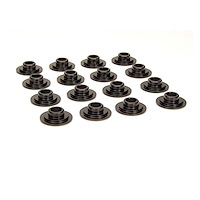
MOPAR PERFORMANCE
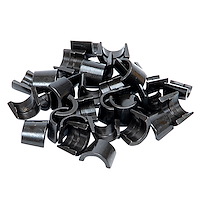
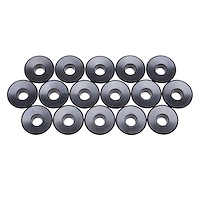
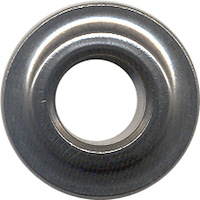
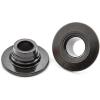
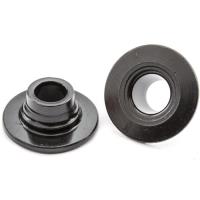
Steel Retainer for Conical Springs Fits 2001-2003 Dodge Dakota, Durango, Ram 1500/2500/3500
Part Number: 312-33004626
 Ships Tomorrow
 Lowest price guarantee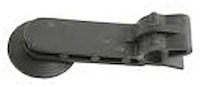
MOPAR PERFORMANCE
Steel Retainer for Conical Springs Fits 2001-2003 Dodge Dakota, Durango, Ram 1500/2500/3500
Part Number: 312-33004626
Ships TomorrowLowest Price Guarantee
![Machined Super Seven Bead Locks [11/32 in. Diameter]](https://www.jegs.com/images/mini_100/200/258/258-86710b-16.jpg)
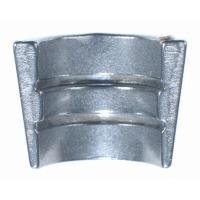
![Machined Super Seven Bead Locks [11/32 in. Diameter]](https://www.jegs.com/images/mini_200/200/258/258-86710b-16.jpg)
AFR - AIRFLOW RESEARCH
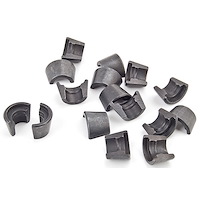
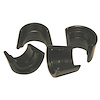
Valve Locks for 10 Degree Retainer w/8 mm Valve Stem Diameter
Part Number: 033-9009-16
Ships TomorrowLowest price guarantee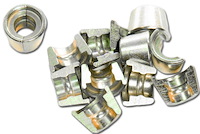
AFR - AIRFLOW RESEARCH
Valve Locks for 10 Degree Retainer w/8 mm Valve Stem Diameter
Part Number: 033-9009-16
Ships TomorrowLowest Price Guarantee

Frequently Asked Questions About Valve Spring Shims
How Many Valve Spring Shims Can You Stack?
There's no fixed count, because coil bind clearance sets the limit. Every shim reduces the room left at full lift, so keep at least about .050" before coil bind. Confirm that figure with your spring maker, and use one thicker shim over several thin ones when you can.
Do Cast-Iron Heads Need Valve Spring Shims?
Cast-iron heads need shims only when installed height measures taller than your spring's spec. Iron resists spring wear better than aluminum, so many iron heads run without a locator or cup. You still need to measure every valve after seat or valve work.
Which Side of the Shim Faces the Spring (Serrated Side)?
If your shims are serrated on one side, place the serrated side toward the head. The smooth side faces the spring or the locator above it. On aluminum heads, the shim goes under the steel spring seat.
Do Shims Change Valve Spring Pressure?
Yes. Shims don't change the spring's rate, but a shorter installed height raises both seat pressure and open pressure. That's why you need to recheck coil bind clearance after adding shims.
Can You Reuse Valve Spring Shims?
You can reuse shims if they're flat, clean and free of wear marks. Check thickness with a micrometer before you reinstall them. Replace any shim that's bent, galled or worn, and re-measure installed height either way.