Sign up now to join the JEGS email newsletter and be the first to learn about new products, special deals and e-mail only offers!

 248 People Found This Article Helpful
Key Takeaways
JEGS Tech Specialist
Pete Mitchell
Selecting the right camshaft is one of the most important steps when building or upgrading an engine. The camshaft plays a major role in how an engine breathes. It controls how far the valves open, how long they stay open, and how the intake and exhaust events work together.
Many other parts such as cylinder heads, valve springs, and torque converters depend on the camshaft you choose. A well matched combination leads to strong, efficient power. A mismatched setup can limit performance or cause mechanical problems.
This guide shows you how to choose a camshaft by explaining the key camshaft terms and the factors that influence your final choice.
Before you shop, write down your combination. Every good camshaft recommendation starts here:
Knowing how to pick a camshaft is mostly about knowing your build. Having this list ready also makes a call to the JEGS tech line faster.
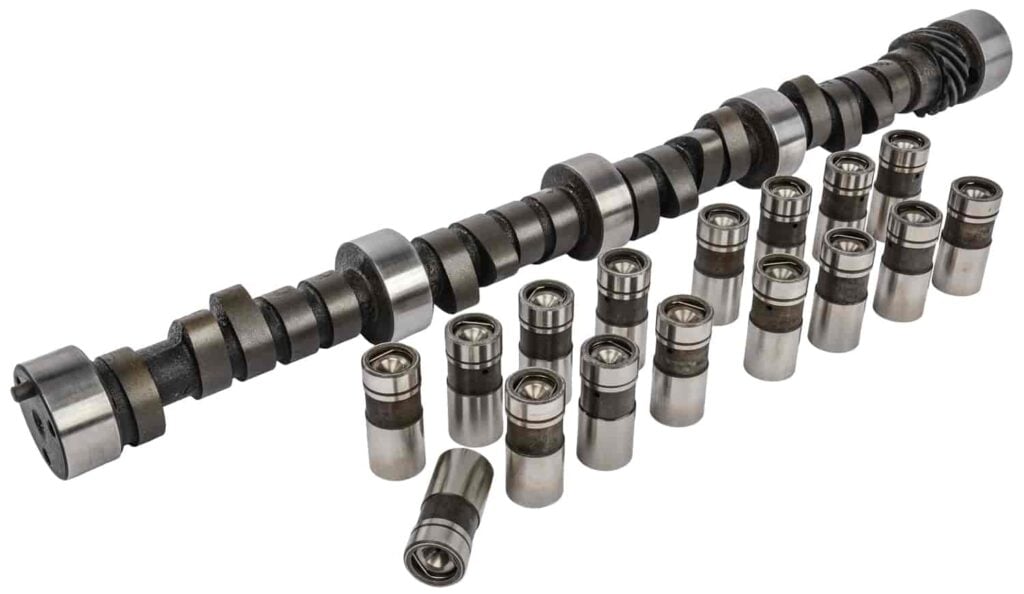
So, what does a camshaft do? It controls the opening and closing of the intake valves and exhaust valves. It's driven by the crankshaft through a timing set. As the cam rotates, its lobes push the lifters upward.
The lifters move the pushrods, which pivot the rocker arms and open the valves. The shape and height of the lobes determine lift and duration.
Longer duration improves high rpm airflow at the cost of low rpm torque. Shorter duration does the opposite. Lobe separation angle influences idle quality, vacuum, and midrange characteristics.
Camshaft lift describes how far the cam lobe moves the lifter. This is called lobe lift or gross lift. Because rocker arms multiply that movement, your valve lift will always be higher than the lobe lift unless the rocker ratio is exactly 1 to 1.
For example, a cam with .400 inch lobe lift and a 1.5 to 1 rocker ratio will produce .600 inch valve lift. A different rocker ratio will change valve lift without changing the cam lobe itself.
More valve lift allows your engine to move more air and exhaust gases. This can improve power, but it also increases stress on the valve springs and can reduce piston to valve clearance. Always confirm valve spring compatibility and verify clearances before purchasing a higher lift camshaft.
Match lift to your heads. Most stock and lightly modified heads stop gaining airflow around .550" of valve lift. If you need more, getting it from rocker ratio instead of a taller lobe is easier on the valvetrain.
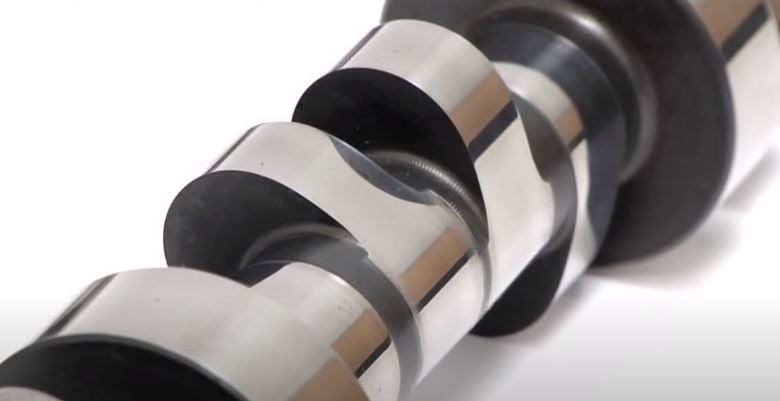
Duration refers to how long a valve stays open. It's measured in degrees of crankshaft rotation.
The industry standard is to measure duration at .050 inch of tappet lift. This eliminates variations caused by ramp design and provides a consistent way to compare cams from different manufacturers.
This is the number of crankshaft degrees the intake valve remains open after the lifter has moved .050 inch.
This is the number of crankshaft degrees the exhaust valve remains open after the lifter has moved .050 inch.
More duration keeps valves open longer and increases high rpm airflow. The tradeoff is reduced low rpm torque and a rougher idle.
Advertised duration may be measured at a lower lift point, such as .004", which makes a cam look bigger. Only compare camshaft duration at .050".
As a rough guide, 195° to 210° at .050" suits stock and computer-controlled engines. Past about 210° to 220°, vacuum starts to drop, so a mild camshaft is the safer street pick. Performance cams run 220° to 280° or more, and 240°+ usually makes its best power from about 3,500 to 7,000 rpm.
Camshaft Duration at .050" Lift by Typical Use
| Typical Use | Duration at .050" Lift |
|---|---|
| Stock or computer-controlled | 195-210° |
| Mild street (vacuum begins dropping) | 210-220° |
| Performance | 220-280°+ |
| Strong top end (power about 3,500-7,000 rpm) | 240°+ |
Typical duration at .050" lift by use. Treat these bands as general guidelines and confirm the cam's advertised rpm range for your build.
Lobe separation angle is the number of degrees between the maximum lift points of the intake and exhaust lobes on the same cylinder. Most performance cams fall between 104 and 115 degrees.
A narrow separation angle increases cam overlap. This improves cylinder filling at higher rpm and can raise midrange torque. It also reduces idle quality and vacuum.
A wide separation angle reduces overlap. This produces a smoother idle, more vacuum, and generally broader but less aggressive power delivery.
Understanding lobe separation helps you match the cam to your intended use, compression ratio, and induction setup. If you're running a turbo or supercharger, you'll usually want less overlap, which typically means a wider camshaft lobe separation angle.

Camshafts involve many variables, which makes selection challenging for beginners. The right choice depends on compression ratio, gearing, vehicle weight, intended rpm range, and other supporting parts.
Here are two rules that help simplify the process:
Rule 1: If a professional engine builder is assembling the engine, rely on their input. Experience matters.
Rule 2: The most common mistake is choosing a cam that is too large. When undecided between two options, the smaller cam often delivers better results.
Every camshaft is designed to work within a specific rpm band. Match this to the way your vehicle is driven.
Examples:
Your drivetrain limits how much cam you can run. A heavy car or truck with tall (numerically low) gears and a stock-stall converter needs a milder cam with low-rpm torque. A lighter car with steeper ring and pinion gears and a higher-stall converter can use more duration.
Watch your cruise rpm, too. Tall gears, tall tires, and overdrive can put a street car near 1,650 rpm at 60 mph. A big cam may not make enough torque there to hold overdrive on long grades. Stick or automatic, factor your transmission into the choice.
Low compression engines work best with shorter duration cams. High compression engines tolerate longer duration and later intake closing events. Matching these two elements prevents detonation and ensures efficient cylinder pressure.
Your cylinder heads and intake have to support the cam, too.


Most manufacturers include a short description that explains the cam's intended use and typical behavior. These summaries provide practical guidance and help narrow your choices without having to interpret every specification.
JEGS carries leading camshaft brands including Comp Cams, Crane Cams, Edelbrock, Ford Performance, Chevrolet Performance, Mopar Performance, Lunati, Crower, Isky Racing Cams, and Howards Cams. We also offer our own JEGS line of performance cams. If you would like personalized guidance, our tech team is ready to help.
Sign up now to join the JEGS email newsletter and be the first to learn about new products, special deals and e-mail only offers!
Hydraulic vs solid lifters and flat tappet vs roller cam choices come down to how you drive and your budget.
Camshafts are designed for either hydraulic or mechanical (solid) lifters.
Lifters also come in flat tappet and roller versions.
Always match lifter type to the camshaft. A hydraulic roller cam must use hydraulic roller lifters, and the same rule applies across all types.


Here's a quick way to narrow it down:
Most camshafts use either cast iron or billet steel.
JEGS offers a wide range of options for every budget and application.
Camshaft installation is straightforward with the correct tools and preparation. Learn how to degree a cam before you start, since that's step one.
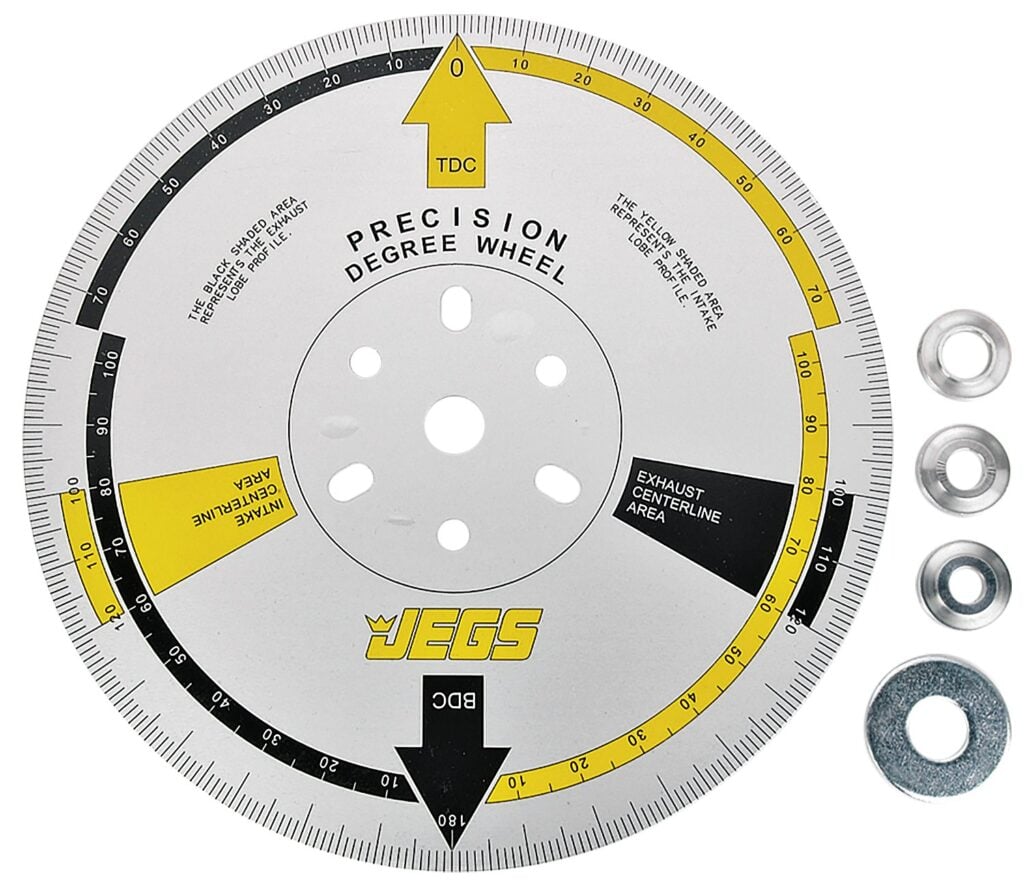
1. Degree the camshaft with a degree wheel. This confirms that the cam events match the design and ensures proper piston to valve clearance.
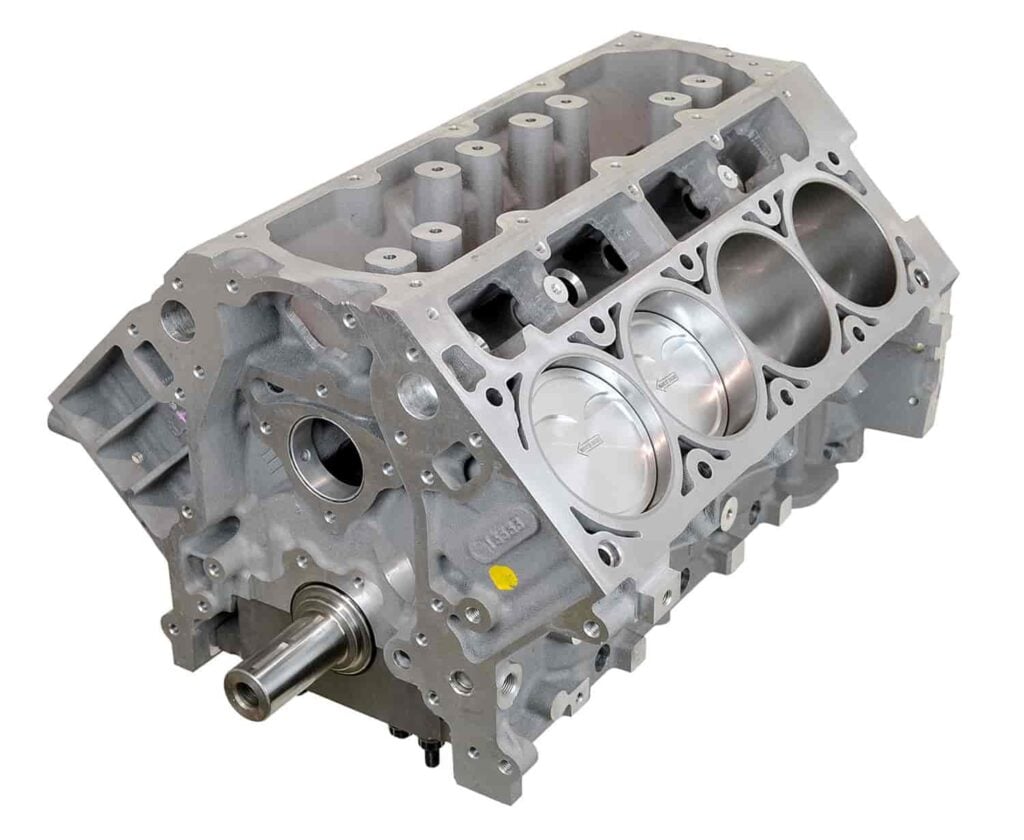
2. Confirm the short block is assembled and the crankshaft is installed.
3. Remove the old camshaft, lifters, and pushrods if applicable.

4. Inspect or replace cam bearings as needed.

5. Lubricate the new camshaft with assembly lube.

6. Use a cam installation tool to guide the cam through the bearings without damage.

7. Install the timing set and verify correct alignment between the crank and cam.

8. Install lifters and pushrods.
9. Set valve lash with a valve lash wrench, or set preload, depending on the lifter type.

If your engine uses a distributor driven off the cam, the distributor gear material has to be compatible with the camshaft material. Use this chart to match them.
| Camshaft Type | Distributor Gear |
|---|---|
| Cast Iron Hydraulic or Solid Flat Tappet Cam | Cast Iron Gear Composite Gear |
| Austempered Ductile Iron Hydraulic or Solid Roller or Nitrided Cam | Melonized / Hardened Steel Gear Composite Gear |
| Billet Steel Hydraulic or Solid Roller Cam | Bronze Gear Composite Gear |
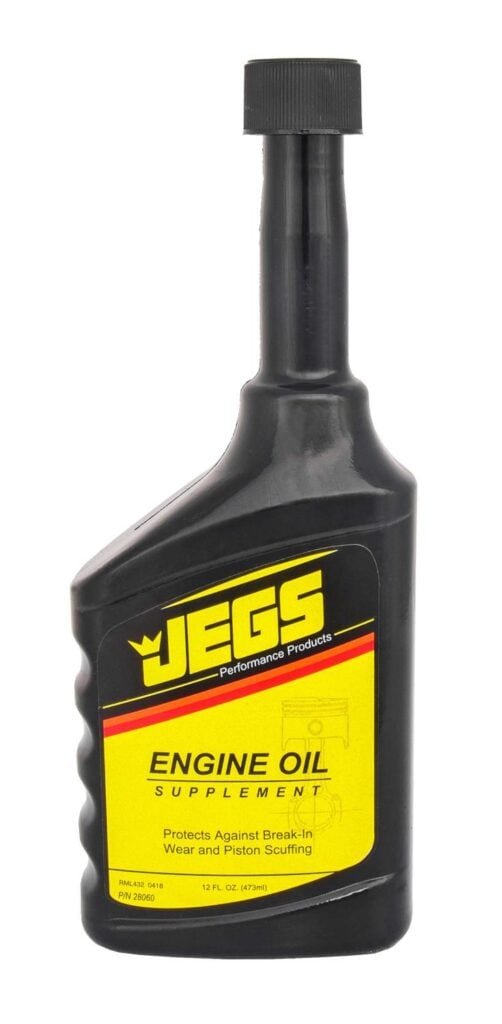
Flat tappet cams require a proper break in procedure.
This protects the cam lobes and lifters during the critical first moments of operation.
Always use new lifters with a new flat tappet cam. During break-in, confirm the pushrods are spinning, which shows the lifters are rotating.
Watch out for these common mistakes:
Incorrect cam selection can cause:
Recognizing these symptoms helps identify whether the cam is mismatched or if another component needs attention.
That's how to choose a camshaft: start with your full combination, compare specs at .050", and go with the smaller cam when you're unsure.
A JEGS expert can help evaluate your combination, recommend the correct camshaft, and answer any technical questions you may have. Use our Ask A Tech service or call our support line for personalized assistance.

Want more build guides from the JEGS tech team? Read More
A camshaft opens and closes your intake and exhaust valves. Its lobe shape sets lift and duration, which controls how your engine breathes, as our guide to camshaft fundamentals explains.
It can add top-end power, but it usually costs low-rpm torque and vacuum. Unless your combination supports it, a bigger cam can feel slower on the street.
There are four basic types based on lifter design: hydraulic flat tappet, solid flat tappet, hydraulic roller, and solid roller.
Stage numbers are labels, not measured specs. Learn how to read camshaft specs and compare duration at .050", lift, LSA, and the advertised rpm range instead.
There's no single best brand. The best camshaft is the grind that fits your combination, from any of the brands JEGS carries.
Yes, if it's a flat tappet cam. Used flat tappet lifters wear to their original lobes, so never run them on a new cam.