


 Order Status & Returns
 Gift Cards
 Help Center
 1-800-345-4545
Fittings & Hose
Fittings and hose move fuel, oil and coolant between the components on your street or race build. Here you'll find the hose, hose ends and fittings you need to connect each part of a fluid system. Filter by part type, brand, size, material or finish, or use the Year/Make/Model selector to narrow the results for your vehicle.
Show More
Types of Fittings and Hose for Fuel, Oil and Coolant
The main types of fittings and hose are AN lines, fuel line parts, hardline, valves and weld-in bungs. Many builds mix several of them. Use this list to match each part type to its job:
- Choose AN fittings and hose for lines that seal with a 37-degree flare.
- Pick fuel line fittings and hose to plumb the fuel system on carbureted or EFI builds.
- Run hose, hardline and tubing for the sections between fittings.
- Add check and shutoff valves to control or stop flow in a line.
- Use weld fittings and bungs to add threaded ports to fabricated tanks and parts.
Start with the fluid, the line size and the port on each component. Then match the fitting style to every connection. If two ports use a different thread or flare, plan on an adapter at that joint.
AN Fittings and AN Fitting Sizes Explained
AN fittings are 37-degree flare fittings built to the Army-Navy standard, a joint spec from World War II. The dash number tells you the size. Each step equals 1/16 inch of tube or hose outside diameter, so -6 AN is 3/8 inch and -8 AN is 1/2 inch.
Common automotive AN fitting sizes span -4 through -24. Check the port size on each component before you order, since every hose end and adapter has to match its dash size. You can also use the size and outside diameter filters to narrow the grid.
On this page you'll see Earl's Performance Plumbing Ano-Tuff AN fittings, plus bulkhead nuts and port plugs with O-ring seals. Our AN fitting and hose size guide explains what each dash size means for your ride, so you can confirm fitment before you buy.
AN vs. NPT Fittings: Threads, Seals and Adapters
AN and NPT fittings don't thread together, so you need an adapter to join them. AN threads are straight, and the seal happens at the 37-degree flare. NPT threads are tapered pipe threads.
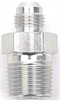
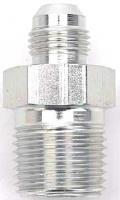
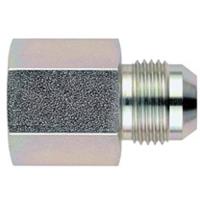
That's why you'll see AN-to-NPT pipe adapters wherever an AN line meets a pipe-thread port. Shop adapter fittings for AN-to-NPT and inverted-flare-to-AN adapters. Browse NPT fittings when the component side of the connection uses pipe threads.
Flare types follow the same rule. An AN fitting can't couple straight to a different flare type, such as an inverted flare, so an adapter has to bridge the two. Before you order, note the thread type and flare type at both ends of every line. Then use the brand filter to compare parts from Vibrant Performance and the other brands on this page.
Choosing Fuel Hose Fittings: PTFE vs. Braided Fuel Line
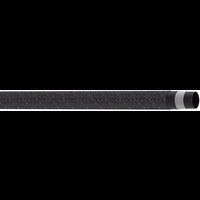
Choosing between PTFE fuel line and rubber-lined braided fuel line starts with the liner. AN hose uses either a rubber liner or a PTFE liner, and the liner is the part that carries the fuel. Pick the liner first, then match the hose ends to it.
Whichever liner you choose, make sure the hose is rated for fuel. That check matters especially on EFI setups, so confirm the rating before you buy. If you're upgrading an older carbureted system to EFI, recheck the hose you already have too.
Next, pick your fuel hose fittings. Fuel line fitting styles include compression, barb, quick-connect, AN, push-lock and bulkhead, and the grid carries fuel line quick-connect fittings. Shop AN hose and hose ends to pair your hose with matching fittings. Plumbing cooler lines for an automatic? Read our transmission cooler line hose guide before you choose hose.
How to Assemble AN Fittings and Hose
You assemble AN fittings and hose by cutting the hose to length, installing the hose end and tightening it to the mating fitting. A clean cut and the right tools help the 37-degree flare seal the way it's designed to.
Plan the route before you cut. Measure each run, note the dash size at both ends and mark where each line needs an adapter. Lay out every hose end and fitting on the bench, so you can confirm the parts match before assembly.
The hose you choose shapes the job, too. This page carries Russell Performance ProFlex -16 AN hose and Earl's UltraPro hose, along with UltraPro ball valves for shutoff points. For each step in detail, read our tech article on how to assemble AN fittings and hose assemblies. Then check every connection for leaks before you run the system.
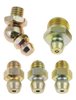
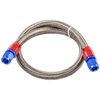
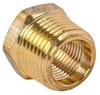

ADD A VEHICLE TO GUARANTEE PARTS FIT
See products that fit


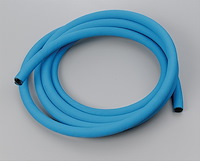
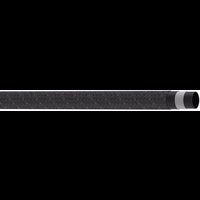
![UltraPro PTFE Hose [-12 AN, Black Polyester Braid, 33 ft.]](https://www.jegs.com/images/mini_100/300/361/361-683312erl.jpg)
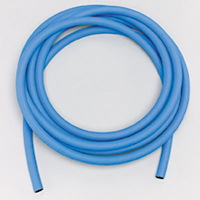
![UltraPro PTFE Hose [-12 AN, Black Polyester Braid, 33 ft.]](https://www.jegs.com/images/mini_200/300/361/361-683312erl.jpg)
RIGHT STUFF
67 5/16 Before 2/1/67 - Front to Rear Fuel Line - Stainless
Part Number: 965-ZGL6712S
 Ships TomorrowFree shipping
 Lowest price guarantee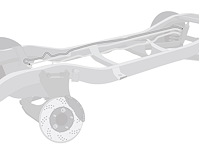
RIGHT STUFF
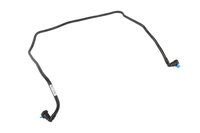
67 5/16 Before 2/1/67 - Front to Rear Fuel Line - Stainless
Part Number: 965-ZGL6712S
Ships TomorrowFree shippingLowest Price Guarantee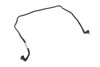






AEROQUIP
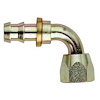
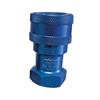
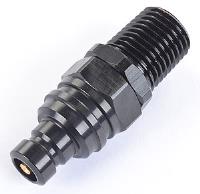
Female Half 250 PSI Working Pressure -15 deg. F to +300 deg. F 3.97oz Viton Seal 6061 Aluminum - Quick-Disconnect Coupling
Part Number: 023-FBM3114
Ships TodayLowest price guarantee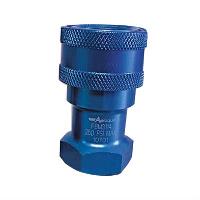
AEROQUIP
Female Half 250 PSI Working Pressure -15 deg. F to +300 deg. F 3.97oz Viton Seal 6061 Aluminum - Quick-Disconnect Coupling
Part Number: 023-FBM3114
Ships TodayLowest Price Guarantee





Frequently Asked Questions About Fittings and Hose
Do AN fittings need thread sealant or Teflon tape?
No. AN fittings seal at the 37-degree flare, so keep thread tape and sealant off the flare. Use sealant only on NPT pipe threads, such as the pipe side of an AN-to-NPT adapter.
Can you reuse AN hose ends?
It depends on the hose end design and its condition. Inspect the 37-degree flare and the threads before you reuse a hose end, and replace any part that shows damage. Check the manufacturer's instructions for your hose end, especially on PTFE hose.
Are blue and black AN fittings different?
Only in looks. Blue/red and black anodized finishes are cosmetic, and they use the same 37-degree flare seal. Pick the finish that suits your engine bay, then use the color and finish filters to find it.
What is a bulkhead fitting used for?
A bulkhead fitting passes a line through a panel or firewall and keeps that opening sealed. It's one of the standard fuel line fitting styles, alongside compression, barb, quick-connect, AN and push-lock fittings.
What tools do you need to build AN hose lines?
You need a hose cutter, an AN wrench and lubricant. A vise with soft jaws is optional, but it holds the hose end steady while you work.