


 Order Status & Returns
 Gift Cards
 Help Center
 1-800-345-4545
Vacuum Line Fittings, Automotive Vacuum Hoses & Connectors
Vacuum hose fittings connect the lines that carry engine vacuum to your brake booster, PCV system, ignition advance and other vacuum-operated accessories. When a connector cracks from heat or a hose goes soft, you get leaks that cause rough idle, weak braking and hard-to-trace drivability problems. Here you'll find tees, reducers, elbows, caps, silicone and rubber hose, and connector kits for a spot repair or a full engine-bay refresh.
Show More
What Vacuum Hose Fittings Do in Your Engine
Vacuum hose fittings route engine vacuum from the intake manifold to every system that depends on it. A running engine creates vacuum behind the throttle, and your fittings, tees and hoses carry that suction where it's needed. If one connection leaks, every system downstream loses pull.
On most vehicles, vacuum powers the brake booster, the PCV system, distributor ignition advance and the transmission modulator on older automatics. Classic and muscle cars also use it for pop-up headlights and cowl induction hoods. A leak at any of these points can show up as a hard brake pedal, poor shifting or headlights that won't open.
The PCV system is a common trouble spot, because its hoses and elbows sit near hot engine parts. If you're chasing oil consumption or an uneven idle, compare what you're seeing with these bad PCV valve symptoms before you replace hoses. When you're ready to plumb the rest of your engine bay, browse the full range of fittings and hose.
What Types of Vacuum Line Connectors Do You Need?
Most vacuum line connectors come in a handful of shapes, and each one solves a specific routing problem. Pick the shape first, then match the size to your hose. Here are the types you'll see most often:
- Tees split one vacuum source into two lines
- Straights join two hoses of the same size end to end
- Reducers connect hoses with two different inside diameters
- Elbows turn a line 90 degrees to clear tight spots
- Caps seal unused ports on a manifold or throttle body
- Barbed aluminum fittings grip hose tightly in high-heat areas
- Soft-mount aluminum fittings add a vacuum port to a silicone coupler
- Vacuum manifolds and distribution blocks feed several accessories from one port
Assortment kits with 100-plus pieces bundle tees, straights and reducers, so you can fix heat-cracked connections without a parts run. Shop individual pieces and kits in vacuum fittings and manifolds. You'll find options from brands including Dorman Products and Mr. Gasket.
Silicone vs. Rubber Vacuum Hose: Which Should You Use?
Choose silicone vacuum hose if your lines run near headers, turbos or other high-heat areas. Choose rubber if you want an OEM-style, budget-friendly replacement on a stock engine. Rubber works well, but it hardens, cracks and dry rots with age and heat.
Silicone holds up longer in those conditions, and color options make it easier to trace lines. Vibrant Performance silicone vacuum hose meets SAE J20R3 and resists collapse under high vacuum, plus peeling, cracking and swelling. It's sold in Pit Packs and Bulk Packs, such as a 3/16" (5mm) I.D. 25 ft bulk pack.
Some idle air control hose kits use 3-ply reinforced silicone for added strength. Because silicone is slicker than rubber, secure it with a clamp on barbed fittings. For silicone couplers and hose, check out Mishimoto, or compare every size and material in automotive vacuum hose.
How Do You Choose the Right Vacuum Hose Size?
Measure the inside diameter (I.D.) of your old hose or the outside diameter of the fitting barb, then buy hose and connectors that match. Vacuum hose is sized by I.D., so a 3/16" hose fits a 3/16" barb. A snug fit is what keeps the connection from leaking.
Common vacuum hose sizes include 1/8", 5/32", 3/16", 1/4", 5/16" and 3/8". Smaller sizes usually run to sensors, gauges and ignition advance, while larger sizes typically feed the brake booster and PCV system. Metric hose is close but not always exact, and 3/16" is roughly 5mm.
If two lines don't match, use a reducer, such as a 1/4" x 3/16" or 3/8" x 1/4" fitting. Don't stretch a small hose over a big barb, since it'll split once heat cycles set in. If your build also uses braided lines, our guide to AN fittings and hose sizes explains how dash sizes differ from vacuum hose I.D.
How Do You Fix a Leaking Vacuum Line?
To fix a leaking vacuum line, find the leak, replace the damaged section and reconnect it with a matching fitting. Most repairs take basic hand tools and a few minutes per connection. Work with the engine off and cool, then use this process:
- Inspect each hose for cracks, splits and loose ends
- Trim cracked hose ends back to clean, solid material
- Replace any hose that's hard, brittle or soft and swollen
- Join or reroute lines with a straight, tee or reducer that matches the I.D.
- Secure each connection with a clamp, then listen for hissing at idle
Spring clamps and small worm-gear clamps keep hose from creeping off barbs, and you'll find them in line clamps and separators. A connector kit keeps common sizes on hand for the next repair. For threaded vacuum ports on boosted or custom builds, follow our steps on how to assemble AN fittings and hose so each joint seals.

ADD A VEHICLE TO GUARANTEE PARTS FIT
See products that fit

OER
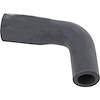
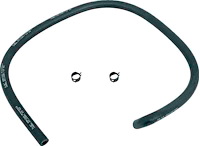
3932336 1968-72 Camaro, Nova, Corvette, Crankcase Ventilator Outer Hose, Each
Part Number: 691-3932336
 Ships on 10/13/2026
 Lowest price guarantee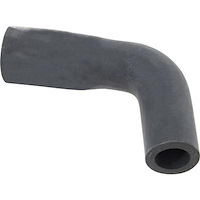
OER
3932336 1968-72 Camaro, Nova, Corvette, Crankcase Ventilator Outer Hose, Each
Part Number: 691-3932336
Ships on 10/13/2026Lowest Price Guarantee
HPS PERFORMANCE
57-2136-BLK Coolant Hose Kit, 3-Ply Reinforced Silicone Coolant & IDle Air Control Hoses, 1995-1998 Skyline GTR R33
Part Number: 589-57-2136-BLK
Ships on 10/21/2026Lowest price guarantee
HPS PERFORMANCE
57-2136-BLK Coolant Hose Kit, 3-Ply Reinforced Silicone Coolant & IDle Air Control Hoses, 1995-1998 Skyline GTR R33
Part Number: 589-57-2136-BLK
Ships on 10/21/2026Lowest Price Guarantee
HPS PERFORMANCE
57-1934-BLUE Breather & BPV Hose Kit, Reinforced Fluorolined Silicone, Replaces Rubber Breather & Bypass Valve Hoses
Part Number: 589-57-1934-BLUE
Ships on 10/21/2026Lowest price guarantee
HPS PERFORMANCE
57-1934-BLUE Breather & BPV Hose Kit, Reinforced Fluorolined Silicone, Replaces Rubber Breather & Bypass Valve Hoses
Part Number: 589-57-1934-BLUE
Ships on 10/21/2026Lowest Price Guarantee
HPS PERFORMANCE
57-1934-RED Breather & BPV Hose Kit, Reinforced Fluorolined Silicone, Replaces Rubber Breather & Bypass Valve Hoses
Part Number: 589-57-1934-RED
Ships on 10/21/2026Lowest price guarantee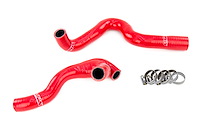
HPS PERFORMANCE
57-1934-RED Breather & BPV Hose Kit, Reinforced Fluorolined Silicone, Replaces Rubber Breather & Bypass Valve Hoses
Part Number: 589-57-1934-RED
Ships on 10/21/2026Lowest Price Guarantee
HPS PERFORMANCE
57-1934-BLK Breather & BPV Hose Kit, Reinforced Fluorolined Silicone, Replaces Rubber Breather & Bypass Valve Hoses
Part Number: 589-57-1934-BLK
Ships on 10/21/2026Lowest price guarantee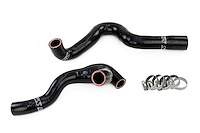
HPS PERFORMANCE
57-1934-BLK Breather & BPV Hose Kit, Reinforced Fluorolined Silicone, Replaces Rubber Breather & Bypass Valve Hoses
Part Number: 589-57-1934-BLK
Ships on 10/21/2026Lowest Price Guarantee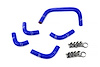
HPS PERFORMANCE
57-2134-BLUE Idle Air Control Valve Hose Kit, 3-Ply Reinforced Silicone, Replaces Rubber IDle Air Control Valve Hoses
Part Number: 589-57-2134-BLUE
Ships on 10/21/2026Lowest price guarantee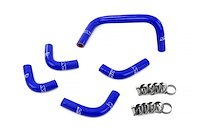
HPS PERFORMANCE
57-2134-BLUE Idle Air Control Valve Hose Kit, 3-Ply Reinforced Silicone, Replaces Rubber IDle Air Control Valve Hoses
Part Number: 589-57-2134-BLUE
Ships on 10/21/2026Lowest Price Guarantee
HPS PERFORMANCE
57-2136-BLUE Coolant Hose Kit, 3-Ply Reinforced Silicone Coolant & IDle Air Control Hoses
Part Number: 589-57-2136-BLUE
Ships on 10/21/2026Lowest price guarantee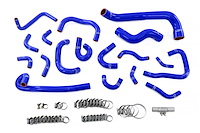
HPS PERFORMANCE
57-2136-BLUE Coolant Hose Kit, 3-Ply Reinforced Silicone Coolant & IDle Air Control Hoses
Part Number: 589-57-2136-BLUE
Ships on 10/21/2026Lowest Price Guarantee
MOTORCRAFT
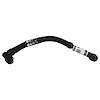
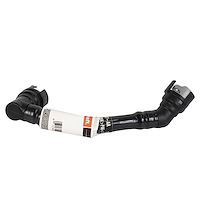
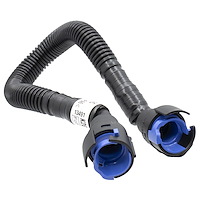
EPDM Rubber Direct-Fit OE Replacement PCV Valve Hose for 2007-2014 Ford and Lincoln Vehicles with 5.4L V8
Part Number: 037-KCV218
Ships on 10/16/2026Lowest price guarantee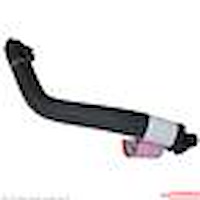
MOTORCRAFT
EPDM Rubber Direct-Fit OE Replacement PCV Valve Hose for 2007-2014 Ford and Lincoln Vehicles with 5.4L V8
Part Number: 037-KCV218
Ships on 10/16/2026Lowest Price Guarantee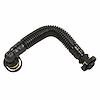
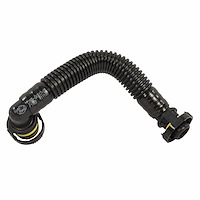
MOTORCRAFT
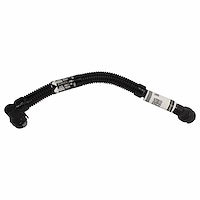
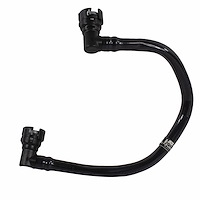
OEM Upper PCV Valve Hose for 2017-2019 Ford Escape SE, 2018-2019 Escape SEL, 2017 Escape Titanium 1.5L L4
Part Number: 037-KCV305
Ships on 10/16/2026Lowest price guarantee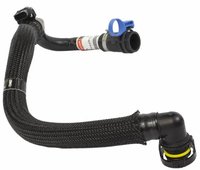
MOTORCRAFT
OEM Upper PCV Valve Hose for 2017-2019 Ford Escape SE, 2018-2019 Escape SEL, 2017 Escape Titanium 1.5L L4
Part Number: 037-KCV305
Ships on 10/16/2026Lowest Price Guarantee

DORMAN PRODUCTS
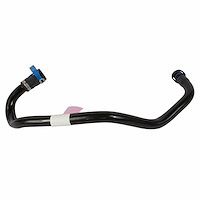
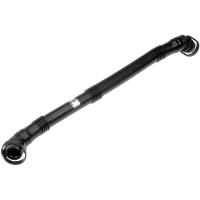
46062 Emissions Hose; 2004-2007 Buick, 2002-2009 Chevrolet, 2002-2009 GMC, 2002-2004 Oldsmobile
Part Number: 326-46062
Ships TomorrowLowest price guarantee
DORMAN PRODUCTS
46062 Emissions Hose; 2004-2007 Buick, 2002-2009 Chevrolet, 2002-2009 GMC, 2002-2004 Oldsmobile
Part Number: 326-46062
Ships TomorrowLowest Price Guarantee
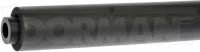
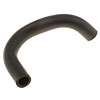
DORMAN PRODUCTS
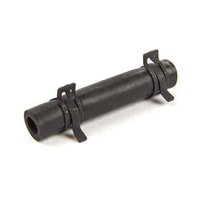
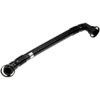
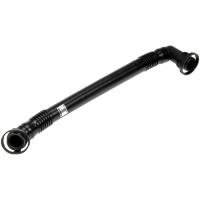
46013 PCV Hose - Fits 3.3l and 3.8l; 1996-2000 Chrysler, 1996-2000 Dodge, 1996-2000 Plymouth
Part Number: 326-46013
Ships on Oct 13, 2026Lowest price guarantee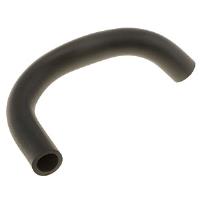
DORMAN PRODUCTS
46013 PCV Hose - Fits 3.3l and 3.8l; 1996-2000 Chrysler, 1996-2000 Dodge, 1996-2000 Plymouth
Part Number: 326-46013
Ships on Oct 13, 2026Lowest Price Guarantee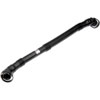
DORMAN PRODUCTS
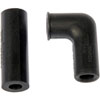
46024 PCV Elbow; 1996-2007 Chevrolet; 1996-2007 GMC; 2006 Pontiac; 2002-2003 Workhorse
Part Number: 326-46024
Ships on Oct 13, 2026Lowest price guarantee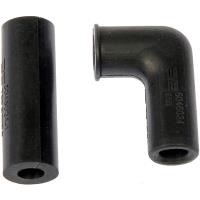
DORMAN PRODUCTS
46024 PCV Elbow; 1996-2007 Chevrolet; 1996-2007 GMC; 2006 Pontiac; 2002-2003 Workhorse
Part Number: 326-46024
Ships on Oct 13, 2026Lowest Price GuaranteeFrequently Asked Questions About Vacuum Hose Fittings
How Much Does a Vacuum Line Repair Kit Cost?
Basic vacuum line repair kits usually cost $5 to $20. Comprehensive connector assortments with more sizes and pieces run $20 to $50 or more. If you do the work yourself, your vacuum leak repair price is mostly the cost of hose, fittings and clamps.
What Are the Symptoms of a Vacuum Leak?
Common signs include a rough or high idle, a hissing sound from the engine bay and a check engine light. You may also notice a hard brake pedal if the brake booster line is leaking. Some engines also hesitate or stall at low speed.
What Can I Use to Seal a Vacuum Hose Temporarily?
Heat-shrink tubing or silicone sealant can seal a small crack long enough to get you home. A vacuum line repair kit is a stronger short-term fix, since you can splice out the damaged section with a straight connector. Replace the hose as soon as you can, because heat and vacuum will reopen a patched crack.
Do Vacuum Hoses Need Clamps?
Small vacuum lines on tight-fitting barbs often hold without clamps, which is how many factory lines are installed. Silicone hose, larger lines and anything near high heat or boost should be clamped. A clamp is cheap insurance against a hose slipping off and causing a leak.
How Often Should You Replace Vacuum Hoses?
There's no set interval, so replace vacuum hoses based on their condition. Inspect them at every tune-up for cracks, dry rot, hardening or soft, swollen spots. On older vehicles, replacing all the hoses at once saves you from chasing one leak after another.