Sign up now to join the JEGS email newsletter and be the first to learn about new products, special deals and e-mail only offers!

 8 People Found This Article Helpful
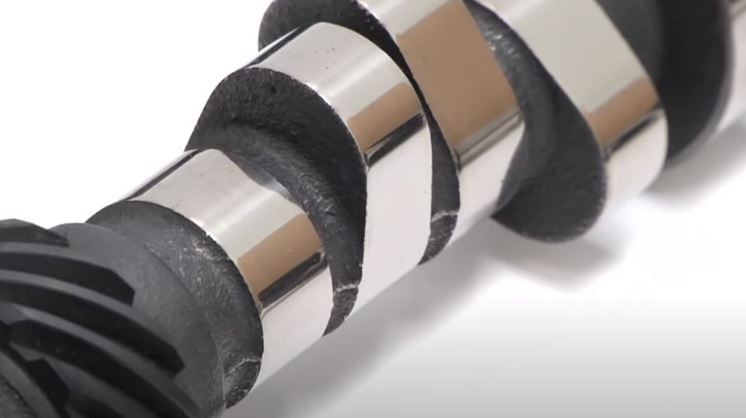

If you are planning a camshaft upgrade, you have likely heard the term camshaft overlap. Overlap plays a major role in how an engine idles, how much vacuum it produces, and where it makes power. Understanding how camshaft overlap affects idle, vacuum, and horsepower can help you choose the right cam for your street or performance build.
This guide breaks down what camshaft overlap is, how it changes engine behavior, and what to consider before selecting a camshaft.
Camshaft overlap is the period during the engine cycle when both the intake and exhaust valves are open at the same time. This occurs at the end of the exhaust stroke and the beginning of the intake stroke.
Overlap is determined by camshaft duration and lobe separation angle. More duration and tighter lobe separation generally increase overlap, while shorter duration and wider lobe separation reduce it.
Camshaft overlap has a direct impact on idle quality. When overlap increases, some of the incoming air and fuel mixture can escape through the exhaust at low engine speeds. This reduces combustion efficiency at idle.
Engines with significant overlap often have a rough or lopey idle. The uneven sound many enthusiasts enjoy is a result of reduced cylinder pressure and inconsistent combustion at low rpm.
In contrast, a camshaft with minimal overlap produces a smoother idle because less mixture escapes during valve overlap.
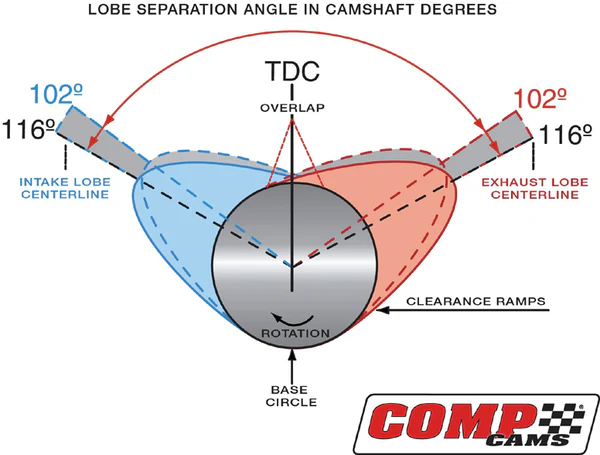
Vacuum is created when the engine pulls air into the cylinders with the throttle mostly closed. Increased camshaft overlap reduces manifold vacuum at idle because of the reversion of exhaust gases and reduced cylinder filling at low speeds.
Low vacuum can affect power brakes, vacuum operated accessories, and certain engine management systems. Street driven vehicles typically benefit from moderate overlap to maintain sufficient vacuum for reliable operation.
High performance or race engines often accept lower idle vacuum in exchange for improved high rpm power.
Sign up now to join the JEGS email newsletter and be the first to learn about new products, special deals and e-mail only offers!

While increased overlap can hurt idle quality and vacuum, it can improve power at higher engine speeds. At elevated rpm, overlap helps take advantage of exhaust scavenging. As exhaust gases exit the cylinder, they help pull fresh air and fuel into the combustion chamber.
This improves cylinder filling and increases volumetric efficiency at higher rpm. The result is greater horsepower and stronger top end performance.
However, too much overlap for a given engine combination can reduce low end torque and drivability.
Choosing the right camshaft overlap depends on how you use your vehicle. For daily driven street cars, moderate overlap helps maintain smooth idle, strong vacuum, and good low speed torque.
For weekend track cars or drag racing applications, more aggressive overlap can shift the power band higher in the rpm range. Supporting modifications such as upgraded intake manifolds, headers, and proper tuning are important when increasing overlap.
Engine compression ratio, displacement, gear ratio, and converter stall speed also influence how well an engine responds to increased overlap.

Camshaft selection should never be made in isolation. Increasing overlap without upgrading airflow and fuel delivery can limit gains. Proper valve springs, pushrods, and tuning are critical to maximize performance and maintain reliability.
At www.jegs.com, you will find a wide selection of camshafts, valvetrain components, intake manifolds, cylinder heads, and tuning solutions to match your performance goals.
If you are unsure how much camshaft overlap is right for your build, the JEGS Tech Specialists are available to help you choose a cam that delivers the idle quality, vacuum level, and power curve that best fits your application.

This engine is a 383. 12.5 compression, ported 210 cc runners,58 cc chambers,2.05 , 2.02 titanium valves, with shaft mounted roller rockers. All electronics are MSD; 7AL3 , front belt drive timing with a front drive MSD ignition. The spring are rated for 715 lift and the operating range is 4500 to 7500 RPM’s. I’m running an 850 CFM with E-85 . It’s a 4 speed Muncie. The rear end is a 488, and 29” slicks.

Hi Henry, thanks for following up with the additional details about your engine! With a 383 small-block Chevy, 12.5:1 compression, ported cylinder heads with 210cc runners, an MSD ignition system, E85 fuel, and a 4,500–7,500 RPM operating range, you’ve provided some valuable information to help narrow down your camshaft options. Your 4-speed Muncie, 4.88 rear gears, and 29-inch slicks also help us better understand your drag racing setup.
A solid roller camshaft with approximately .700″ valve lift and a 4/7 firing order swap could be a good option for your combination, but the ideal duration, lobe separation angle, and valve timing will depend on your complete setup. Since your valve springs are rated for .715″ lift, we’d also want to verify actual spring travel, coil-bind clearance, retainer-to-seal clearance, and piston-to-valve clearance before recommending a camshaft. With your 1.5-ratio shaft-mounted rockers, it’s especially important to confirm that everything works together properly.
Given your engine specifications and performance goals, a custom-ground camshaft may be the best way to optimize your combination, although we’d certainly check available off-the-shelf options as well. One of our JEGS Techs would be happy to review your specifications, help identify a suitable 4/7 swap camshaft, and check availability or custom-order options. Please give us a call at 1-800-345-4545, and we’ll be happy to help!
I’m looking to change my solid roller cam with
630 lift, 300 advertise duration on a LSA of 106. But I would like to change it for a 4/7 swap with around 700 lift. My engine has excellent air flow plus all the other goods that go with a drag racing engine. I’m using 1.5 roller rockers. Would you have something like this or does it have to be special order?
Hi Henry, thanks for reaching out! It sounds like you’ve got a serious drag racing engine combination! Moving from your current .630″ lift solid roller camshaft with 300 degrees advertised duration and a 106-degree LSA to a 4/7 firing order swap cam with approximately .700″ lift is certainly possible. However, with your 1.5-ratio roller rockers and the performance level you’re targeting, we’d recommend selecting a camshaft based on your complete engine combination rather than lift alone. Factors such as engine displacement, cylinder heads, compression ratio, operating RPM range, and valve spring specifications will help determine the ideal camshaft profile. A 4/7 swap also requires the correct firing order and compatible ignition setup. While some aftermarket manufacturers offer 4/7 swap camshafts, your specific requirements may call for a custom-ground camshaft. One of our JEGS Techs would be happy to review your engine specifications, check available camshaft options, and help determine whether an off-the-shelf or custom grind would be best for your application. Give us a call at 1-800-345-4545, and we’ll be happy to help!



Leave a Reply