


 Order Status & Returns
 Gift Cards
 Help Center
 1-800-345-4545
Valve Springs
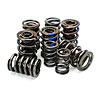
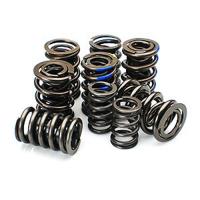
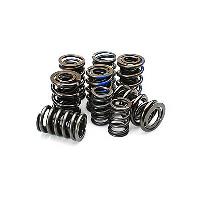
Valve springs close each valve after the cam opens it, and this page brings together springs for street, strip, and track engines. You'll find single, dual, and triple valve springs, beehive valve springs, springs with dampers, and complete spring kits. JEGS carries about 1,150 options you can filter by style, material, outside diameter, and engine make and size.
Show More
What Do Valve Springs Do?
A valve spring closes the valve after the cam lobe opens it, then holds the valve tight against its seat. That seal keeps compression and combustion pressure in the chamber, where it makes power.
The spring also keeps the lifter riding on the cam lobe. Without enough spring force, the valvetrain can't follow the lobe at high RPM, and the valve lags behind the cam. That's valve float, and it costs power and can let a valve contact the piston.
In every engine, a valve spring does three jobs:
- Closes the valve quickly after the cam opens it
- Keeps the lifter in contact with the cam lobe
- Prevents valve float as engine speed climbs
Springs work as one system with your lifters, cam, and valves. That's why a spring upgrade should match the rest of your camshafts and valvetrain parts. For more on spring design and terms, read our guide to understanding valve springs.
Types of Performance Valve Springs: Single, Dual, Triple and Beehive
Performance valve springs come in a few main styles, and each handles lift, RPM, and spring pressure differently. The right style depends on your cam and how you use the engine.
Here's how the main types compare:
- Single valve springs suit stock replacements and mild street cams with moderate lift
- Springs with dampers add an inner flat coil that helps control spring surge and vibration
- Dual valve springs nest an inner spring inside the outer spring for more pressure at higher lift
- Triple springs add a third coil for high-lift, high-spring-pressure drag-race and circle-track engines
- Beehive valve springs taper at the top, which cuts mass and reduces harmonics at high RPM
For racing valve springs, PAC Racing Springs offers 1200 and 1300 series springs in dual, triple, beehive, and circle-track designs. Manley makes the NexTek drag-race valve spring with a 1.650 in. O.D.
Mopar Performance offers single and dual valve springs with dampers for small-block engines. You'll also find JEGS valve springs in the lineup.
How to Choose Valve Springs for Your Camshaft
Choose valve springs by matching their pressure and max lift rating to your cam card. Your cam maker lists recommended spring specs, so start there.
Check these specs before you buy:
- Seat pressure is the force on the valve when it's closed at installed height
- Open pressure equals seat pressure plus valve lift multiplied by spring rate
- Spring rate is the force needed to compress the spring one inch
- Max valve lift is the most lift the spring is rated to handle
- Installed height is the distance from the bottom of the retainer to the spring seat on the head
- Outside diameter must fit your cylinder head's spring pocket and your retainer
Too little pressure invites valve float. Too much adds load on the cam and lifters.
If you're still picking a cam, start with performance camshafts and our guide on how to choose a camshaft. Our article on how to read camshaft specs explains cam card lift numbers. If a new spring changes diameter, pair it with matched valve spring retainers and locks.
LS Valve Springs and Valve Spring Kits
LS and LT engines use their own spring designs, and many builders upgrade them when they install a bigger cam. Chevrolet Performance offers a beehive valve spring for GM LS2, LS3, and LS6 engines. It also offers a valve spring kit for LSX454R and LSX-DR cylinder heads.
Brian Tooley Racing options cover several lift ranges:
- Beehive spring set for GM LS6 applications, rated to .560 in. max lift
- Beehive spring set for Gen V LT engines, rated to .550 in. max lift
- Platinum dual spring kit for GM LS engines, rated to .660 in. max lift
PAC Racing Springs also makes the RPM dual LS series for LS builds that call for a dual spring.
If you don't want to match parts one by one, valve spring kits bundle springs with retainers and locks. Crower offers a spring and retainer kit that pairs the two for you. Kits take the guesswork out of fit, but you'll still want to verify installed height on your heads.
Coil Bind, Installed Height and Installation Checks
Coil bind happens when a spring compresses so far that its coils touch before the valve reaches full lift. The valve stops, but the cam keeps pushing. That load can bend pushrods, break rocker arms, or snap valves.
COMP Cams recommends at least .060 in. of clearance between coils at full lift. To check it, subtract max valve lift from installed height, then compare the result to the spring's coil-bind height.
Here's a worked example. With a 1.900 in. installed height and .650 in. of lift, the spring compresses to 1.250 in. If that spring binds at 1.200 in., you'd have only .050 in. of clearance.
That's under the .060 in. minimum, so you'd need a spring with a lower coil-bind height or a different installed height. After any change, recheck seat pressure so it still matches your cam's spec.
Install new springs whenever you install a new cam. Measure installed height on every valve, since small differences in heads, retainers, and locks add up.

ADD A VEHICLE TO GUARANTEE PARTS FIT
See products that fit

ADD A VEHICLE TO GUARANTEE PARTS FIT
See products that fit
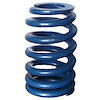
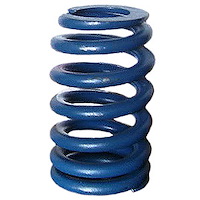


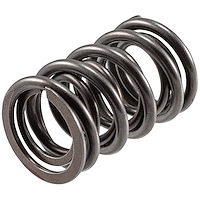

BRIAN TOOLEY RACING BTR
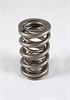
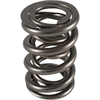
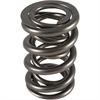
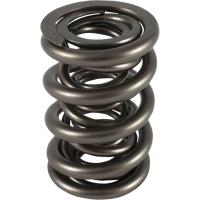
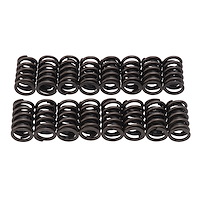
BTR91120-16 Beehive Valve Spring Set, GM Gen V LT, Max Lift: .550 in.
Part Number: 559-BTR91120-16
 Ships Tomorrow
 Lowest price guarantee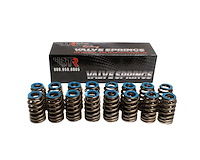
BRIAN TOOLEY RACING BTR
BTR91120-16 Beehive Valve Spring Set, GM Gen V LT, Max Lift: .550 in.
Part Number: 559-BTR91120-16
Ships TomorrowLowest Price Guarantee
BRIAN TOOLEY RACING BTR
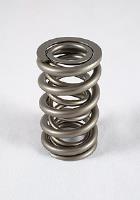
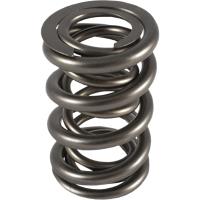
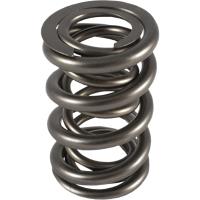
SK001/T/0560/BB Platinum Dual Spring Kit, GM LS, Max Lift: .660 in.
Part Number: 559-J000001
Ships TomorrowLowest price guarantee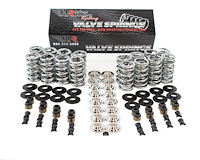
BRIAN TOOLEY RACING BTR
SK001/T/0560/BB Platinum Dual Spring Kit, GM LS, Max Lift: .660 in.
Part Number: 559-J000001
Ships TomorrowLowest Price Guarantee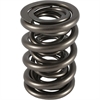
MELLING
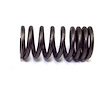
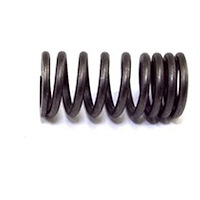
466724 High Performance Valve Spring GM Small Block (262-400), Mercury 4.3L, 4.7L, 5.0L
Part Number: 689-466724
Ships TomorrowLowest price guarantee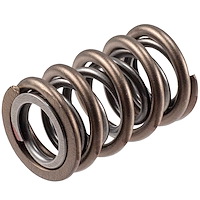
MELLING
466724 High Performance Valve Spring GM Small Block (262-400), Mercury 4.3L, 4.7L, 5.0L
Part Number: 689-466724
Ships TomorrowLowest Price Guarantee
PAC RACING SPRINGS
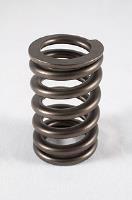
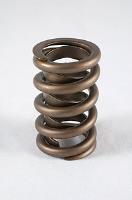
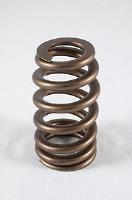
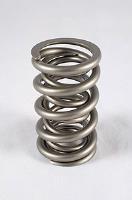
1500 Series Beehive Valve Spring Spring OD: 1.061
Part Number: 278-1514-1
Ships TomorrowLowest price guarantee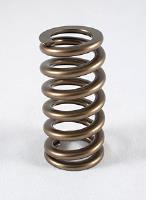
PAC RACING SPRINGS
1500 Series Beehive Valve Spring Spring OD: 1.061
Part Number: 278-1514-1
Ships TomorrowLowest Price Guarantee

Frequently Asked Questions About Valve Springs
Can You Drive With a Bad Valve Spring?
You can for a short distance, but you shouldn't. A weak or broken spring can let a valve float, drop, or hit the piston. That can turn a simple spring swap into a full engine rebuild, so replace the spring before you drive hard.
How Much Does It Cost to Replace Valve Springs?
Cost depends on the brand, material, and application. A set of valve springs can range widely in price, and performance kits with retainers and locks cost more than springs alone. Labor adds up if the cylinder heads have to come off.
Is Replacing Valve Springs Hard?
It's a manageable job for a DIY builder with the right tools. With the heads on, you can hold the valves closed with air pressure or the rope method, then use a spring compressor. You'll also need to check installed height so the new springs deliver the right seat pressure.
Do I Need New Valve Springs With a New Camshaft?
In most cases, yes. A new cam often has more lift or a more aggressive lobe than the old springs were built to handle. Your cam maker lists recommended springs, and matching them helps the valvetrain follow the new lobe.
What Are Signs of Weak Valve Springs?
Common signs include valve float at high RPM, misfires, or a power drop near the top of the rev range. You may also hear a noisier valvetrain. The surest check is measuring seat pressure on a spring tester and comparing it to the spring's spec.