


 Order Status & Returns
 Gift Cards
 Help Center
 1-800-345-4545

Lifters
Lifters ride on your cam lobes and transfer each lobe's motion to the rest of the valvetrain. JEGS carries hydraulic, solid, flat tappet, and roller lifters for Chevy, Ford, Mopar, AMC, and Jeep engines. Use the guides below to match lifter type and diameter to your cam, engine, and rpm range.
Show More
Types of Lifters for Street and Race Engines
Lifters come in four main families, and the right one depends on your cam grind and how you drive. Each family pairs a lifter design (hydraulic or solid) with a lobe contact style (flat tappet or roller).
- Hydraulic flat tappet lifters suit stock rebuilds and mild street-driven builds on older engines.
- Solid flat tappet lifters suit vintage race engines and builds that run a mechanical flat-tappet cam.
- Hydraulic roller lifters suit factory roller engines and low-maintenance street builds.
- Solid roller lifters suit high-rpm race engines with aggressive cam profiles and high spring pressure.
You'll find every family in Camshafts & Valvetrain, so you can shop lifters alongside matching parts. For a deeper look at how each style works, read our guide to the types of cams: solid, hydraulic, flat tappet, and roller.
Hydraulic Lifters vs Solid Lifters
Hydraulic lifters use engine oil and an internal plunger to self-adjust, while solid lifters need manual lash adjustment. That difference drives the tradeoffs in noise, maintenance, and rpm range.
A hydraulic lifter holds zero lash on its own, so it runs quiet and rarely needs attention. The tradeoff is that the plunger can pump up or collapse at very high rpm, which limits valve control. Short-travel hydraulic designs reduce plunger travel to help hold valve control at higher rpm.
Solid lifters, also called mechanical lifters, run with a set valve lash that you check and adjust periodically. They hold valve timing more consistently at high rpm, which is why race builds often use solid roller lifters. If your engine starts making noise, learn what a lifter tick sound means and how to fix it.
Whichever style you choose, the lifter has to match the cam design. Browse hydraulic and solid camshafts before you order lifters.
Flat Tappet vs Roller Lifters
Flat tappet lifters slide across the cam lobe, while roller lifters use a wheel that rolls along it. Rolling contact cuts friction and allows faster lobe profiles.
A flat tappet needs a careful break-in and oil with enough zinc to protect the lobe. Each flat tappet also wears into its own lobe, so it can't move to a different lobe or a new cam.
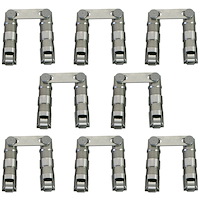
Roller lifters need a way to keep the wheel aligned with the lobe. Factory roller engines use guide trays or retainers, while retrofit roller lifters use link bars that tie each pair together. Check whether your block has factory roller provisions before you choose a style.
Flat tappet setups usually cost less up front, while roller setups reduce wear on the cam lobes. Get the full comparison in flat tappet vs roller camshafts explained.
How to Choose Lifters by Diameter and Engine
Start with your engine family, since lifter bore diameter varies by manufacturer. Most V8 applications use one of three common sizes:
- .842 in. diameter is common in Chevy small-block and big-block engines.
- .875 in. diameter is common in Ford V8 engines.
- .904 in. diameter is common in Chrysler and AMC V8 engines.
Next, match the lifter to your cam: hydraulic or solid, flat tappet or roller. Then confirm your block's roller provisions, since that decides between OEM-style and link-bar roller lifters.
Finally, consider your rpm range and spring pressure. A street-driven engine with a mild cam works well with hydraulic lifters, while a high-rpm race engine calls for solid roller lifters. If you're replacing the cam too, camshaft kits with matched lifters take the guesswork out of compatibility.
Lifter Brands at JEGS
JEGS carries lifters from established valvetrain and OEM brands for street, race, and factory-replacement builds. Here's what each brand covers in this category.
COMP Cams offers Short Travel XD hydraulic roller lifters for small-block Chevy 265-400 engines. Its Endure-X solid roller lifters fit Chrysler 273-360 engines with a .904 in. diameter. The lineup also includes solid lifters for AMC 290-401 engines and DOD delete kits for GM Gen V LT4 engines.
Chevrolet Performance supplies the OEM roller lifter (5234890) for 1987-1995 small-block Chevy engines. Isky Racing Cams makes EZ-RollMAX roller lifters with a .180 in. offset for 429/460 Big Block Ford engines.
For Jeep repairs, Crown Automotive offers replacement valve lifters for Jeep engines. Filter this page by brand to compare options for your engine.
Supporting Valvetrain Parts for Lifters
Lifters work as one part of a system, so plan the surrounding parts when you upgrade. A lifter swap can change the length of pushrods you need, so measure before you order. An adjustable checking pushrod helps you find the correct length.
Rocker arms set the final lift at the valve, since their ratio multiplies the cam's lobe lift. On hydraulic setups, you set lifter preload through rocker adjustment, so recheck it after any swap. Match valve springs to your cam and lifter type, because solid roller setups typically run higher spring pressure than hydraulic flat tappet setups.
For replacement and installation hardware, shop lifter components. Once your parts list is set, shop all lifters on this page by engine family, lifter type, and diameter.

ADD A VEHICLE TO GUARANTEE PARTS FIT
See products that fit

ADD A VEHICLE TO GUARANTEE PARTS FIT
See products that fit
COMP CAMS
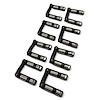
85401-16 Retro-Fit Hydraulic Roller Lifters for Chevy Big Block Engines w/OEM Flat Tappet Camshaft [16]
Part Number: 249-85401-16
 Ships Today
 Lowest price guarantee
COMP CAMS
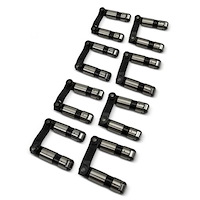
85401-16 Retro-Fit Hydraulic Roller Lifters for Chevy Big Block Engines w/OEM Flat Tappet Camshaft [16]
Part Number: 249-85401-16
Ships TodayLowest Price Guarantee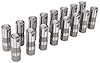
JEGS
Hydraulic Roller Lifters for 1997-2013 GM LS Gen III & IV Engines
Part Number: 555-20825
Ships TodayLowest price guarantee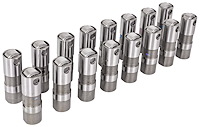
JEGS
Hydraulic Roller Lifters for 1997-2013 GM LS Gen III & IV Engines
Part Number: 555-20825
Ships TodayLowest Price Guarantee
BRIAN TOOLEY RACING BTR
X12499225-16 DELPHI LS7 Hydraulic Roller Lifter Set for GM Gen III/IV LS & Gen V LT
Part Number: 559-X12499225-16
Ships TodayLowest price guarantee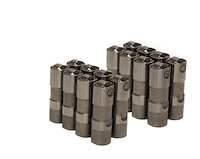
BRIAN TOOLEY RACING BTR
X12499225-16 DELPHI LS7 Hydraulic Roller Lifter Set for GM Gen III/IV LS & Gen V LT
Part Number: 559-X12499225-16
Ships TodayLowest Price Guarantee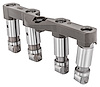
JEGS
Hydraulic Roller Lifters for 2004-2023 Chrysler Hemi GEN III Engines 5.7L, 6.4L with MDS [Rear]
Part Number: 555-20844
Ships TodayLowest price guarantee
JEGS
Hydraulic Roller Lifters for 2004-2023 Chrysler Hemi GEN III Engines 5.7L, 6.4L with MDS [Rear]
Part Number: 555-20844
Ships TodayLowest Price Guarantee
JEGS
Hydraulic Roller Lifters for 2004-2024 Chrysler Hemi GEN III Engines 5.7L, 6.4L with MDS [Front]
Part Number: 555-20843
Ships TodayLowest price guarantee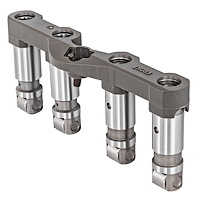
JEGS
Hydraulic Roller Lifters for 2004-2024 Chrysler Hemi GEN III Engines 5.7L, 6.4L with MDS [Front]
Part Number: 555-20843
Ships TodayLowest Price Guarantee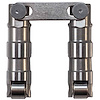
MELLING
291001 High Performance Hydraulic Retro Fit Roller Lifter Chevy Small Block 262-400
Part Number: 689-291001
Ships on 03/24/2027Lowest price guarantee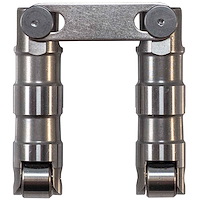
MELLING
291001 High Performance Hydraulic Retro Fit Roller Lifter Chevy Small Block 262-400
Part Number: 689-291001
Ships on 03/24/2027Lowest Price Guarantee
CHEVROLET PERFORMANCE
Racing Hydraulic Roller Lifter Kit Gen III and IV LS-Series GM Engines (Except with Active Fuel Management)
Part Number: 809-88958689
Ships on 11/27/2026Lowest price guarantee
CHEVROLET PERFORMANCE
Racing Hydraulic Roller Lifter Kit Gen III and IV LS-Series GM Engines (Except with Active Fuel Management)
Part Number: 809-88958689
Ships on 11/27/2026Lowest Price Guarantee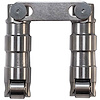
MELLING
291003 High Performance Hydraulic Retro Fit Roller Lifter Ford 221-302, 351W, 351C-400
Part Number: 689-291003
Ships on 12/28/2026Lowest price guarantee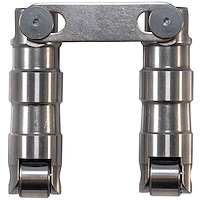
MELLING
291003 High Performance Hydraulic Retro Fit Roller Lifter Ford 221-302, 351W, 351C-400
Part Number: 689-291003
Ships on 12/28/2026Lowest Price Guarantee
MELLING
JB-7525 Hydraulic Lifter/Lash Adjuster Fits Select Chrysler 1.8, 2.0, 2.4, 3.0, 3.2, 3.6, 5.5L Engines
Part Number: 689-JB-7525
Ships TodayLowest price guarantee
MELLING
JB-7525 Hydraulic Lifter/Lash Adjuster Fits Select Chrysler 1.8, 2.0, 2.4, 3.0, 3.2, 3.6, 5.5L Engines
Part Number: 689-JB-7525
Ships TodayLowest Price Guarantee
COMP CAMS
Non-MDS Hydraulic Roller Lifter and Yoke Set for Dodge Gen III HEMI [16 Lifters, 4 Yokes]
Part Number: 249-856Y-16
Ships TodayLowest price guarantee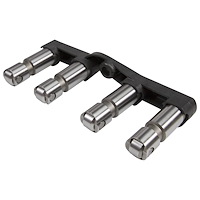
COMP CAMS
Non-MDS Hydraulic Roller Lifter and Yoke Set for Dodge Gen III HEMI [16 Lifters, 4 Yokes]
Part Number: 249-856Y-16
Ships TodayLowest Price GuaranteeCHEVROLET PERFORMANCE
OEM Hydraulic Roller Lifter Kit Gen III and IV LS-Series GM Engines (Except with Active Fuel Management)
Part Number: 809-12499225
Ships TodayLowest price guaranteeCHEVROLET PERFORMANCE
OEM Hydraulic Roller Lifter Kit Gen III and IV LS-Series GM Engines (Except with Active Fuel Management)
Part Number: 809-12499225
Ships TodayLowest Price Guarantee
COMP CAMS
89201-16 Retro-Fit Hydraulic Roller Lifters for Mopar 273-360 ci. Small Block Engines w/OEM Flat Tappet Camshaft [16]
Part Number: 249-89201-16
Ships TodayLowest price guarantee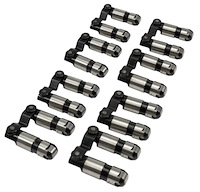
COMP CAMS
89201-16 Retro-Fit Hydraulic Roller Lifters for Mopar 273-360 ci. Small Block Engines w/OEM Flat Tappet Camshaft [16]
Part Number: 249-89201-16
Ships TodayLowest Price Guarantee
JEGS
Hydraulic Roller Lifters for Chrysler Hemi GEN III Engines 5.7L, 6.1L, 6.4L [Non-MDS]
Part Number: 555-20840
Ships TodayLowest price guarantee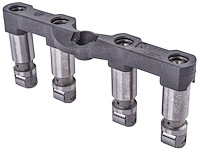
JEGS
Hydraulic Roller Lifters for Chrysler Hemi GEN III Engines 5.7L, 6.1L, 6.4L [Non-MDS]
Part Number: 555-20840
Ships TodayLowest Price Guarantee
JEGS
Replacement Hydraulic Lifters 1962-1995 Ford 289, 302, 351C, 351W, and 400M [Set of 16]
Part Number: 555-20706
Ships TodayLowest price guarantee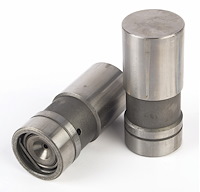
JEGS
Replacement Hydraulic Lifters 1962-1995 Ford 289, 302, 351C, 351W, and 400M [Set of 16]
Part Number: 555-20706
Ships TodayLowest Price Guarantee
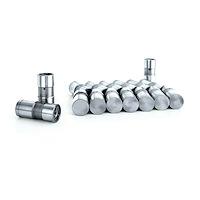

HOWARDS CAMS
Max Effort Retro-Fit Hydraulic Roller Lifter Set AMC 304-401, Chrysler 392-426 HEMI
Part Number: 466-91774
Ships on 11/30/2026Lowest price guarantee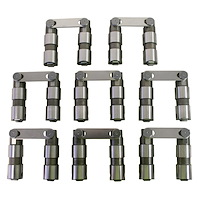
HOWARDS CAMS
Max Effort Retro-Fit Hydraulic Roller Lifter Set AMC 304-401, Chrysler 392-426 HEMI
Part Number: 466-91774
Ships on 11/30/2026Lowest Price Guarantee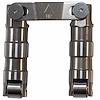
MELLING
291002 High Performance Hydraulic Retro Fit Roller Lifter Chevy Big Block 396-502
Part Number: 689-291002
Ships on 02/01/2027Lowest price guarantee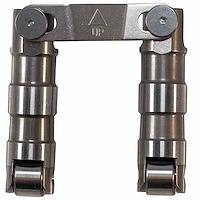
MELLING
291002 High Performance Hydraulic Retro Fit Roller Lifter Chevy Big Block 396-502
Part Number: 689-291002
Ships on 02/01/2027Lowest Price Guarantee
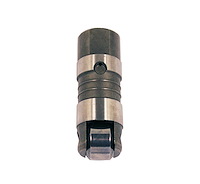

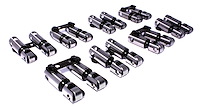
COMP CAMS
89211-16 Retro-Fit Hydraulic Roller Lifters for Mopar 383-440 ci. Big Block Engines w/OEM Flat Tappet Camshaft [16]
Part Number: 249-89211-16
Ships TodayLowest price guarantee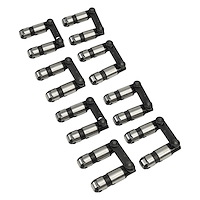
COMP CAMS
89211-16 Retro-Fit Hydraulic Roller Lifters for Mopar 383-440 ci. Big Block Engines w/OEM Flat Tappet Camshaft [16]
Part Number: 249-89211-16
Ships TodayLowest Price Guarantee
ISKY RACING CAMS
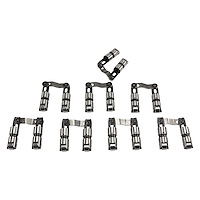
Extreme Zone EZ-RollMAX Roller Lifter Set 1967-1996 Big Block Chevy
Part Number: 609-37296RHMEZMA
Ships TodayLowest price guarantee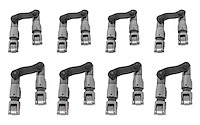
ISKY RACING CAMS
Extreme Zone EZ-RollMAX Roller Lifter Set 1967-1996 Big Block Chevy
Part Number: 609-37296RHMEZMA
Ships TodayLowest Price GuaranteeFrequently Asked Questions About Lifters
Can I use solid lifters on a hydraulic cam?
No. Solid and hydraulic cams use different lobe profiles, and solid cams build in clearance ramps designed for valve lash. Running the wrong lifter type can cause noise, poor valve control, and wear, so always match the lifter to the cam type in its specs.
Should I replace lifters when I install a new cam?
Yes, if you run flat tappet lifters. Each flat tappet wears into its original lobe, and reusing it on a new cam can damage the lobe. Roller lifters can be reused if they pass inspection, but many builders install new ones with a new cam.
What causes lifter tick?
Common causes include low oil pressure, dirty or old oil, and incorrect preload on hydraulic lifters or excess lash on solid lifters. A worn or collapsed lifter can also tick. Check your oil level and pressure first, then inspect preload or lash.
Do I need to break in a flat tappet cam?
Yes. Use high-zinc oil and run the engine at 2,000-2,500 rpm for 20-30 minutes right after the first start. Avoid extended idling during this period, since low rpm reduces oil splash to the lobes.
How long do hydraulic lifters last?
Hydraulic lifters commonly last 100,000 miles or more with proper oil maintenance. Infrequent oil changes, low oil levels, and contaminated oil can shorten that life. Regular changes with the correct oil help keep the internal plunger working as designed.