Sign up now to join the JEGS email newsletter and be the first to learn about new products, special deals and e-mail only offers!

 26 People Found This Article Helpful


When upgrading or replacing a camshaft, one of the most critical decisions you’ll make is choosing between a flat tappet vs roller tappet camshaft. Both options have their strengths and weaknesses, and the right choice depends on your vehicle’s intended use, engine setup, and performance goals. In this guide, we’ll break down the differences between roller cam vs flat tappet camshafts, their pros and cons, and help you decide which one is best for your build.
Flat tappet camshafts have been a staple in internal combustion engines for decades, especially in older cars and classic builds. They feature lifters (or tappets) with a flat contact surface that follows the camshaft lobes.


Flat tappets are an excellent option for restorations or builds where authenticity and cost control are primary considerations. However, they may not be the best choice for high-performance applications.
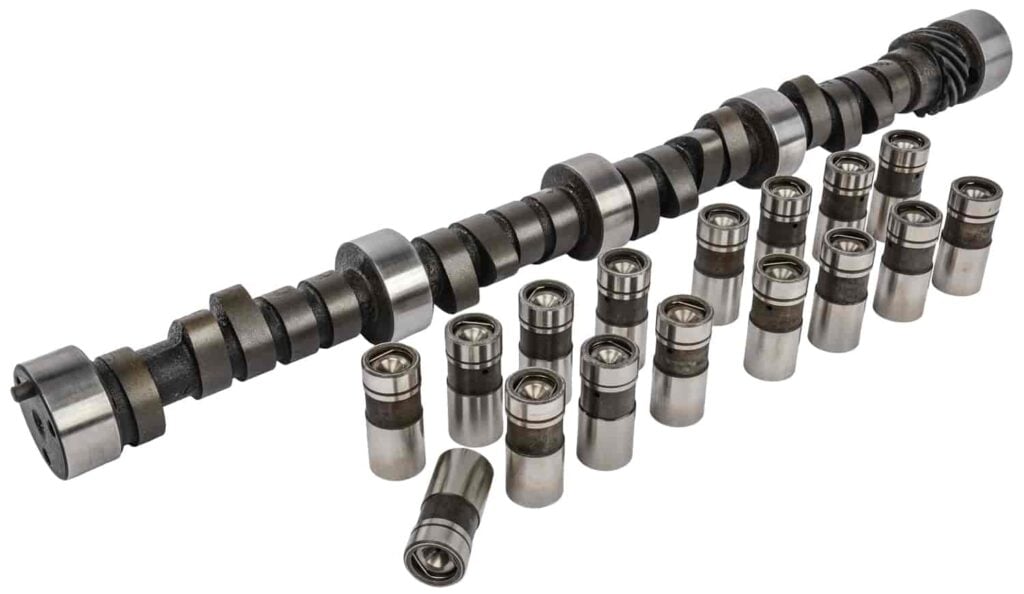
Roller tappet camshafts use lifters equipped with a small roller wheel at the contact point, allowing them to glide over the camshaft lobes with minimal friction. This design offers significant advantages in both performance and durability.
Roller tappets are the go-to choice for high-performance engines, modern vehicles, or any build where durability and power are top priorities.

Sign up now to join the JEGS email newsletter and be the first to learn about new products, special deals and e-mail only offers!
| Feature | Flat Tappet | Roller Tappet |
|---|---|---|
| Friction | High | Low |
| Durability | Moderate | High |
| Cost | Affordable | Expensive |
| Performance Potential | Moderate | High |
| Lobe Profiles | Less aggressive | More aggressive |
| Oil Requirements | ZDDP additives needed | Standard modern oils |
When deciding between a roller tappet vs flat tappet, you’ll need to consider several factors, including your budget, performance goals, and intended use for your vehicle.


Understanding the differences between flat tappet vs roller camshafts is essential for choosing the right setup for your engine. While flat tappets offer affordability and simplicity, roller tappets deliver better performance, longevity, and efficiency. Whether you’re restoring a classic or pushing the limits of your build, the right camshaft will unlock your engine’s full potential.
JEGS offers a wide selection of camshafts, lifters, and components to complete your build. If you need help selecting the right camshaft or have questions about your project, our JEGS Tech Support Team is available at 1-800-345-4545 to provide expert advice and guidance.

do you offer a cam recommending service or could you recommend someone to advise on cam selection, more aggressive if possible
Duntov 30-30 cam is OE
street/strip 4X56 rear axel ratio
stock LSA advertised for OE cam is 114 degrees
1968 Z28, 302 CI, 3 inch stroke. 4 inch bore, 11 to 1 compression ratio, 2.02 3917291 heads, lightly bowl blended, rotating assembly is stock for DZ,
would like to move to retro hydraulic cam with roller hydraulic lifters, O stamped rockers, what valve springs and pushrods should I run ? Any help would be deeply appreciated

Hi Brad,
Thanks for the detailed info on your 1968 Z/28 build—sounds like a fantastic street/strip project! Going from the OE Duntov 30-30 flat tappet cam to a more aggressive retro-fit hydraulic roller setup is a great way to improve drivability and performance without sacrificing too much of the car’s original character.
Camshaft Recommendation:
Since you’re working with a 302 DZ engine with 11:1 compression, a 4.56 rear gear, and a street/strip setup, a solid choice would be a hydraulic roller cam in the 230–240° duration at .050 range, around .520″–.550″ lift, and a 110–112° LSA. This will offer a noticeable increase in power and torque, better vacuum than the OE cam, and still sound aggressive.
Look at options like:
Comp Cams Magnum Retro-Fit Hydraulic Roller Camshafts
Lunati Voodoo Retro-Fit Hydraulic Roller Series
Lifters:
Use the matching retro-fit hydraulic roller lifters from the same brand as the cam to ensure proper compatibility with base circle and preload specs.
Valve Springs:
Choose valve springs that match the cam’s lift. For example, if you’re running .550″ lift, you’ll want springs that can handle up to .600″ safely. Both Comp and Lunati offer cam kits (K-Kits) that include the cam, lifters, springs, retainers, locks, and sometimes pushrods.
Pushrods:
Once you’ve mocked up the valvetrain, measure for correct pushrod length using a pushrod length checker. Since you’re moving from a flat tappet to a roller setup, pushrod length will likely change. Brands like COMP and Lunati offer custom-length hardened pushrods to match your exact geometry.
We’d be happy to walk you through specific part numbers based on your exact goals and budget. Contact our JEGS tech support team at 1-800-345-4545 and we can help tailor a cam and valvetrain package that fits your build perfectly.


Leave a Reply