Sign up now to join the JEGS email newsletter and be the first to learn about new products, special deals and e-mail only offers!

 2 People Found This Article Helpful
By
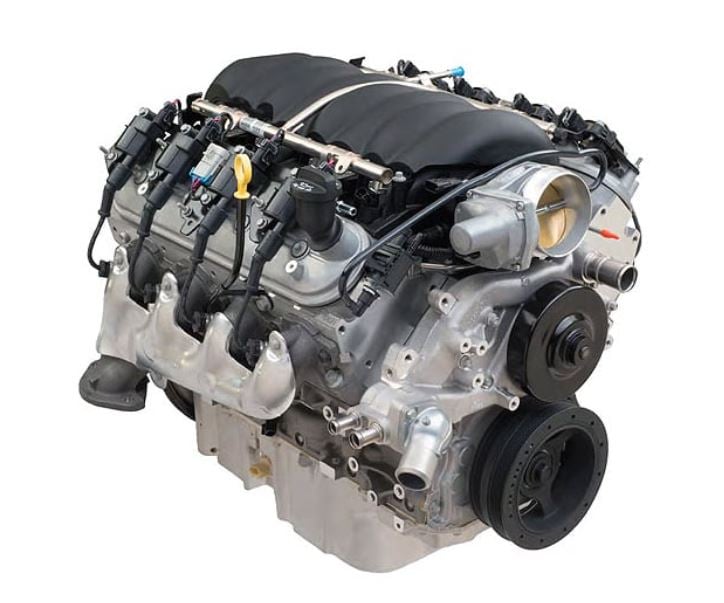
General Motors produced numerous versions of its LS-based V8 engines, and although many look nearly identical from the outside, important differences exist beneath the surface. Engine displacement, block material, compression ratio, horsepower, fuel compatibility, and factory applications can vary significantly.
If you own a Chevrolet Silverado, GMC Sierra, Chevrolet Tahoe, GMC Yukon, Cadillac Escalade, or another GM truck or SUV, you may have encountered engine codes such as LM7, L59, LQ4, LQ9, or L33. These three-character codes identify specific engine configurations and can help determine which replacement parts and performance upgrades are compatible with your vehicle.
Understanding GM LS engine RPO codes is especially important when purchasing a used engine, planning an LS swap, rebuilding an engine, or choosing upgrades such as cylinder heads, camshafts, intake manifolds, and fuel system components.
In this guide, we'll explain what GM RPO codes mean, compare five popular Generation III LS-based truck engines, show you how to identify your engine, and discuss which versions are best suited for different performance applications.
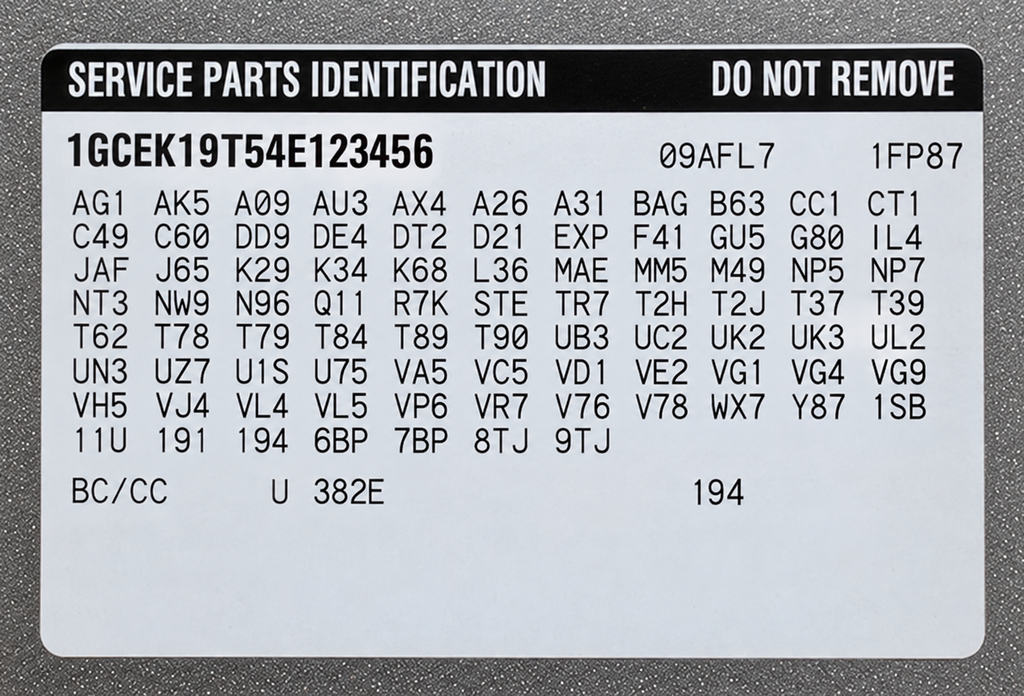
RPO stands for Regular Production Option. General Motors uses RPO codes to identify specific vehicle equipment, including engines, transmissions, axle ratios, suspension packages, and other factory-installed options.
Engine RPO codes are typically three-character combinations of letters and numbers. For example, LM7 identifies a particular 5.3-liter V8, while LQ9 identifies a high-output 6.0-liter V8.
These codes are important because two vehicles advertised as having a 5.3L Vortec V8 may have different engine configurations.
For example:
All five belong to GM's Generation III LS-based small-block engine family. Although GM marketed many of these engines under the Vortec name, they share the fundamental architecture that made the LS engine family popular for performance builds and engine swaps.
The following chart compares the major specifications of the LM7, L59, LQ4, LQ9, and L33 engines.
| Specification | LM7 | L59 | LQ4 | LQ9 | L33 |
|---|---|---|---|---|---|
| Engine family | Gen III | Gen III | Gen III | Gen III | Gen III |
| Displacement | 5.3L | 5.3L | 6.0L | 6.0L | 5.3L |
| Cubic inches (approx.) | 325 | 325 | 364 | 364 | 325 |
| Block material | Cast iron | Cast iron | Cast iron | Cast iron | Aluminum |
| Cylinder heads | Aluminum | Aluminum | Aluminum* | Aluminum | Aluminum |
| Bore | 3.780" | 3.780" | 4.000" | 4.000" | 3.780" |
| Stroke | 3.622" | 3.622" | 3.622" | 3.622" | 3.622" |
| Compression ratio (approx.) | 9.5:1 | 9.5:1 | 9.4:1 | 10.0:1 | 10.0:1 |
| Factory horsepower | 270–295 | 285–295 | 300–325 | 345 | 310 |
| Factory torque (lb-ft) | 315–335 | 320–335 | 360–370 | 380 | 335 |
| Factory flex-fuel capability | No | Yes | No | No | No |
*Some early LQ4 applications used cast-iron cylinder heads. Horsepower, torque, and certain specifications vary by model year and vehicle application. Figures are representative factory ratings, not guaranteed output for every installation.
The most important differences are displacement, block construction, compression ratio, and fuel system configuration. Those characteristics affect both the engine's factory performance and its suitability for future modifications.
The LM7 is one of the most recognizable engines in GM's LS-based truck engine family. Introduced for the 1999 model year, it became a popular powerplant in Chevrolet and GMC pickups and SUVs.
The LM7 uses a cast-iron engine block with aluminum cylinder heads. Its 5.3-liter displacement, compact pushrod V8 design, and widespread availability have made it a popular choice for budget-conscious LS engine swaps.
| Specification | LM7 |
|---|---|
| Displacement | 5.3L |
| Engine family | Generation III |
| Block | Cast iron |
| Cylinder heads | Aluminum |
| Bore | 3.780 inches |
| Stroke | 3.622 inches |
| Compression ratio | Approximately 9.5:1 |
| Horsepower | Approximately 270–295 hp |
| Torque | Approximately 315–335 lb-ft |
| Fuel delivery | Sequential multiport fuel injection |
| Valvetrain | OHV, 2 valves per cylinder |
| Typical production years | 1999–2007 |
The LM7 was installed in numerous GM trucks and SUVs, including certain model years and configurations of the Chevrolet Silverado 1500, GMC Sierra 1500, Chevrolet Tahoe, Chevrolet Suburban, GMC Yukon, and GMC Yukon XL.
Because these vehicles were produced in substantial numbers, LM7 engines are commonly encountered in salvage yards and used-engine marketplaces.
Yes. The LM7 is frequently selected for LS swaps because of its availability, aftermarket support, and relatively straightforward architecture.
Its cast-iron block is a useful foundation for naturally aspirated and forced-induction projects, although the condition of the engine and the quality of its internal components remain critical.
Popular LM7 upgrades include performance camshafts, valve springs, intake and exhaust improvements, and appropriate engine tuning.
For higher-output builds, connecting rods, pistons, fuel delivery, cooling, and overall engine condition must be considered rather than assuming the factory bottom end will support a particular horsepower level.
The L59 is closely related to the LM7, but it was engineered for factory flex-fuel applications.
Introduced for the 2002 model year, the L59 was offered in selected GM trucks and SUVs equipped to operate on gasoline or approved ethanol-gasoline blends containing up to 85% ethanol.
Although its basic engine architecture is similar to the LM7, the L59's factory fuel-system configuration is an important distinction.
| Specification | L59 |
|---|---|
| Displacement | 5.3L |
| Engine family | Generation III |
| Block | Cast iron |
| Cylinder heads | Aluminum |
| Bore | 3.780 inches |
| Stroke | 3.622 inches |
| Compression ratio | Approximately 9.5:1 |
| Horsepower | Approximately 285–295 hp |
| Torque | Approximately 320–335 lb-ft |
| Factory fuel capability | Flex fuel, including E85 |
| Typical production years | 2002–2007 |
The most significant difference is factory flex-fuel compatibility.
E85 contains substantially more ethanol than conventional gasoline and requires greater fuel volume to produce comparable energy output. A factory flex-fuel vehicle therefore uses appropriately specified fuel-system components and engine-management strategies.
Depending on the model year, the L59's original vehicle may include different fuel injectors, fuel-system components, sensors, and calibration requirements than a gasoline-only LM7 application.
However, installing an L59 engine by itself does not automatically make another vehicle E85-compatible. The complete fuel system and engine-management calibration must support the intended fuel.
The L59 can be a useful foundation for many of the same types of performance projects as the LM7.
Its 5.3L displacement and cast-iron block make it suitable for a wide range of engine swaps and upgrades.
For enthusiasts planning to use E85, the L59's factory flex-fuel heritage can be attractive, but fuel-system compatibility must still be verified for the complete installation.
The LQ4 is a 6.0-liter Generation III LS-based V8 that appeared in GM trucks, vans, and SUVs beginning in 1999.
Compared with the 5.3L LM7 and L59, the LQ4 offers greater displacement, which helps explain its stronger factory torque output.
The LQ4 uses a cast-iron block and, in most applications, aluminum cylinder heads. Some early versions were equipped with cast-iron heads.
| Specification | LQ4 |
|---|---|
| Displacement | 6.0L |
| Cubic inches | Approximately 364 |
| Engine family | Generation III |
| Block | Cast iron |
| Cylinder heads | Aluminum on most versions |
| Bore | 4.000 inches |
| Stroke | 3.622 inches |
| Compression ratio | Approximately 9.4:1 |
| Horsepower | Approximately 300–325 hp |
| Torque | Approximately 360–370 lb-ft |
| Typical production years | 1999–2007, with some later applications |
The LQ4 was used in selected Chevrolet Silverado HD and GMC Sierra HD trucks, Chevrolet Suburban 2500 models, GMC Yukon XL 2500 models, and GM full-size vans, among other applications.
Exact availability depends on model year, vehicle configuration, and market.
The LQ4 combines 6.0 liters of displacement with a cast-iron block and relatively modest factory compression.
Those characteristics make it an attractive starting point for certain turbocharged and supercharged projects.
The 4.000-inch bore also gives builders access to cylinder-head and piston combinations that may not be appropriate for the smaller 3.780-inch bore used in 5.3L engines.
However, the cast-iron block alone does not guarantee reliability at high boost levels. Piston design, connecting rods, ring gaps, fuel delivery, ignition timing, charge-air temperature, and tuning are all important.
For naturally aspirated applications, the LQ4 can also respond well to camshaft, cylinder-head, intake, and exhaust upgrades.
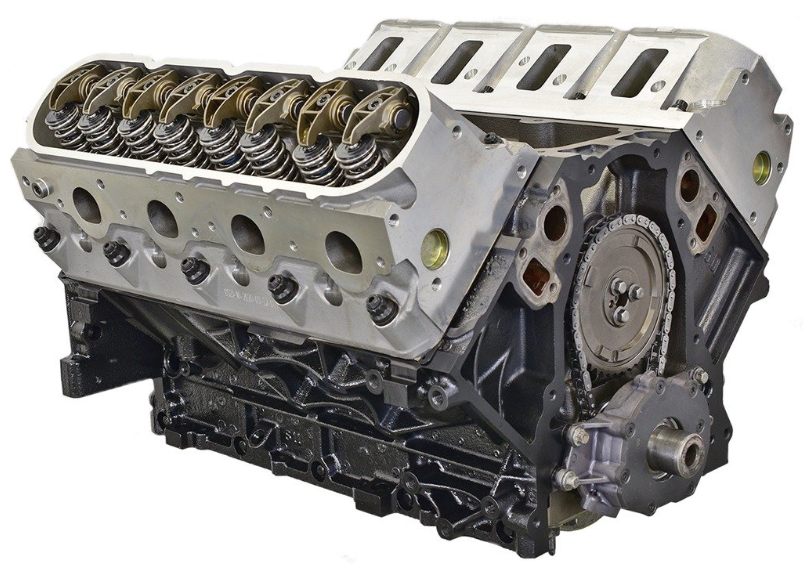
The LQ9 is a higher-output version of GM's Generation III 6.0-liter truck engine.
Often associated with the Vortec HO and VortecMAX names, the LQ9 was installed in selected performance-oriented trucks and SUVs, including the Cadillac Escalade and Chevrolet Silverado SS.
It shares the same 4.000-inch bore and 3.622-inch stroke as the LQ4 but uses a higher factory compression ratio.
| Specification | LQ9 |
|---|---|
| Displacement | 6.0L |
| Engine family | Generation III |
| Block | Cast iron |
| Cylinder heads | Aluminum |
| Bore | 4.000 inches |
| Stroke | 3.622 inches |
| Compression ratio | Approximately 10.0:1 |
| Factory horsepower | 345 hp |
| Factory torque | 380 lb-ft |
| Typical production years | 2002–2007 |
Notable LQ9 applications include selected model years of the Cadillac Escalade, Cadillac Escalade EXT, Cadillac Escalade ESV, Chevrolet Silverado SS, and certain VortecMAX-equipped trucks.
Not every vehicle carrying these model names used the LQ9 in every year or configuration.
Both engines displace approximately 364 cubic inches and use cast-iron blocks, aluminum cylinder heads in their commonly compared configurations, and the same bore and stroke.
The LQ9's higher compression ratio is a major distinction. Different piston configurations contribute to that difference, and the engine's factory calibration also plays a role in its rated output.
The LQ9 was rated at 345 horsepower and 380 lb-ft of torque, compared with the approximately 300–325 horsepower commonly associated with later LQ4 applications.
The LQ9 is therefore appealing to enthusiasts who want a stronger factory naturally aspirated starting point without immediately replacing major internal components.
Higher compression can also influence fuel octane requirements and the amount of boost an engine can safely tolerate. The appropriate combination depends on the entire build, not compression ratio alone.
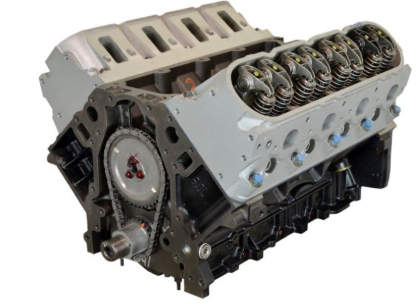
The L33 is a less common and particularly interesting member of GM's Generation III 5.3L engine family.
Introduced for the 2005 model year, the L33 was offered in selected four-wheel-drive Chevrolet Silverado and GMC Sierra 1500 extended-cab, standard-bed pickups.
Unlike the more common LM7 and L59, the L33 uses an aluminum engine block.
It also features a higher compression ratio and a factory rating of 310 horsepower.
| Specification | L33 |
|---|---|
| Displacement | 5.3L |
| Engine family | Generation III |
| Block | Aluminum |
| Cylinder heads | Aluminum |
| Bore | 3.780 inches |
| Stroke | 3.622 inches |
| Compression ratio | Approximately 10.0:1 |
| Factory horsepower | 310 hp |
| Factory torque | 335 lb-ft |
| Typical production years | 2005–2007 |
The L33 combines the familiar 5.3L LS-based architecture with a lighter aluminum block and higher factory output.
It also uses cylinder-head and piston characteristics that distinguish it from the conventional LM7.
The aluminum block can reduce engine weight compared with an otherwise similar cast-iron configuration, which is useful for projects where front-end weight and vehicle balance matter.
The L33 is particularly attractive for lightweight street builds and naturally aspirated engine swaps.
It depends on the application.
The L33 provides more factory horsepower, a higher compression ratio, and a lighter block. Those characteristics make it desirable for certain performance-oriented builds.
The LM7, however, is generally easier to find and can offer a more economical starting point.
For an engine swap, the L33 may be preferable when weight reduction is a priority, while the LM7 may make more sense when purchase cost and parts availability are the main considerations.
Choosing the right LS-based truck engine depends on how you intend to use it. An engine that makes sense for a daily-driven pickup may not be the best choice for a lightweight street car or dedicated racing project.
| Your goal | Engine to consider | Why |
|---|---|---|
| Budget LS swap | LM7 | Widespread availability and aftermarket support |
| Factory flex-fuel donor | L59 | Originally configured for gasoline/E85 operation |
| Naturally aspirated 6.0L build | LQ9 | Higher factory compression and horsepower |
| Turbocharged 6.0L project | LQ4 | Iron block, 6.0L displacement, lower factory compression |
| Lightweight 5.3L swap | L33 | Aluminum block and 310-hp factory rating |
| Truck or towing application | LQ4 or LQ9 | Greater displacement and factory torque |
| Affordable 5.3L performance build | LM7 or L59 | Common engine architecture and broad parts support |
These are starting-point recommendations rather than guarantees of performance. Engine condition, transmission compatibility, gearing, intended use, and overall project budget should influence the final decision.
Sign up now to join the JEGS email newsletter and be the first to learn about new products, special deals and e-mail only offers!
Correctly identifying your engine is essential before ordering replacement parts or performance upgrades.
GM used several versions of its LS-based V8 engines that share similar external dimensions and mounting characteristics. Because of this, engine appearance alone may not provide a definitive identification.
For many GM trucks and SUVs from this era, the factory Service Parts Identification label is located inside the glove box.
This label lists the vehicle's original factory equipment, including its engine RPO code.
Look for one of the following three-character codes:
| RPO code | Engine identification |
|---|---|
| LM7 | 5.3L Vortec V8, gasoline |
| L59 | 5.3L Vortec V8, flex fuel |
| LQ4 | 6.0L Vortec V8 |
| LQ9 | 6.0L Vortec HO V8 |
| L33 | 5.3L Vortec HO V8 |
The label identifies the engine originally installed at the factory. If the vehicle has received a replacement engine, the RPO label may no longer describe the engine currently under the hood.
The eighth character of the vehicle identification number can help identify the original engine configuration.
For common GM truck applications of these Generation III engines, the following VIN engine identifiers are useful:
| Engine RPO | Common VIN eighth character |
|---|---|
| LM7 | T |
| L59 | Z |
| LQ4 | U |
| LQ9 | N |
| L33 | B |
Important: VIN engine identifiers are application-specific. Verify the model year and vehicle application using factory service information or an appropriate GM parts catalog before relying on the VIN character alone.
A VIN identifies the vehicle's original configuration, not necessarily an engine that was installed later.
If the engine is removed from the vehicle or its history is unknown, inspect the block and cylinder-head casting numbers.
These markings can help identify the engine's casting family, but they do not always prove a specific RPO code.
Multiple GM engine configurations can share castings, and previous owners may have replaced cylinder heads, rotating assemblies, or other components.
Use casting information alongside the engine's physical characteristics, factory documentation, and any available identification markings.
Block material provides another useful clue.
The LM7, L59, LQ4, and LQ9 use cast-iron engine blocks, while the L33 uses an aluminum block.
A magnet can help distinguish the two materials when placed against an accessible, clean portion of the engine block itself.
Do not test the cylinder head and assume it represents the block material. Most of these engines use aluminum cylinder heads even when the engine block is cast iron.
Also, identifying an aluminum 5.3L block does not automatically confirm an L33, because GM produced other aluminum-block 5.3L engines.
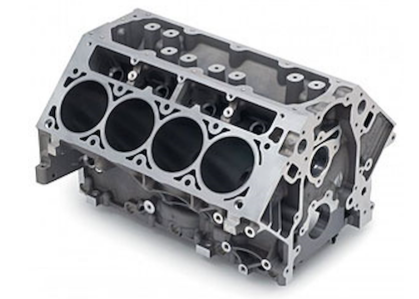
Before ordering parts, confirm as many of the following as possible:
These details become particularly important when combining components from different LS engine generations.
No. Although GM's LS engine family is known for sharing many components, not every part fits every LS-based engine.
The LM7, L59, LQ4, LQ9, and L33 have substantial architectural similarities, but several differences can affect compatibility.
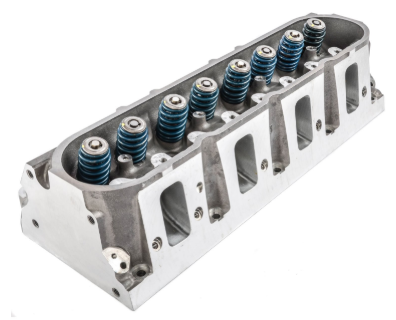
Cylinder-head compatibility depends on more than the mounting-bolt pattern.
The 5.3L engines use a smaller cylinder bore than the 6.0L engines. Cylinder heads with larger valves may create clearance concerns when installed on a smaller-bore block.
Combustion chamber volume also affects compression ratio, and changes to cylinder-head configuration can influence piston-to-valve clearance.
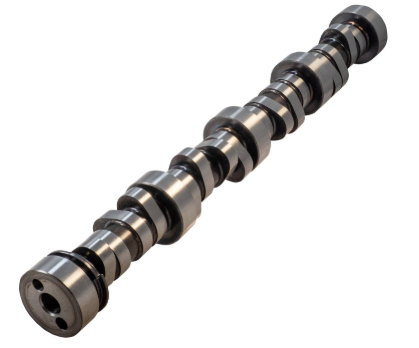
Performance camshafts are popular upgrades for LS-based engines, but choosing a camshaft requires consideration of the entire combination.
Important factors include valve lift, duration, lobe separation, intended RPM range, piston-to-valve clearance, valve spring specifications, and the vehicle's transmission and torque converter.
An aggressive camshaft may produce more high-RPM horsepower while reducing low-speed drivability or vacuum.
Intake manifolds and throttle bodies can differ between truck and passenger-car applications.
Differences may include throttle actuation, fuel rail design, injector dimensions, accessory clearance, and engine-management compatibility.
A manifold that physically bolts to the cylinder heads may still require additional components or modifications.
The five engines covered here generally use Generation III engine-management architecture, including a 24-tooth crankshaft reluctor configuration.
However, wiring harnesses, control modules, throttle systems, sensors, and calibrations can vary by year and application.
This is especially important when installing a Generation III engine into a vehicle originally equipped with a later-generation engine or when mixing components from different donor vehicles.
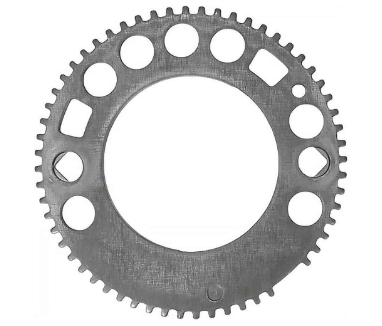
One reason these engines remain popular is the extensive selection of available performance parts.
The right upgrades depend on whether the goal is improved daily-driving performance, towing capability, naturally aspirated horsepower, or forced-induction power.
A properly selected camshaft can change an LS engine's power characteristics significantly.
For street-driven trucks, a mild camshaft designed to maintain low- and midrange torque may be more appropriate than a high-RPM racing camshaft.
More aggressive camshafts often require upgraded valve springs, compatible pushrods, and additional valvetrain inspection.
Cylinder heads can improve airflow and combustion efficiency.
Depending on the engine and performance goals, upgrades may include professionally prepared factory heads or aftermarket performance cylinder heads.
Builders should verify bore compatibility, combustion chamber size, valve clearance, compression ratio, and valvetrain geometry before purchasing.
An appropriately sized intake manifold, compatible throttle body, and well-designed exhaust system can help support increased airflow.
Headers and exhaust components should be selected for the vehicle's chassis, intended operating range, and emissions requirements.
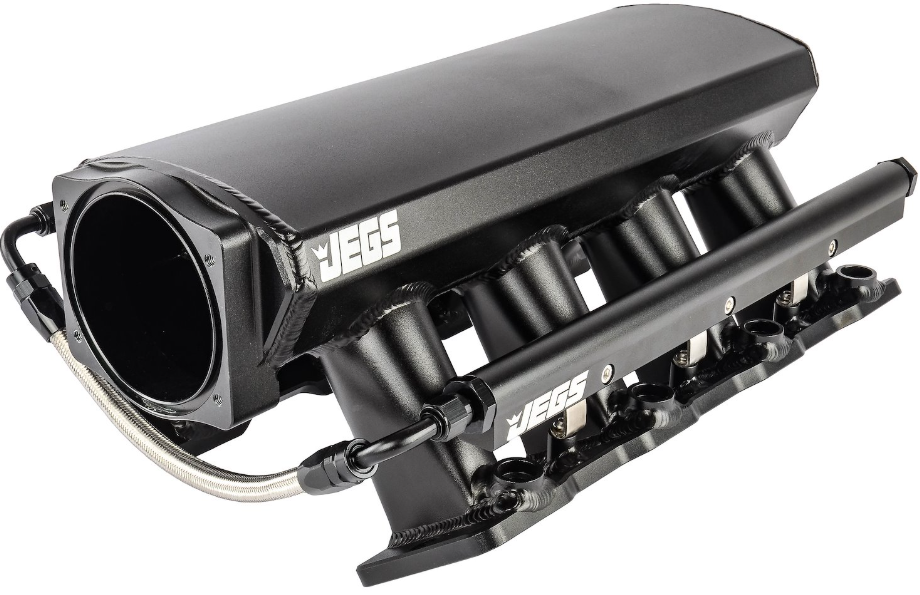
Higher-output engines may require upgraded injectors, fuel pumps, regulators, and fuel lines.
Fuel demand increases as engine output increases, and ethanol-rich fuels typically require greater fuel volume than gasoline for comparable power.
Fuel-system upgrades should be matched to the intended fuel, engine output, and control strategy.
Forced induction can substantially increase the output of an LS-based engine, but it also increases thermal and mechanical loads.
A reliable combination requires appropriate fuel delivery, ignition control, charge-air temperature management, engine tuning, and suitable internal components.
There is no universal safe boost-pressure or horsepower limit for an LM7, L59, LQ4, LQ9, or L33. Actual capability depends on engine condition, component specifications, fuel quality, and calibration.

Engine calibration is an essential part of many performance modifications.
Changes to airflow, injector specifications, camshaft characteristics, or forced induction can require adjustments to fuel delivery, ignition timing, idle behavior, and other control parameters.
A properly calibrated engine-management system can help the completed combination operate as intended.
For emissions-controlled street vehicles, modifications must also comply with applicable federal, state, and local requirements.
A used LS engine can offer excellent value, but its condition matters more than its advertised horsepower or RPO code.
Before purchasing a used LM7, L59, LQ4, LQ9, or L33, inspect the engine carefully.
Check for signs of overheating, coolant contamination, excessive oil consumption, damaged wiring, broken mounting points, and evidence of previous modifications.
Whenever possible, perform a compression test and cylinder leak-down test. These tests provide useful information about cylinder sealing, although neither can independently establish the condition of every internal component.
Inspect the engine oil for contamination and check for abnormal metal debris. If the engine is still installed and operational, listen for unusual mechanical noises and verify oil pressure using appropriate diagnostic equipment.
For an LS swap, also confirm what is included with the engine. A complete engine with accessories, wiring, sensors, fuel-system components, and a compatible control module may be more useful than a bare long block.
Finally, verify the engine's identity rather than relying solely on the seller's description. A used engine advertised as an LQ9, for example, should not be identified solely by the fact that it has a 6.0L cast-iron block.

LM7 is GM's RPO designation for a Generation III 5.3-liter Vortec V8 with a cast-iron block and aluminum cylinder heads. It was used in numerous Chevrolet and GMC trucks and SUVs beginning with the 1999 model year.
The primary difference is factory fuel compatibility. The LM7 is a gasoline-engine configuration, while the L59 was designed for flex-fuel applications capable of operating on approved ethanol-gasoline blends, including E85. Both are 5.3L Generation III engines with cast-iron blocks.
Yes. The LQ4 belongs to GM's Generation III LS-based small-block V8 family. Although it was marketed as a Vortec 6000 truck engine rather than an LS1 or LS2, it shares the underlying LS-based architecture.
The LQ4 and LQ9 are both 6.0L Generation III engines with cast-iron blocks. The LQ9 features higher factory compression and a 345-horsepower rating, while LQ4 factory horsepower varies by application and is generally lower.
The LQ9 offers greater factory horsepower and higher compression, making it attractive for naturally aspirated builds. The LQ4's lower factory compression can be useful for certain forced-induction combinations. Neither is automatically better for every application.
The L33 is less common than the LM7 because it was offered in a narrower selection of GM pickups. Its aluminum block, 310-horsepower factory rating, and limited applications make it desirable for some engine swaps and performance builds.
The L33 was factory-rated at 310 horsepower and 335 lb-ft of torque. Actual output from a used or modified engine depends on its condition and configuration.
The L33 is an aluminum-block 5.3L Generation III engine. GM also produced other aluminum-block 5.3L variants, including the LM4 and later Generation IV engines. Not every aluminum-block 5.3L is an L33.
Start with the vehicle's factory RPO label and VIN engine identifier. If the engine has been swapped, inspect available engine identification markings and physical specifications. The 5.3L engines discussed here have a 3.780-inch bore, while the LQ4 and LQ9 6.0L engines have a 4.000-inch bore. External appearance alone is not a reliable way to determine displacement.
An LQ9 can be used in many projects originally equipped with an LM7, but it is not necessarily a direct plug-and-play replacement. Differences in displacement, fuel delivery, calibration, exhaust configuration, accessories, and other components may require modifications. Verify the specific vehicle and donor-engine combination before beginning the swap.
These particular Generation III engine configurations were not factory-equipped with Active Fuel Management (AFM). AFM appeared on certain later GM engine applications. A modified engine may differ from its original factory configuration.
The LQ4 is a popular candidate because it combines 6.0L displacement, a cast-iron block, and relatively modest factory compression. However, the LM7, L59, LQ9, and L33 can also be used in properly engineered forced-induction builds. The ideal choice depends on budget, intended output, fuel, internal components, and tuning.

GM's LM7, L59, LQ4, LQ9, and L33 engines share the basic architecture that made the LS engine family a favorite among automotive enthusiasts, but they are not identical.
The LM7 offers an accessible 5.3L platform for engine swaps and performance upgrades. The L59 adds factory flex-fuel capability. The LQ4 provides 6.0L displacement with a durable cast-iron block and lower factory compression. The LQ9 delivers higher factory output, while the L33 combines 5.3L displacement with an aluminum block and 310-horsepower rating.
Understanding these differences helps you identify the correct engine, select compatible components, and plan upgrades that match your goals.
Whether you're rebuilding a factory truck engine, preparing an LS swap, or upgrading your existing V8, JEGS offers a wide selection of LS engine components, including camshafts, cylinder heads, intake manifolds, fuel system components, gaskets, ignition parts, and engine swap accessories.
Explore JEGS performance parts and accessories to find components for your next LS engine project.


Leave a Reply