


 Order Status & Returns
 Gift Cards
 Help Center
 1-800-345-4545
Performance Intake Manifolds
Performance intake manifolds route air, or air and fuel, from the carburetor or throttle body into each cylinder's intake port. The right design shifts your powerband toward low-end torque or high-rpm horsepower, so it has to match your cam, heads and intended use. This category covers street, strip and race manifolds for carbureted and EFI engines, plus the spacers, plates and hardware that finish the install.
Show More
What Performance Intake Manifolds Do
Performance intake manifolds distribute airflow to every cylinder and control how fast that air moves into the ports. Runner design is the main tuning lever. Longer, narrower runners keep air velocity high for low-end and mid-range torque, while shorter, larger runners favor high-rpm horsepower.
Plenum volume matters too. A larger plenum helps feed a high-revving engine, but it can soften throttle response on a mild street combination. That's why you should choose an aftermarket intake manifold as part of the whole package, including cam timing, cylinder heads, displacement and gearing.
For a closer look at how runner cross-section and length change the powerband, read our breakdown of intake manifold runner size. Bigger runners aren't automatically better, especially on a smaller engine that rarely sees high rpm. When you're ready to plan the rest of the system, browse our air and fuel delivery parts for carburetors, throttle bodies, fuel pumps and filters.
Single Plane Vs Dual Plane Intake Manifolds
A dual plane intake builds low-end and mid-range torque, while a single plane intake trades some bottom end for high-rpm power. Dual plane designs divide the plenum into two halves, and each half feeds four cylinders through longer runners. That layout suits street cars, tow vehicles and automatic combinations with stock converters.
A single plane intake uses one open plenum that feeds all eight runners. It suits track cars with bigger cams, higher-stall converters and steeper gears that keep rpm up.
Common intake styles in this category include:
- Dual plane intakes for low-end and mid-range torque on street and towing builds
- Single plane intakes for high-rpm power on strip and race engines
- High-rise and tunnel ram intakes for race combinations that often need a hood scoop
- EFI multi-port intakes with injector bosses in each runner
- Fabricated sheet-metal intakes for dedicated race engines
If you're still deciding, our single plane vs dual plane intake guide compares both designs in more detail.
Choosing An Intake Manifold By Engine Platform
Start with your engine family, then match the manifold to your cylinder head port shape. A small block Chevy (SBC) intake manifold won't bolt to a big block, and an oval-port big block intake won't match rectangle-port heads. LS engines add another split between cathedral-port and rectangle-port heads.
For big block Chevy oval-port heads, the Edelbrock RPM Air-Gap is a dual plane option for street performance. Brian Tooley Racing BTR Trinity intakes cover GM LS3, LS7 and Gen V LT engines, plus the 6.2L HEMI and Ford Godzilla. If you're shopping for an LS intake manifold for an EFI build, the FAST LSXHR is another option in this category.
Before you order, check the carburetor or throttle body flange, hood clearance, and vacuum and coolant port locations. Use the JEGS vehicle fitment tool to filter parts for your vehicle. You can also call JEGS Tech Specialists to confirm your manifold, heads and induction system work together.
Carbureted Vs EFI Intake Manifolds
A carbureted intake manifold carries both air and fuel, while an EFI intake manifold carries mostly air and sprays fuel near each intake valve. Because a carbureted runner moves a fuel mixture, its shape affects fuel distribution as well as airflow. Port-injected EFI manifolds avoid most of that issue, which gives designers more freedom with runner length.
On a carbureted build, match the manifold flange to your carb. A square-bore 4150 flange won't accept a spread-bore carburetor without an adapter, and plenum height affects hood clearance. Our high rise vs low rise carbureted intake guide compares rise height options for carbureted engines.
EFI conversions and late-model engines need injector bosses, a throttle body flange and sensor provisions that match your system. For 5.0L Ford EFI engines with Cobra or GT-40 intakes, Ford Performance offers an EFI heat spacer that helps reduce heat transfer into the intake.
Intake Manifold Components, Spacers And Valley Plates
Spacers, plates and hardware let you fine-tune or adapt the manifold you already run. Phenolic heat spacers reduce heat transfer from the engine into the carburetor, and open spacers add plenum volume. Billet-aluminum LS spacers and tall-deck plates help adapt intakes to blocks with raised deck heights.
Common intake manifold spacers and add-on parts include:
- Phenolic heat spacers that insulate the carburetor from engine heat
- Billet-aluminum spacers that raise LS intakes on tall-deck blocks
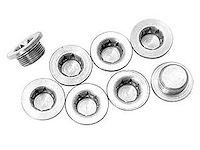
- Plug kits that seal unused vacuum, sensor or injector ports
- Replacement runners for modular intake designs
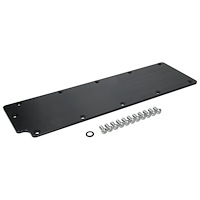
Shop our intake manifold components for these parts and related install hardware. On LS engines, lifter valley plates and covers seal the lifter valley beneath the intake manifold. Chevrolet Performance offers LS valley covers for factory-style builds and engine swaps.
Whichever parts you choose, confirm that each spacer or plate matches your manifold bolt pattern and port style.

ADD A VEHICLE TO GUARANTEE PARTS FIT
See products that fit

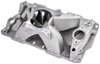
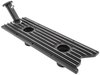
![146052-1 Replacement Intake Manifold Runner for FAST LSXR Intake Manifolds [Number 8 Position]](https://www.jegs.com/images/mini_100/200/244/244-146052-1.jpg)
FAST
146052-1 Replacement Intake Manifold Runner for FAST LSXR Intake Manifolds [Number 8 Position]
Part Number: 244-146052-1
 Ships Today
 Lowest price guarantee
![146052-1 Replacement Intake Manifold Runner for FAST LSXR Intake Manifolds [Number 8 Position]](https://www.jegs.com/images/mini_200/200/244/244-146052-1.jpg)
FAST
146052-1 Replacement Intake Manifold Runner for FAST LSXR Intake Manifolds [Number 8 Position]
Part Number: 244-146052-1
Ships TodayLowest Price Guarantee

ACDELCO
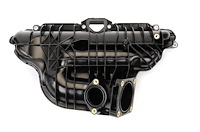
12623417 Fuel Injected Intake Manifold Fits Select GM 5.3L Engines
Part Number: 065-12623417
Ships TodayLowest price guarantee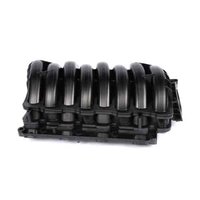
ACDELCO
12623417 Fuel Injected Intake Manifold Fits Select GM 5.3L Engines
Part Number: 065-12623417
Ships TodayLowest Price Guarantee
OER
TP5610G Tri-Power Aluminum Intake Manifold for 1966 Pontiac Bonneville, Grand Prix, GTO, Lemans
Part Number: 691-TP5610G
Ships TodayLowest price guarantee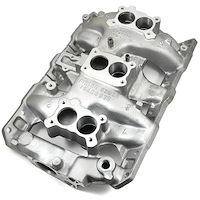
OER
TP5610G Tri-Power Aluminum Intake Manifold for 1966 Pontiac Bonneville, Grand Prix, GTO, Lemans
Part Number: 691-TP5610G
Ships TodayLowest Price Guarantee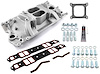
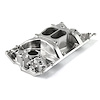
SPEEDMASTER
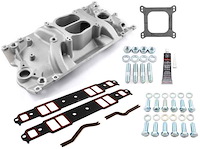
LowRise Intake Manifold 1996-Up Small Block Chevy 350 Vortec
Part Number: 746-1-147-005
Ships TodayLowest price guarantee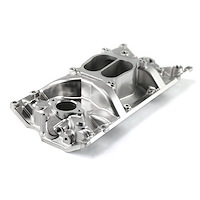
SPEEDMASTER
LowRise Intake Manifold 1996-Up Small Block Chevy 350 Vortec
Part Number: 746-1-147-005
Ships TodayLowest Price Guarantee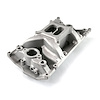
SPEEDMASTER
MidRise Intake Manifold 1996-Up Small Block Chevy 350 Vortec
Part Number: 746-1-147-010
Ships TodayLowest price guarantee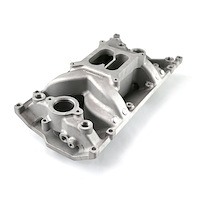
SPEEDMASTER
MidRise Intake Manifold 1996-Up Small Block Chevy 350 Vortec
Part Number: 746-1-147-010
Ships TodayLowest Price Guarantee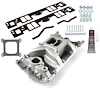
![MidRise Air Intake Manifold Small Block Chevy 350 Vortec [Black Finish]](https://www.jegs.com/images/mini_100/700/746/746-1-147-012.jpg)
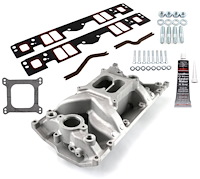
SPEEDMASTER
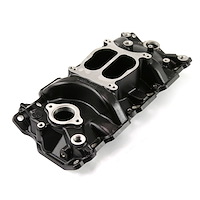
MidRise Air Intake Manifold Small Block Chevy 350 Vortec [Black Finish]
Part Number: 746-1-147-012
Ships TodayLowest price guarantee![MidRise Air Intake Manifold Small Block Chevy 350 Vortec [Black Finish]](https://www.jegs.com/images/mini_200/700/746/746-1-147-012.jpg)
SPEEDMASTER
MidRise Air Intake Manifold Small Block Chevy 350 Vortec [Black Finish]
Part Number: 746-1-147-012
Ships TodayLowest Price Guarantee
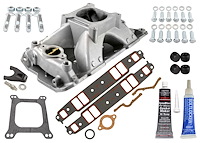
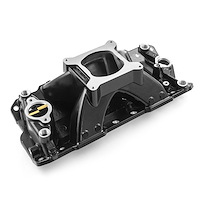
SPEEDMASTER
HiRise Intake Manifold Kit 1957-1995 Small Block Chevy 350 - Black Finish
Part Number: 746-1-147-015K
Ships TodayLowest price guarantee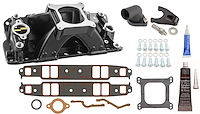
SPEEDMASTER
HiRise Intake Manifold Kit 1957-1995 Small Block Chevy 350 - Black Finish
Part Number: 746-1-147-015K
Ships TodayLowest Price Guarantee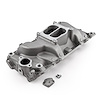
SPEEDMASTER
LowRise Intake Manifold Big Block Chevy 454 Oval Port
Part Number: 746-1-147-016
Ships TodayLowest price guarantee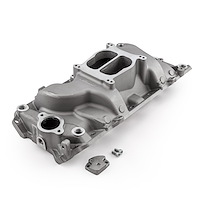
SPEEDMASTER
LowRise Intake Manifold Big Block Chevy 454 Oval Port
Part Number: 746-1-147-016
Ships TodayLowest Price Guarantee![LowRise Intake Manifold Big Block Chevy 454, Oval Port [Machine Polished]](https://www.jegs.com/images/mini_100/700/746/746-1-147-017.jpg)
SPEEDMASTER
LowRise Intake Manifold Big Block Chevy 454, Oval Port [Machine Polished]
Part Number: 746-1-147-017
Ships TomorrowLowest price guarantee![LowRise Intake Manifold Big Block Chevy 454, Oval Port [Machine Polished]](https://www.jegs.com/images/mini_200/700/746/746-1-147-017.jpg)
SPEEDMASTER
LowRise Intake Manifold Big Block Chevy 454, Oval Port [Machine Polished]
Part Number: 746-1-147-017
Ships TomorrowLowest Price Guarantee![Downdraft EFI Stack Intake Manifold Small Block Chevy 350 [Black]](https://www.jegs.com/images/mini_100/700/746/746-1-148-004.jpg)
![Downdraft EFI Stack Intake Manifold Small Block Chevy 350 [Black]](https://www.jegs.com/images/mini_200/700/746/746-1-148-004.jpg)


SPEEDMASTER
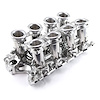
Downdraft EFI Stack Intake Manifold - Big Block Ford 460 Fuel Injected
Part Number: 746-1-148-008
Ships TomorrowLowest price guarantee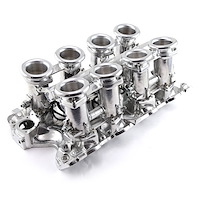
SPEEDMASTER
Downdraft EFI Stack Intake Manifold - Big Block Ford 460 Fuel Injected
Part Number: 746-1-148-008
Ships TomorrowLowest Price Guarantee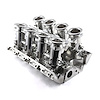
SPEEDMASTER
Downdraft EFI Stack Intake Manifold - Ford FE 390/427/428 Fuel Injected
Part Number: 746-1-148-010
Ships TomorrowLowest price guarantee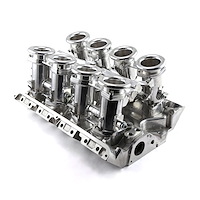
SPEEDMASTER
Downdraft EFI Stack Intake Manifold - Ford FE 390/427/428 Fuel Injected
Part Number: 746-1-148-010
Ships TomorrowLowest Price GuaranteeFrequently Asked Questions About Performance Intake Manifolds
How much horsepower does a performance intake manifold add?
Gains depend on your full combination, including heads, cam, displacement, exhaust and tuning. A manifold that matches the rest of the engine can add power in the rpm range you use most. A mismatched manifold can shift power higher than your engine operates and cost you low-end torque.
Do I need a tune after installing a new intake manifold?
On EFI engines, plan on a tune, because changes in airflow and runner design affect fuel and timing needs. Carbureted engines may need jetting and timing adjustments to suit the new manifold. Either way, check your air-fuel ratio after the install.
Will an aftermarket intake manifold fit under my stock hood?
It depends on manifold height, carburetor or throttle body height, air cleaner height and any spacer you add. High-rise and tunnel ram intakes often need a hood scoop or cowl hood. Compare the listed manifold height with your measured clearance before you order.
Can I reuse my intake manifold gaskets?
In most cases, no. Intake gaskets compress and conform when they're torqued, so a used gasket may not seal again and can cause vacuum or coolant leaks. Install new gaskets that match your head port shape and the manifold's port size.
What does intake manifold runner control do?
Factory intake manifold runner control (IMRC) systems on some engines change runner length or airflow as rpm changes. The goal is to improve low-rpm torque and high-rpm power from the same manifold. Most aftermarket performance manifolds use fixed runners, so their size and length are chosen for a target rpm range.