Sign up now to join the JEGS email newsletter and be the first to learn about new products, special deals and e-mail only offers!

 2 People Found This Article Helpful


When building or upgrading an engine, it is easy to assume that bigger parts automatically mean more power. That is not always the case, especially when it comes to intake manifold runner size. The size and length of intake runners play a major role in airflow velocity, torque production, and overall horsepower.
Understanding how intake manifold runner size affects engine performance can help you choose the right manifold for your combination instead of simply choosing the largest option available.
The intake manifold distributes air from the throttle body or carburetor to each cylinder. The runners are the individual passages that carry air to the intake ports in the cylinder heads.
Runner size includes both diameter and length. These dimensions directly influence how air moves into the engine and where in the rpm range the engine makes power.

Large intake runners allow a greater volume of air to flow at high engine speeds. This can support higher peak horsepower numbers, especially in engines that operate at elevated rpm.
However, larger runners reduce air velocity at lower engine speeds. Lower air velocity can hurt throttle response and reduce low end torque.
Smaller runners increase air velocity, which improves cylinder filling at lower and mid range rpm. This typically results in stronger low speed torque and better street drivability.
The key is balancing airflow volume and air velocity for your intended use.
Engines that use smaller diameter, longer runners tend to produce strong torque in the lower and middle rpm range. This setup works well for street cars, trucks, towing applications, and vehicles that spend most of their time below peak rpm.
Larger diameter, shorter runners are commonly found in performance intake manifolds designed for high rpm horsepower. These manifolds are often used in drag racing, road racing, and other applications where peak power at higher engine speeds is the priority.
Choosing an intake manifold with runners that are too large for your engine combination can actually reduce performance in everyday driving.

Sign up now to join the JEGS email newsletter and be the first to learn about new products, special deals and e-mail only offers!
Intake manifold runner size should match engine displacement and operating rpm range. A small displacement engine typically benefits from smaller runners to maintain air velocity. A large displacement engine can often support larger runners without sacrificing as much low speed performance.
Camshaft selection, cylinder head flow, compression ratio, and exhaust system design all influence how an engine responds to different runner sizes.

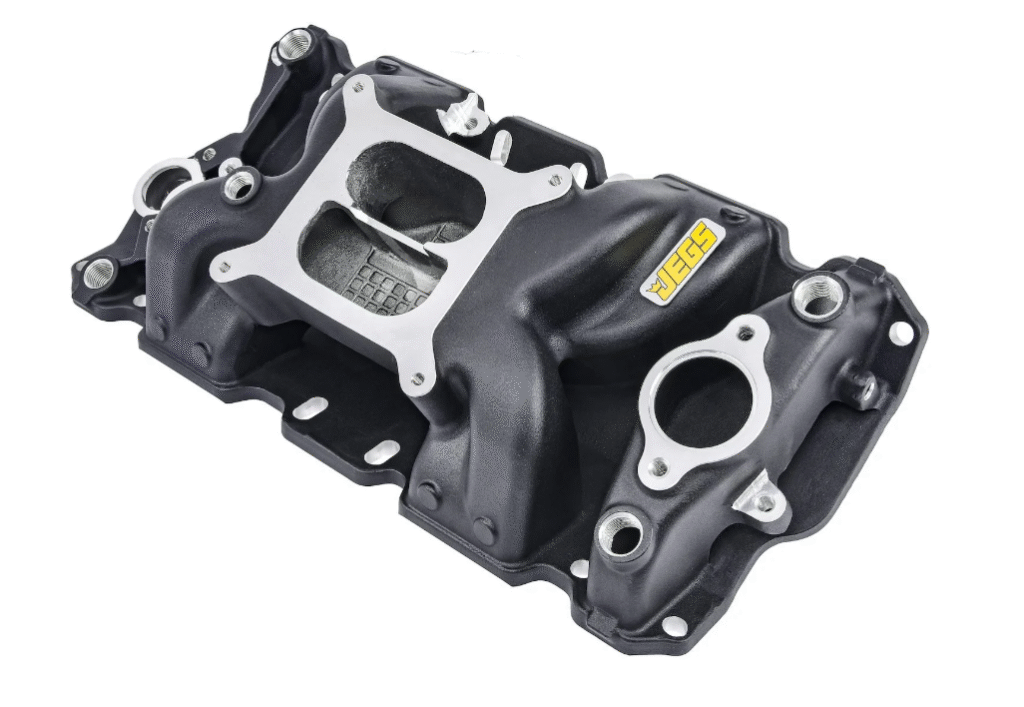
Single plane intake manifolds usually have shorter, larger runners and are designed for high rpm power. Dual plane manifolds typically use longer runners that promote better low and mid range torque.
For many street driven vehicles, a dual plane intake provides a better balance of drivability and performance. For race focused builds, a single plane manifold may deliver stronger top end horsepower.

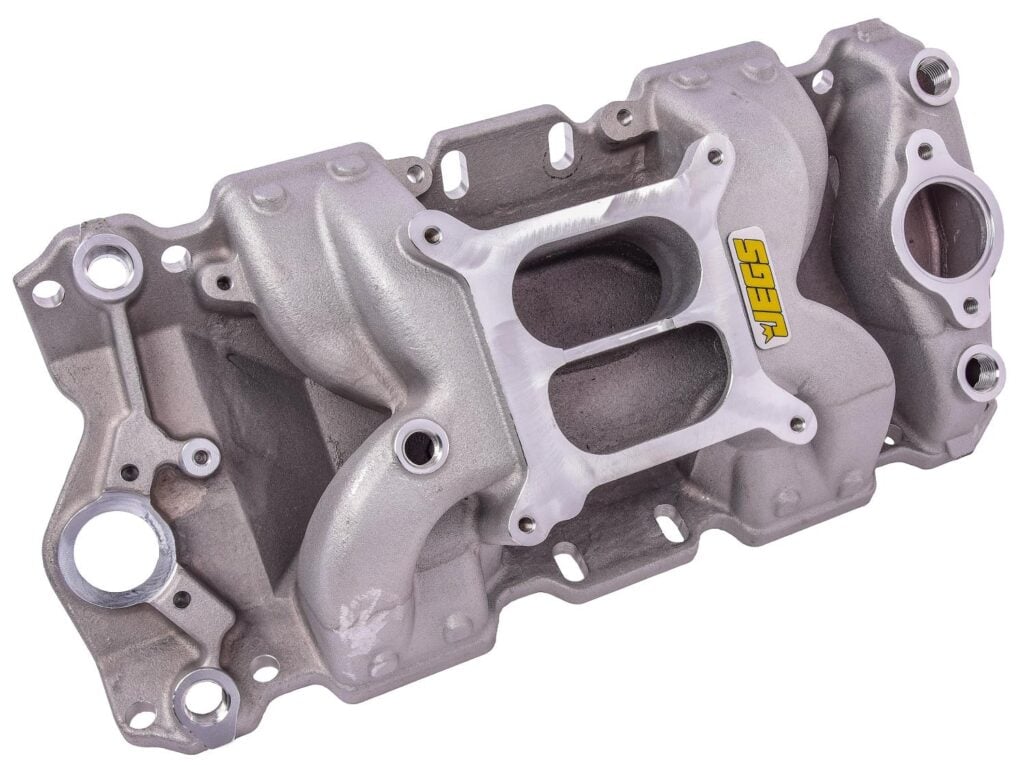
Upgrading to a larger intake manifold without supporting changes can limit results. Cylinder head flow, throttle body size, carburetor capacity, and fuel system upgrades must be able to support increased airflow.
Proper tuning is also critical. Air and fuel mixture, ignition timing, and overall engine calibration must be optimized to take advantage of intake changes.
Bigger is not always better when it comes to intake manifold runner size. The best choice depends on how you use your vehicle and where you want the engine to make power.
At www.jegs.com, you will find a wide selection of intake manifolds for street, strip, and full race applications. Whether you are building a torque focused street engine or a high rpm performance combination, there are options designed to match your goals.
If you need help selecting the right intake manifold based on runner size, engine displacement, and intended rpm range, the JEGS Tech Specialists are available to help you choose a setup that delivers the performance you are looking for.



Leave a Reply