


 Order Status & Returns
 Gift Cards
 Help Center
 1-800-345-4545

Car Engines
Car engines in this category include remanufactured crate engines, long block and short block engines, and high-performance crate engines. You'll find about 1,700 options, including direct-fit replacements for specific Ford, Chevy/GMC, and Chrysler vehicles. Use the Add a Vehicle selector to narrow the list to engines that fit your year, make, and model.
Show More
Crate Engines vs. Remanufactured Car Engines
A crate engine is a complete engine assembly shipped ready to install. A remanufactured engine is a used core rebuilt to replace a specific factory engine. Many remanufactured engines ship in crate form, so the real choice is between a direct-fit replacement and a build for more power.
Remanufactured crate engines from ATK Engines are built for specific vehicles. Examples include a 2000 Ford Mustang 4.6L V8, a 2004-2011 Ford Ranger 2.3L L4, and a 2002-2003 Ford F-150 5.4L V8. There's also a 2001 Chevy/GMC truck 8.1L V8. You'll also see options for 2006-2009 Chevy/GMC SUVs with the 4.2L L6 and 2004-2009 Chrysler PT Cruisers with the 2.4L L4.
Choose a remanufactured engine when your original engine is worn out and you want factory-style operation back. Choose a high-performance crate engine when you're building for more horsepower and torque.
Long Block vs. Short Block Engines
A long block engine is the more complete assembly. A short block engine gives you the bottom end and leaves the top end to you. Exact contents vary by product, so check each listing. Here's how the common assembly levels typically compare:
- A short block typically includes the block, crankshaft, connecting rods, and pistons.
- A long block typically adds the cylinder heads, camshaft, and valvetrain to the short block.
- A turn-key engine is typically built to run with fewer added parts, though contents vary by build.
Shop long block engines for replacement builds like the remanufactured GM 3.0L LF1 and GM 2.0L LTG. Choose short block engines, such as the Big Block Chevy 496ci high-performance short block, when you want to pick your own heads and cam. If you're starting from a bare foundation, browse engine blocks.
High-Performance Small Block and Big Block Crate Engines
High-performance crate engines give you a known horsepower and torque rating before you install anything. That lets you plan the rest of the build, including fuel, cooling, and drivetrain parts, around a specific output.
Small Block Chevy options include a 350ci rated at 390HP/420TQ and a 383ci rated at 460HP/490TQ. You'll also find builds rated at 470HP/490TQ, 500HP/505TQ with EFI, and 525HP/515TQ. Small Block Ford choices include a 302ci at 375HP/380TQ, a 347ci at 415HP/430TQ, and a 408ci at 480HP/500TQ.
For Chrysler projects, there's a Small Block Chrysler 408ci at 465HP/535TQ. Big Block Chevy builders can step up to a 496ci rated at 600HP/605TQ. Pick displacement based on your power goal, engine bay space, and how you drive. If you're weighing a late-model GM platform, read our guide to LS vs. Vortec engine specs and swaps.
What You Still Need to Install a Crate Engine
Most crate engines still need supporting parts before they'll run in your vehicle, so budget for more than the engine itself. What's included depends on whether you buy a short block, long block, or turn-key engine.
Induction is the first gap to check. Confirm whether the intake manifold, carburetor or throttle body, and fuel delivery parts are included. Next, check electronics. Late-model and EFI engines may need sensors, a wiring harness, and an engine controller matched to the engine.
Then cover accessories and fluids. The water pump, alternator, starter, belts, and pulleys may not be part of the package. You'll also need headers or exhaust manifolds, oil, and coolant before first start-up. Read each listing for exactly what ships with the engine, then shop engines and engine components for the parts your build still needs.
How to Confirm an Engine Fits Your Vehicle
Start with the Add a Vehicle selector, which filters the catalog to parts that fit your year, make, and model. For a direct-fit remanufactured engine, confirm the size and type match your original, such as a 5.4L V8 for a 2002-2003 F-150.
For swaps, fit goes beyond the vehicle listing. Check engine mount locations, oil pan and crossmember clearance, and hood clearance. Then confirm exhaust routing and the transmission bellhousing pattern. A swap engine that bolts in but can't clear the steering or firewall will stall your project, so measure before you order.
You'll also want to confirm your fuel system, cooling system, and electronics can support the new engine. Our engine swap compatibility checklist walks through what to verify before you order. If anything's unclear, review the fitment notes on the product listing before you buy.

ADD A VEHICLE TO GUARANTEE PARTS FIT
See products that fit

BLUEPRINT ENGINES
BP350CT GM Small Block Compatible 350 ci. Long Block [341 HP]
Part Number: 138-BP350CT
 Ships TodayFree shipping
 Lowest price guarantee
BLUEPRINT ENGINES
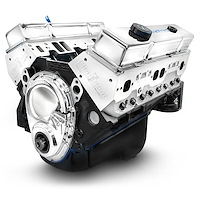
BP350CT GM Small Block Compatible 350 ci. Long Block [341 HP]
Part Number: 138-BP350CT
Ships TodayFree shippingLowest Price Guarantee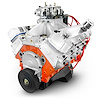
BLUEPRINT ENGINES
PS6320CTC Big Block Chevy 632 ci. ProSeries Base Dressed Carbureted Crate Engine [815 HP]
Part Number: 138-PS6320CTC
Ships TodayFree shippingLowest price guarantee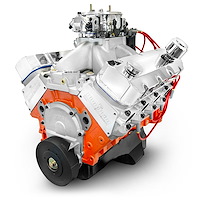
BLUEPRINT ENGINES
PS6320CTC Big Block Chevy 632 ci. ProSeries Base Dressed Carbureted Crate Engine [815 HP]
Part Number: 138-PS6320CTC
Ships TodayFree shippingLowest Price Guarantee
BLUEPRINT ENGINES
PS6320CT Big Block Chevy 632 ci. ProSeries Long Block [815 HP]
Part Number: 138-PS6320CT
Ships TodayFree shippingLowest price guarantee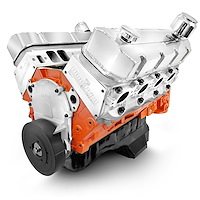
BLUEPRINT ENGINES
PS6320CT Big Block Chevy 632 ci. ProSeries Long Block [815 HP]
Part Number: 138-PS6320CT
Ships TodayFree shippingLowest Price Guarantee
BLUEPRINT ENGINES
PS5401CT Big Block Chevy 540 ci. ProSeries Long Block [670 HP]
Part Number: 138-PS5401CT
Ships on 10/30/2026Free shippingLowest price guarantee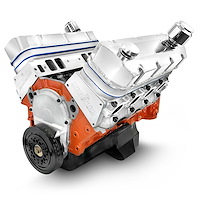
BLUEPRINT ENGINES
PS5401CT Big Block Chevy 540 ci. ProSeries Long Block [670 HP]
Part Number: 138-PS5401CT
Ships on 10/30/2026Free shippingLowest Price Guarantee
BLUEPRINT ENGINES
PS5720CT Blueprint Pro Series Big Block Chevy 572ci/745HP/710TQ Base Engine
Part Number: 138-PS5720CT
Ships on 10/30/2026Free shippingLowest price guarantee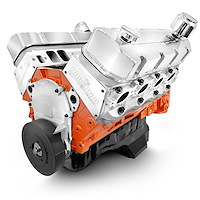
BLUEPRINT ENGINES
PS5720CT Blueprint Pro Series Big Block Chevy 572ci/745HP/710TQ Base Engine
Part Number: 138-PS5720CT
Ships on 10/30/2026Free shippingLowest Price Guarantee
BLUEPRINT ENGINES
PS5401CTC Big Block Chevy 540 ci. ProSeries Base Dressed Carbureted Crate Engine [670 HP]
Part Number: 138-PS5401CTC
Ships TodayFree shippingLowest price guarantee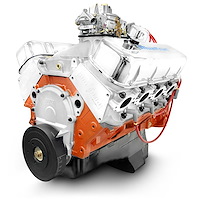
BLUEPRINT ENGINES
PS5401CTC Big Block Chevy 540 ci. ProSeries Base Dressed Carbureted Crate Engine [670 HP]
Part Number: 138-PS5401CTC
Ships TodayFree shippingLowest Price Guarantee

CHEVROLET PERFORMANCE
GM Goodwrench 4.3L 262 V6 Crate Engine 1995 Remanufactured L35
Part Number: 809-12366017
Ships on 11/02/2026Free shippingLowest price guarantee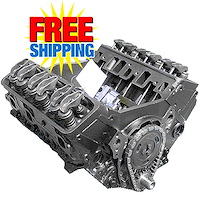
CHEVROLET PERFORMANCE
GM Goodwrench 4.3L 262 V6 Crate Engine 1995 Remanufactured L35
Part Number: 809-12366017
Ships on 11/02/2026Free shippingLowest Price Guarantee
BLUEPRINT ENGINES
BP4967CT GM Compatible Big Block Chevy 496 ci. Long Block [600 HP]
Part Number: 138-BP4967CT
Ships on 11/04/2026Free shippingLowest price guarantee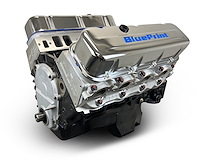
BLUEPRINT ENGINES
BP4967CT GM Compatible Big Block Chevy 496 ci. Long Block [600 HP]
Part Number: 138-BP4967CT
Ships on 11/04/2026Free shippingLowest Price Guarantee
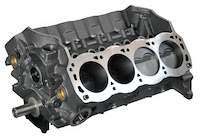
CHEVROLET PERFORMANCE
Goodwrench 6.0L/LQ4 Longblock 2001-04 GM Truck/SUV *Remanufactured
Part Number: 809-19301553
Ships on 11/02/2026Free shippingLowest price guarantee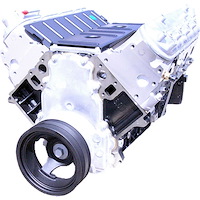
CHEVROLET PERFORMANCE
Goodwrench 6.0L/LQ4 Longblock 2001-04 GM Truck/SUV *Remanufactured
Part Number: 809-19301553
Ships on 11/02/2026Free shippingLowest Price Guarantee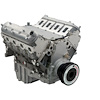
CHEVROLET PERFORMANCE
2014-15 COPO 350ci Supercharged Long Block Engine
Part Number: 809-19328600
Ships on 11/02/2026Free shippingLowest price guarantee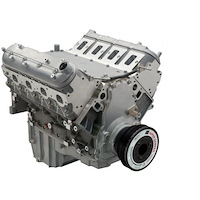
CHEVROLET PERFORMANCE
2014-15 COPO 350ci Supercharged Long Block Engine
Part Number: 809-19328600
Ships on 11/02/2026Free shippingLowest Price Guarantee
CHEVROLET PERFORMANCE
Goodwrench 5.3L Longblock 2005-07 GM Truck/SUV
Part Number: 809-19301548
Ships on 11/02/2026Free shippingLowest price guarantee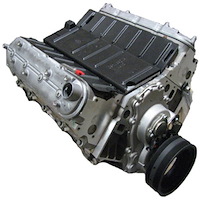
CHEVROLET PERFORMANCE
Goodwrench 5.3L Longblock 2005-07 GM Truck/SUV
Part Number: 809-19301548
Ships on 11/02/2026Free shippingLowest Price Guarantee
BLUEPRINT ENGINES
PS5403CT1 Big Block Chevy 540 ci. ProSeries Long Block for Power Adders [600 HP]
Part Number: 138-PS5403CT1
Ships on 01/22/2027Free shippingLowest price guarantee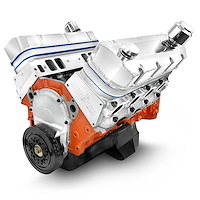
BLUEPRINT ENGINES
PS5403CT1 Big Block Chevy 540 ci. ProSeries Long Block for Power Adders [600 HP]
Part Number: 138-PS5403CT1
Ships on 01/22/2027Free shippingLowest Price Guarantee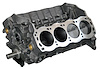

CHEVROLET PERFORMANCE
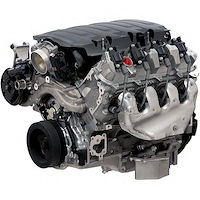
19432778 GM Replacement 5.7L/350 ci. (LO5) Crate Engine for 1987-1995 GM Trucks
Part Number: 809-19432778
Ships TodayFree shippingLowest price guarantee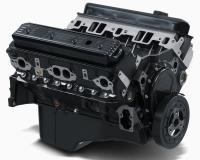
CHEVROLET PERFORMANCE
19432778 GM Replacement 5.7L/350 ci. (LO5) Crate Engine for 1987-1995 GM Trucks
Part Number: 809-19432778
Ships TodayFree shippingLowest Price Guarantee
CHEVROLET PERFORMANCE
350 HO Turn-Key Crate Engine 330 HP / 381 ft.-lbs. TQ
Part Number: 809-19433031
Ships TodayFree shippingLowest price guarantee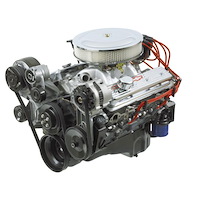
CHEVROLET PERFORMANCE
350 HO Turn-Key Crate Engine 330 HP / 381 ft.-lbs. TQ
Part Number: 809-19433031
Ships TodayFree shippingLowest Price Guarantee
BLUEPRINT ENGINES
BP4967CTC GM Compatible Big Block Chevy 496 ci. Base Dressed Carbureted Crate Engine [600 HP]
Part Number: 138-BP4967CTC
Ships TodayFree shippingLowest price guarantee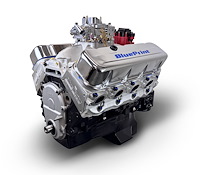
BLUEPRINT ENGINES
BP4967CTC GM Compatible Big Block Chevy 496 ci. Base Dressed Carbureted Crate Engine [600 HP]
Part Number: 138-BP4967CTC
Ships TodayFree shippingLowest Price Guarantee
ATK ENGINES
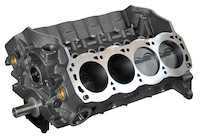
377 Stroker Short Block for Small Block Chevy 4 in. Bore x 3.750 in. Stroke [Forged Dished Pistons]
Part Number: 059-SP35NB
Ships TodayFree shippingLowest price guarantee
ATK ENGINES
377 Stroker Short Block for Small Block Chevy 4 in. Bore x 3.750 in. Stroke [Forged Dished Pistons]
Part Number: 059-SP35NB
Ships TodayFree shippingLowest Price Guarantee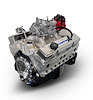
BLUEPRINT ENGINES
BP3505CTC GM Compatible Small Block Chevy 350 ci. Base Dressed Carbureted Crate Engine [390 HP]
Part Number: 138-BP3505CTC
Ships TodayFree shippingLowest price guarantee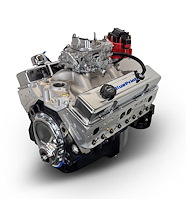
BLUEPRINT ENGINES
BP3505CTC GM Compatible Small Block Chevy 350 ci. Base Dressed Carbureted Crate Engine [390 HP]
Part Number: 138-BP3505CTC
Ships TodayFree shippingLowest Price Guarantee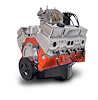
BLUEPRINT ENGINES
PS4541CTC1 GM Compatible Small Block Chevy 454 ci. Base Dressed Carbureted ProSeries Engine [563 HP]
Part Number: 138-PS4541CTC1
Ships TomorrowFree shippingLowest price guarantee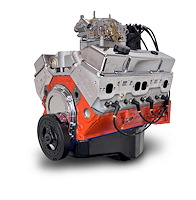
BLUEPRINT ENGINES
PS4541CTC1 GM Compatible Small Block Chevy 454 ci. Base Dressed Carbureted ProSeries Engine [563 HP]
Part Number: 138-PS4541CTC1
Ships TomorrowFree shippingLowest Price GuaranteeFrequently Asked Questions About Car Engines
Can my transmission handle a more powerful engine?
It depends on the transmission's torque capacity and condition. A big jump in torque, like moving to a 496ci Big Block Chevy rated at 605TQ, can overload a factory unit. Check the ratings for your transmission, driveshaft, and rear axle before you upgrade.
What should I check before ordering an engine for an emissions-regulated vehicle?
Check your state and local emissions rules first. Some areas require a replacement engine to match the original configuration or carry specific certification. Review the product listing for emissions notes, and keep required emissions equipment in place.
Is it cheaper to buy a crate engine or rebuild my old one?
It depends on your old engine's condition and who's doing the work. A rebuild can add machine shop costs, replacement parts, and downtime, and hidden damage can raise the bill. A crate engine gives you a known starting point, so compare the total cost of both before you decide.
What is the difference between carbureted and EFI crate engines?
A carbureted engine mixes fuel and air mechanically, which keeps wiring and tuning simpler. An EFI engine uses sensors and an electronic controller to meter fuel, which can improve cold starts and drivability. EFI typically needs a higher-pressure fuel system, so plan for that if your vehicle came with a carburetor.