


 Order Status & Returns
 Gift Cards
 Help Center
 1-800-345-4545
Gaskets & Seals
Gaskets and seals keep oil, coolant, fuel, exhaust and boost where they belong, and one failed part can sideline a fresh build. JEGS carries replacement and high-performance parts for street, race and marine engines, organized by system so you can find the right fit fast. You'll find head gaskets, intake manifold gaskets, oil pan gaskets, rear main seals, valve stem seals and the sealing parts that support them.
Show More
Engine Gaskets and Seals for Every Rebuild
Every engine rebuild needs new engine gaskets and seals, because used parts have already been compressed, heat-cycled and soaked in oil. Start with the head gaskets, which seal combustion pressure, coolant and oil between the block and cylinder heads. Intake manifold gaskets seal the intake ports and, on many V8s, the coolant passages at each end of the manifold.
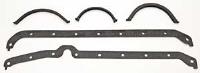
Down low, the oil pan gasket and rear main seal keep oil inside the crankcase. A leaking rear main seal is a common source of drips at the bellhousing, and replacing it usually means pulling the transmission. Valve stem seals control how much oil reaches the valve guides, so worn ones can cause blue smoke on startup.
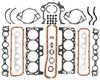
If you're doing a full overhaul, a complete gasket set saves you from tracking down each part separately. If you're fixing a single leak, buy the individual gasket and inspect the mating surfaces before you install it. Clean, flat flanges matter as much as the gasket itself.
Exhaust, Turbo and Transmission Gaskets
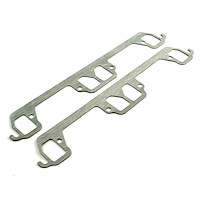
Outside the engine's core, you'll need gaskets that handle exhaust heat, boost pressure and transmission fluid. Exhaust gaskets and seals cover header flanges, exhaust manifolds and collectors. Match the gasket's port shape and size to your cylinder head and header flange, or you risk leaks and burned gasket edges.
Our exhaust gasket sizing and installation guide walks you through choosing the right size and installing it. Forced-induction engines put extra heat and pressure on every joint between the turbo or blower and the engine. Turbocharger and supercharger gaskets and seals are built for those flanges and blower-to-manifold connections.
On the drivetrain side, transmission gaskets and seals include pan gaskets, front pump seals and output shaft seals. A leaking pan gasket or output shaft seal can drop fluid levels between services. It's worth replacing both whenever you have the transmission apart.
How to Choose a Head Gasket
Choose a head gasket by matching its construction, bore size and compressed thickness to your engine and build. Multi-layer steel (MLS) head gaskets stack several thin steel layers, usually with a rubber-like coating. They handle high cylinder pressure from boost, nitrous or high compression, but they need a smooth, flat deck and head surface.
Composite head gaskets use a facing material over a steel core. They're more forgiving of minor surface imperfections on stock or mild rebuilds. Next, check the bore size, which should be slightly larger than your cylinder bore so the gasket edge doesn't hang into the chamber.
Compressed thickness is the gasket's thickness after the heads are torqued. It changes your compression ratio and piston-to-head clearance, so a thicker gasket lowers compression and a thinner one raises it. Before you order, read up on what a cylinder head does. You can also browse our engine and components tech articles for more build-planning help.
Gasket Materials, O-Rings and Grommets
When a pre-cut gasket isn't available, or you need to seal a line, fitting or wire pass-through, these parts fill the gap. Here's what each one does:
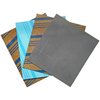
- Bulk gasket materials come in sheets you can cut to fit custom flanges, covers and fabrication work.
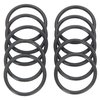
- O-rings seal fittings, filter housings, fuel components and other round joints under pressure.
- Grommets protect wiring, hoses and sensors where they pass through sheet metal or mount to the engine.
- Sealers and adhesives, including RTV, seal corners, uneven surfaces and joints that don't use a gasket.
Pick a material rated for the fluid and temperature it'll see. Cork and rubber suit low-pressure covers and pans, while fiber and graphite materials handle more heat. For O-rings, confirm the size and check that the material is compatible with the fuel or oil it'll touch.
Gaskets and Seals From Brands Builders Trust
JEGS stocks gaskets and seals from manufacturers engine builders already know, so you can stay with a brand you trust. Fel-Pro covers a wide range, including PermaTorque composite head gaskets, PrintoSeal big-block Chevy intake gaskets and PermaDryPlus oil pan gaskets. It also offers rear main seals for 1959-1989 GM and 1969-1984 Ford 5.8L and 6.6L engines, plus marine gasket sets.
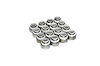
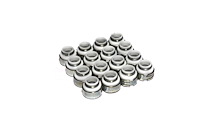
Moroso offers race-quality oil pan gaskets for Ford 460 and big-block Chevy Mark 4 engines. For valvetrain work, Melling makes valve stem oil seal sets for GM LS engines. Edelbrock offers valve stem seals for 11/32" stems.
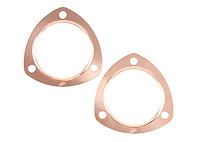
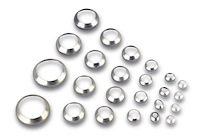
On the exhaust side, Hedman supplies 3" 3-bolt collector flange gaskets for header installs. Earl's Stat-O-Seal washers, including 7/16" ID sizes, seal bolts and plumbing connections. Before you order, check each product's fitment details against your engine, year and application so the part seals the first time.



ADD A VEHICLE TO GUARANTEE PARTS FIT
See products that fit



CLEAR VIEW FILTRATION
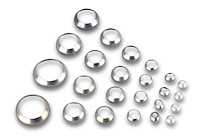
425 4 in. Filter Replacement O-Ring Kit, Viton, Chemical Resistant, Fits All 4 in. See-Through Filter Assemblies
Part Number: 126-425
 Ships Today
 Lowest price guarantee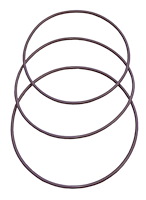
CLEAR VIEW FILTRATION
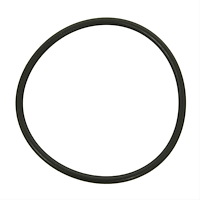
425 4 in. Filter Replacement O-Ring Kit, Viton, Chemical Resistant, Fits All 4 in. See-Through Filter Assemblies
Part Number: 126-425
Ships TodayLowest Price Guarantee
ALLSTAR PERFORMANCE
ALL72150 Tailshaft Seal for GM Powerglide, TH350, Saginaw, Muncie, Bert and Brinn Transmissions
Part Number: 049-ALL72150
Ships TodayLowest price guarantee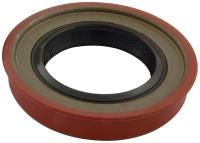
ALLSTAR PERFORMANCE
ALL72150 Tailshaft Seal for GM Powerglide, TH350, Saginaw, Muncie, Bert and Brinn Transmissions
Part Number: 049-ALL72150
Ships TodayLowest Price Guarantee

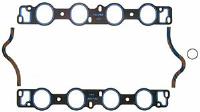
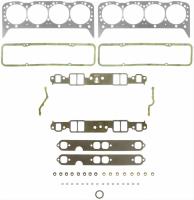
![17000 Marine Head Gasket for GM 3.0L L4 Engine [Carbureted]](https://www.jegs.com/images/mini_100/300/375/375-17000.jpg)
![17000 Marine Head Gasket for GM 3.0L L4 Engine [Carbureted]](https://www.jegs.com/images/mini_200/300/375/375-17000.jpg)







Frequently Asked Questions About Gaskets and Seals
What is the difference between a gasket and a seal?
A gasket is a compressible part that seals two stationary surfaces, such as a cylinder head and block. A seal usually works against a moving part, such as a rotating crankshaft or a sliding valve stem. Both keep fluids and pressure contained, but they're designed for different jobs.
How do you know if a gasket or seal needs replacement?
Look for oil or coolant drips, wet residue around a joint, or fluid levels that drop between changes. A failing head gasket can cause white exhaust smoke, overheating, coolant loss or milky-looking oil. Worn valve stem seals often show up as blue smoke at startup.
Can you reuse an engine gasket?
In most cases, you shouldn't reuse an engine gasket. Once a gasket has been compressed and heat-cycled, it may not seal again at the same torque. Some molded rubber valve cover or oil pan gaskets can be reused if they're undamaged, but check the manufacturer's instructions first.
Should you use RTV sealant with a gasket?
Use RTV only where the gasket manufacturer calls for it. Many gaskets are designed to install dry, and extra sealant can make them slip or squeeze into oil passages. A small dab of RTV is often used at corners, such as where an intake manifold or oil pan gasket meets the block.
What gasket material is best for high heat?
For exhaust and turbo flanges, multi-layer steel, embossed steel and graphite-faced gaskets handle high temperatures well. Paper, cork and standard rubber materials suit lower-temperature jobs like covers and pans. Check the manufacturer's temperature rating against your application before you install it.