Sign up now to join the JEGS email newsletter and be the first to learn about new products, special deals and e-mail only offers!

 2 People Found This Article Helpful
By
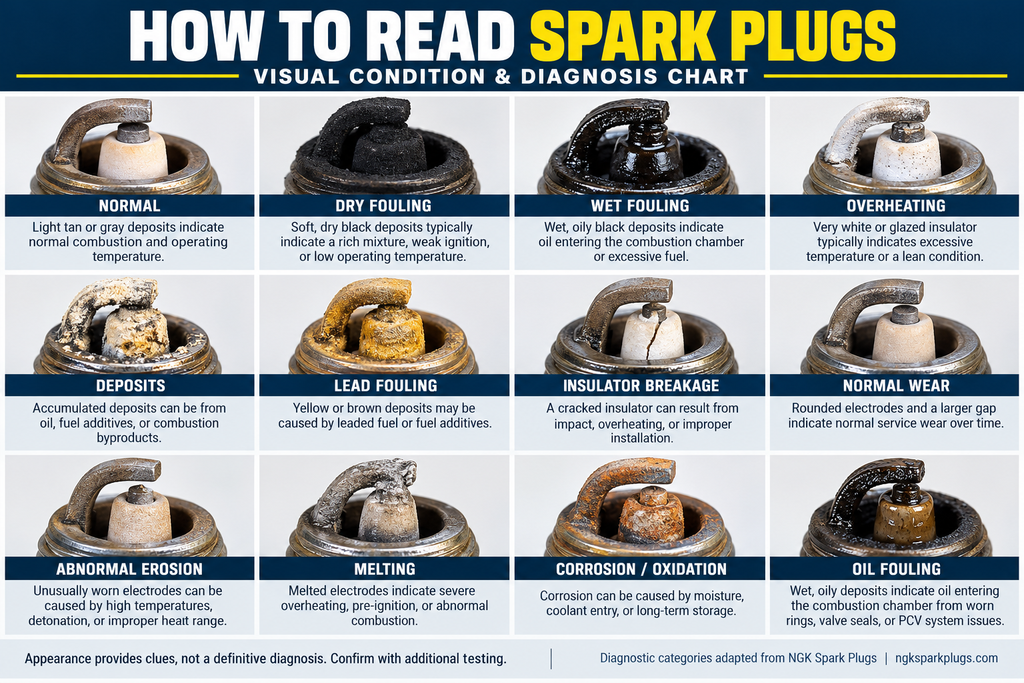
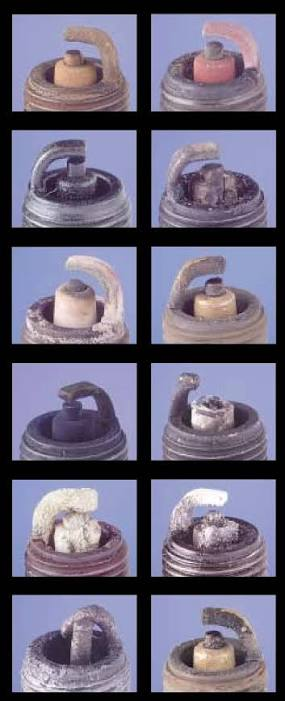
Your spark plugs can reveal valuable information about what's happening inside your engine. From a healthy combustion process to excessive fuel, oil consumption, overheating, and ignition problems, the condition of a spark plug can provide clues that help identify potential engine problems before they become more serious.
But knowing how to read spark plugs involves more than checking whether they're black, brown, or white. The color, texture, deposits, electrode wear, and overall condition of each plug can help distinguish normal operation from problems that require further diagnosis.
For example, a black spark plug may indicate excessive fuel or carbon buildup, while a wet, oily plug can point toward oil entering the combustion chamber. A plug with blistered ceramic or melted electrodes may indicate dangerous overheating or abnormal combustion.
In this guide, we'll explain how to read spark plugs, provide a detailed spark plug color chart, identify common causes of abnormal spark plug appearance, and explain what to check before replacing them.
Whether you're maintaining a daily driver, diagnosing a misfire, tuning a carbureted engine, or working on a high-performance build, understanding spark plug condition can help you make more informed repair and tuning decisions.
One of the easiest ways to begin diagnosing a spark plug is to examine its firing end—the portion installed inside the combustion chamber.
The ceramic insulator, center electrode, ground electrode, and surrounding deposits can reveal clues about combustion conditions.
However, spark plug color alone cannot definitively establish an engine's air-fuel ratio, ignition timing, or mechanical condition. Always consider the plug's overall appearance, recent operating conditions, and other diagnostic results.
| Spark plug appearance | What it may indicate | What to check |
|---|---|---|
| Light tan or gray | Normal combustion and operating temperature | Routine maintenance |
| Light gray or nearly white, with no damage | May be normal, especially with modern fuels | Electrode condition and engine symptoms |
| Dry, sooty black | Carbon fouling, rich mixture, weak ignition, or low plug temperature | Fuel delivery, ignition, air filter |
| Wet black with oily residue | Oil fouling | PCV system, valve seals, piston rings |
| Wet with gasoline | Fuel flooding or failure to ignite the mixture | Injectors, ignition, compression |
| Chalky white with blistering or erosion | Excessive spark plug temperature | Cooling, mixture, timing, heat range |
| Yellow, orange, or reddish deposits | Fuel or oil additive deposits; possible contamination | Fuel and additive history |
| Thick white, tan, or gray crust | Ash deposits | Oil consumption, additives |
| Shiny or glazed ceramic | Possible deposit melting or excessive heat | Engine temperature and combustion conditions |
| Rounded or worn electrodes | Normal service wear or accelerated erosion | Plug age, gap, ignition system |
| Melted or broken electrodes | Severe overheating, pre-ignition, or physical damage | Stop operation and investigate |
| Cracked ceramic insulator | Mechanical damage, thermal stress, or abnormal combustion | Installation, plug fitment, engine condition |
This chart is a starting point, not a final diagnosis. A spark plug that appears abnormal may reflect a problem elsewhere in the engine rather than a defective plug.


A normal spark plug typically has a light tan, brownish-gray, or light gray appearance around the firing-end insulator and electrodes.
The electrodes should be intact, without excessive rounding, melting, or abnormal erosion. Light, relatively uniform deposits can be normal after extended service.
Modern engines using unleaded gasoline may produce relatively light-colored spark plugs. A nearly white ceramic insulator does not automatically indicate that an engine is running lean.
Likewise, a tan-colored plug does not prove that every aspect of engine operation is correct.
What should you do?
If the spark plug appears normal and remains within its recommended service interval, replacement may not be necessary. Check the gap and condition according to the spark plug manufacturer's instructions and the vehicle's maintenance schedule.
If the plug is due for replacement, install the correct type and specification recommended for the engine.
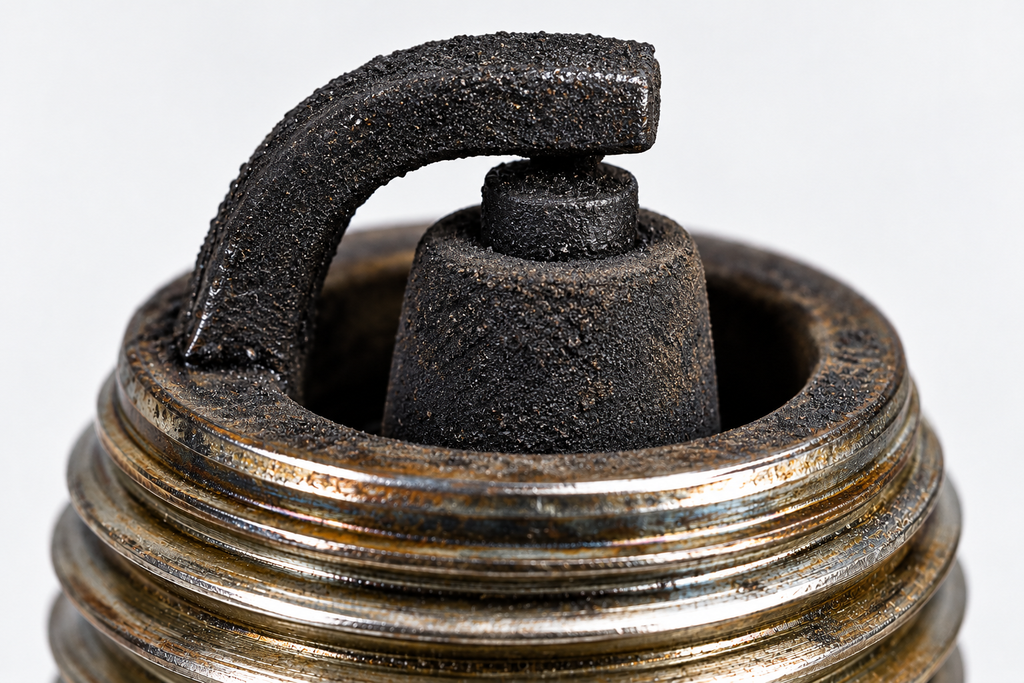


Black spark plugs are among the most common findings during engine troubleshooting.
A plug covered in dry, powdery black soot is typically described as carbon fouled.
Carbon fouling occurs when carbon deposits accumulate on the firing end. As deposits increase, they can interfere with the spark plug's ability to ignite the air-fuel mixture.
Several conditions can contribute to carbon buildup:
1. Rich air-fuel mixture
When the engine receives more fuel than can be completely burned under its operating conditions, carbon deposits may accumulate.
Possible causes include leaking fuel injectors, excessive fuel pressure, carburetor calibration problems, or incorrect sensor inputs.
2. Weak ignition system
A weak ignition coil, damaged plug wire, defective coil boot, or other ignition problem may prevent complete combustion and contribute to fouling.
3. Excessive idling and short trips
Repeated short trips and prolonged idling may prevent spark plugs from reaching temperatures that help burn away deposits.
4. Incorrect spark plug heat range
A plug with a heat range that is too cold for the application may not reach its intended self-cleaning temperature.
5. Restricted air intake
A severely restricted air filter can contribute to overly rich operation in some engine-management systems, particularly older carbureted applications.
Carbon fouling may contribute to rough idle, difficult starting, hesitation, reduced acceleration, misfires, and increased fuel consumption.
Begin by determining whether one plug or several plugs are affected.
If all plugs are similarly carbon fouled, investigate conditions affecting the entire engine, such as fuel delivery, engine temperature, or the ignition system.
If only one plug is black, concentrate on that cylinder's injector, ignition components, and mechanical condition.
For fuel-injected vehicles, scan for diagnostic trouble codes and examine relevant fuel-trim and operating-temperature data.
Replace plugs that are heavily fouled or cannot be reliably restored, but correct the underlying cause to prevent the problem from returning.


An oil-fouled spark plug usually has dark, wet, shiny, or sticky deposits on its firing end.
Unlike dry carbon fouling, oil fouling involves engine oil entering the combustion chamber or otherwise contaminating the firing end.
Potential causes include:
Oil entering the combustion chamber can leave deposits that interfere with ignition and cause repeated misfires.
The location of the oil matters.
Oil found on the firing tip suggests a different problem from oil discovered only on the outside of the spark plug or inside the spark plug well.
On engines with spark plug tubes, leaking valve cover gaskets or spark plug tube seals can allow oil to accumulate around the exterior of the plug.
That external leak does not necessarily mean oil is entering the combustion chamber.
Oil on the threads after removal can also be transferred from an oil-filled plug well, so inspect the area before drawing conclusions.
Start by checking engine oil consumption and inspecting the PCV system.
If internal oil leakage is suspected, a compression test and cylinder leak-down test can help assess cylinder sealing.
A borescope inspection may provide additional evidence of oil deposits, cylinder damage, or other abnormalities.
Replace the fouled plug as appropriate after identifying and addressing the underlying problem.



White spark plugs are frequently misunderstood.
Many older spark plug reading charts associate white ceramic with a lean air-fuel mixture. However, a light-colored plug is not automatically evidence of a lean-running engine.
Modern fuel formulations, spark plug materials, engine operating conditions, and combustion characteristics can produce relatively pale deposits during normal operation.
The important distinction is whether the spark plug is simply light-colored or shows physical evidence of excessive heat.
Potential warning signs include:
Possible causes include an excessively hot spark plug heat range, inadequate engine cooling, incorrect ignition timing, abnormal combustion, insufficient plug tightening, or an excessively lean mixture under certain operating conditions.
High engine loads and inadequate fuel octane for the engine's requirements can also contribute to harmful combustion conditions.
Inspect the cooling system, confirm correct spark plug specifications, and investigate possible air-fuel mixture or ignition timing problems.
For modified engines, verify calibration using appropriate diagnostic equipment.
A wideband oxygen sensor can help measure air-fuel ratio, but spark plug color should not be used as a substitute for proper measurement.
Important: If a plug has melted electrodes, severe blistering, or other evidence of serious overheating, avoid continuing to operate the engine until the cause has been investigated. Severe abnormal combustion can damage pistons and other engine components.


Yellow, orange, or reddish deposits may result from compounds introduced through fuel, fuel additives, oil additives, or other sources of contamination.
Some additives contain metallic compounds that can leave visible deposits after combustion.
The color alone does not establish which additive or substance caused the deposit.
Not necessarily.
A thin, uniform discoloration may have little effect on spark plug operation.
However, heavy deposits or glazed coatings can interfere with ignition under certain conditions.
Inspect the plug for misfiring, abnormal electrode wear, or excessive deposit accumulation.
If the engine operates normally and the deposits are minor, the appearance may not indicate a serious problem.
If fouling develops repeatedly, review the fuel and additive history and investigate potential oil consumption or other sources of contamination.



Ash fouling differs from ordinary light-colored spark plug deposits.
Instead of a thin discoloration, ash deposits typically appear as relatively hard, crusty material accumulating around the electrodes or insulator.
These deposits may originate from substances in engine oil or fuel additives that remain after combustion.
Potential contributors include excessive engine oil consumption, certain fuel additives, and lubricant-derived compounds entering the combustion chamber.
Heavy ash deposits can interfere with spark formation, contribute to misfires, or create localized hot spots.
Determine whether the deposits are isolated to one cylinder or present throughout the engine.
Check for excessive oil consumption, PCV system problems, and signs of internal engine wear.
Replace heavily fouled plugs and investigate the source of the deposits before returning the engine to normal service.

A spark plug wet with gasoline is not necessarily oil fouled.
If the plug smells strongly of raw fuel and the liquid is relatively thin, the engine may be experiencing fuel flooding or a failure to ignite the mixture.
Possible causes include:
Fuel flooding can prevent an engine from starting because the excessive fuel interferes with normal combustion.
When diagnosing a gasoline-wet plug, check the ignition system, fuel delivery, and mechanical condition rather than immediately assuming the spark plug is defective.
Keep ignition sources away from spilled fuel and follow appropriate safety procedures when working around gasoline.



Spark plug electrodes gradually wear during normal operation.
As material erodes from the center and ground electrodes, the spark gap can increase.
A larger gap generally requires more voltage to initiate a spark under the same operating conditions. Eventually, the ignition system may struggle to fire the plug consistently, especially under heavy engine load.
Common signs include rounded electrode edges, an excessive gap, visible electrode erosion, and deterioration beyond the recommended service interval.
Symptoms may include misfires, rough running, hesitation, or difficult starting.
Follow the replacement interval specified by the vehicle manufacturer.
Spark plug service life varies considerably depending on engine design, plug construction, operating conditions, and application.
Some conventional plugs have relatively short service intervals, while certain long-life iridium or platinum plugs are specified for substantially longer use.
Do not assume that all iridium plugs have the same replacement interval.
Also, some fine-wire precious-metal plugs should not be adjusted using conventional prying-style gapping tools because their electrodes can be damaged. Follow the manufacturer's instructions.
Sign up now to join the JEGS email newsletter and be the first to learn about new products, special deals and e-mail only offers!


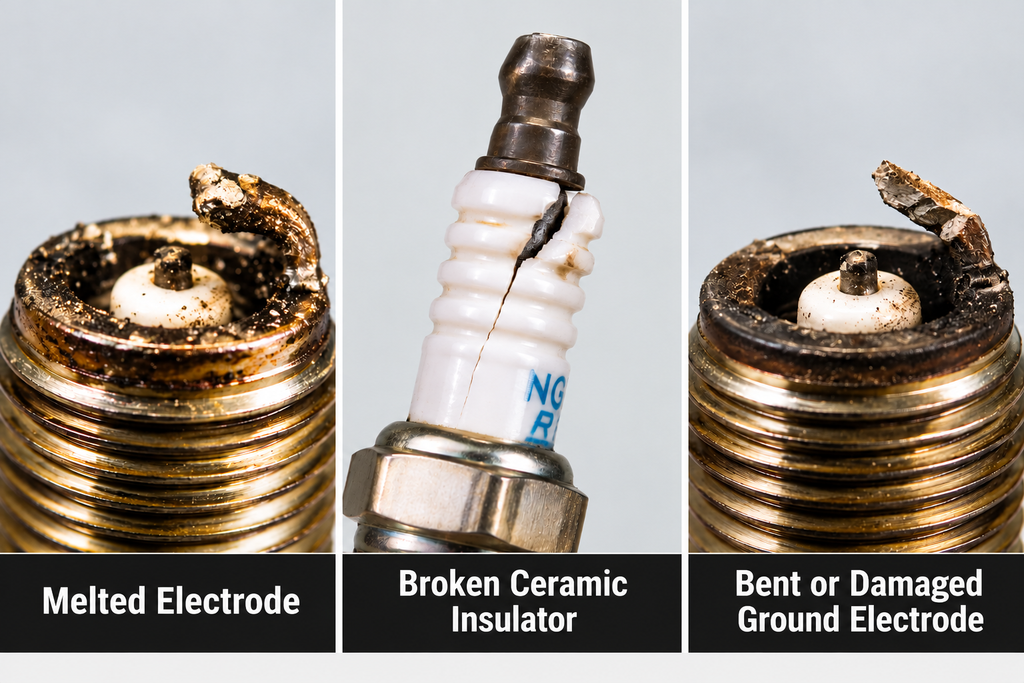
Severe physical damage is one of the most concerning findings during spark plug inspection.
Melted electrodes, broken ceramic, or bent ground electrodes may indicate conditions that can damage the engine itself.
Electrode melting can result from extreme spark plug temperatures or pre-ignition.
Pre-ignition occurs when the air-fuel mixture ignites before the intended spark event, often because of an overheated surface inside the combustion chamber.
This is different from detonation, which involves abnormal combustion of the remaining unburned mixture after ignition has begun. Both can be destructive, but they are not the same phenomenon.
A cracked or broken insulator may result from mechanical impact, improper handling, thermal stress, or severe abnormal combustion.
Physical damage can occur if the wrong spark plug reach is installed or if a foreign object contacts the plug inside the combustion chamber.
Do not simply replace a severely damaged spark plug and resume driving.
Inspect the engine for underlying problems, confirm the correct spark plug dimensions, and investigate potential combustion chamber damage.
A borescope inspection, compression test, or other mechanical testing may be necessary.
Reading spark plugs accurately requires a consistent inspection process.
Allow the engine to cool before removing spark plugs, particularly from aluminum cylinder heads.
Follow the vehicle manufacturer's removal procedures to reduce the risk of thread damage or injury.
Before removing the plugs, remove loose dirt and debris from the surrounding area.
Compressed air may be useful when applied carefully with appropriate eye protection.
This helps prevent contaminants from falling into the cylinders.
Use the correct spark plug socket and removal tools.
Keep each plug identified by its original cylinder location.
This is especially important when comparing deposits between cylinders.
Examine the ceramic section surrounding the center electrode.
Look for color, carbon deposits, oil contamination, glazing, cracks, or other abnormalities.
Check the center and ground electrodes for erosion, rounding, melting, or physical damage.
Compare the observed gap against the correct specification using a suitable measuring tool.
Look for differences between plugs.
If all plugs have similar deposits, consider problems affecting the entire engine.
If one plug looks significantly different, investigate that cylinder more closely.
Use the spark plug observations alongside relevant diagnostic information, such as trouble codes, fuel trims, compression readings, leak-down results, ignition testing, and measured air-fuel ratio where applicable.
Once the cause is understood, repair the underlying issue and install the correct spark plugs when replacement is necessary.
Use the specified plug type, gap, and tightening procedure. Do not apply anti-seize or lubricant to the threads unless the manufacturer specifically instructs you to do so, since coatings can affect tightening torque.

Spark plug reading has long been used in carburetor tuning, drag racing, and other performance applications.
Experienced tuners may inspect specific areas of a spark plug after a controlled operating period to look for signs of combustion temperature, deposits, and abnormal combustion.
However, accurately interpreting a plug after a high-load run is more complicated than reading the visible color of the ceramic tip.
Several factors affect spark plug appearance:
A plug that appears dark after extended idling may not accurately represent the engine's operating conditions during wide-open-throttle acceleration.
Likewise, a light-colored plug does not prove that the engine is running dangerously lean.
For performance tuning, a properly installed and calibrated wideband oxygen sensor provides more useful quantitative air-fuel ratio information than plug color alone.
Spark plug inspection remains valuable as a supplemental diagnostic method, particularly when looking for abnormal deposits, electrode overheating, or possible combustion damage.
Spark plug inspection can be especially useful when troubleshooting older carbureted engines.
Unlike modern electronically controlled fuel-injection systems, carburetors depend on mechanical and pressure-based fuel-metering circuits.
Potential problems include incorrect jetting, excessive float-bowl fuel level, choke malfunctions, idle-mixture problems, or fuel-pressure issues.
A rich-running carbureted engine may develop dry carbon deposits on multiple plugs.
However, a black spark plug does not automatically mean that the carburetor needs smaller main jets.
The deposits could have developed during idling, cold operation, or another operating condition unrelated to the main metering circuit.
For accurate tuning, evaluate the operating condition in which the problem occurs and use appropriate mixture-measurement equipment whenever possible.

Forced-induction engines place additional thermal and pressure demands on the ignition system.
Higher cylinder pressure can make it more difficult for the spark to jump the electrode gap, while elevated combustion temperatures increase the importance of correct plug selection and engine calibration.
When inspecting spark plugs from a turbocharged or supercharged engine, look for signs of excessive heat, abnormal electrode erosion, cracked insulators, and deposits that may indicate combustion or mechanical problems.
Performance engines may require a different heat range from their original naturally aspirated configuration.
A colder spark plug transfers heat away from its firing end more readily, helping maintain appropriate plug temperature under demanding conditions.
However, installing an excessively cold plug can increase fouling during low-load operation.
A colder spark plug does not correct an excessively lean mixture, inadequate fuel octane, excessive ignition advance, or other tuning problems.
Some forced-induction combinations require a smaller spark plug gap to help prevent ignition misfires under high cylinder pressure.
The correct gap depends on the ignition system, cylinder pressure, plug design, and engine combination.
There is no universal spark plug gap that is appropriate for every turbocharged or supercharged engine.
Always follow the engine builder's or spark plug manufacturer's recommendations for the specific application.

One of the most useful diagnostic techniques is comparing all the spark plugs from the same engine.
| Observation | Possible direction for diagnosis |
|---|---|
| All plugs have dry black deposits | Rich operation, low operating temperature, or shared ignition/fuel issue |
| One plug is dry black | Cylinder-specific ignition, injector, or compression problem |
| All plugs are oily | Widespread oil consumption or crankcase ventilation problem |
| One plug is oily | Cylinder-specific oil entry or mechanical wear |
| One plug is unusually clean | Investigate that cylinder; possible fluid intrusion or different combustion conditions |
| Several plugs show heat damage | Shared cooling, calibration, or operating problem |
| One plug has a damaged electrode | Localized overheating, physical contact, or abnormal combustion |
| All plugs show excessive electrode wear | Service interval or application-related wear |
This comparison is not a definitive diagnosis, but it helps narrow the investigation.
For example, if seven plugs appear normal and one is heavily oil fouled, a problem affecting that cylinder may be more likely than an issue affecting the entire fuel system.
Spark plug heat range describes how effectively a plug transfers heat away from its firing end.
It does not describe how powerful the spark is.
A hotter plug retains more heat at its firing end, while a colder plug transfers heat away more readily.
NGK explains that spark plugs need to operate within a temperature range that is hot enough to resist carbon fouling but cool enough to avoid overheating. Its technical guidance identifies a typical firing-end operating range of approximately 500–800°C (932–1,472°F).
Spark plug temperature concepts
Too cold
Carbon may accumulate when the firing end stays too cool.
Proper range
Enough heat to resist fouling without excessive temperature.
Too hot
Rapid wear and possible pre-ignition.
Heat range numbering varies between manufacturers. For example, higher NGK heat-range numbers indicate colder plugs, while Champion uses a different numbering convention.
Do not compare heat-range numbers across brands without using an appropriate manufacturer cross-reference.
Spark plugs should be replaced according to the vehicle manufacturer's maintenance schedule or when inspection and testing indicate they are no longer serviceable.
Replacement may be necessary when plugs have excessive electrode wear, damaged insulators, severe fouling, abnormal erosion, or other defects.
However, a spark plug problem can be a symptom rather than the root cause.
Replacing a carbon-fouled plug without correcting an overly rich mixture or ignition problem may result in the replacement plug becoming fouled again.
Similarly, installing a new plug will not repair worn piston rings or defective valve stem seals.
For reliable long-term operation, correct the underlying issue and use spark plugs specified for the engine.
A healthy used spark plug commonly has light tan, gray, or brownish-gray deposits on its firing end. Modern engines may also produce relatively pale insulators. The absence of heavy deposits, overheating damage, and excessive electrode wear is more important than achieving one specific color.
Dry black soot usually indicates carbon fouling. Possible causes include excessive fuel, weak ignition, repeated short trips, prolonged idling, or an incorrect spark plug heat range. Wet black deposits may indicate oil or fuel contamination.
No. A rich mixture is one possible cause, but weak ignition, insufficient plug temperature, low compression, and other problems can also cause carbon buildup.
A white or light gray plug can be normal. However, a severely bleached insulator accompanied by blistering, melted electrodes, or accelerated wear can indicate overheating. Additional testing is needed to determine the cause.
An oil-fouled plug typically has wet, dark, shiny, or sticky deposits around the firing end. Possible causes include oil entering the combustion chamber through worn piston rings, valve guides, valve stem seals, or crankcase ventilation problems.
A severely lean-running engine may produce evidence of excessive combustion temperatures, including damaged electrodes or overheated ceramic. However, a light-colored spark plug alone cannot confirm a lean mixture. Use appropriate fuel-system diagnostics and air-fuel ratio measurements.
They can provide clues, but they cannot reliably quantify air-fuel ratio. Fuel composition, engine load, ignition timing, heat range, and operating history all influence spark plug appearance.
One black plug may indicate a cylinder-specific problem such as a leaking injector, weak ignition component, or reduced compression. Compare the remaining plugs and investigate that cylinder before replacing parts.
Orange or reddish deposits may be associated with fuel additives, oil additives, or other combustion contaminants. Their exact composition cannot be determined by color alone.
Coolant entering a cylinder can sometimes leave unusual deposits, moisture, or an abnormally clean appearance. However, no single spark plug appearance proves a coolant leak. Cooling-system pressure testing, combustion-gas testing, borescope inspection, and other diagnostics may be necessary.
Some plugs may be serviceable after cleaning, depending on their construction, condition, and the manufacturer's instructions. However, severely fouled, damaged, or worn plugs should be replaced. Abrasive cleaning and improper handling can damage certain modern spark plug designs.
It depends on the plugs' age, condition, and the cause of failure. If the full set is near its scheduled replacement interval, replacing all plugs may be practical. If one recently installed plug fails, investigate the cylinder-specific cause before replacing the entire set.
A plug that is too cold may accumulate carbon deposits and misfire. A plug that is too hot may experience excessive electrode wear and increase the risk of pre-ignition. Use the correct heat range for the engine and its operating conditions.
Learning how to read spark plugs is a valuable skill for anyone maintaining, repairing, or modifying an engine.
Light tan or gray deposits generally suggest normal operation, while dry black soot may indicate carbon fouling. Wet, oily deposits can point toward oil contamination, and severe blistering or melted electrodes may warn of overheating or abnormal combustion.
However, the most accurate diagnosis comes from examining the entire spark plug, comparing plugs between cylinders, and combining those observations with other engine tests.
Spark plug reading is most useful when treated as one part of a complete diagnostic process rather than a definitive test based on color alone.
Whether you're performing routine maintenance, troubleshooting an engine misfire, or selecting ignition components for a performance build, choosing the correct spark plugs and addressing the underlying causes of fouling can help maintain dependable engine operation.
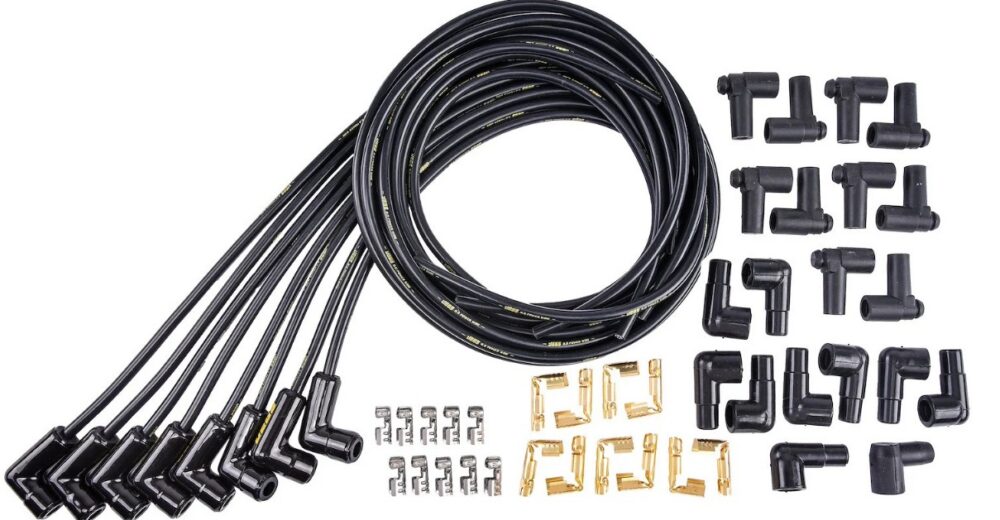
At JEGS, you'll find spark plugs, ignition coils, spark plug wires, ignition components, and diagnostic tools for a wide range of stock and performance applications. Explore the selection at JEGS to find parts for your next maintenance or performance project.





Leave a Reply