


 Order Status & Returns
 Gift Cards
 Help Center
 1-800-345-4545
Mechanical Fuel Pumps
Mechanical fuel pumps give your carbureted street, strip or restoration build a simple, engine-driven way to feed fuel without wiring, relays or switches. JEGS carries stock-replacement pumps, high-volume racing pumps, fuel pump pushrods, block-off plates and dual-tank kits for your engine and power goals. Browse by engine family, flow and pressure to narrow your choices quickly.
Show More
How Does a Mechanical Fuel Pump Work?
A mechanical fuel pump uses engine rotation to pull fuel from the tank and push it to the carburetor. An eccentric or lobe on the camshaft moves the pump's lever arm, directly or through a pushrod, every time the cam turns. That motion flexes a diaphragm inside the pump body, creating suction on one stroke and pressure on the next.
Inlet and outlet check valves keep fuel moving in one direction. On the suction stroke, the inlet valve opens and draws fuel in. On the pressure stroke, the inlet closes and the outlet valve opens to send fuel toward the carburetor.
You'll find two basic designs: diaphragm-style pumps driven by the lever arm, and pushrod-actuated pumps used on engines like the small block Chevy. Either way, there's no wiring, relay or switch to install, and the pump stops feeding fuel when the engine shuts off. Adding one of our fuel filters ahead of the pump helps keep debris away from those check valves.
Mechanical Vs. Electric Fuel Pump: Which Is Right for Your Build?
A mechanical pump is usually the right call for a carbureted street engine making moderate horsepower. It bolts to the block, needs no wiring and delivers the modest pressure most carburetors want. It's also period-correct, which matters on a restoration.
The tradeoff is that mechanical pump output depends on engine speed. At idle and low rpm, flow drops, and a big-inch engine or long fuel line can outrun what the pump delivers.
Our electric fuel pumps run independently of engine speed and can deliver higher flow, so they're common on higher-horsepower and racing combinations. They're also required for EFI, which needs far more pressure than a mechanical pump can make. If you're planning that upgrade, read our guide to changing a carburetor to fuel injection before you buy. For a closer look at flow and application, see our breakdown of the best performance fuel pumps for carbureted and racing engines.
Types of Mechanical Fuel Pumps and Components
This category covers complete pumps plus the parts that drive, seal and route them. Here's what you'll find:
- Stock-replacement pumps: US Motor Works offers direct-fit pumps for GM, Chevrolet/GMC big block, Pontiac 400/455 and Ford/Mercury 289/302 V8s.
- High-volume racing pumps: The Blueprint Engines BPP4891 six-valve pump for small block Chevy 262-400 ci engines is rated at 110 GPH and 7.5 psi.
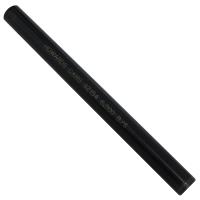
- Fuel pump pushrods: The Moroso 65765 lightweight pushrod fits small and big block Chevy engines, works with billet roller cams and uses a bronze tip.
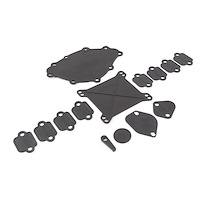
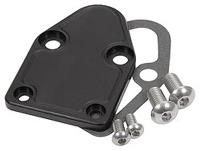
- Block-off plates: The Allstar Performance black block-off plate seals the pump opening on small block Chevy engines.
- Dual-tank kits: The Holley 534-38 dual-tank fuel pump kit is built for 4-barrel fuel systems.
Pushrods are easy to overlook, but a worn or incorrect pushrod can shorten pump stroke and reduce fuel delivery. Check yours whenever you replace the pump.
How to Choose the Right Mechanical Fuel Pump
Start by matching the pump to your engine family, then confirm flow and pressure for your power level. Mounting patterns differ between a small block Chevy, a big block Chevy and a Ford 289/302, so one engine's pump won't bolt to another. Check inlet and outlet orientation too, since it affects fuel line routing.
Next, compare flow. Pumps are rated in gallons per hour (GPH), and higher-horsepower engines need more fuel volume. A stock-replacement pump suits a mild street engine, while a high-volume pump makes sense for a built street/strip combination.
Pressure matters just as much. Most carburetors want about 5-7 psi, and too much pressure can force the needle and seat open and cause flooding. If your pump runs above that range, add one of our fuel pressure regulators to dial it in. For help matching fuel delivery to your carb, see our guide to choosing the right carburetor for your vehicle. Then use the fitment tool to confirm the pump fits your vehicle.
When Do You Need a Fuel Pump Block-Off Plate?
You need a block-off plate when you remove a mechanical fuel pump, most often after converting to an electric pump. The plate seals the pump opening on the block so oil stays in and dirt and debris stay out. Without it, you'd leave an open path into the crankcase.
Block-off plates follow an engine-specific bolt pattern, so buy one made for your engine family. A small block Chevy plate won't fit a Ford 289/302, for example.
Install the plate with a fresh gasket or a thin bead of sealant to prevent oil leaks. Tighten the bolts evenly so the plate seats flat against the block. On engines that use a fuel pump pushrod, remove it during the swap, since the pump no longer needs it. Ready to finish your fuel system? Shop All fuel pumps, regulators and filters to find matching parts for your build.

ADD A VEHICLE TO GUARANTEE PARTS FIT
See products that fit

ADD A VEHICLE TO GUARANTEE PARTS FIT
See products that fit
![Mechanical Fuel Pump for 1989-2005 Mack CL700, FDM, MR, Vision [85 PSI]](https://www.jegs.com/images/mini_100/300/326/326-285-5500.jpg)
DORMAN PRODUCTS
Mechanical Fuel Pump for 1989-2005 Mack CL700, FDM, MR, Vision [85 PSI]
Part Number: 326-285-5500
 Ships on Oct 12, 2026
 Lowest price guarantee
![Mechanical Fuel Pump for 1989-2005 Mack CL700, FDM, MR, Vision [85 PSI]](https://www.jegs.com/images/mini_200/300/326/326-285-5500.jpg)
DORMAN PRODUCTS
Mechanical Fuel Pump for 1989-2005 Mack CL700, FDM, MR, Vision [85 PSI]
Part Number: 326-285-5500
Ships on Oct 12, 2026Lowest Price Guarantee


US MOTOR WORKS
USMP15273 Mechanical Fuel Pump for 1973-1990 GM 260, 305, 307, 350, 403, 455 V8 Engines
Part Number: 275-USMP15273
Ships on Oct 12, 2026Lowest price guarantee
US MOTOR WORKS
USMP15273 Mechanical Fuel Pump for 1973-1990 GM 260, 305, 307, 350, 403, 455 V8 Engines
Part Number: 275-USMP15273
Ships on Oct 12, 2026Lowest Price Guarantee
RCI
7084A 16-Bolt Round Fuel Pump Hanger, 7-12 in. Adjustable, #8 AN Inlet/Return
Part Number: 821-7084A
Ships on Oct 12, 2026Lowest price guarantee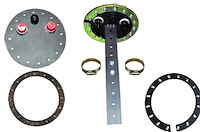
RCI
7084A 16-Bolt Round Fuel Pump Hanger, 7-12 in. Adjustable, #8 AN Inlet/Return
Part Number: 821-7084A
Ships on Oct 12, 2026Lowest Price Guarantee
![Mechanical Fuel Pump for Ford 351C-400M [80 gph, Chrome]](https://www.jegs.com/images/mini_100/500/555/555-15964.jpg)
JEGS
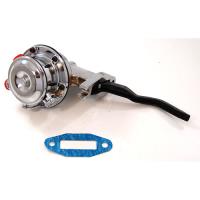
Mechanical Fuel Pump for Ford 351C-400M [80 gph, Chrome]
Part Number: 555-15964
Ships on Oct 12, 2026Lowest price guarantee![Mechanical Fuel Pump for Ford 351C-400M [80 gph, Chrome]](https://www.jegs.com/images/mini_200/500/555/555-15964.jpg)
JEGS
Mechanical Fuel Pump for Ford 351C-400M [80 gph, Chrome]
Part Number: 555-15964
Ships on Oct 12, 2026Lowest Price Guarantee
![Fuel Pump Block-Off Plate for Big Block Chevy Gen VI and Mark IV Engines [Black]](https://www.jegs.com/images/mini_100/700/734/734-4810-454-2.jpg)
REDHORSE PERFORMANCE
Fuel Pump Block-Off Plate for Big Block Chevy Gen VI and Mark IV Engines [Black]
Part Number: 734-4810-454-2
Ships on 10/26/2026Lowest price guarantee![Fuel Pump Block-Off Plate for Big Block Chevy Gen VI and Mark IV Engines [Black]](https://www.jegs.com/images/mini_200/700/734/734-4810-454-2.jpg)
REDHORSE PERFORMANCE
Fuel Pump Block-Off Plate for Big Block Chevy Gen VI and Mark IV Engines [Black]
Part Number: 734-4810-454-2
Ships on 10/26/2026Lowest Price Guarantee![Fuel Pump [6910 Series]](https://www.jegs.com/images/mini_100/700/734/734-6910-340-03.jpg)
![Fuel Pump [6910 Series]](https://www.jegs.com/images/mini_200/700/734/734-6910-340-03.jpg)
![Fuel Pump Block-Off Plate for Small Block Chevy Gen I Engines [Black]](https://www.jegs.com/images/mini_100/700/734/734-4810-350-2.jpg)
REDHORSE PERFORMANCE
Fuel Pump Block-Off Plate for Small Block Chevy Gen I Engines [Black]
Part Number: 734-4810-350-2
Ships on 10/26/2026Lowest price guarantee![Fuel Pump Block-Off Plate for Small Block Chevy Gen I Engines [Black]](https://www.jegs.com/images/mini_200/700/734/734-4810-350-2.jpg)
REDHORSE PERFORMANCE
Fuel Pump Block-Off Plate for Small Block Chevy Gen I Engines [Black]
Part Number: 734-4810-350-2
Ships on 10/26/2026Lowest Price Guarantee![Fuel Pump [6910 Series]](https://www.jegs.com/images/mini_100/700/734/734-6910-280-08.jpg)
![Fuel Pump [6910 Series]](https://www.jegs.com/images/mini_200/700/734/734-6910-280-08.jpg)
AEROMOTIVE
Fuel Pump Fitting Kit Two 3/8" NPT Male Port to 3/8" Hose End (Brass)
Part Number: 027-11203K2
Ships on Oct 12, 2026Lowest price guarantee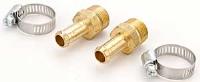
AEROMOTIVE
Fuel Pump Fitting Kit Two 3/8" NPT Male Port to 3/8" Hose End (Brass)
Part Number: 027-11203K2
Ships on Oct 12, 2026Lowest Price Guarantee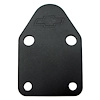
PROFORM
Bowtie Fuel Pump Block-Off Plate for Small Block Chevy in Black Crinkle
Part Number: 778-141-212
Ships on Oct 12, 2026Lowest price guarantee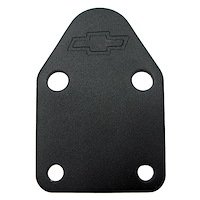
PROFORM
Bowtie Fuel Pump Block-Off Plate for Small Block Chevy in Black Crinkle
Part Number: 778-141-212
Ships on Oct 12, 2026Lowest Price Guarantee

MOROSO
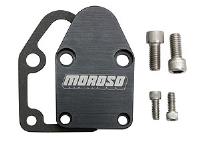
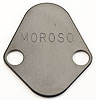
Fuel Pump Block-Off Plate Big Block Chevy, 273-440 Chrysler, All Fords except 351C, 351M and 400
Part Number: 710-65392
Ships on Oct 12, 2026Lowest price guarantee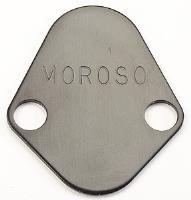
MOROSO
Fuel Pump Block-Off Plate Big Block Chevy, 273-440 Chrysler, All Fords except 351C, 351M and 400
Part Number: 710-65392
Ships on Oct 12, 2026Lowest Price GuaranteeFrequently Asked Questions About Mechanical Fuel Pumps
How Much Does It Cost to Replace a Mechanical Fuel Pump?
JEGS lists replacement mechanical fuel pumps from about $27, with performance units running above $150. Your price depends on your engine family, flow rating and whether you choose a stock-replacement or high-volume pump. Budget for a new gasket too, and a pushrod on engines that use one.
What Are the Symptoms of a Bad Mechanical Fuel Pump?
Common signs include hard starting, hesitation under acceleration and the engine dying at higher rpm. You may also see fuel or oil leaking around the pump body or mounting surface. A failed diaphragm can let fuel into your engine oil, so check the dipstick for a fuel smell.
Can a Mechanical Fuel Pump Be Used With Fuel Injection?
Generally, no. EFI systems need much higher fuel pressure than a mechanical pump can supply, so fuel-injected builds typically use an electric pump. If you're converting from a carburetor to EFI, plan on replacing the mechanical pump and sealing the pump opening.
Do I Need a Fuel Pressure Regulator With a Mechanical Fuel Pump?
Not always. Many stock-replacement pumps deliver pressure within the range most carburetors accept. If you run a high-volume pump or your gauge reads above your carburetor's spec, a regulator helps prevent flooding and keeps fuel delivery steady.
How Long Does a Mechanical Fuel Pump Last?
Lifespan varies with fuel quality, driving habits and how long the vehicle sits. Ethanol-blended fuel and long storage periods can harden the diaphragm and seals over time. Replace the pump if you notice leaks, falling pressure or any of the symptoms of a failing pump.