

 Order Status & Returns
 Gift Cards
 Help Center
 1-800-345-4545
Ball Joints
Ball joints connect your control arms to the steering knuckles and let your suspension move while you steer, so worn ones affect handling, tire wear and safety. This category covers upper and lower ball joints in greaseable and sealed designs, plus press-in, bolt-in and screw-in styles for street, truck and racing setups. You'll also find cartridge joints, pins, studs, grommets, press tools and complete upper-and-lower sets to finish the job.
Show More
What Ball Joints Do In Your Suspension
A ball joint is a pivoting connection between the control arm and the steering knuckle or spindle, and it carries load while letting the wheel move. It works like the ball-and-socket joint in your shoulder, letting the suspension travel up and down over bumps while the wheel turns for steering. Each joint uses a tapered stud, a hardened ball and a bearing surface sealed by a rubber boot that keeps grease in and dirt out. Because the joint handles vertical motion and steering angle at once, it stays under constant stress every mile you drive. Ball joints sit at the heart of the control arms, spindles and ball joints group, working alongside steering spindles to locate the wheel. When a joint wears out, that precise location breaks down and your alignment, steering feel and tire contact all suffer.
Upper Vs Lower Ball Joints
The lower ball joint carries the vehicle's weight and usually wears out first, while the upper joint mainly controls steering motion and suspension geometry. On a short-long arm or double-wishbone front end, both joints work together: the lower locates and supports the spindle, and the upper keeps camber and caster in spec as the wheel moves. Many MacPherson strut setups skip the upper joint entirely, using only a lower ball joint because the strut itself handles the top of the knuckle. That's why replacement parts and control arms and components are sold by position and suspension type, so you match the right joint to your setup. When you shop, confirm whether your vehicle uses one joint or two per side, and whether the joint presses into the arm or bolts on, before you order.
Greaseable Vs Sealed Ball Joints
A greaseable ball joint has a zerk fitting so you can add grease and flush out contaminants, while a sealed-for-life joint is packed at the factory and needs no service. If you service a greaseable design regularly, it can outlast a sealed unit because fresh grease pushes out dirt and moisture that grind down the bearing. Sealed joints run maintenance-free and stay clean until the boot tears, but once that boot splits, grit gets in and the joint can wear fast with little warning. Greaseable joints are popular on trucks, off-road rigs and performance builds where owners service the front end often and inspect the same control arm bushings at the same time. Whichever you choose, inspect the boot at every oil change, and read our guide on ball joints vs. tie rods if you're not sure which worn part is causing your symptoms.
Types Of Ball Joints And Related Parts
The parts in this category cover every common ball joint style plus the tools and small components you need to install them.
- Upper and lower ball joints sized by suspension position and vehicle
- Press-in and bolt-in styles that either press into the control arm or bolt to it
- Screw-in racing ball joints, including K6141 and K772 pin designs for circle-track and drag setups
- Cartridge ball joints that drop into a housing for quick service
- Ball joint pins, grommets and studs for rebuilds and repairs
- Ball joint press tools and complete upper-and-lower sets that cover both sides at once
Matching the right style to your car matters, since a press-in joint won't fit a housing built for a bolt-in unit. If your project also involves rear suspension pivots, check the trailing arms section for the arms those joints mount to.
Signs Of A Worn Ball Joint
A worn ball joint usually announces itself with a clunk over bumps, loose or wandering steering, uneven tire wear, and visible play when you rock the tire. The clunk comes from the ball rattling in a bearing that's lost its tight fit, and it often gets louder over rough pavement or during hard braking. Wandering steering and a vague on-center feel show up because the joint no longer locates the wheel precisely, which also throws off your alignment angles like caster and camber. To check for play, safely raise the wheel, then grab the tire at the top and bottom and rock it: movement or a knocking feel points to a bad joint. Treat a failing ball joint as a safety issue, because a joint that separates can drop the suspension and cause loss of control.
Top Ball Joint Brands At JEGS
JEGS stocks ball joints from proven suspension brands so you can match quality and price to your build. Moog ball joints are a common OE-style choice, known for a powdered-metal gusher bearing design that channels grease across the wear surface for longer service life. Proforged ball joints focus on heavy-duty replacement units with greaseable fittings and strong boots, aimed at trucks and daily drivers that need durable parts. QA1 suspension parts lean toward performance and racing, with low-friction and adjustable options built for handling and precise geometry. Each brand offers upper and lower joints in press-in, bolt-in or screw-in styles, so check your suspension type and joint position before ordering. Compare the grease provisions, load ratings and included hardware, then pick the joint that fits how you drive, whether that's street miles, towing or track time.

ADD A VEHICLE TO GUARANTEE PARTS FIT
See products that fit

ADD A VEHICLE TO GUARANTEE PARTS FIT
See products that fit
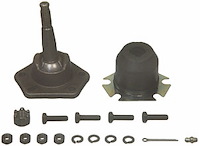
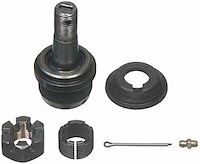
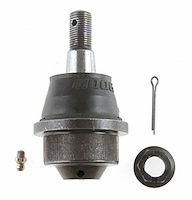
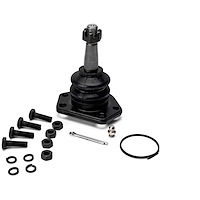
PROFORGED
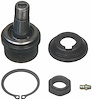
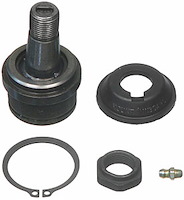
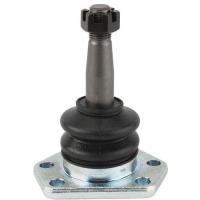
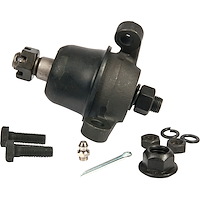
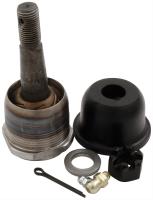
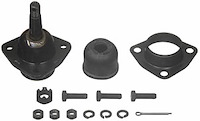
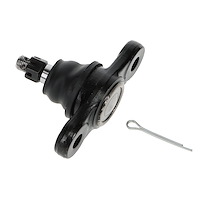
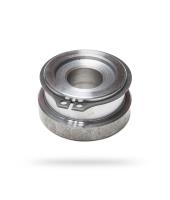
Upper Ball Joint Fits Select 1971-1980 Buick Skyhawk; Chevy Monza, Vega; Olds Starfire; Pontiac Astre, Sunbird
Part Number: 469-101-10300
 Ships Tomorrow
 Lowest price guarantee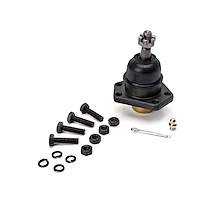
PROFORGED
Upper Ball Joint Fits Select 1971-1980 Buick Skyhawk; Chevy Monza, Vega; Olds Starfire; Pontiac Astre, Sunbird
Part Number: 469-101-10300
Ships TomorrowLowest Price Guarantee
SPOHN PERFORMANCE
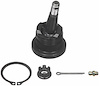
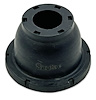
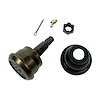
BJB-1 Rubber Ball Joint Boot, Fits Moog K6145T & K8259 Front Lower Ball Joints
Part Number: 267-BJB-1
Ships TomorrowLowest price guarantee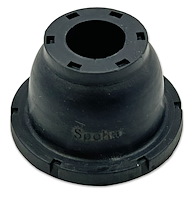
SPOHN PERFORMANCE
BJB-1 Rubber Ball Joint Boot, Fits Moog K6145T & K8259 Front Lower Ball Joints
Part Number: 267-BJB-1
Ships TomorrowLowest Price Guarantee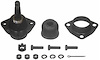
DETROIT SPEED
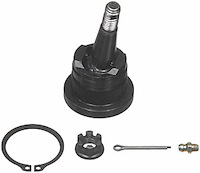
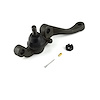
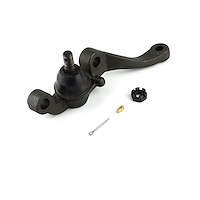
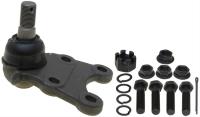
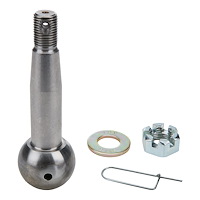
030203DS Lower Ball Joint for 1967-1969 Chevrolet Camaro/Pontiac Firebird/1968-1974 Chevrolet Nova/1964-1972 GM A-Body
Part Number: 320-030203DS
Ships TomorrowLowest price guarantee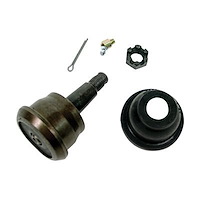
DETROIT SPEED
030203DS Lower Ball Joint for 1967-1969 Chevrolet Camaro/Pontiac Firebird/1968-1974 Chevrolet Nova/1964-1972 GM A-Body
Part Number: 320-030203DS
Ships TomorrowLowest Price Guarantee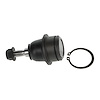
ACDELCO
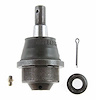
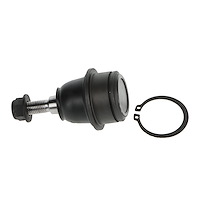
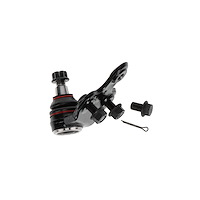
Front Lower Ball Joint for Select 2005-2019 Audi, Volkswagen
Part Number: 065-45D2338
Ships TomorrowLowest price guarantee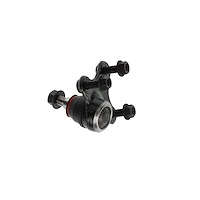
ACDELCO
Front Lower Ball Joint for Select 2005-2019 Audi, Volkswagen
Part Number: 065-45D2338
Ships TomorrowLowest Price Guarantee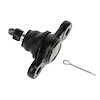


Frequently Asked Questions About Ball Joints
How Long Do Ball Joints Last?
Ball joints commonly last between 70,000 and 150,000 miles, though the range depends heavily on driving conditions. Rough roads, towing, off-road use and skipped maintenance all shorten their life, while greaseable joints that get serviced regularly tend to reach the higher end. Inspect them at every alignment or oil change so you catch play early.
Should You Replace Ball Joints In Pairs?
It's smart to replace ball joints in pairs, especially on higher-mileage vehicles. If one side has worn out, the joint on the other side has seen the same miles and loads, so it's likely close behind. Doing both sides at once keeps your steering balanced and saves you a second round of labor.
Do You Need An Alignment After Replacing A Ball Joint?
Yes, you should always get an alignment after replacing a ball joint. Swapping the joint changes the position of the knuckle and shifts your suspension geometry, which affects camber, caster and toe. Skipping the alignment leads to fast, uneven tire wear and sloppy steering. If you'd rather do it in your own garage, our DIY front end alignment tools guide covers what you need.
Can You Replace Ball Joints Yourself?
You can replace ball joints yourself, but it's an advanced DIY job. Press-in joints usually require a ball joint press to remove the old unit and seat the new one, and you'll need to support the suspension safely. Bolt-in and screw-in joints are more forgiving. If you're not confident working on load-bearing suspension parts, have a shop handle it.
How Much Do Ball Joints Cost?
Ball joint prices vary widely based on your vehicle, the brand and the style you choose. Sealed replacement joints for common daily drivers sit at the lower end, while greaseable, performance and racing joints cost more. Factor in a press tool or shop labor if you're doing a press-in joint, and buy both sides if you're replacing in pairs.