


 Order Status & Returns
 Gift Cards
 Help Center
 1-800-345-4545
Engine Thermostats & Water Restrictors
A car thermostat controls when coolant flows to the radiator, so your engine warms up quickly and holds a steady operating temperature. This category covers high-flow and standard-flow engine thermostats, integrated-housing assemblies, remote oil thermostats and water restrictors for street, strip and restoration builds. Use the guidance below to match temperature rating, flow design and fitment to your engine before you order.
Show More
How a Car Thermostat Controls Engine Temperature
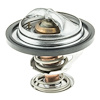
A car thermostat is a wax-pellet valve that stays closed while your engine warms up, then opens to send coolant to the radiator. As coolant heats the pellet, the wax expands and pushes the valve open. When the temperature drops, a spring closes it again, so flow keeps adjusting as load and weather change.
That cycle matters because an engine that runs too cold burns fuel less efficiently, and one that runs too hot risks head gasket damage. The thermostat works with the rest of your cooling system parts: the pump moves coolant, the radiator sheds heat and the cap holds pressure.
If any of those parts is weak, a new thermostat alone won't fix a temperature problem. A fault in this loop can also set a cooling performance code, so see our guide to P2181 code causes and fixes for diagnosis steps.
High-Flow vs. Standard-Flow Engine Thermostats
A high-flow thermostat uses a larger valve opening to move more coolant once it opens, while a standard-flow thermostat matches the factory flow rate. High-flow designs suit modified engines that make more heat, and standard-flow designs keep late-model engines running as calibrated.
Here's how the main options in this category break down:
- JEGS High-Flow thermostats come in 160-, 180- and 195-degree ratings for Pre-LT1 GM, Ford, AMC and 1978-earlier Mopar engines.
- The same high-flow line fits 1992-1997 LT-based and 1996-2009 GM LS-based engines, plus a universal 170-degree version.
- JEGS Standard-Flow thermostats fit Ford Coyote 5.0L, Chevy/GMC/Hummer/Saab and Chrysler/Dodge/Jeep/Ram engines in factory-matched ratings.
- Mishimoto offers a 180-degree thermostat with housing for the 2012-2018 Jeep Wrangler JK 3.6L.
- Motorcraft supplies an OE-style thermostat assembly for factory-correct replacement.
You'll find matching gaskets and fittings across our full selection of thermostats, housings and hoses.
Choosing the Right Thermostat Temperature (160 vs 180 vs 195)
The right thermostat temperature range is usually your engine's factory rating, unless you've modified the engine and tune to suit a cooler one. A lower-temp thermostat opens sooner, so coolant reaches the radiator earlier and the engine settles at a cooler temperature.
In the 160 vs 180-degree thermostat choice, carbureted street and race engines often run cooler. Modern EFI engines are calibrated around the factory temp rating, which is why JEGS Standard-Flow units come in 187- and 192-degree ratings for late-model applications.
Before you pick a rating, run through these checks:
- Confirm the temperature your engine calibration expects before going cooler.
- Match the flow design to engine output and radiator capacity.
- Check whether your engine uses a separate housing or an integrated one.
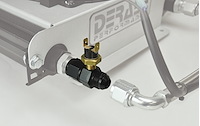
Engines with an oil cooler can add an Earl's Remote Oil Thermostat, which sends oil to the cooler only after it warms up.
Water Restrictors for Race Engines
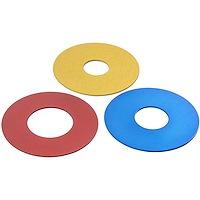
A water restrictor is a disc with a calibrated opening that slows coolant flow through the radiator. It's typically used in race engines that run without a thermostat. Slowing the flow gives coolant more time in the radiator and helps keep pressure in the block.
JEGS Water Restrictor Discs let you tune flow for drag and circle track engines that don't need a thermostat for warm-up or heater output. To set up a thermostat-free race cooling system, you'll typically need:
- A water restrictor disc sized for your engine and pump.
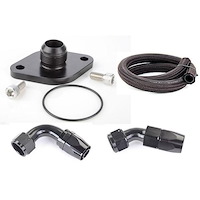
- A JEGS Water Outlet & Upper Radiator Hose Kit or Water Outlet & By-Pass Plate Kit.
- One of our performance radiators with enough capacity for sustained high rpm.
Building a vintage drag car or a resto-mod? Our guide to aluminum radiator installation in a classic car walks you through the swap. Plan restrictor size and radiator choice together, since both control how much heat your system can shed.
Signs You Need a Car Thermostat Replacement
You likely need a car thermostat replacement when the temperature gauge doesn't match how the engine is running. A thermostat stuck open causes slow warm-up, weak heater output and possibly a P0128 code.
Stuck closed thermostat symptoms include fast overheating, a hot upper hose with a cool lower hose and coolant pushing out of the overflow. Shut the engine down quickly if you see these signs, since a stuck-closed valve can lead to head gasket damage.
Before you replace the thermostat, rule out leaks with our guide on how to find and fix coolant leaks. Inspect the gasket surface on thermostat housings and water outlets, since corroded parts often seep after a swap. While the system is drained, replace tired radiator and heater hoses and radiator caps.
Ready to order? Shop car thermostats now by filtering this page for temperature rating, flow design and engine fitment.

ADD A VEHICLE TO GUARANTEE PARTS FIT
See products that fit

ADD A VEHICLE TO GUARANTEE PARTS FIT
See products that fit
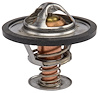
JEGS
High-Flow 160 degree Thermostat for 1996-2009 GM LS-Based Engines
Part Number: 555-53228
 Ships on Oct 19, 2026
 Lowest price guarantee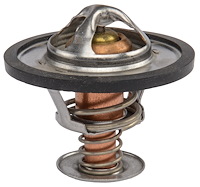
JEGS
High-Flow 160 degree Thermostat for 1996-2009 GM LS-Based Engines
Part Number: 555-53228
Ships on Oct 19, 2026Lowest Price Guarantee
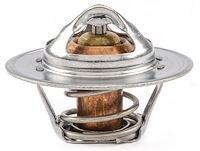
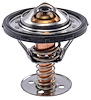
JEGS
Standard-Flow 160 degree Thermostat for Chevy, GMC, Hummer, Isuzu, Pontiac, Saab
Part Number: 555-53237
Ships on Oct 19, 2026Lowest price guarantee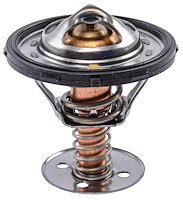
JEGS
Standard-Flow 160 degree Thermostat for Chevy, GMC, Hummer, Isuzu, Pontiac, Saab
Part Number: 555-53237
Ships on Oct 19, 2026Lowest Price Guarantee![High-Flow 170 degree Thermostat [Universal]](https://www.jegs.com/images/mini_100/500/555/555-53238.jpg)
![High-Flow 170 degree Thermostat [Universal]](https://www.jegs.com/images/mini_200/500/555/555-53238.jpg)
![Standard-Flow Thermostat for Ford Coyote 5.0L Engines [160-Degree]](https://www.jegs.com/images/mini_100/500/555/555-53243.jpg)
JEGS
Standard-Flow Thermostat for Ford Coyote 5.0L Engines [160-Degree]
Part Number: 555-53243
Ships on Oct 19, 2026Lowest price guarantee![Standard-Flow Thermostat for Ford Coyote 5.0L Engines [160-Degree]](https://www.jegs.com/images/mini_200/500/555/555-53243.jpg)
JEGS
Standard-Flow Thermostat for Ford Coyote 5.0L Engines [160-Degree]
Part Number: 555-53243
Ships on Oct 19, 2026Lowest Price Guarantee![Standard-Flow Thermostat for Ford Coyote 5.0L Engines [170-Degree]](https://www.jegs.com/images/mini_100/500/555/555-53244.jpg)
JEGS
Standard-Flow Thermostat for Ford Coyote 5.0L Engines [170-Degree]
Part Number: 555-53244
Ships on Oct 19, 2026Lowest price guarantee![Standard-Flow Thermostat for Ford Coyote 5.0L Engines [170-Degree]](https://www.jegs.com/images/mini_200/500/555/555-53244.jpg)
JEGS
Standard-Flow Thermostat for Ford Coyote 5.0L Engines [170-Degree]
Part Number: 555-53244
Ships on Oct 19, 2026Lowest Price Guarantee
JEGS
High-Flow 195 degree Thermostat for Pre-LT1 GM, Ford, AMC
Part Number: 555-53222
Ships on Oct 19, 2026Lowest price guarantee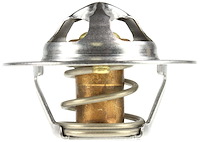
JEGS
High-Flow 195 degree Thermostat for Pre-LT1 GM, Ford, AMC
Part Number: 555-53222
Ships on Oct 19, 2026Lowest Price Guarantee
JEGS
High-Flow 180 degree Thermostat for 1978-Earlier Mopar, Chrysler, Dodge
Part Number: 555-53231
Ships on Oct 19, 2026Lowest price guarantee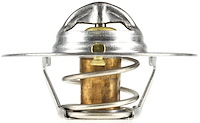
JEGS
High-Flow 180 degree Thermostat for 1978-Earlier Mopar, Chrysler, Dodge
Part Number: 555-53231
Ships on Oct 19, 2026Lowest Price Guarantee
JEGS
High-Flow 195 degree Thermostat for 1996-2009 GM LS-Based Engines
Part Number: 555-53227
Ships on Oct 19, 2026Lowest price guarantee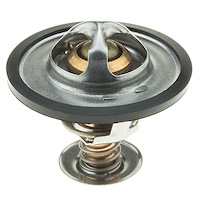
JEGS
High-Flow 195 degree Thermostat for 1996-2009 GM LS-Based Engines
Part Number: 555-53227
Ships on Oct 19, 2026Lowest Price Guarantee
JEGS
High-Flow 195 degree Thermostat for 1978-Earlier Mopar, Chrysler, Dodge
Part Number: 555-53232
Ships on Oct 19, 2026Lowest price guarantee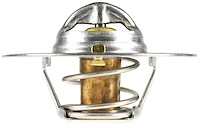
JEGS
High-Flow 195 degree Thermostat for 1978-Earlier Mopar, Chrysler, Dodge
Part Number: 555-53232
Ships on Oct 19, 2026Lowest Price Guarantee
JEGS
Standard-Flow 160 degree Integrated Housing Thermostat for Chevy, GMC, Isuzu, Pontiac
Part Number: 555-53242
Ships on Oct 19, 2026Lowest price guarantee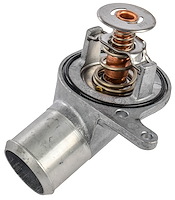
JEGS
Standard-Flow 160 degree Integrated Housing Thermostat for Chevy, GMC, Isuzu, Pontiac
Part Number: 555-53242
Ships on Oct 19, 2026Lowest Price Guarantee
JEGS
High-Flow 180 degree Thermostat for 1992-1997 LT-Based Engines
Part Number: 555-53225
Ships on Oct 19, 2026Lowest price guarantee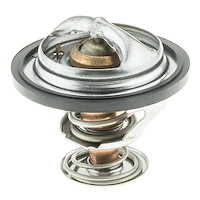
JEGS
High-Flow 180 degree Thermostat for 1992-1997 LT-Based Engines
Part Number: 555-53225
Ships on Oct 19, 2026Lowest Price Guarantee
JEGS
High-Flow 160 degree Thermostat for 1978-Earlier Mopar, Chrysler, Dodge
Part Number: 555-53230
Ships on Oct 19, 2026Lowest price guarantee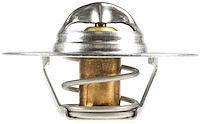
JEGS
High-Flow 160 degree Thermostat for 1978-Earlier Mopar, Chrysler, Dodge
Part Number: 555-53230
Ships on Oct 19, 2026Lowest Price Guarantee
JEGS
Standard-Flow 187 degree Thermostat for Chevy, GMC, Hummer, Isuzu, Pontiac, Saab
Part Number: 555-53234
Ships on Oct 19, 2026Lowest price guarantee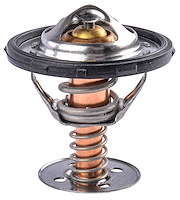
JEGS
Standard-Flow 187 degree Thermostat for Chevy, GMC, Hummer, Isuzu, Pontiac, Saab
Part Number: 555-53234
Ships on Oct 19, 2026Lowest Price Guarantee
JEGS
Standard-Flow 187 degree Thermostat for Chevy, GMC, Hummer, Saab
Part Number: 555-53235
Ships on Oct 19, 2026Lowest price guarantee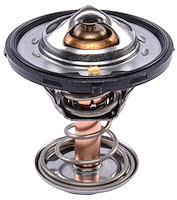
JEGS
Standard-Flow 187 degree Thermostat for Chevy, GMC, Hummer, Saab
Part Number: 555-53235
Ships on Oct 19, 2026Lowest Price Guarantee
JEGS
Standard-Flow 192 degree Thermostat for Chrysler, Dodge, Jeep, Ram
Part Number: 555-53236
Ships on Oct 19, 2026Lowest price guarantee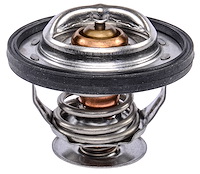
JEGS
Standard-Flow 192 degree Thermostat for Chrysler, Dodge, Jeep, Ram
Part Number: 555-53236
Ships on Oct 19, 2026Lowest Price Guarantee
JEGS
High-Flow 180 degree Thermostat for 1996-2009 GM LS-Based Engines
Part Number: 555-53229
Ships on Oct 19, 2026Lowest price guarantee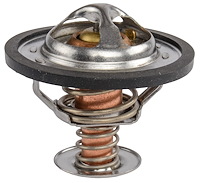
JEGS
High-Flow 180 degree Thermostat for 1996-2009 GM LS-Based Engines
Part Number: 555-53229
Ships on Oct 19, 2026Lowest Price Guarantee
JEGS
High-Flow 160 degree Thermostat for Pre-LT1 GM, Ford, AMC
Part Number: 555-53220
Ships on Oct 19, 2026Lowest price guarantee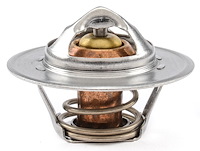
JEGS
High-Flow 160 degree Thermostat for Pre-LT1 GM, Ford, AMC
Part Number: 555-53220
Ships on Oct 19, 2026Lowest Price Guarantee

Frequently Asked Questions About Car Thermostats
Can a car run without a thermostat?
A street car can run without a thermostat, but it's not a good idea. The engine may warm up slowly, run too cold and set a P0128 code on EFI vehicles. Race engines that skip the thermostat use a water restrictor to control flow instead.
How do you test a car thermostat?
Start a cold engine and feel the upper radiator hose as the gauge climbs. The hose should stay cool, then get hot quickly once the thermostat opens near its rating. Off the car, you can heat the thermostat in water with a thermometer and watch for the valve to open.
What is a normal engine temperature?
A normal engine temperature usually sits at or slightly above the thermostat's rating once the engine is fully warm. It can rise a bit with heavy load or hot weather. If your gauge keeps climbing past that point, inspect the thermostat, fan and pump, since worn mechanical water pumps are a common cause.
Should I replace the thermostat when I install a new radiator?
Yes, it's smart to replace the thermostat while the system is drained for a radiator swap. It saves you from draining the system a second time if the old thermostat fails. Flush the old coolant and refill with fresh fluid from our coolants, flushes and additives lineup.
Which way does a thermostat face?
The spring and wax pellet face the engine, so they sit in the hot coolant coming from the block. The flat flange side faces the thermostat housing and radiator. If your thermostat has a small bleed hole or jiggle valve, position it at the top to help purge air.