


 Order Status & Returns
 Gift Cards
 Help Center
 1-800-345-4545

Bolts & Bolt Kits
Bolt kits and individual bolts in this category include Grade 5 carbon steel and stainless steel hardware with hex, 12-point, and socket heads. You'll find bulk bolt assortment bins, sets of 10, and vehicle-specific kits for timing covers, front ends, valances, trunks, and interior trim. Shop all bolt kits by grade type, finish, color, and overall length using the filters.
Show More
What Types of Bolts & Bolt Kits Can You Buy Here?
This category carries loose bolts and complete bolt kits for general automotive use. It sits inside the larger bolts section, which is part of the full lineup of automotive fasteners and hardware. Here's what you'll see in the product grid:
- Hex bolts in carbon steel and stainless steel, sold individually, in sets of 10, or in bulk bins
- 12-point bolts with a compact head for tight clearances
- Socket head cap screws that tighten with a hex key
- Metric multi-purpose bolts, heavy hex flange bolts, and U-bolts
- Bolt assortment bins for stocking your home shop
- Vehicle-specific kits for engines, front ends, valances, and trunks
Refreshing a whole assembly? A kit saves you from sourcing each size one at a time.
What's the Difference Between Grade 5 and Grade 8 Bolts?
Grade 8 bolts are stronger than Grade 5 bolts. Under SAE J429, Grade 8 has a 150,000 psi minimum tensile strength, while Grade 5 has 120,000 psi for 1/4" through 1" diameters.
You can tell them apart by the radial lines on the head. A Grade 5 head has three lines, a Grade 8 head has six, and a Grade 2 bolt has no marks at all.
Grade 5 hardware handles most general-purpose jobs, such as brackets, covers, and accessory mounts. Step up to Grade 8 when a joint sees high loads and you want extra strength. For the most critical engine fasteners, read why rod bolts are critical to an engine build before you spec your bottom end.
When Should You Choose Stainless Steel or Chromoly Bolts?
Choose stainless steel bolts when corrosion resistance and appearance matter more than maximum strength. Alloys such as 18-8, 304, and 316 resist rust, but they generally fall below Grade 5 tensile strength. That makes them a fit for trim, brackets, and show-car hardware rather than high-load joints.
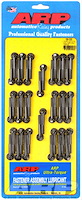
This category includes ARP bolts in stainless steel, with both hex and 12-point heads. Chromoly is the alloy steel you'll see in many high-strength bolts for engine and chassis work, where stainless isn't strong enough.
Finish matters too. You'll find black-phosphate coatings and polished stainless here, and you can sort by finish and color with the filters. Stainless threads can gall during installation, so compare aluminum or copper anti-seize before you tighten anything down.
Should You Use a Hex Head, 12-Point, or Socket Head Bolt?
Pick a hex head for general work, a 12-point head for tight spaces, and a socket head where a wrench can't fit around the bolt.
Hex heads are the most common style and work with standard sockets and wrenches. They're the easy choice for brackets, accessories, and chassis hardware.
A 12-point head is smaller in diameter than a hex head for the same thread size. That compact shape helps in crowded engine-bay spots. It also lets you reposition your wrench every 30 degrees instead of every 60.
Socket head cap screws tighten with an Allen or hex key, so they can sit in counterbores and tight pockets. You'll see small sizes here, such as 1/4"-20 x 3/8". If a head has no built-in flange, pair it with washers to spread the clamping load across the mounting surface.
How Do You Size a Bolt by Diameter, Thread Pitch, and UHL?
You size a bolt by three numbers: diameter, thread pitch, and under-head length (UHL). A callout like 5/16"-18 x 1" UHL on Billet Specialties Pro Bolts means a 5/16" diameter, 18 threads per inch, and 1" of length. UHL is measured from the underside of the head to the tip, so it doesn't include the head.
SAE pitch counts threads per inch, so 3/8"-16 is coarse thread and 3/8"-24 is fine thread. Metric bolts list pitch as the distance between threads. An M10 x 1.5 x 30 bolt has a 10 mm diameter, 1.5 mm pitch, and 30 mm length.
Use the overall length filter to narrow results. Match the same diameter and pitch when you add nuts and nut kits or studs. If a hole's threads are stripped, learn how to repair damaged threads using the Time-Sert method before you reinstall.
Which Bolt Kits Work for Restoration and Engine Projects?
Vehicle-specific bolt kits are the fastest way to replace hardware on a known application, since each kit bundles the sizes for one job. Browse application-specific bolts when you want parts matched to a make, model, or component.
For restorations, Auto Metal Direct kits include 1972-1974 Challenger and Barracuda valance bolt kits, trunk bolt kits, and 1966-1968 Mopar interior trim screw sets. JEGS kits include a polished stainless front-end bolt kit for 1961-1964 Chevrolet full-size cars and a black-phosphate GM LS timing cover bolt kit.
Building a motor? Head to engine bolt kits for engine-specific hardware, or body bolts for exterior panel fasteners. When you're ready, shop all bolt kits on this page by grade, finish, and length.

ADD A VEHICLE TO GUARANTEE PARTS FIT
See products that fit

ADD A VEHICLE TO GUARANTEE PARTS FIT
See products that fit
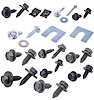
JEGS
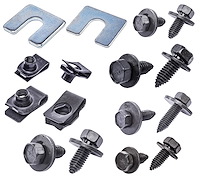
Front End Fastener Kit for 1981-1987 GM Truck/SUV [Black Finish]
Part Number: 555-79181
 Ships Tomorrow
 Lowest price guarantee
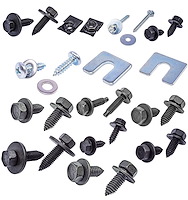
JEGS
Front End Fastener Kit for 1981-1987 GM Truck/SUV [Black Finish]
Part Number: 555-79181
Ships TomorrowLowest Price Guarantee
JEGS
Truck Bed to Frame Fastener Kit for 1973-1987 Chevrolet, GMC C/K Series Pickups [Zinc-Plated]
Part Number: 555-90865
Ships TomorrowLowest price guarantee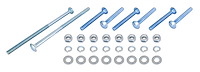
JEGS
Truck Bed to Frame Fastener Kit for 1973-1987 Chevrolet, GMC C/K Series Pickups [Zinc-Plated]
Part Number: 555-90865
Ships TomorrowLowest Price Guarantee
JEGS
Master Fastener Kit for 1947-1955 (1st Series) Chevrolet, GMC Truck [Polished Finish]
Part Number: 555-90889
Ships TomorrowLowest price guarantee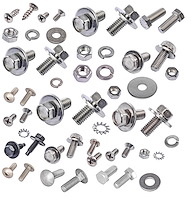
JEGS
Master Fastener Kit for 1947-1955 (1st Series) Chevrolet, GMC Truck [Polished Finish]
Part Number: 555-90889
Ships TomorrowLowest Price Guarantee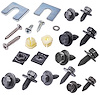
JEGS
Front End Fastener Kit for 1967-1972 GM Truck/SUV [Black Finish]
Part Number: 555-79159
Ships TomorrowLowest price guarantee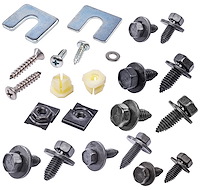
JEGS
Front End Fastener Kit for 1967-1972 GM Truck/SUV [Black Finish]
Part Number: 555-79159
Ships TomorrowLowest Price Guarantee
JEGS
Front End Bolt Kit 1968-1972 Chevy Chevelle, El Camino, 1970-1972 Chevy Monte Carlo - Black Finish
Part Number: 555-79148
Ships TomorrowLowest price guarantee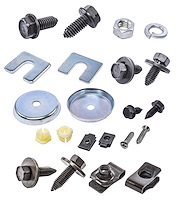
JEGS
Front End Bolt Kit 1968-1972 Chevy Chevelle, El Camino, 1970-1972 Chevy Monte Carlo - Black Finish
Part Number: 555-79148
Ships TomorrowLowest Price Guarantee
JEGS
Front End Bolt Kit 1970-1981 Chevy Camaro, Pontiac Firebird - Black Finish
Part Number: 555-79153
Ships TomorrowLowest price guarantee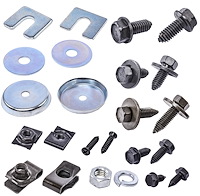
JEGS
Front End Bolt Kit 1970-1981 Chevy Camaro, Pontiac Firebird - Black Finish
Part Number: 555-79153
Ships TomorrowLowest Price Guarantee
JEGS
Master Fastener Kit for 1955 (2nd Series)-1959 Chevrolet, GMC Truck [Polished Finish]
Part Number: 555-90890
Ships TomorrowLowest price guarantee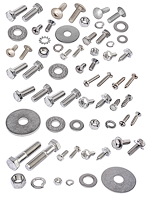
JEGS
Master Fastener Kit for 1955 (2nd Series)-1959 Chevrolet, GMC Truck [Polished Finish]
Part Number: 555-90890
Ships TomorrowLowest Price Guarantee
JEGS
Front End Bolt Kit 1967-1968 Chevy Camaro (Standard Front End), Pontiac Firebird - Black Finish
Part Number: 555-79149
Ships TomorrowLowest price guarantee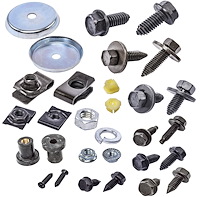
JEGS
Front End Bolt Kit 1967-1968 Chevy Camaro (Standard Front End), Pontiac Firebird - Black Finish
Part Number: 555-79149
Ships TomorrowLowest Price Guarantee
JEGS
Front End Bolt Kit 1968-1972 Chevy Chevelle, El Camino, 1970-1972 Chevy Monte Carlo [Polished Stainless Steel]
Part Number: 555-79429
Ships TomorrowLowest price guarantee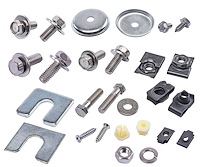
JEGS
Front End Bolt Kit 1968-1972 Chevy Chevelle, El Camino, 1970-1972 Chevy Monte Carlo [Polished Stainless Steel]
Part Number: 555-79429
Ships TomorrowLowest Price Guarantee
JEGS
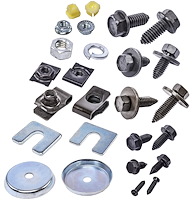
Front End Fastener Kit for 1967-1972 GM Truck, Blazer, Jimmy, Suburban [Polished Stainless Steel]
Part Number: 555-79440
Ships TomorrowLowest price guarantee
JEGS
Front End Fastener Kit for 1967-1972 GM Truck, Blazer, Jimmy, Suburban [Polished Stainless Steel]
Part Number: 555-79440
Ships TomorrowLowest Price Guarantee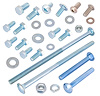
JEGS
Truck Bed Assembly & Frame Mounting Fastener Kit for 1973-1987 Chevrolet, GMC C/K Series Pickups [Zinc-Plated]
Part Number: 555-90868
Ships TomorrowLowest price guarantee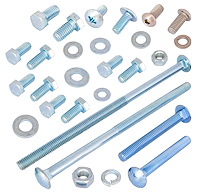
JEGS
Truck Bed Assembly & Frame Mounting Fastener Kit for 1973-1987 Chevrolet, GMC C/K Series Pickups [Zinc-Plated]
Part Number: 555-90868
Ships TomorrowLowest Price Guarantee
JEGS
Front End Bolt Kit 1969 Chevy Camaro (Standard Front End), Pontiac Firebird [Black Oxide-Coated Stainless Steel]
Part Number: 555-79449
Ships TomorrowLowest price guarantee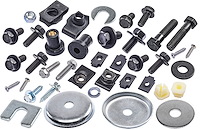
JEGS
Front End Bolt Kit 1969 Chevy Camaro (Standard Front End), Pontiac Firebird [Black Oxide-Coated Stainless Steel]
Part Number: 555-79449
Ships TomorrowLowest Price Guarantee
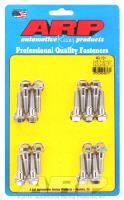
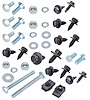
JEGS
Truck Bed Assembly & Frame Mounting Fastener Kit for 1967-1972 Chevrolet, GMC Pickups Long Bed [Zinc-Plated]
Part Number: 555-90866
Ships TomorrowLowest price guarantee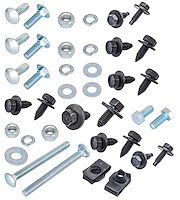
JEGS
Truck Bed Assembly & Frame Mounting Fastener Kit for 1967-1972 Chevrolet, GMC Pickups Long Bed [Zinc-Plated]
Part Number: 555-90866
Ships TomorrowLowest Price Guarantee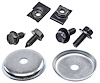
JEGS
Inner Fender Hardware Kit Fits Select 1962-1981 Chevrolet Models - Black Stainless Steel
Part Number: 555-90643
Ships TomorrowLowest price guarantee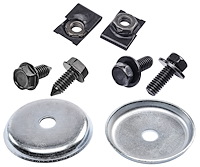
JEGS
Inner Fender Hardware Kit Fits Select 1962-1981 Chevrolet Models - Black Stainless Steel
Part Number: 555-90643
Ships TomorrowLowest Price Guarantee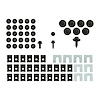
BROTHERS TRUCKS
8130-67 Inner Fender Bolt Kit for 1967-1972 Chevrolet GMC C/K Series Truck
Part Number: 543-8130-67
Ships on 12/22/2026Lowest price guarantee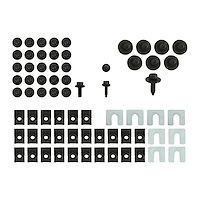
BROTHERS TRUCKS
8130-67 Inner Fender Bolt Kit for 1967-1972 Chevrolet GMC C/K Series Truck
Part Number: 543-8130-67
Ships on 12/22/2026Lowest Price Guarantee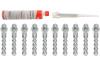
Frequently Asked Questions About Bolt Kits
What Is the Metric Equivalent of a Grade 8 Bolt?
Metric property class 10.9 is the closest match to SAE Grade 8. Class 8.8 is roughly equal to Grade 5. Check the number stamped on the head of a metric bolt to confirm its class.
Do You Need to Match Nut Grade to Bolt Grade?
Yes. A Grade 8 bolt needs a Grade 8 nut to reach its full proof load. A lower-grade nut can become the weak point in the joint.
Should You Reuse Old Bolts or Buy a New Bolt Kit?
Replace bolts that are rusted, stretched, or have damaged threads. A new kit also makes sense when hardware is missing, since you get matched sizes for the job in one package. If you do reuse a bolt, inspect the threads and head markings first.
Can You Replace a Bolt With a Different Grade?
You can, as long as the new bolt is at least as strong as the original. Read the head markings on the old bolt, then match or exceed that grade. Don't swap a Grade 8 bolt for a Grade 5 or stainless steel bolt in a high-load spot.