


 Order Status & Returns
 Gift Cards
 Help Center
 1-800-345-4545

Rear Main Seals
Rear main seals stop oil from leaking where the crankshaft exits the block, and you'll find one-piece seals, two-piece seals and complete seal kits here. Choose rubber seals, rear main cover gaskets and seal-and-gasket kits for GM LS, small-block Chevy, Ford, Chrysler and Toyota engines. With hundreds of application-specific options in one category, you can match the right rear crankshaft seal to your engine and get back to your build.
Show More
What Does A Rear Main Seal Do?
A rear main seal, also called a rear crankshaft seal, closes off the spot where the crankshaft exits the rear of the engine block. It keeps oil inside the crankcase while the crank spins at full engine speed. When it fails, oil escapes between the engine and the transmission bellhousing.
The seal lip rides on a machined sealing surface at the back of the crank. That lip has to stay in contact through heat cycles, vibration and crankcase pressure. That's why the seal's material, its fit and the condition of the crank all affect how long it lasts.
Oil feeds the rear main bearing under pressure, and some naturally flows back toward the seal. For a refresher, read our guide on how engine oil systems work.
Need more than a seal for your build? Shop all engine gaskets and seals.
What's The Difference Between One-Piece And Two-Piece Rear Main Seals?
A two-piece seal splits into upper and lower halves, and older engines often use this style in rope or rubber. A one-piece seal is a single ring that usually sits in a bolt-on retainer or cover.
Many later engines use one-piece designs, such as the seal in the GM LS rear main cover. On small-block Chevy engines, the 1959-1985 blocks use a two-piece seal, and 1986-up blocks use a one-piece seal in a retainer. For two-piece applications, Fel-Pro offers a rubber two-piece rear main seal for 1980-1985 GM and Jeep engines.
Rope seals usually call for removing the crankshaft, so many builders replace them during a rebuild. One-piece seals typically require pulling the transmission to reach the seal. Confirm which style your block uses before you order, since the two designs don't interchange.
Which Rear Main Seal Kits Fit Your Engine?
Start with your engine family and model year, then match the seal style to your block. This category covers popular domestic engines plus several import applications:
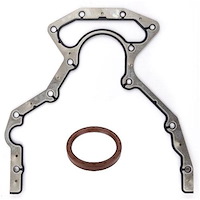
- GM LS rear main seals, cover gaskets and seal-and-gasket kits from JEGS
- Small-block Chevy seals for 1959-1985 engines and 1986-1995 V6 and V8 engines
- Small-block Ford 260-302 seals and Ford 351C, 351M, 351W and 400 seals
- Chrysler 273, 318 and 340 seals for 1964-1991 engines
- Big-block Chrysler 350-440 seal sets for 1959-1979 engines from Clevite MAHLE
- Toyota 2JZ-GE, 2JZ-GTE and 22R rear main seals from Cometic Gaskets
JEGS also makes the small-block Chevy, Ford and Chrysler seals listed above. On an LS, the seal-and-gasket kit lets you replace the seal and the cover gasket in one job. If you only need one part, the seal and cover gasket are also sold separately.
What Are The Signs Of A Rear Main Seal Leak?
The clearest sign of a rear main seal leak is oil dripping from the seam between the engine and the transmission bellhousing. You may also notice your oil level dropping between changes. A burning-oil smell after a drive is another clue.
Before you order a seal, confirm the source. Oil runs toward the back of the engine, so a leak from the oil pan or higher up can mimic a rear main leak. If the drip traces back to the pan rail, you may need oil pan gaskets instead of a new seal.
To pinpoint the leak, clean the area with degreaser, drive a short distance and inspect it again. Fresh oil at the bottom of the bellhousing seam points to the rear main seal. Fresh oil higher on the block points somewhere else.
How Do You Install A Rear Main Seal So It Lasts?
Replacing a rear main seal typically means removing the transmission and the parts bolted to the back of the crank. Since that's a lot of labor, take these steps so you only do the job once:
- Inspect the crankshaft sealing surface for grooves, rust or wear before you install the new seal
- Check the PCV system, since a clogged valve builds crankcase pressure that pushes oil past the seal
- Lube the seal lip with clean engine oil unless the seal's instructions call for a dry install
- Drive the seal in square with the correct installer so the lip doesn't fold or cock
The right engine rebuild tools make it easier to seat the seal straight and torque the retainer or main cap bolts to spec. If you're already pulling the oil pan, shop lower engine gasket sets to reseal the entire bottom end at once.

ADD A VEHICLE TO GUARANTEE PARTS FIT
See products that fit

ADD A VEHICLE TO GUARANTEE PARTS FIT
See products that fit
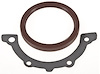
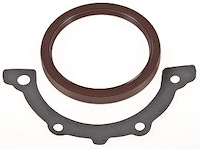

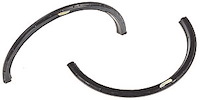
JEGS
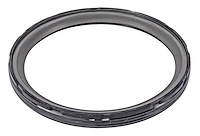
Rear Main Seal Fits 1959-1985 Small Block Chevy (except 400ci) & L6/V6
Part Number: 555-212085
 Ships Tomorrow
 Lowest price guarantee
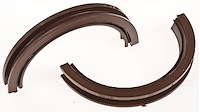
JEGS
Rear Main Seal Fits 1959-1985 Small Block Chevy (except 400ci) & L6/V6
Part Number: 555-212085
Ships TomorrowLowest Price Guarantee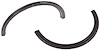
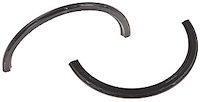
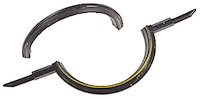
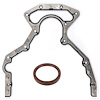


FEL-PRO
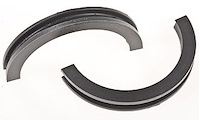
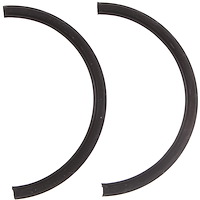
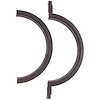
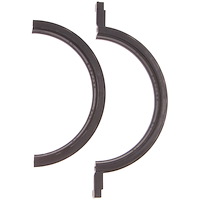
Fluoroelastomer 2-Piece Rear Main Seal Gasket for 1959-1985 Chevy and GM Cars and Trucks
Part Number: 375-2912
Ships TomorrowLowest price guarantee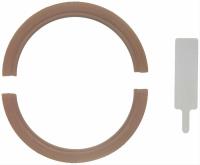
FEL-PRO
Fluoroelastomer 2-Piece Rear Main Seal Gasket for 1959-1985 Chevy and GM Cars and Trucks
Part Number: 375-2912
Ships TomorrowLowest Price Guarantee
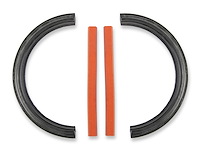

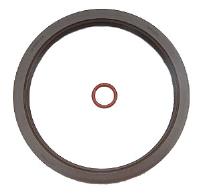

FEL-PRO
Fluoroelastomer 2-Piece Rear Main Seal Gasket for 1958-1980 Chrysler, Dodge and Plymouth 361-440 Big Block V8
Part Number: 375-2947
Ships TomorrowLowest price guarantee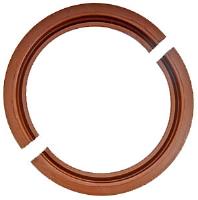
FEL-PRO
Fluoroelastomer 2-Piece Rear Main Seal Gasket for 1958-1980 Chrysler, Dodge and Plymouth 361-440 Big Block V8
Part Number: 375-2947
Ships TomorrowLowest Price Guarantee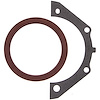
CLEVITE MAHLE
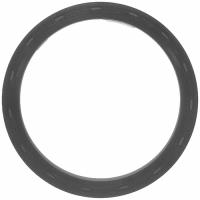
Rear Main Seal Set 1986-1996 Small Block Chevy 305/350 (5.0/5.7L) ; LT1 4.3/5.7L ; V6 4.3L with 1 Piece Rear Main Seal
Part Number: 695-JV554
Ships TomorrowLowest price guarantee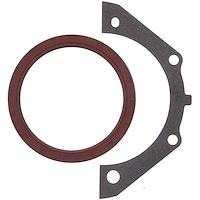
CLEVITE MAHLE
Rear Main Seal Set 1986-1996 Small Block Chevy 305/350 (5.0/5.7L) ; LT1 4.3/5.7L ; V6 4.3L with 1 Piece Rear Main Seal
Part Number: 695-JV554
Ships TomorrowLowest Price Guarantee
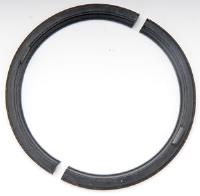
MR GASKET
Silicone Rear Main Seal for 1968-1988 Ford 429/460 [Two Piece, Rope Seal Upgrade]
Part Number: 720-1965
Ships on 11/24/2026Lowest price guarantee
MR GASKET
Silicone Rear Main Seal for 1968-1988 Ford 429/460 [Two Piece, Rope Seal Upgrade]
Part Number: 720-1965
Ships on 11/24/2026Lowest Price Guarantee

FEL-PRO
Fluoroelastomer 2-Piece Rear Main Seal Gasket for 1962-1982 Ford 260, 289 and 302 V8 and SVO V6 Racing Engines
Part Number: 375-2901
Ships TomorrowLowest price guarantee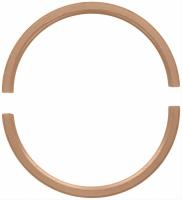
FEL-PRO
Fluoroelastomer 2-Piece Rear Main Seal Gasket for 1962-1982 Ford 260, 289 and 302 V8 and SVO V6 Racing Engines
Part Number: 375-2901
Ships TomorrowLowest Price Guarantee


CLEVITE MAHLE
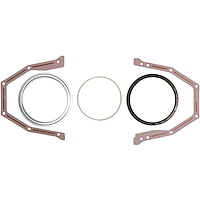
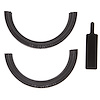
Rear Main Seal Set 1959-1985 Small Block Chevy 265-400 ; V6 229/262 (3.8/4.3L) ; L6 200/230/250/292 ; L4 151 (2.5L)
Part Number: 695-JV1627
Ships on 11/24/2026Lowest price guarantee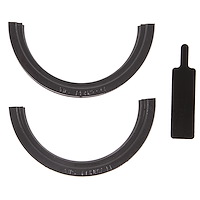
CLEVITE MAHLE
Rear Main Seal Set 1959-1985 Small Block Chevy 265-400 ; V6 229/262 (3.8/4.3L) ; L6 200/230/250/292 ; L4 151 (2.5L)
Part Number: 695-JV1627
Ships on 11/24/2026Lowest Price Guarantee
Frequently Asked Questions About Rear Main Seals
Is A Rear Main Seal Leak Serious?
A small seep is usually more of a nuisance than an emergency, but you shouldn't ignore it. A growing leak can drop your oil level, coat the clutch on a manual transmission and drip onto hot exhaust parts. Check your oil often and plan the repair before the leak gets worse.
How Long Can You Drive With A Rear Main Seal Leak?
There's no set mileage, because it depends on how fast the engine loses oil. A slow seep can often be managed for a while if you check and top off the oil regularly. If you're adding oil often or see fresh drips every time you park, schedule the repair soon.
What Causes A Rear Main Seal To Leak?
Age and heat harden the seal over time, and engines that sit for long periods can develop dry rot. Excess crankcase pressure from a clogged PCV system can push oil past the seal lip. A worn or damaged crankshaft sealing surface can also keep a new seal from sealing.
Why Does Rear Main Seal Replacement Cost So Much?
The seal itself is a small part, but reaching it usually takes significant labor. Most jobs require removing the transmission, and some two-piece designs require removing the crankshaft. Doing the work yourself, or replacing the seal while the engine is already apart, saves most of that labor.
Is It Worth Fixing A Rear Main Seal?
In most cases, yes, especially on an engine you plan to keep. A failing seal won't stop leaking on its own, and the leak can lead to low oil levels and a slipping clutch. If you're already pulling the transmission for another repair, replace the seal at the same time.