


 Order Status & Returns
 Gift Cards
 Help Center
 1-800-345-4545
Header Wrap, Heat Shields & Exhaust Tape
Header wrap is thermal insulating material you wrap around headers and exhaust pipes to keep heat inside the system and off everything around it. This category brings together header wrap, heat shield tape, and exhaust sleeves from names builders trust, so you can match the right material to your engine bay in one place. Shop here to compare fiberglass, titanium-coated, graphite, and carbon-fiber options alongside the ties and tape you need to finish the job.
Show More
What Is Header Wrap and How Does It Work?
Header wrap is a heat-resistant insulating material that wraps directly around your exhaust headers to trap heat inside the pipes instead of letting it radiate into the engine bay. By holding that heat in, the wrap keeps exhaust gases hotter and moving faster, which improves flow through the scavenging effect and helps pull spent gases out of each cylinder. It also lowers underhood temperatures and shields your hands and nearby components from burns during service. If you're deciding what to wrap, it helps to understand the difference between exhaust manifolds and headers, since tubular headers have more surface area to cover than a cast manifold. Most builders wrap long-tube or shorty headers, but you can also wrap downpipes and mid-pipes for the same effect. Browse our full selection of headers and exhaust manifolds to see what fits your setup before you choose a wrap.
Types of Header Wrap, Heat Shields, and Tape
Your choices break down into a few core material and product types, each built for a different job. Header wrap covers the pipes directly, while tape and sleeves protect the wires and lines routed near your exhaust piping. Think about how much heat you're managing and where it sits before you pick a material.
Here are the main options you'll compare:
- Fiberglass and basalt wrap: high-heat, budget-friendly rolls for wrapping headers and pipes.
- Titanium exhaust wrap: pliable, abrasion-resistant material rated for the highest temperatures.
- Graphite-coated wrap: a tight-weave option that resists fraying and cleans up easily.
- Carbon-fiber wrap: a lightweight look with strong heat resistance for show builds.
- Heat shield tape: adhesive-backed tape that protects hoses, wiring, and panels from radiant heat.
- Exhaust sleeves and locking ties: slip-on protection plus the stainless ties that hold your wrap in place.
Benefits of Wrapping Your Headers
Wrapping your headers pays off in three main ways: cooler underhood temperatures, better exhaust flow, and safer service. Keeping heat inside the pipes can drop engine-bay temps noticeably, which protects sensitive electronics, plug wires, and rubber components from heat soak. Hotter exhaust gas also moves faster, and that scavenging effect can free up a bit of power and throttle response, especially on long-tube vs shorty headers. Wrap also cuts the risk of burns when you're working near the exhaust after a drive. Keep in mind there's a tradeoff: wrap can trap moisture against the metal and speed up rust or fatigue if you never remove it, so inspect it over time. For a cooler, quieter combination, pair your wrap with the right mufflers and resonators downstream. Good exhaust insulation is one of the simplest upgrades for a hot engine bay.
Top Header Wrap and Heat Shield Brands
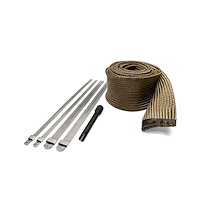
We stock header wrap and heat shielding from a few brands builders trust. Design Engineering (DEI) is known for its titanium and fiberglass wraps, heat shield tape, and complete kits that bundle wrap with stainless ties. Thermo Tec offers graphite-coated and standard exhaust wrap along with reflective heat barriers, giving you options for both headers and firewalls. Dynamat rounds things out with thermal and sound-deadening products that cut heat and noise inside the cabin. Between these brands you'll find fiberglass, basalt, titanium-coated, and graphite materials, plus the tape and sleeves that finish an install. If you want everything in one box, look for a header wrap kit that pairs a full roll with the locking ties sized for your headers. Match the brand to your priority, whether that's maximum heat resistance, a clean appearance, or a quieter interior.
How to Choose the Right Header Wrap
Start by matching the wrap's temperature rating and material to how much heat your setup makes. A naturally aspirated street engine does fine with fiberglass or basalt wrap, while turbo and high-heat applications are where titanium exhaust wrap earns its cost. Next, measure your pipes so you buy enough length, and pick a width that lets you overlap cleanly without bunching, usually one or two inches. Decide whether you want a raw functional look or a graphite or carbon-fiber finish for a show build. Don't forget the stainless locking ties, since they hold the wrap far better than the wire alone. If you're building a full system, browse the complete headers and exhaust lineup so your wrap, pipes, and mufflers work together. Our muffler types guide can help you dial in sound and flow to match your new wrap.

ADD A VEHICLE TO GUARANTEE PARTS FIT
See products that fit

ADD A VEHICLE TO GUARANTEE PARTS FIT
See products that fit

 Lowest price guarantee
Frequently Asked Questions About Header Wrap
How Do You Install Header Wrap?
Wear gloves, since the fibers can irritate your skin, and optionally dampen the wrap with water to make it more pliable and easier to pull tight. Start at the exhaust port and work outward, overlapping each pass by about a quarter inch so there are no gaps. Keep steady tension and secure the ends with stainless locking ties rather than relying on the wrap alone. Pick up any ties, clamps, or fasteners you're missing from our exhaust clamps, hangers and accessories.
How Long Does Header Wrap Last?
It depends on the material and how hard you run the car, but quality wrap commonly lasts several years of regular driving. Titanium and graphite-coated wraps tend to hold up longer than basic fiberglass because they resist fraying and abrasion. Inspect it during routine service and re-wrap when you see charring, gaps, or loose sections.
Can Header Wrap Cause Rust or Damage Your Headers?
It can if you ignore it. Wrap traps moisture against the metal, and that trapped moisture can promote rust and, over time, contribute to metal fatigue on the tubing. You reduce the risk by fully drying the pipes before wrapping, avoiding standing water, and removing the wrap periodically to inspect the metal underneath. Stainless or coated headers handle wrap better than bare mild steel.
Is Header Wrap or Ceramic Coating Better?
Neither is strictly better; they solve the problem differently. Wrap is inexpensive, easy to install at home, and simple to remove, though it can trap moisture. Ceramic coating is applied to the metal, resists moisture, and looks clean, but it costs more and usually requires a shop. Many builders use both, coating the headers and adding wrap for maximum heat control.
How Much Does Header Wrap Cost?
Cost varies by material, width, and length, so a short roll of basic fiberglass wrap sits well below a long roll of titanium or graphite wrap. Kits that bundle wrap with locking ties can save money versus buying the pieces separately. Check current pricing on each product page to compare the options for your build.