Sign up now to join the JEGS email newsletter and be the first to learn about new products, special deals and e-mail only offers!

 2 People Found This Article Helpful


Upgrading exhaust headers is one of the most popular ways to improve engine performance, sound, and throttle response. If you are comparing long tube headers vs shorty headers, you are likely trying to decide which design will deliver the best results for your vehicle and driving style.
Both options improve exhaust flow compared to factory manifolds, but they differ in design, power delivery, installation requirements, and intended use. Understanding those differences helps you choose the right header for your build.
Exhaust headers replace restrictive factory exhaust manifolds. Instead of merging exhaust gases into a small chamber, headers use individual primary tubes for each cylinder. This design improves exhaust scavenging and reduces backpressure.
Better exhaust flow allows the engine to breathe more efficiently, which can increase horsepower and torque.

Long tube headers use extended primary tubes that typically run farther down the engine bay before merging into a collector. The longer tube length improves exhaust scavenging at higher engine speeds.
Because of their design, long tube headers often produce stronger gains in mid range and top end horsepower. They are commonly used in performance street cars, drag racing builds, and track applications where maximum power is a priority.
However, long tube headers usually require more installation space and may require modifications to the exhaust system. In some areas, emissions regulations can limit their use on street driven vehicles.

Shorty headers are designed to replace factory manifolds while maintaining a similar overall size and location. The primary tubes are shorter and merge closer to the engine.
Shorty headers typically improve exhaust flow and throttle response compared to stock manifolds, but peak horsepower gains are often smaller than those from long tube designs.
One advantage of shorty headers is easier installation. They usually connect to the factory exhaust system without major modifications, making them a popular choice for daily driven vehicles.

When comparing long tube headers vs shorty, the biggest difference is where the power gains occur.
Long tube headers are generally better for increasing mid range and high rpm horsepower. They are well suited for engines with upgraded camshafts, intake systems, and tuning.
Shorty headers tend to provide modest gains across the rpm range, often improving throttle response and low to mid range torque without dramatically changing the power curve.
Your engine combination and intended use should guide the decision.
Sign up now to join the JEGS email newsletter and be the first to learn about new products, special deals and e-mail only offers!
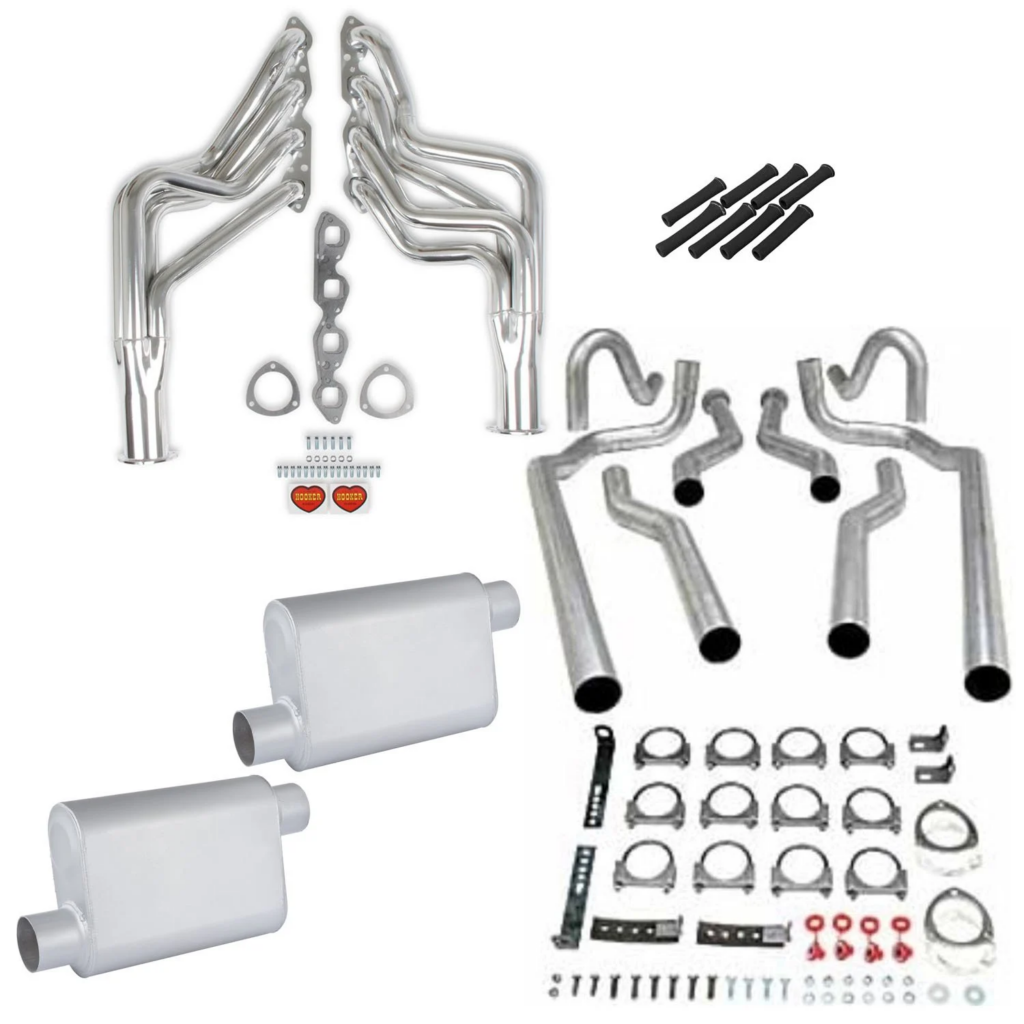
Both header styles can improve exhaust sound, giving the vehicle a deeper and more aggressive tone. Long tube headers often create a more pronounced change in sound due to increased exhaust flow and altered scavenging characteristics.
Shorty headers provide a performance sound improvement while maintaining closer compatibility with factory exhaust components.
Long tube headers may require modifications to mid pipes, catalytic converters, or other exhaust components. Clearance around the steering shaft, transmission, and ground clearance should also be considered.
Shorty headers are typically easier to install and are often designed to bolt directly to the factory exhaust system.
Before choosing either option, verify fitment for your specific engine, chassis, and transmission combination.

If your goal is maximum horsepower and you are building a performance focused vehicle, long tube headers are often the better choice. They are ideal for modified engines that can take advantage of improved scavenging.
If you want improved sound, better throttle response, and a simpler installation for a street driven vehicle, shorty headers may be the right fit.
At www.jegs.com, you will find a wide selection of long tube and shorty headers for popular engines and platforms. Whether you are upgrading a daily driver or building a dedicated performance machine, there are options designed to match your goals.
If you need help deciding between long tube headers and shorty headers for your application, the JEGS Tech Specialists are available to help you select the right components for your engine and driving style.



Leave a Reply