

 Order Status & Returns
 Gift Cards
 Help Center
 1-800-345-4545
Exhaust & Turbo Downpipes
Turbo downpipes connect your turbocharger's outlet to the rest of your exhaust, and this category also covers manifold downpipes for classic V8s. You'll find stainless-steel Pypes Performance Exhaust downpipes, JBA downpipes for the 8.1L Silverado, and PPE Power Duramax manifolds and up-pipes. Shop JEGS to compare fitment years and engines side by side and find the right part for your exact vehicle.
Show More
What Is a Turbo Downpipe?
A turbo downpipe is the section of pipe that bolts to your turbo's turbine outlet and routes exhaust into the rest of the system. It's the first pipe exhaust gas hits after it spins the turbine, so its design affects how freely your turbo can breathe.
Factory downpipes are often crimped or restrictive so they fit tight engine bays. Aftermarket turbo downpipes typically widen the diameter and use mandrel-bent tubing, which keeps the inside diameter consistent through every bend. Less restriction after the turbine can help your turbo spool faster.
You'll also see non-turbo parts called downpipes. On many classic V8s, it links the exhaust manifold to the rest of the exhaust. Browse all exhaust piping if you're building a complete system. For headers, manifolds, and everything else behind the engine, start at Headers & Exhaust. New to boost? Our cars with turbo guide covers how turbo systems work.
Turbo Downpipes vs Exhaust Manifold Downpipes
The difference is what the pipe bolts to. A turbo downpipe mounts to the turbo's outlet. An exhaust manifold downpipe bolts to the manifold on a naturally aspirated engine and carries exhaust toward the rest of the system.
Pypes Performance Exhaust makes stainless-steel exhaust manifold downpipes for popular classic applications, including:
- 1963-1966 Chevy/GMC trucks with a small-block Chevy
- 1966-1971 Ford Fairlane with a small-block Ford
- 1964-1966 Ford Mustang
- 1968-1972 Oldsmobile 442
- 1967-1981 Corvette C3
- 1973 GTO and 1970-1981 Firebird
Pypes also covers select Pontiac Bonneville, Firebird, and Grand Prix models. For newer trucks, JBA offers downpipes for the 2001-2006 Silverado with the 8.1L.
Before you order, confirm the downpipe flange matches your manifold. If you're replacing cracked or worn exhaust manifolds at the same time, buy them together. Merging two pipes into one? Add exhaust Y-pipes to your list.
Duramax Exhaust Manifolds and Downpipe Support Parts
If you drive a GM 6.6L Duramax, match every part to your engine code first. Diesel exhaust parts change between generations, and a part built for one engine code won't always fit another.
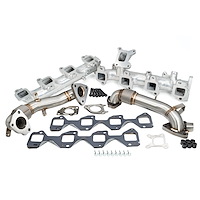
PPE Power offers diesel exhaust manifolds and up-pipes for the LB7 (2001-2004), LLY (2004.5-2005), LLY/LBZ (2006-2007), LMM (2007.5-2010), LML (2011-2016), and L5P (2017+). The LMM kit is a high-flow design, and manifolds come in silver or black finishes.
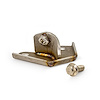
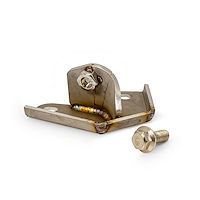
PPE Power also sells the smaller parts that keep a diesel downpipe setup tight. You'll find replacement driver-side up-pipes, OEM-length up-pipes, and downpipe support brackets for 2001-2016 6.6L Duramax trucks. A worn or missing bracket lets the downpipe move and stress its connections, so it's worth replacing while you're under the truck.
Planning the rest of your diesel exhaust after the downpipe? You can also shop MBRP for diesel exhaust at JEGS.
How to Choose Downpipe Diameter and Material
Start with fitment, then match diameter to the rest of your exhaust. Aftermarket turbo downpipes commonly step up from about 3 inches to 4 inches or more. Your size should still match the turbo outlet and the pipe it feeds.
Measure before you buy. Our guide on how to measure exhaust inlet and outlet diameter walks you through getting accurate numbers, so parts connect without guesswork.
Construction matters as much as size, so check these details on each listing:
- Stainless-steel construction for better corrosion resistance
- Mandrel-bent tubing that holds a consistent inside diameter
- Tubing gauge, which tells you the wall thickness
- Flange style that matches your turbo or manifold
Stainless steel holds up to heat and moisture better than mild steel, so it's a smart pick for a long-term build. If you need to modify routing or fabricate a custom section, shop exhaust tubing bends in matching diameters.
Fitment Checks Before You Order a Downpipe
The right downpipe is the one built for your exact year, model, and engine. A pipe that's close but not correct can hit the frame, transmission, or steering and leave you with leaks.
Run through these checks before you check out. Confirm your model year and engine, including the Duramax engine code on diesel trucks. Check whether the part is sold on its own or as a kit with brackets and hardware. Make sure the inlet and outlet sizes match the parts on either side.
If you're adding a turbo instead of replacing a downpipe, plan the whole system first. Turbo placement drives downpipe routing, so the kit you choose decides which pipe you need. Our Chevy LS turbo kits buying guide helps you compare options before you buy supporting exhaust parts.

ADD A VEHICLE TO GUARANTEE PARTS FIT
See products that fit

ADD A VEHICLE TO GUARANTEE PARTS FIT
See products that fit
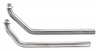
PYPES PERFORMANCE EXHAUST
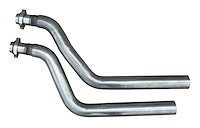
DGU17S Downpipes for 1963-1966 Chevy, GMC Trucks w/Small Block Chevy Engine
Part Number: 958-DGU17S
 Ships Tomorrow
 Lowest price guarantee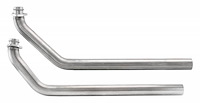
PYPES PERFORMANCE EXHAUST
DGU17S Downpipes for 1963-1966 Chevy, GMC Trucks w/Small Block Chevy Engine
Part Number: 958-DGU17S
Ships TomorrowLowest Price Guarantee
PYPES PERFORMANCE EXHAUST
Exhaust Downpipes 1978-1988 Chevy Monte Carlo, GM G-Body Cars
Part Number: 958-DGU10S
Ships TomorrowLowest price guarantee
PYPES PERFORMANCE EXHAUST
Exhaust Downpipes 1978-1988 Chevy Monte Carlo, GM G-Body Cars
Part Number: 958-DGU10S
Ships TomorrowLowest Price Guarantee
PYPES PERFORMANCE EXHAUST
DGU14S Downpipes for 1964-1977 Chevelle & GM A-Body Cars, 1967-1981 Camaro/Firebird
Part Number: 958-DGU14S
Ships TomorrowLowest price guarantee
PYPES PERFORMANCE EXHAUST
DGU14S Downpipes for 1964-1977 Chevelle & GM A-Body Cars, 1967-1981 Camaro/Firebird
Part Number: 958-DGU14S
Ships TomorrowLowest Price Guarantee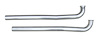
PYPES PERFORMANCE EXHAUST
Exhaust Downpipes 1964-1973 GTO/Tempest/LeMans, 1970-1981 Firebird, 1973-1977 Grand Am/Grand Prix
Part Number: 958-DGA20S33
Ships TomorrowLowest price guarantee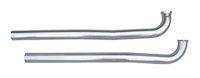
PYPES PERFORMANCE EXHAUST
Exhaust Downpipes 1964-1973 GTO/Tempest/LeMans, 1970-1981 Firebird, 1973-1977 Grand Am/Grand Prix
Part Number: 958-DGA20S33
Ships TomorrowLowest Price Guarantee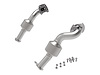
AFE POWER
Twisted Steel Downpipe 2-1/2 to 2-1/4 in. 409 Stainless Steel with Cat for 2016-2023 Toyota Tacoma
Part Number: 048-48-46012-HC
Ships on Oct 13, 2026Lowest price guarantee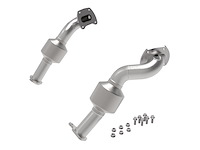
AFE POWER
Twisted Steel Downpipe 2-1/2 to 2-1/4 in. 409 Stainless Steel with Cat for 2016-2023 Toyota Tacoma
Part Number: 048-48-46012-HC
Ships on Oct 13, 2026Lowest Price Guarantee
PYPES PERFORMANCE EXHAUST
DFF10S Stainless Steel Exhaust Manifold Downpipes for 1966-1971 Ford Fairlane w/Ford Small Block Engine
Part Number: 958-DFF10S
Ships TomorrowLowest price guarantee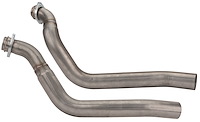
PYPES PERFORMANCE EXHAUST
DFF10S Stainless Steel Exhaust Manifold Downpipes for 1966-1971 Ford Fairlane w/Ford Small Block Engine
Part Number: 958-DFF10S
Ships TomorrowLowest Price Guarantee
PYPES PERFORMANCE EXHAUST
DGF10S Downpipes for 1964-1970 Bonneville, 1967-1969 Firebird, 1969-1972 Grand Prix
Part Number: 958-DGF10S
Ships TomorrowLowest price guarantee
PYPES PERFORMANCE EXHAUST
DGF10S Downpipes for 1964-1970 Bonneville, 1967-1969 Firebird, 1969-1972 Grand Prix
Part Number: 958-DGF10S
Ships TomorrowLowest Price Guarantee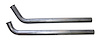
PYPES PERFORMANCE EXHAUST
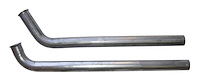
DGF13S Downpipes for 1965-1970 Bonneville, 1967-1969 Firebird, 1969-1972 Grand Prix
Part Number: 958-DGF13S
Ships TomorrowLowest price guarantee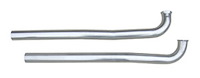
PYPES PERFORMANCE EXHAUST
DGF13S Downpipes for 1965-1970 Bonneville, 1967-1969 Firebird, 1969-1972 Grand Prix
Part Number: 958-DGF13S
Ships TomorrowLowest Price Guarantee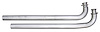
PYPES PERFORMANCE EXHAUST
Exhaust Downpipes 1973 Pontiac GTO, 1973-1977 Tempest/LeMans, 1970-1981 Pontiac Firebird
Part Number: 958-DGA13S
Ships TomorrowLowest price guarantee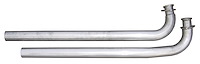
PYPES PERFORMANCE EXHAUST
Exhaust Downpipes 1973 Pontiac GTO, 1973-1977 Tempest/LeMans, 1970-1981 Pontiac Firebird
Part Number: 958-DGA13S
Ships TomorrowLowest Price Guarantee
PYPES PERFORMANCE EXHAUST
Exhaust Downpipes 1964-1973 GTO/Tempest/LeMans, 1970-1981 Firebird, 1973-1977 Grand Am/Grand Prix
Part Number: 958-DGA20S
Ships TomorrowLowest price guarantee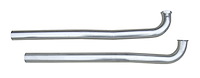
PYPES PERFORMANCE EXHAUST
Exhaust Downpipes 1964-1973 GTO/Tempest/LeMans, 1970-1981 Firebird, 1973-1977 Grand Am/Grand Prix
Part Number: 958-DGA20S
Ships TomorrowLowest Price Guarantee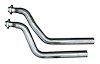
PPE POWER
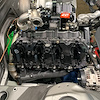
116111035 Exhaust Manifolds w/Up-Pipes, GM 2001 CA, 01-04 FED LB7 No Y - Silver
Part Number: 795-116111035
Ships on 10/13/2026Lowest price guarantee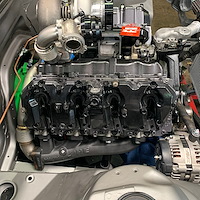
PPE POWER
116111035 Exhaust Manifolds w/Up-Pipes, GM 2001 CA, 01-04 FED LB7 No Y - Silver
Part Number: 795-116111035
Ships on 10/13/2026Lowest Price Guarantee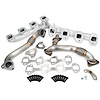
PPE POWER
116111235 Manifolds and Up-Pipes GM 2002-2004 CA Y-pipe LB7 - Silver
Part Number: 795-116111235
Ships on 10/13/2026Lowest price guarantee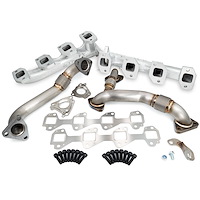
PPE POWER
116111235 Manifolds and Up-Pipes GM 2002-2004 CA Y-pipe LB7 - Silver
Part Number: 795-116111235
Ships on 10/13/2026Lowest Price Guarantee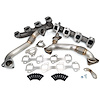
PPE POWER
116111220 Manifolds and Up-Pipes GM 2002-2004 CA Y-pipe LB7 - Black
Part Number: 795-116111220
Ships on 10/13/2026Lowest price guarantee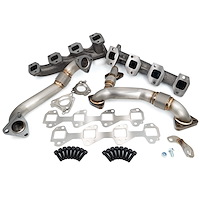
PPE POWER
116111220 Manifolds and Up-Pipes GM 2002-2004 CA Y-pipe LB7 - Black
Part Number: 795-116111220
Ships on 10/13/2026Lowest Price Guarantee
PPE POWER
116120005 Replacement Up-Pipe (Driver Side) for OEM Exhaust Manifold
Part Number: 795-116120005
Ships on 10/13/2026Lowest price guarantee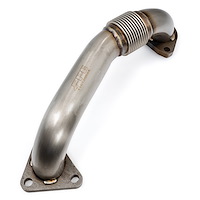
PPE POWER
116120005 Replacement Up-Pipe (Driver Side) for OEM Exhaust Manifold
Part Number: 795-116120005
Ships on 10/13/2026Lowest Price Guarantee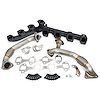
PPE POWER
116111620 Manifolds and Up-Pipes 2006-2007 GM 6.6L Duramax V8 Y-Pipe LLY/LBZ - Black
Part Number: 795-116111620
Ships on 10/13/2026Lowest price guarantee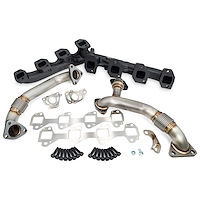
PPE POWER
116111620 Manifolds and Up-Pipes 2006-2007 GM 6.6L Duramax V8 Y-Pipe LLY/LBZ - Black
Part Number: 795-116111620
Ships on 10/13/2026Lowest Price Guarantee
PPE POWER
116111635 Manifolds and Up-Pipes GM 2006-2007 Y-Pipe LLY/LBZ - Silver
Part Number: 795-116111635
Ships on 10/13/2026Lowest price guarantee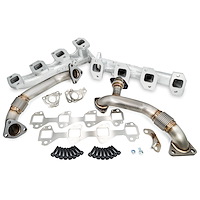
PPE POWER
116111635 Manifolds and Up-Pipes GM 2006-2007 Y-Pipe LLY/LBZ - Silver
Part Number: 795-116111635
Ships on 10/13/2026Lowest Price Guarantee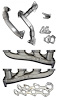
PPE POWER
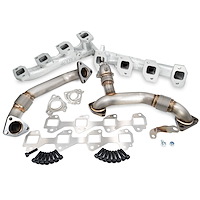
116111800 High-Flow Manifolds and Up-Pipes Kit GM 2007.5-2010 Y-Pipe LMM
Part Number: 795-116111800
Ships on 10/13/2026Lowest price guarantee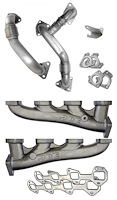
PPE POWER
116111800 High-Flow Manifolds and Up-Pipes Kit GM 2007.5-2010 Y-Pipe LMM
Part Number: 795-116111800
Ships on 10/13/2026Lowest Price Guarantee
Frequently Asked Questions About Turbo Downpipes
Why Are Some Downpipes Illegal for Street Use?
Many downpipes remove or replace the factory catalytic converter, which can take your vehicle out of emissions compliance. Catless downpipes are generally meant for off-road or competition use only. Check your local, state, and federal emissions laws before you buy, and look for a catted option if your vehicle has to pass inspection.
Do Downpipes Increase Horsepower?
On a turbocharged engine, a less restrictive downpipe can help the turbo spool faster and flow more freely. Real-world results depend on your engine, turbo, the rest of your exhaust, and your tune. Be wary of fixed horsepower claims, since gains vary from build to build.
What Does a Turbo Up-Pipe Do?
On diesels like the 6.6L Duramax, up-pipes carry exhaust from the exhaust manifolds to the turbocharger inlet. They sit before the turbo, while the downpipe sits after it. Leaks in the up-pipes can reduce the exhaust energy that reaches your turbo.
Do I Need a Tune After Installing a Turbo Downpipe?
Often, yes. Changing the downpipe, especially removing a catalytic converter, can change sensor readings and trigger a check engine light. A retune of the ECU helps your engine run correctly with the new part, so plan for it in your build budget.