


 Order Status & Returns
 Gift Cards
 Help Center
 1-800-345-4545
Battery Cables
Battery cables carry high-current power between your battery, starter, and ground, so JEGS stocks the gauges, kits, ends, and terminals your build needs. You shop here for straight answers on gauge, length, and material, plus terminated cables and bulk options for street, race, and relocated setups. Choose from 1-gauge, 2-gauge, and 4-gauge cable, complete battery cable kits, ring terminals, and heavy-duty ground straps.
Show More
What Are Battery Cables?
Battery cables are the heavy-gauge conductors that move current from your battery to the starter, alternator, and chassis ground. They handle far more amperage than standard wiring, so conductor size, insulation, and end quality all matter for reliable starts. On this page you'll find positive and negative cables, replacement cables, and complete assemblies sized for stock and modified vehicles. Most cables use copper conductor for low resistance, with lengths from short 8-inch jumpers to 20-foot and 50-foot rolls for custom routing. If you're building a full electrical system, start with the parent batteries, terminals and wire category to see how cables, terminals, and wire work together. For wiring help and install planning, browse the ignition and electrical tech articles before you buy. Match the cable to your amperage draw and routing distance, then confirm the terminal type fits your battery posts and ground points.
How Do You Choose the Right Battery Cable Gauge?
Choose your battery cable gauge by matching conductor size to current draw and cable length: bigger loads and longer runs need thicker, lower-number gauge. A cable that's too thin drops voltage and runs hot, while the right size delivers full cranking power to the starter.
Use these common sizes as a starting point:
- 1-gauge battery cable: high-amp starters, big-inch engines, and long relocation runs
- 2-gauge battery cable: most performance V8s and heavy-duty street builds
- 4-gauge cable: stock replacement on many cars and light-duty accessory feeds
- 6-gauge cable: shorter ground straps and lower-current connections
When you're unsure, size up rather than down, and account for the full round-trip length of both the positive and negative runs. For load context and reading electrical schematics, see how to read automotive wiring diagrams, then match your cable gauge to the amperage your starter and accessories actually pull.
Battery Cable Kits vs. Bulk Cable and Terminals
Battery cable kits give you pre-cut, pre-terminated cables with the ends and hardware already installed, while bulk cable lets you build custom lengths from rolls. Kits save time and guarantee clean, sealed connections, so they suit most street and weekend projects. Bulk cable plus loose terminals is the better route when you need exact lengths for a relocated battery or a tight engine bay. Brands like Moroso and Taylor offer both terminated battery cable kits and quality cable by the foot, so you can match your budget and skill level. If you're comfortable crimping and soldering ends, buying cable and terminals separately trims cost on longer runs. If you'd rather bolt it in and go, a complete kit removes the guesswork on gauge, length, and terminal fit. Either way, confirm the cable gauge and end type before you order so the assembly bolts straight to your posts and ground.
What Battery Cable Ends, Terminals, and Connectors Are Available?
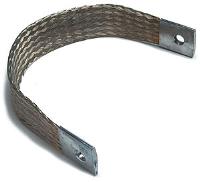
Battery cable ends, terminals, and connectors are the fittings that bond your cable to the battery posts, starter lugs, and chassis. JEGS stocks top-post and side-post terminals, ring terminals, quick-connect and thru-panel battery cable connectors, and heavy-duty ground straps in brass and billet. Match the terminal bore to your cable gauge and the stud size to your post or lug so the connection stays tight and low-resistance. For a full range of post clamps and adapters, shop the battery terminals subcategory alongside your cable order. Allstar Performance offers billet terminals, quick-disconnects, and ground straps built for repeated race-day service. Ground straps deserve the same attention as your main cables, since a poor ground causes hard starts and voltage drop. Choose sealed or heat-shrunk battery cable ends where moisture and heat are a concern, and keep spare ring terminals on hand for accessory grounds and charging leads.
Which Battery Cables Suit Relocated and Racing Batteries?
Relocated and racing batteries need longer, heavier cable, sealed ends, and a disconnect, so plan the full run from a trunk-mounted battery to a front-mounted starter. Measure the actual routed path, not the straight-line distance, then add slack for strain relief and grommets at every panel pass. Long runs favor 1-gauge or 2-gauge cable to keep voltage drop low over the extra distance. Complete battery relocation kits bundle the cable, terminals, and pass-through hardware you need for a trunk or rear-mount install. Add battery disconnect switches to meet track safety rules and to isolate the battery between rounds. Painless Performance Products builds relocation and disconnect components for clean, race-ready wiring. If you park the car between events, our battery tender charger guide helps you keep a relocated battery topped off. Route cables away from headers, secure them every few feet, and protect the positive run inside conduit for a safe, durable install.

ADD A VEHICLE TO GUARANTEE PARTS FIT
See products that fit

ADD A VEHICLE TO GUARANTEE PARTS FIT
See products that fit



![Heavy-Duty 1-Gauge Battery Cable [50 ft. Roll | Black Insulation]](https://www.jegs.com/images/mini_100/700/710/710-74071.jpg)
![Heavy-Duty 1-Gauge Battery Cable [50 ft. Roll | Black Insulation]](https://www.jegs.com/images/mini_200/700/710/710-74071.jpg)
AMERICAN AUTOWIRE
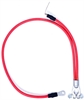
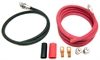
Positive Battery Cable for 1991-1995 Jeep YJ 2.5L, 4.0L, 1991 Pontiac Firebird
Part Number: 073-510713
 Ships Tomorrow
 Lowest price guarantee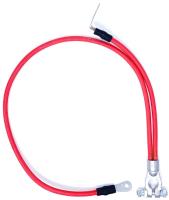
AMERICAN AUTOWIRE
Positive Battery Cable for 1991-1995 Jeep YJ 2.5L, 4.0L, 1991 Pontiac Firebird
Part Number: 073-510713
Ships TomorrowLowest Price Guarantee




![RWS-BATTKIT-STD 2 Ga. Battery Cable Install Kit [25 ft. Red/Black, Dual Pass-Thru, Ring Terminals]](https://www.jegs.com/images/mini_100/700/732/732-j732035.jpg)
RACEWIRE SOLUTIONS
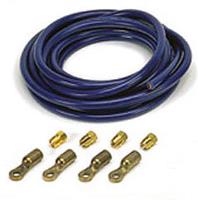
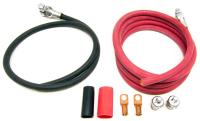
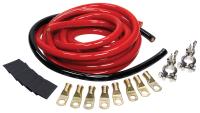
RWS-BATTKIT-STD 2 Ga. Battery Cable Install Kit [25 ft. Red/Black, Dual Pass-Thru, Ring Terminals]
Part Number: 732-J732035
Ships TomorrowLowest price guarantee![RWS-BATTKIT-STD 2 Ga. Battery Cable Install Kit [25 ft. Red/Black, Dual Pass-Thru, Ring Terminals]](https://www.jegs.com/images/mini_200/700/732/732-j732035.jpg)
RACEWIRE SOLUTIONS
RWS-BATTKIT-STD 2 Ga. Battery Cable Install Kit [25 ft. Red/Black, Dual Pass-Thru, Ring Terminals]
Part Number: 732-J732035
Ships TomorrowLowest Price Guarantee![RWS-BATT-SR Single Red Billet Firewall Battery Pass-Thru [3/8 in. Stud, 350A]](https://www.jegs.com/images/mini_100/700/732/732-rws-batt-sr.jpg)
RACEWIRE SOLUTIONS
RWS-BATT-SR Single Red Billet Firewall Battery Pass-Thru [3/8 in. Stud, 350A]
Part Number: 732-RWS-BATT-SR
Ships TomorrowLowest price guarantee![RWS-BATT-SR Single Red Billet Firewall Battery Pass-Thru [3/8 in. Stud, 350A]](https://www.jegs.com/images/mini_200/700/732/732-rws-batt-sr.jpg)
RACEWIRE SOLUTIONS
RWS-BATT-SR Single Red Billet Firewall Battery Pass-Thru [3/8 in. Stud, 350A]
Part Number: 732-RWS-BATT-SR
Ships TomorrowLowest Price Guarantee![4000-200 Battery Charging Lugs [Male]](https://www.jegs.com/images/mini_100/0/093/093-4000-200.jpg)
![4000-200 Battery Charging Lugs [Male]](https://www.jegs.com/images/mini_200/0/093/093-4000-200.jpg)
![Battery Cable Male End [Black, Replacement for Moroso No. 74155]](https://www.jegs.com/images/mini_100/700/710/710-97550.jpg)
![Battery Cable Male End [Black, Replacement for Moroso No. 74155]](https://www.jegs.com/images/mini_200/700/710/710-97550.jpg)
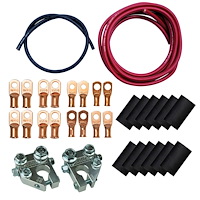
![Alternator to Battery Charge Cable 7 ft. 6-Gauge with 5/16 in. Eyelets [Neoprene]](https://www.jegs.com/images/mini_100/700/713/713-1-567.jpg)
POWERMASTER
Alternator to Battery Charge Cable 7 ft. 6-Gauge with 5/16 in. Eyelets [Neoprene]
Part Number: 713-1-567
Ships on 10/13/2026Lowest price guarantee![Alternator to Battery Charge Cable 7 ft. 6-Gauge with 5/16 in. Eyelets [Neoprene]](https://www.jegs.com/images/mini_200/700/713/713-1-567.jpg)
POWERMASTER
Alternator to Battery Charge Cable 7 ft. 6-Gauge with 5/16 in. Eyelets [Neoprene]
Part Number: 713-1-567
Ships on 10/13/2026Lowest Price Guarantee
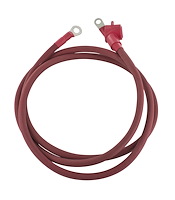
![Alternator to Battery Charge Cable 3 ft. 4-Gauge with 5/16 in. and 1/4 in. Eyelets [Neoprene]](https://www.jegs.com/images/mini_100/700/713/713-1-543-130.jpg)
POWERMASTER
Alternator to Battery Charge Cable 3 ft. 4-Gauge with 5/16 in. and 1/4 in. Eyelets [Neoprene]
Part Number: 713-1-543-130
Ships on 10/16/2026Lowest price guarantee![Alternator to Battery Charge Cable 3 ft. 4-Gauge with 5/16 in. and 1/4 in. Eyelets [Neoprene]](https://www.jegs.com/images/mini_200/700/713/713-1-543-130.jpg)
POWERMASTER
Alternator to Battery Charge Cable 3 ft. 4-Gauge with 5/16 in. and 1/4 in. Eyelets [Neoprene]
Part Number: 713-1-543-130
Ships on 10/16/2026Lowest Price Guarantee![Power Cable [2 AWG, Black]](https://www.jegs.com/images/mini_100/600/635/635-57-103-27.jpg)
![Power Cable [2 AWG, Black]](https://www.jegs.com/images/mini_200/600/635/635-57-103-27.jpg)




Frequently Asked Questions About Battery Cables
What is the correct order to disconnect battery cables?
Always disconnect the negative cable first, then the positive. Removing the negative ground first prevents your wrench from creating a short if it touches metal while you loosen the positive terminal. When you reconnect, reverse the order: positive first, then negative. This sequence keeps the job safe on street cars and race builds alike.
Can you replace battery cables yourself?
Yes. Replacing battery cables is a common do-it-yourself job that needs basic hand tools and a little care. Disconnect the negative cable first, match the new cable to the same gauge and length, and route it along the original path. If you're building custom lengths, crimp or solder the ends cleanly and seal them against moisture.
Can a battery cable be too big?
A heavier-than-needed cable won't hurt performance, since larger conductor simply carries current with less resistance. The practical limits are cost, weight, and fit: thicker cable is harder to route in tight spaces and needs matching terminals. Size for your amperage and run length first, then step up a gauge if you want extra headroom.
Are copper battery cables better than aluminum battery cables?
Copper carries more current per given size and resists corrosion better than aluminum, which is why most performance battery cables use copper conductor. Aluminum is lighter and cheaper but needs a larger gauge to match copper's capacity. For starter and charging circuits, copper is the common choice for reliable, low-resistance connections.
How long should a battery relocation cable be?
Measure the actual routed distance from the relocated battery to the starter, then add slack for grommets, strain relief, and secure mounting. There's no single length, since it depends on where you mount the battery and how the cable is routed. Longer runs should step up to 1-gauge or 2-gauge cable to limit voltage drop.