


 Order Status & Returns
 Gift Cards
 Help Center
 1-800-345-4545
Battery Disconnect Switches & Parts
A car battery disconnect switch lets you cut power between your battery and the rest of the vehicle's electrical system. JEGS carries battery kill switches for street cars, stored projects and race cars from trusted performance brands in one place. You can compare terminal disconnects, knife-blade switches, rotary master switches, remote kits and automatic switches by amp rating, voltage and 2-post or 4-post design.
Show More
Types Of Car Battery Disconnect Switches
Match the battery kill switch style to battery location, electrical load and how you want to cut power, whether by hand, by remote or automatically:
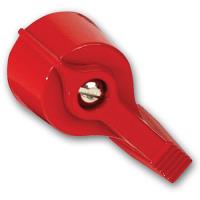
- Terminal disconnect knobs install on the negative post and are rated for 500A surge and 125A continuous on 12V, 16V or 24V systems.
- Knife-blade switches mount on top of the battery and step up to 750A surge and 250A continuous for heavier loads.
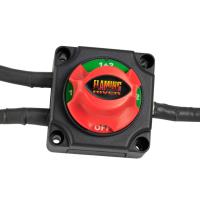
- Rotary master disconnect switches come in 2-post versions for battery power only and 4-post versions that add an alternator circuit.
- Remote battery disconnect kits from Painless Performance Products pair a solenoid with a toggle switch, so you can cut power from inside the car without opening the hood.
- Push/pull E-stop switches give you a simple pull-to-kill control by hand, with options rated at 10A.
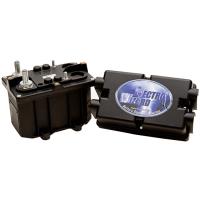
- Automatic switches, such as the Flaming River FR1052 Electro-Wizard, are built for 12V systems.
How To Choose The Right Amp Rating
Pick a switch whose continuous rating covers your normal electrical load. Its surge or peak rating should cover the current your starter pulls.
Continuous amps are what the switch can carry all the time. Surge or peak amps are the short spikes it can handle without damage.
Here's how the ratings step up. Longacre Racing offers the 441-45748 at 125A continuous and 500A peak for lighter loads.
Its 441-45760 2-terminal switch moves up to 175A continuous and 1,000A peak, and the heavy-duty 441-45782 4-terminal switch is rated at 175A continuous. For bigger loads, the JEGS 555-103050 4-post master switch carries 300A continuous.
Voltage matters too. Many master switches cover 6-36V, while terminal disconnects list 12V, 16V and 24V support. Match the switch to your system voltage, then run battery cables sized for the same current so the wiring doesn't become the weak link.
Battery Kill Switch Requirements For Racing
If you race, you'll likely need a battery kill switch, since NHRA and SCCA require one for many classes. NHRA also requires a remote battery disconnect for trunk-mounted batteries. Check your class rulebook before you buy, and plan the switch location when you install one of our battery relocation kits.
Alternators add a catch. If your engine keeps running after you flip a 2-post switch, the alternator is backfeeding power. To stop it, route the alternator output through a 4-post switch or add a secondary ignition cut-off.
Several switches in this category handle that alternator circuit.
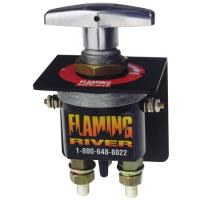
The Moroso 74101 is a twist-style, heavy-duty switch for street and race cars with alternators, rated at 175A at 6-36V DC. The Ron Francis Wiring MS-56 master switch includes an alternator circuit. Flaming River adds the FR1013 combination battery and alternator kill switch, plus the FR1010 Big Switch for magneto and battery setups.
Battery Cut-Off Switches For Storage, Security And Service
A battery cut-off switch gives you a fast way to shut off power while a vehicle sits or while you work on it. You don't need to pull cables every time. Just turn the knob, flip the lever or remove the key.
For seasonal storage, a terminal disconnect is a simple fit because it installs right on the negative post. For shop and service work, a master switch lets you kill power before you touch wiring. Options include a 100A, 24V 2-post cut-off with a mounting bracket and the Flaming River FR1003-2 Big Switch with a lever kit.
Keyed switches add a layer of security, since the car's electrical system stays off until the key goes back in. If you lose your key, Flaming River offers the FR1009K replacement key. When the stored car also needs a fresh battery or new hardware, browse our full selection of batteries, terminals and wire.
Installation And Wiring Tips
Plan the switch location, cable routing and circuit before you drill a single hole. Start by disconnecting the battery, then mount the switch where you can reach it quickly and where cables can run without sharp bends.
Clean and tighten your battery terminals so the new switch gets a solid connection. On a 4-post switch, one pair of posts carries battery power and the other carries the alternator circuit. Label each wire before you connect it.
Remote kits add a toggle and solenoid, which means extra wiring runs to plan. Route those wires away from heat and moving parts, and secure them so vibration can't wear through the insulation.
If you want a step-by-step walkthrough, see our guide on how to wire a battery disconnect switch. It also helps to know how to read automotive wiring diagrams before you tap into the alternator or ignition circuits.

ADD A VEHICLE TO GUARANTEE PARTS FIT
See products that fit

ADD A VEHICLE TO GUARANTEE PARTS FIT
See products that fit

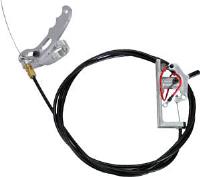
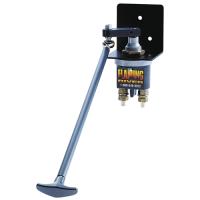
QUICKCAR RACING
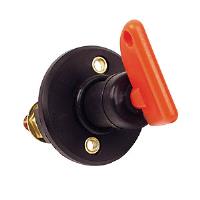
Master Disconnect Switch 4 Bottom Posts, Used In Conjunction W/ Alternator
Part Number: 635-55-012
 Ships Tomorrow
 Lowest price guarantee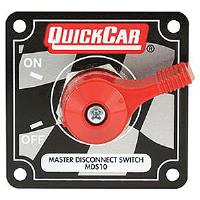
QUICKCAR RACING
Master Disconnect Switch 4 Bottom Posts, Used In Conjunction W/ Alternator
Part Number: 635-55-012
Ships TomorrowLowest Price Guarantee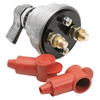
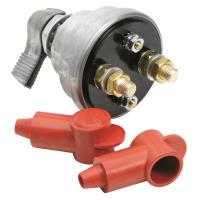

QUICKCAR RACING
Master Disconnect Switch 4 Bottom Posts, Used In Conjunction W/ Alternator
Part Number: 635-55-011
Ships TomorrowLowest price guarantee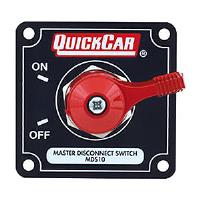
QUICKCAR RACING
Master Disconnect Switch 4 Bottom Posts, Used In Conjunction W/ Alternator
Part Number: 635-55-011
Ships TomorrowLowest Price Guarantee
PAINLESS PERFORMANCE PRODUCTS
Remote Master Disconnect Switch With Mechanical Latching Solenoid
Part Number: 764-30206
Ships TomorrowLowest price guarantee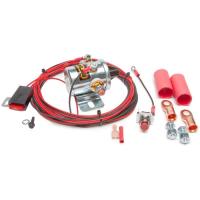
PAINLESS PERFORMANCE PRODUCTS
Remote Master Disconnect Switch With Mechanical Latching Solenoid
Part Number: 764-30206
Ships TomorrowLowest Price Guarantee
![Battery Disconnect Billet Aluminum Faceplate [Polished Aluminum]](https://www.jegs.com/images/mini_100/500/555/555-10347.jpg)
JEGS
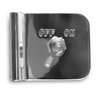
Battery Disconnect Billet Aluminum Faceplate [Polished Aluminum]
Part Number: 555-10347
Ships TomorrowLowest price guarantee![Battery Disconnect Billet Aluminum Faceplate [Polished Aluminum]](https://www.jegs.com/images/mini_200/500/555/555-10347.jpg)
JEGS
Battery Disconnect Billet Aluminum Faceplate [Polished Aluminum]
Part Number: 555-10347
Ships TomorrowLowest Price Guarantee
![500A-CD-HD1 Continuous-Duty Battery Disconnect [500A, 2000A Surge, Waterproof, HD E-Stop]](https://www.jegs.com/images/mini_100/700/732/732-500a-cd-hd1.jpg)
RACEWIRE SOLUTIONS
500A-CD-HD1 Continuous-Duty Battery Disconnect [500A, 2000A Surge, Waterproof, HD E-Stop]
Part Number: 732-500A-CD-HD1
Ships TomorrowLowest price guarantee![500A-CD-HD1 Continuous-Duty Battery Disconnect [500A, 2000A Surge, Waterproof, HD E-Stop]](https://www.jegs.com/images/mini_200/700/732/732-500a-cd-hd1.jpg)
RACEWIRE SOLUTIONS
500A-CD-HD1 Continuous-Duty Battery Disconnect [500A, 2000A Surge, Waterproof, HD E-Stop]
Part Number: 732-500A-CD-HD1
Ships TomorrowLowest Price Guarantee![64-HD-E HD Billet E-Stop Kill Switch [Push/Pull, 10A, 7/8 in. Mount, 15 ft. Pigtails]](https://www.jegs.com/images/mini_100/700/732/732-64-hd-e.jpg)
RACEWIRE SOLUTIONS
64-HD-E HD Billet E-Stop Kill Switch [Push/Pull, 10A, 7/8 in. Mount, 15 ft. Pigtails]
Part Number: 732-64-HD-E
Ships TomorrowLowest price guarantee![64-HD-E HD Billet E-Stop Kill Switch [Push/Pull, 10A, 7/8 in. Mount, 15 ft. Pigtails]](https://www.jegs.com/images/mini_200/700/732/732-64-hd-e.jpg)
RACEWIRE SOLUTIONS
64-HD-E HD Billet E-Stop Kill Switch [Push/Pull, 10A, 7/8 in. Mount, 15 ft. Pigtails]
Part Number: 732-64-HD-E
Ships TomorrowLowest Price Guarantee
AEM ELECTRONICS
30-8506 Rincon Power HVBD4AXR High Voltage Battery Disconnect, 400A/1000VDC
Part Number: 017-30-8506
Ships on 10/13/2026Lowest price guarantee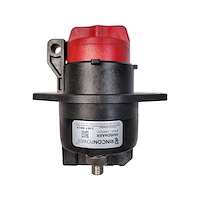
AEM ELECTRONICS
30-8506 Rincon Power HVBD4AXR High Voltage Battery Disconnect, 400A/1000VDC
Part Number: 017-30-8506
Ships on 10/13/2026Lowest Price Guarantee
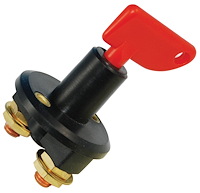
QUICKCAR RACING
Master Disconnect Switch 4 Bottom Posts, Used In Conjunction W/ Alternator
Part Number: 635-55-022
Ships on 10/16/2026Lowest price guarantee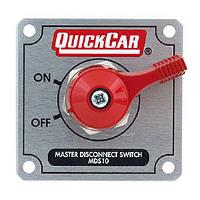
QUICKCAR RACING
Master Disconnect Switch 4 Bottom Posts, Used In Conjunction W/ Alternator
Part Number: 635-55-022
Ships on 10/16/2026Lowest Price Guarantee

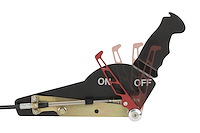
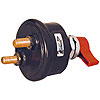
LONGACRE RACING
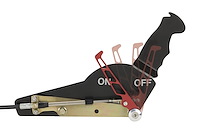
Battery Disconnect Switch - 4 Terminal 175 amp Continuous Rating, 1000 amp Peak
Part Number: 441-45788
Ships on 10/13/2026Lowest price guarantee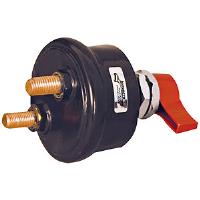
LONGACRE RACING
Battery Disconnect Switch - 4 Terminal 175 amp Continuous Rating, 1000 amp Peak
Part Number: 441-45788
Ships on 10/13/2026Lowest Price Guarantee
Frequently Asked Questions About Car Battery Disconnect Switch
Should a battery disconnect switch go on the negative or positive terminal?
You can install a battery disconnect on either terminal, but the negative side is the most common location. JEGS terminal disconnects are designed to install on the negative post.
Will disconnecting the battery erase my radio and computer settings?
A standard switch cuts all power, so stored settings can be lost. If you want to keep them, choose a JEGS terminal disconnect with a 15-amp fused bypass. The bypass retains radio and computer settings while the main circuit is off.
Can a remote battery disconnect drain my battery?
The Painless remote kit uses a 250A solenoid and a toggle switch, and the solenoid draws 2.5A while it's engaged. Factor that draw in if the car sits with the switch on. The Painless 764-30206 uses a mechanical latching solenoid, so compare both designs before you buy.
Can I use a battery disconnect on a side-post battery?
Yes. JEGS offers a side-post adapter for its terminal disconnects, so you aren't limited to top-post batteries.
Can one switch control two batteries?
Yes, if you choose a switch built for it. The Flaming River FR1050 is a dual battery switch rated at 300A. Make sure that rating covers the combined load of your system.