


 Order Status & Returns
 Gift Cards
 Help Center
 1-800-345-4545
Clutch Slave Cylinders
A clutch slave cylinder turns hydraulic pressure from your clutch pedal into the motion that releases the clutch. When it's worn or mismatched, you get a soft pedal, grinding shifts, or a clutch that won't fully disengage. Use the filters and Add a Vehicle tool on this page to find external, concentric, pull-type, and push-type units, plus repair kits and conversion parts.
Show More
What Does a Clutch Slave Cylinder Do?
A clutch slave cylinder moves the clutch fork or release bearing so your clutch disengages when you press the pedal. The pedal operates the clutch master cylinder, which sends fluid through a line to the slave cylinder. That pressure drives a piston, and the piston moves the release mechanism so the pressure plate lets go of the clutch disc.
Because the system is hydraulic, the slave cylinder only works as well as the parts feeding it. A worn master cylinder can feel like a slave cylinder problem, so inspect the whole circuit before you buy. If the master is suspect, compare replacement clutch master cylinders at the same time.
The slave cylinder also controls how far the release bearing travels. Too little travel leaves the clutch dragging, which makes gear changes hard. If you're replacing the clutch too, match the disc and pressure plate from our clutches and clutch kits category.
How Do External and Concentric Slave Cylinders Differ?
An external slave cylinder bolts outside the bellhousing, while a concentric slave cylinder mounts inside it around the transmission input shaft. That location changes how you service it and how much labor a replacement takes.
Here's how the two designs compare:
- An external slave cylinder uses a piston to push or pull the release fork.
- You can usually replace an external unit without removing the transmission.
- A concentric, or internal, slave cylinder combines the cylinder and release bearing in one part.
- Replacing a concentric unit usually means pulling the transmission.
Concentric units are also called hydraulic throwout bearings, and they do away with the fork and pivot. If your car uses one, or you're converting to one, compare options alongside our clutch release bearings. Since reaching one takes so much labor, it makes sense to replace a concentric unit whenever the transmission is already out.
How Do You Match Slave Cylinder Type and Bore Size?
Match the slave cylinder to your transmission's release design first, then match its bore to the master cylinder. A push-type slave cylinder pushes the release fork, while a pull-type slave cylinder pulls it. Pull-type units show up in racing setups and some street applications.
For example, McLeod offers a pull-style aluminum external slave cylinder with a 0.625 in. bore for 1979-2004 Ford Mustang. McLeod also offers an anodized aluminum external unit with a 0.875 in. bore for 1993-1997 Chevy Camaro and Pontiac Firebird.
Slave cylinder bore size works with master cylinder bore to set pedal effort and release travel. Change either bore and you change the ratio, which shifts pedal feel and how far the bearing moves. Some hydraulic release bearing kits require a 0.750 in. bore master cylinder, so check the instructions before you order.
To narrow the list, use the Part Type, Outlet Size, Body Type, and Material filters. Then add your vehicle to confirm fit.
Which Slave Cylinder Kits and Conversion Kits Fit Your Build?
A hydraulic clutch conversion kit replaces a mechanical clutch linkage, while a direct-replacement slave cylinder restores a factory hydraulic system. McLeod direct-fit conversion firewall assemblies for Ford Mustang include everything except the slave cylinder. That lets you choose a slave cylinder that matches your transmission.
For repairs on factory hydraulic systems, you can pick from these options:
- Dorman Products direct-replacement slave cylinders for 1983-1997 Ford, 1991-1996 Corvette, 1984-1991 Chevrolet/GMC, and 1985-1987 Toyota Corolla
- Crown Automotive slave cylinders for 1983-1986, 1984-1993, 1987-1992, 1993, and 2007-2018 Jeep models
- Crown Automotive clutch slave cylinder repair kits and hydraulic clutch actuators
- Slave cylinders for 1995-2004 Toyota Tacoma V6 and 1998-2002 Chevy Camaro V8
Whatever you choose, inspect the fluid line and hardware that connect the master and slave. Plan on new clutch hydraulic lines and linkage if the old line is cracked, kinked, or the wrong length for a conversion.
What Are the Signs of a Bad Clutch Slave Cylinder?
A bad clutch slave cylinder usually shows up as a soft pedal, a fluid leak, or a clutch that won't fully release. Worn internal seals let fluid slip past the piston, so pressure never builds the way it should.
Watch for these bad slave cylinder symptoms:
- Soft or spongy pedal feel
- Fluid on the slave cylinder body, bellhousing, or floor below
- Clutch that won't fully disengage with the pedal down
- Hard shifting or grinding when you select a gear
Before you replace parts, check the fluid level and condition with our guide on how to check and change hydraulic clutch fluid. If the fluid is full and clean but the symptoms stay, the seals are likely worn and the slave cylinder needs replacing. When you're ready, add your vehicle on this page to see the slave cylinders that fit.

ADD A VEHICLE TO GUARANTEE PARTS FIT
See products that fit

ADD A VEHICLE TO GUARANTEE PARTS FIT
See products that fit
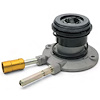
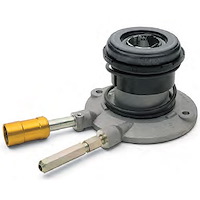
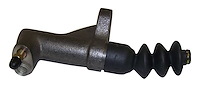
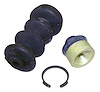
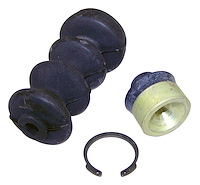
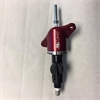
MCLEOD
Replacement Master Cylinder Replacement Part For 1434001 & 1434002
Part Number: 673-139310
 Ships on Oct 13, 2026
 Lowest price guarantee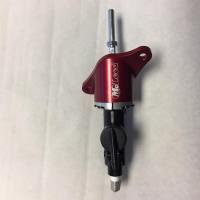
MCLEOD
Replacement Master Cylinder Replacement Part For 1434001 & 1434002
Part Number: 673-139310
Ships on Oct 13, 2026Lowest Price Guarantee
MCLEOD
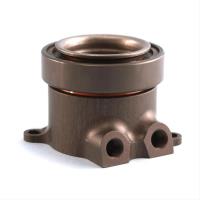
Hydraulic Clutch Conversion Assembly - Firewall Ford Mustang
Part Number: 673-1431001
Ships TomorrowLowest price guarantee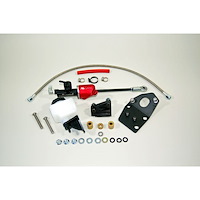
MCLEOD
Hydraulic Clutch Conversion Assembly - Firewall Ford Mustang
Part Number: 673-1431001
Ships TomorrowLowest Price Guarantee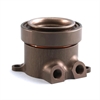
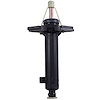
OMIX-ADA
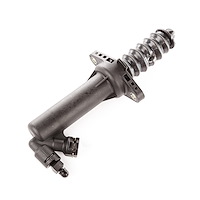
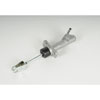
Hydraulic Clutch Slave Cylinder 1994-1995 Jeep Wrangler YJ By Omix-ADA
Part Number: 440-16909.07
Ships on 10/13/2026Lowest price guarantee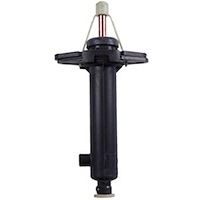
OMIX-ADA
Hydraulic Clutch Slave Cylinder 1994-1995 Jeep Wrangler YJ By Omix-ADA
Part Number: 440-16909.07
Ships on 10/13/2026Lowest Price Guarantee
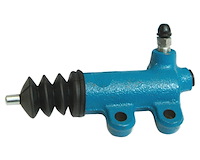

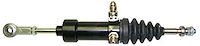

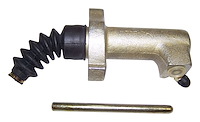

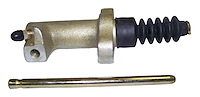
CROWN AUTOMOTIVE
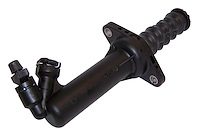
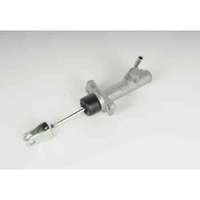
52129182S Clutch Slave Cylinder, 2005-2006 Jeep Liberty, 2005-2005 Jeep Liberty, 2007-2007 Jeep Liberty
Part Number: 077-52129182S
Ships on 10/13/2026Lowest price guarantee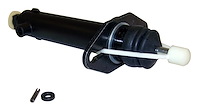
CROWN AUTOMOTIVE
52129182S Clutch Slave Cylinder, 2005-2006 Jeep Liberty, 2005-2005 Jeep Liberty, 2007-2007 Jeep Liberty
Part Number: 077-52129182S
Ships on 10/13/2026Lowest Price Guarantee
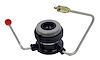
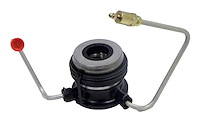
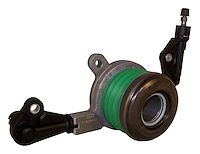
CROWN AUTOMOTIVE
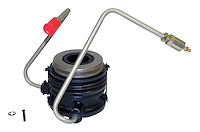
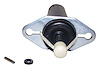
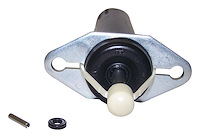
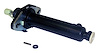
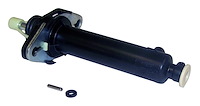
4641944AA Clutch Slave Cylinder for 2001-9/6/2002 Chrysler (Europe) Voyager, Fits Left Hand Drive or Right Hand Drive Models. 1
Part Number: 077-4641944AA
Ships on Oct 13, 2026Lowest price guarantee
CROWN AUTOMOTIVE
4641944AA Clutch Slave Cylinder for 2001-9/6/2002 Chrysler (Europe) Voyager, Fits Left Hand Drive or Right Hand Drive Models. 1
Part Number: 077-4641944AA
Ships on Oct 13, 2026Lowest Price GuaranteeFrequently Asked Questions About Clutch Slave Cylinders
How do you bleed a clutch slave cylinder?
Fill the master cylinder reservoir, then have a helper press and hold the clutch pedal while you open the slave cylinder's bleeder valve. Close the valve before the pedal comes back up, and repeat until the fluid runs free of bubbles. Keep the reservoir topped off so you don't pull new air into the system.
Should you replace the clutch master cylinder and slave cylinder together?
It's a smart move when both parts are the same age or the fluid is dark and contaminated. Both cylinders' seals wear in the same fluid, so a new slave with a tired master can still give you a soft pedal. If you replace just one, make sure its bore matches the original.
Can a clutch slave cylinder be rebuilt instead of replaced?
Many external slave cylinders can be rebuilt with a clutch slave cylinder repair kit, which replaces the internal seals. A rebuild only works if the bore is smooth and free of pitting or scoring. If the bore is damaged, or the unit is a concentric design that's hard to reach, a complete replacement usually makes more sense.
What brake fluid does a clutch slave cylinder use?
Most clutch hydraulic systems use DOT 3 or DOT 4 brake fluid. Check your owner's manual or the master cylinder reservoir cap for the exact type. Don't add DOT 5 silicone fluid unless your system calls for it, since it doesn't mix with glycol-based fluids.
How long does a clutch slave cylinder last?
Service life varies with driving style, clutch use, heat, and how often the fluid is changed. Stop-and-go driving and racing put more cycles on the seals than steady highway driving. Changing old, moisture-contaminated fluid helps the seals last longer.