


 Order Status & Returns
 Gift Cards
 Help Center
 1-800-345-4545

U-Joints
U-joints connect rotating shafts that meet at an angle, so your driveshaft, axle, or steering shaft keeps turning as angles change. This category includes driveshaft, axle, CV shaft, and steering universal joints in 1000, 1310, 1330, 1350, and 1410 series. You'll find greaseable, non-greaseable, and conversion styles, plus double-D and splined steering joints in nickel-plated or black finishes.
Show More
What Does a Driveshaft U-Joint Do?
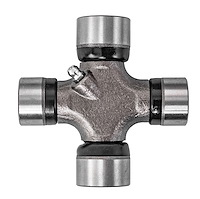
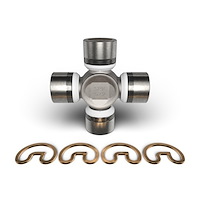
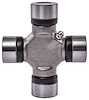
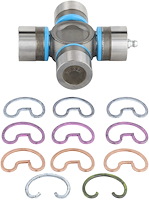
A driveshaft U-joint transfers torque from the transmission to the rear axle while the shaft swings through changing angles. Each joint uses a cross with four needle-bearing caps that pivot inside the driveshaft yokes at each end. That pivot lets the suspension move without binding the driveline.
JEGS U-joints in this category list fitment for select 1957-2018 Buick, Cadillac, Chevy, Chrysler, Dodge, Ford, GMC, Lincoln, Ram, and Toyota applications. You'll also find joints for 1988-1997 Ford Super Duty trucks and joints listed for driveshaft or CV shaft use.
If you're replacing the tube or building a new shaft, browse driveshafts & components to match the joint to the shaft. Before you install, check your pinion and transmission angles with our driveline angle guide for rear-wheel drive and drag racing.
Which U-Joint Sizes and Series Do You Need?
Your U-joint size comes down to the series your yokes are built for, so match the series first. The series number reflects cap diameter and the width across the caps. Both must fit your yokes, or the joint won't seat.
This category covers five series:
- 1000 series in a greaseable design
- 1310 series in greaseable and non-greaseable designs, common on many factory driveshafts
- 1330 series in a non-greaseable design
- 1350 series in a greaseable design, a common step up for higher-torque builds
- 1410 series in a greaseable design for heavy-duty drivelines
To identify an unknown joint, measure the cap diameter and the span across the caps with calipers. Then compare those numbers against a series chart before you order, since similar-looking series can use different cap sizes.
Should You Choose a Greaseable U-Joint or a Solid U-Joint?
Choose a greaseable U-joint if you want to service the joint, and a solid joint if you want more strength with no service. A greaseable joint has a zerk fitting and drilled passages that carry fresh grease to the needle bearings. A non-greaseable, or solid, joint is sealed and has no drilled passages, so the cross is generally stronger.
Greaseable joints suit trucks, off-road rigs, and high-mileage drivers that see water and dirt, since fresh grease pushes contamination out. Solid joints suit street/strip cars where you'd rather skip service intervals. Greaseable options here come in 1000, 1310, 1350, and 1410 series, and non-greaseable options come in 1310 and 1330 series.
Whichever style you run, a worn joint can show up as shake at speed. Our article on why a car shakes at highway speeds walks through diagnosing driveline vibration.
When Do You Need a U-Joint Conversion?
You need a U-joint conversion when the yokes at each end of a joint use different series. A conversion joint has two caps sized for one series and two caps sized for another. That lets you join mismatched parts without replacing a yoke.
This category includes 1310-to-1350 conversion joints, a common fix when you upgrade to a 1350 driveshaft but keep a 1310 pinion yoke. You'll also find 1330 conversion joints that mate to GM 3R, S44, Mechanics 3, and American Axle 1344 yokes. Confirm the series at both ends before you pick a conversion joint.
Many pinion yokes hold the caps with straps or U-bolts, so check those retainers when you swap joints. Replace stretched or damaged hardware with U-joint straps & girdles sized for your yoke.
How Is a Steering U-Joint Different From a Driveline U-Joint?
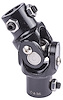
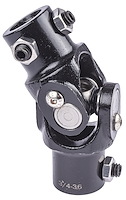
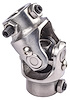
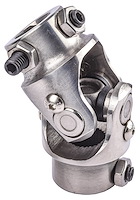
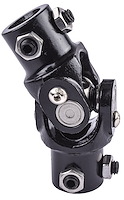
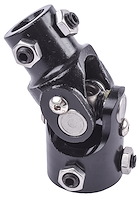
A steering U-joint carries your steering input between the column and steering box, while a driveline joint carries engine torque. Steering joints are smaller, use double-D (DD) or splined ends, and need to rotate with no free play.
Steering U-joints here include 3/4 in. DD x 3/4 in. DD, 3/4 in. DD x 9/16 in.-26 spline, 3/4 in. DD x 3/4 in.-30 spline, and 1 in. DD x 3/4 in. DD. Pick a nickel-plated finish for a bright engine bay or a black finish for a low-key look.
Match each end to your column shaft and steering box input before you order, since DD and spline sizes aren't interchangeable. For complete shafts and support parts, browse steering shafts & U-joints.
Where Does an Axle U-Joint Fit?
An axle U-joint sits in the front axle shafts of many 4WD trucks and SUVs. It lets each shaft deliver power through the steering knuckle as you turn. These joints take heavy loads when the front axle is engaged, so exact fitment matters.
Axle U-joints here list fitment for select 2010-2023 Dodge and Ram applications. They also cover select 1957-1995 Chevy, Dodge, Ford, GMC, and Jeep applications. Enter your year, make, and model in the Add a Vehicle fitment tool to filter this page to joints listed for your truck.
If your axle shafts are worn, rebuild the assembly with replacement axles at the same time. For driveshafts, yokes, and related driveline hardware, shop the full Driveshafts & Yokes category. Then filter the U-joints above by series or vehicle and order the joints your build needs.

ADD A VEHICLE TO GUARANTEE PARTS FIT
See products that fit

ADD A VEHICLE TO GUARANTEE PARTS FIT
See products that fit

JEGS
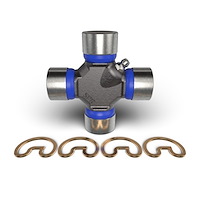
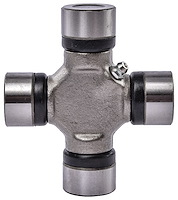
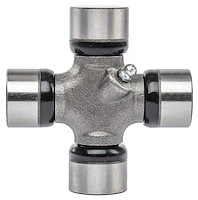
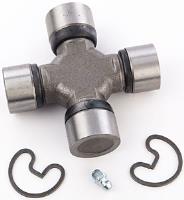
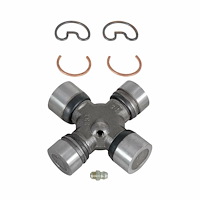
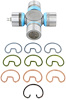
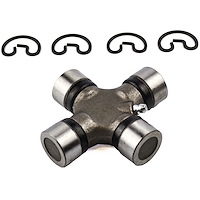
Greasable U-Joint 1310 to 1330 Conversion Series Combination
Part Number: 555-60635
 Ships on 11/16/2026
 Lowest price guarantee
JEGS
Greasable U-Joint 1310 to 1330 Conversion Series Combination
Part Number: 555-60635
Ships on 11/16/2026Lowest Price Guarantee
YUKON GEAR
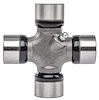
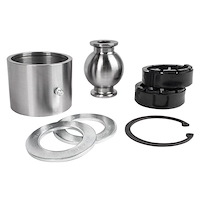
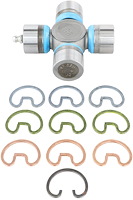
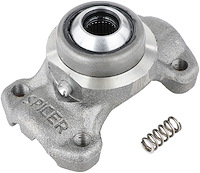
U-Joints Front Axle, Chrysler 9.25 in. 1555 U/Joint 2010-Up Dodge Truck Aam
Part Number: 807-42026
Ships on 11/09/2026Lowest price guarantee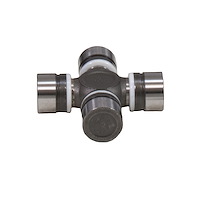
YUKON GEAR
U-Joints Front Axle, Chrysler 9.25 in. 1555 U/Joint 2010-Up Dodge Truck Aam
Part Number: 807-42026
Ships on 11/09/2026Lowest Price Guarantee
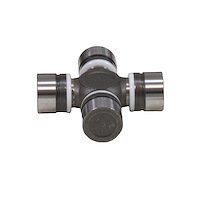
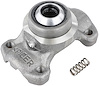
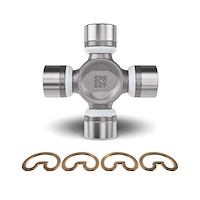
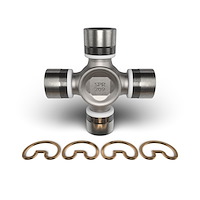
JEGS
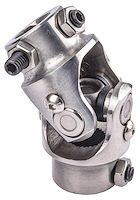
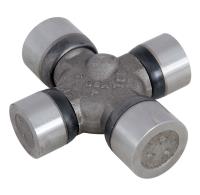
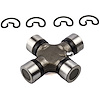
Driveshaft U-Joint Fits Select 1948-2017 Buick, Chevy, Chrysler, Dodge, Ford, GMC, Honda, Jeep, Pontiac, Ram, Toyota Models
Part Number: 555-60617
Ships TodayLowest price guarantee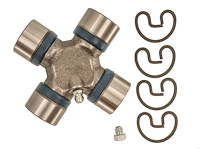
JEGS
Driveshaft U-Joint Fits Select 1948-2017 Buick, Chevy, Chrysler, Dodge, Ford, GMC, Honda, Jeep, Pontiac, Ram, Toyota Models
Part Number: 555-60617
Ships TodayLowest Price Guarantee
Frequently Asked Questions About U-Joints
What are the signs of a bad U-joint?
Common signs include a clunk when you shift into drive or reverse, vibration that rises with speed, and a squeak from dry needle bearings. You may also see rust-colored dust around the caps. If you feel play when you twist the driveshaft by hand, the joint is due for replacement.
Can you replace U-joints yourself?
Yes, most driveshaft U-joints can be replaced at home with basic hand tools and a vise or U-joint press. Mark the driveshaft and yokes before removal so you reinstall them in the same orientation. Make sure every retaining clip seats fully before the shaft goes back in.
How often should you grease a greaseable U-joint?
Many owners grease the joints at each oil change, and trucks that see water or mud may need it more often. Pump grease until fresh grease purges from all four caps. Check your vehicle's service schedule for its recommended interval.
Should you replace both U-joints on a driveshaft at the same time?
It's a good idea, since both joints have seen the same miles and loads. Replacing them together saves you from pulling the driveshaft again later. It also helps you get a fresh baseline when chasing vibration.
What does U-joint phasing mean?
Phasing means the yokes at each end of a one-piece driveshaft line up with each other. When the yokes are out of phase, the speed changes at each joint stop canceling out, which can cause vibration. Keep the factory orientation when you reassemble a shaft.