


 Order Status & Returns
 Gift Cards
 Help Center
 1-800-345-4545
Mechanical & Electric Engine Cooling Fans
Engine cooling fans pull air through your radiator at idle and low speed, and JEGS stocks electric fans, mechanical fans, fan shrouds, clutches and spacers. You'll also find the mounts, brackets and controls to install them, from JEGS Brand Products and the top brands builders trust. Shop by diameter, CFM rating, pusher or puller setup and 12V amp draw to match your radiator, engine bay and charging system.
Show More
What Types of Engine Cooling Fans Are There?
Engine cooling fans come in two styles: electric fans powered by your 12V system and belt-driven mechanical fans. Shrouds, clutches, spacers and hardware help them move air efficiently.
Here's how to shop by part type:
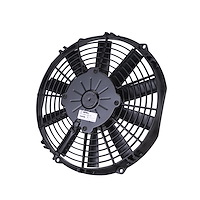
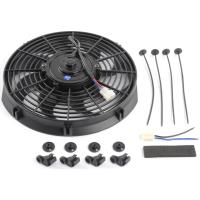
- 12V electric fans in single and dual electric fan designs, including pusher, puller and reversible models
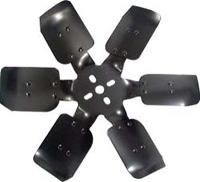
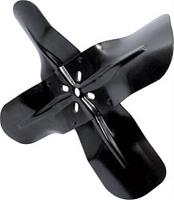
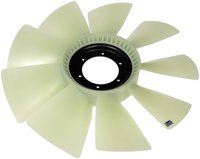
- Belt-driven mechanical fans, including rigid-blade and flex-blade styles for street, truck and restoration builds
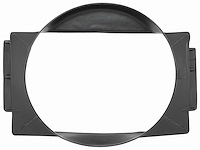
- Molded and aluminum fan shrouds that seal the fan to the radiator so it pulls air across the whole core
- Correct-length mechanical fan spacers and clutches that position the fan and control when it engages
- Universal electric fan mounts, brackets and components for installing, wiring and controlling your fan
Start with the fan style that suits your build, then add the shroud, mounting and control parts it needs. If you're switching styles, plan for every piece at once.
Electric Radiator Fan vs. Mechanical Fan: Which Is Right for You?
An electric radiator fan runs only when your engine needs it, while a mechanical fan turns whenever the engine does. Choose electric for packaging and power savings, or mechanical for no-wiring simplicity.
An electric fan switches on through a thermostatic switch or controller at a set coolant temperature. It doesn't draw power from the crankshaft, so more output reaches the wheels. Low-profile models also fit tight bays where a belt-driven fan won't clear.
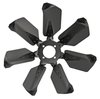
A mechanical fan bolts to the water pump pulley and spins with the belt. It has no wiring to fail, which suits restorations and work trucks. A thermal fan clutch freewheels when cool and locks up as underhood heat rises.
Flex fan blades flatten at higher rpm to cut drag. Flex-A-Lite developed the first electric engine cooling fan for the U.S. in 1978 and also builds flex fans. Derale makes engine fans, flex fans, fan controllers and dual-speed puller fans with aluminum shrouds.
Pusher or Puller: Where Should Your Car Radiator Fan Mount?
A puller fan mounts behind the radiator and pulls air through the core. It's the more common, usually more efficient setup. A pusher mounts in front and pushes air through when there's no room behind.
Choose a puller when there's space between the radiator and engine. With a shroud, it draws air across more of the core. Pushers fit when a long engine, front-mounted blower or tight core support fills that space.
Many universal fans are reversible, so you can flip the blade and swap wiring polarity to run pusher or puller. That helps while you're still mocking up.
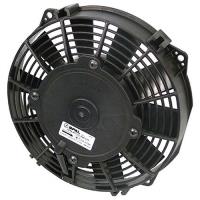
Be Cool Radiators offers 100% USA-made Qualifier puller and pusher fans in 8 in. through 16 in. sizes. SPAL, founded in Italy in 1959, builds 12V low-, medium- and high-performance electric fans in 4 in. through 16 in. sizes.
How Do You Size an Electric Cooling Fan?
Size an electric cooling fan to cover as much radiator core as possible. Then confirm its CFM, amp draw and depth suit your build.
Measure the radiator core, not the tanks, and pick fans that cover the most area. A dual electric fan setup often covers a wide core better than one round fan. A shroud helps pull air across the full core.
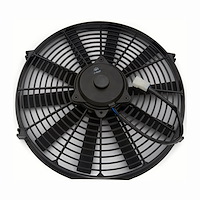
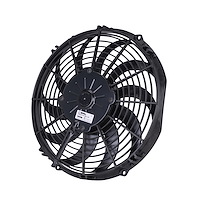
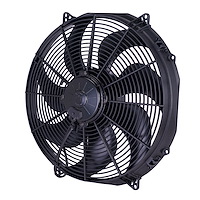
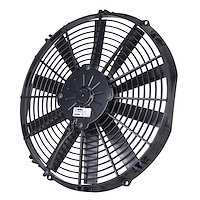
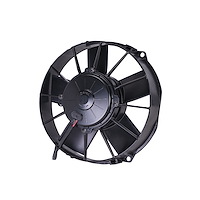
Next, check CFM, the cubic feet of air the fan moves per minute. The JEGS 16 in. S-Blade universal reversible fan is rated at 1,950 cfm, the 14 in. S-Blade at 1,750 cfm and the 10 in. S-Blade at 615 cfm.
Then compare amp draw with your charging system. The 16 in. S-Blade draws 13.1 amps and the 10 in. draws 4.6 amps, so make sure your alternator can handle a dual-fan setup.
Measure from the core to the water pump or pulleys to confirm fan depth clears. If the radiator is the limit, compare aluminum vs. stock OEM radiators or read up on how to buy a performance radiator.
What Else Do You Need to Wire and Control a Radiator Fan?
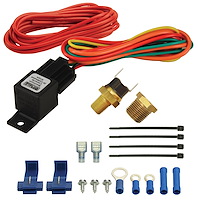
Most radiator fans need a relay, a wiring harness and a thermostatic switch or controller to run reliably. The relay carries the fan's high current, so the switch doesn't have to.
The Proform universal electric fan kit pairs a 14 in. fan with a 185-degree thermostat fan relay. The JEGS 10 in. electric fan & temperature-controlled harness & relay kit bundles the basics in a smaller size. A SPAL fan relay wiring harness adds a relay to a fan you already own.
To set your own turn-on point, choose an adjustable controller. The Flex-A-Lite Quick Start variable-speed control adjusts from 160 to 240 degrees F. The Derale high-amperage adjustable dual electric fan controller covers 150 to 240 degrees F.
If your engine sets a P2181 cooling system performance code, check fan operation, the thermostat and coolant level before replacing parts. For the install, add mounting kits and brackets sized for your fan.
Shop All Cooling, Heating & A/C: browse the full lineup of cooling, heating and A/C parts, including radiators, hoses and water pumps.

ADD A VEHICLE TO GUARANTEE PARTS FIT
See products that fit

BE COOL RADIATORS
Extreme Tri-Five Module Cooling System 1955 SB/BB-Chevy 700 HP w/A/C AT
Part Number: 134-83656
 Ships on 10/29/2026Free shipping
 Lowest price guarantee
BE COOL RADIATORS
Extreme Tri-Five Module Cooling System 1955 SB/BB-Chevy 700 HP w/A/C AT
Part Number: 134-83656
Ships on 10/29/2026Free shippingLowest Price Guarantee

![Mechanical Temperature Gauge Adapter Fitting [3/8 in. NPT Male x 5/8 in. -18 Female Straight]](https://www.jegs.com/images/mini_100/100/105/105-2263.jpg)
AUTO METER
Mechanical Temperature Gauge Adapter Fitting [3/8 in. NPT Male x 5/8 in. -18 Female Straight]
Part Number: 105-2263
Ships TodayLowest price guarantee![Mechanical Temperature Gauge Adapter Fitting [3/8 in. NPT Male x 5/8 in. -18 Female Straight]](https://www.jegs.com/images/mini_200/100/105/105-2263.jpg)
AUTO METER
Mechanical Temperature Gauge Adapter Fitting [3/8 in. NPT Male x 5/8 in. -18 Female Straight]
Part Number: 105-2263
Ships TodayLowest Price Guarantee



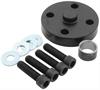
ALLSTAR PERFORMANCE
Aluminum Fan Spacer Kit 1/2" Spaced *Note: Spacers work with 1-3/4" bolt circle flanges only.
Part Number: 049-ALL30180
Ships TodayLowest price guarantee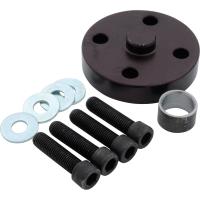
ALLSTAR PERFORMANCE
Aluminum Fan Spacer Kit 1/2" Spaced *Note: Spacers work with 1-3/4" bolt circle flanges only.
Part Number: 049-ALL30180
Ships TodayLowest Price Guarantee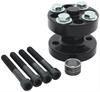
ALLSTAR PERFORMANCE
Aluminum Fan Spacer Kit 2" Spaced *Note: Spacers work with 1-3/4" bolt circle flanges only.
Part Number: 049-ALL30186
Ships TodayLowest price guarantee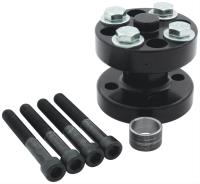
ALLSTAR PERFORMANCE
Aluminum Fan Spacer Kit 2" Spaced *Note: Spacers work with 1-3/4" bolt circle flanges only.
Part Number: 049-ALL30186
Ships TodayLowest Price Guarantee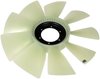
![Adjustable Electric Fan Controller and Relay Kit [Push-In Temperature Probe]](https://www.jegs.com/images/mini_100/500/555/555-10537.jpg)
JEGS
Adjustable Electric Fan Controller and Relay Kit [Push-In Temperature Probe]
Part Number: 555-10537
Ships TodayLowest price guarantee![Adjustable Electric Fan Controller and Relay Kit [Push-In Temperature Probe]](https://www.jegs.com/images/mini_200/500/555/555-10537.jpg)
JEGS
Adjustable Electric Fan Controller and Relay Kit [Push-In Temperature Probe]
Part Number: 555-10537
Ships TodayLowest Price Guarantee
Frequently Asked Questions About Engine Cooling Fans
What does a radiator fan do in a car?
A radiator fan moves air through the radiator when vehicle speed alone can't. That airflow carries heat out of the coolant so your engine stays in its operating range. It matters most at idle, in traffic and at low speeds.
Can I still drive with a broken radiator fan?
It isn't recommended. At highway speed, ram air may keep temperatures stable for a while, but at idle, low speed or in traffic, your engine can overheat quickly. Watch the temperature gauge and repair the fan as soon as you can to avoid engine damage.
How do I know if my radiator fan is bad?
Common signs include overheating at idle, a fan that doesn't spin when the engine is hot and A/C that blows warm at idle. A blown fuse, a failed relay or grinding and rattling noises from the fan area also point to a problem. Check the fuse, relay and wiring before replacing the fan motor.
Is a radiator fan the same as a cooling fan?
In most cases, yes. Radiator fan, cooling fan and engine cooling fan usually describe the same part that moves air through the radiator. Some vehicles also use a separate condenser fan for the A/C system.
Can I add an electric fan to a car that has a mechanical fan?
Yes. You can mount an electric pusher fan in front of the radiator as a supplement. You can also replace the mechanical fan and clutch with an electric fan. Either way, confirm clearance, wire it through a relay and make sure your charging system can handle the added load.