


 Order Status & Returns
 Gift Cards
 Help Center
 1-800-345-4545

Differential Carriers
Differential carriers decide how your rear end splits torque between the tires, which shapes launch, cornering, and street manners. Shop posi, limited slip, locker, spool, and mini spool options for GM, Ford, Chrysler, and Dana applications. Use the "Add a vehicle" selector to see the units that fit your build.
Show More
Types of Differential Carriers: Open, Limited Slip, Locker and Spool
Your ring and pinion gears bolt to the differential carrier, and the carrier's side gears turn your rear axle shafts. The gears set the ratio, while the carrier decides where torque goes. Most builds use one of four designs:
- An open differential sends torque to the tire with less grip, so it's smooth and quiet but spins a tire under hard throttle.
- A limited slip or posi unit biases torque to the tire with traction. Options include Eaton Posi, Auburn Gear Grip-N-Loc, and Yukon Gear Dura Grip.
- A locker ties both axles together for full traction, such as the selectable Eaton ELocker or the automatic Yukon Grizzly Locker.
- A spool is a solid piece with no differential action, built for drag racing and dedicated race cars.
Open carriers suit daily drivers. Posi and locker units fit street-driven cars that see track days, towing, or trail use.
Limited Slip vs. Open Differential: Which Do You Need?
If you're running stock power on a commuter, an open carrier is quiet and wears slowly. Once you add power, the inside tire spins on a hard launch or corner exit, and you lose drive.
A limited slip differential fixes that by sending torque to the tire that can use it. Clutch-type units give a firm feel and can be rebuilt with fresh clutches. Gear-type units have no clutches to wear, but they need some load on both tires to bias torque.
Posi, short for Positraction, started as GM's name for a limited slip. Many builders still call any clutch-type unit a positraction rear end. Still deciding? Read our breakdown of limited slip vs posi before you order.
Spools and Mini Spools for Drag Racing
A spool differential locks both axles solid, so each tire gets the same torque on every pass. That's what a drag-racing setup needs for straight, repeatable launches. On the street, a spool chirps the tires in tight turns and adds wear, so it belongs in race cars and dedicated strip builds.
Full spools replace the carrier entirely. You'll find Ford 9 spools for 28-, 31-, and 35-spline axles, including a lightweight 31-spline version, plus a Ford 8.8 in. 31-spline spool and a Mopar 8.75 in. 30-spline spool. Many racers build these into Ford 9-inch third members or fabricated rear axle housings.
A mini spool installs inside your existing open carrier in place of the spider gears. It's a simple way to lock up a bracket car or budget race build. Mini spools fit GM 10-bolt 7.5 in. (including 1989-up), Ford 8 in. and 9 in., and Ford 8.8 in. rear ends, and they're intended for race use only.
Shop Differential Carriers by Axle: Ford 9", Ford 8.8, GM 12-Bolt, Dana 44
A rear differential carrier has to match your axle model, spline count, and ratio range. Here's what's available by application:
- Ford 9 in. options include spools, Trac-Loc units, and Trac-Loc clutch kits for rebuilding a worn unit.
- Ford 8.8 in. builds can run a 31-spline posi or a 31-spline spool.
- Ford truck axles take 9.75 in. 34-spline or 10.25/10.5 in. 12-bolt 35-spline posi units.
- GM car 12-bolt 8.875 in. posi units use 33-spline axles and cover 3.08-3.90 ratios.
- GM truck 12-bolt 8.875 in. posi units use 30-spline axles and cover 2.76-3.42 ratios.
- GM 10-bolt posi units cover the 8.2 in. and 8.5 in. 28-spline axles.
- Chrysler options include the 8.75 in. 30-spline posi and the Ram truck 9.25 in. ZF 31-spline posi.
- Dana 44 posi units fit front or rear 30-spline axles with 3.92 and numerically higher gears.
Every limited slip differential for sale on this page is listed by axle. Check your axle tag or use the vehicle selector before you order.
How to Choose the Right Differential Carrier
Spline count comes first. The carrier's side gears must match your axle splines, so a 28-spline unit won't accept 31-spline axles. Upgraded axles usually mean a new carrier to match.
Ring gear size and ratio range come next. Many carriers are split into series by ratio, such as the GM car 12-bolt 3.08-3.90 units, because ring gear thickness changes with ratio. Our guide to choosing the correct rear gear ratio helps you pick the ratio before you pick the carrier.
Last, match the design to your intended use. A street-driven car usually fits a posi, a trail rig often wants a locker, and a dedicated drag car runs a spool. Replacing a complete differential carrier assembly? Plan on fresh differential bearings and seals, and check our differential covers while the rear end is apart.
Ready to build out the rest of the rear end? Browse all differentials & rear-end components, or add your vehicle above to shop differential carriers that fit.

ADD A VEHICLE TO GUARANTEE PARTS FIT
See products that fit

ADD A VEHICLE TO GUARANTEE PARTS FIT
See products that fit
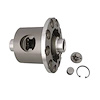
DETROIT TRUETRAC
Detroit Truetrac Limited-Slip Differential for 8.5/8.6 in. Rear Axle [30 Spline, 2.73 and Up Ratio]
Part Number: 363-913A481
 Ships on Nov 16, 2026
 Lowest price guarantee
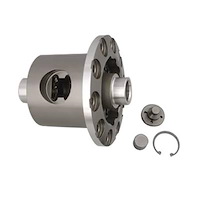
DETROIT TRUETRAC
Detroit Truetrac Limited-Slip Differential for 8.5/8.6 in. Rear Axle [30 Spline, 2.73 and Up Ratio]
Part Number: 363-913A481
Ships on Nov 16, 2026Lowest Price Guarantee
YUKON GEAR
Dura Grip Limited-Slip Positraction Differential [GM 8.500 in.] 28-Spline Axles
Part Number: 807-YDGGM8.53281
Ships on Nov 16, 2026Lowest price guarantee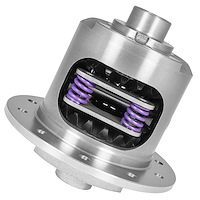
YUKON GEAR
Dura Grip Limited-Slip Positraction Differential [GM 8.500 in.] 28-Spline Axles
Part Number: 807-YDGGM8.53281
Ships on Nov 16, 2026Lowest Price Guarantee
YUKON GEAR
Dura Grip Limited-Slip Positraction Differential [GM 8.500 in. & 8.600 in.] 30-Spline Axles
Part Number: 807-YDGGM8.53301
Ships on Nov 16, 2026Lowest price guarantee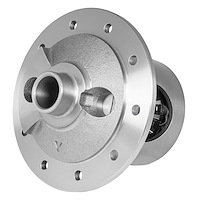
YUKON GEAR
Dura Grip Limited-Slip Positraction Differential [GM 8.500 in. & 8.600 in.] 30-Spline Axles
Part Number: 807-YDGGM8.53301
Ships on Nov 16, 2026Lowest Price Guarantee
JEGS
Posi Traction Differential for GM 8.500 in. 10-Bolt [30-Spline]
Part Number: 555-62808
Ships on Nov 16, 2026Lowest price guarantee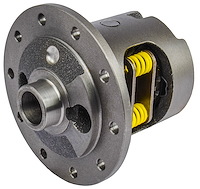
JEGS
Posi Traction Differential for GM 8.500 in. 10-Bolt [30-Spline]
Part Number: 555-62808
Ships on Nov 16, 2026Lowest Price Guarantee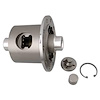
DETROIT TRUETRAC
Detroit Truetrac Limited-Slip Differential for 8.8 in. Rear Axle [31 Spline]
Part Number: 363-913A561
Ships on Nov 16, 2026Lowest price guarantee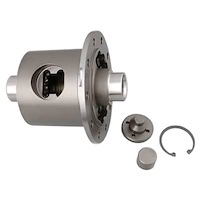
DETROIT TRUETRAC
Detroit Truetrac Limited-Slip Differential for 8.8 in. Rear Axle [31 Spline]
Part Number: 363-913A561
Ships on Nov 16, 2026Lowest Price Guarantee
JEGS
Posi Traction Differential for GM 8.500 in. 10-Bolt, 28-Spline
Part Number: 555-62806
Ships on Nov 16, 2026Lowest price guarantee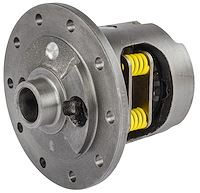
JEGS
Posi Traction Differential for GM 8.500 in. 10-Bolt, 28-Spline
Part Number: 555-62806
Ships on Nov 16, 2026Lowest Price Guarantee
DETROIT TRUETRAC
917A732 Rear Differential for GM 9.500 in./9.750 in. [33 Spline]
Part Number: 363-917A732
Ships on Nov 16, 2026Lowest price guarantee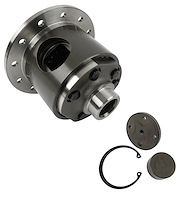
DETROIT TRUETRAC
917A732 Rear Differential for GM 9.500 in./9.750 in. [33 Spline]
Part Number: 363-917A732
Ships on Nov 16, 2026Lowest Price Guarantee
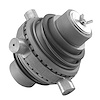
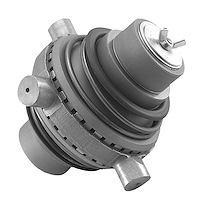
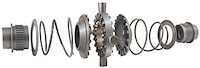
DETROIT TRUETRAC
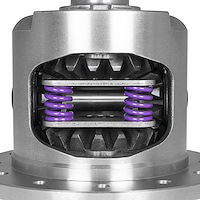
Detroit Truetrac Limited-Slip Differential for GM 10.5 in., 14-Bolt Rear Axle [30 Spline, 4.10 and Down Ratio]
Part Number: 363-915A545
Ships on 11/20/2026Lowest price guarantee
DETROIT TRUETRAC
Detroit Truetrac Limited-Slip Differential for GM 10.5 in., 14-Bolt Rear Axle [30 Spline, 4.10 and Down Ratio]
Part Number: 363-915A545
Ships on 11/20/2026Lowest Price Guarantee
JEGS
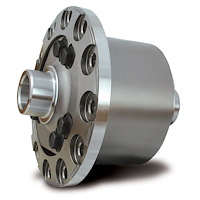
Posi Traction Differential for GM 8.200 in. 10-Bolt, 28-Spline
Part Number: 555-62804
Ships on 11/16/2026Lowest price guarantee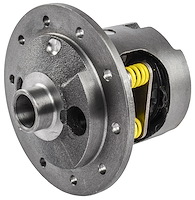
JEGS
Posi Traction Differential for GM 8.200 in. 10-Bolt, 28-Spline
Part Number: 555-62804
Ships on 11/16/2026Lowest Price Guarantee
JEGS
Posi Traction Differential for GM Truck 12-Bolt 8.875 in. Rear, 30-Spline [2.76-3.42 Ratio]
Part Number: 555-62832
Ships on Nov 16, 2026Lowest price guarantee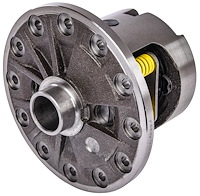
JEGS
Posi Traction Differential for GM Truck 12-Bolt 8.875 in. Rear, 30-Spline [2.76-3.42 Ratio]
Part Number: 555-62832
Ships on Nov 16, 2026Lowest Price Guarantee
YUKON GEAR
Dura Grip Limited-Slip Positraction Differential for GM 12T (12-Bolt Truck) 30-Spline Axles [2.76-3.42 Gear Ratio]
Part Number: 807-YDGGM12T3301
Ships on 11/16/2026Lowest price guarantee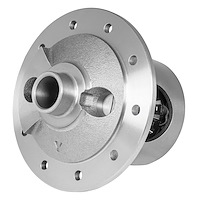
YUKON GEAR
Dura Grip Limited-Slip Positraction Differential for GM 12T (12-Bolt Truck) 30-Spline Axles [2.76-3.42 Gear Ratio]
Part Number: 807-YDGGM12T3301
Ships on 11/16/2026Lowest Price Guarantee
DETROIT TRUETRAC
Detroit Truetrac Limited-Slip Differential for 8.5 in. Rear Axle [28 Spline, 2.73 and Up Ratio]
Part Number: 363-912A556
Ships on Nov 16, 2026Lowest price guarantee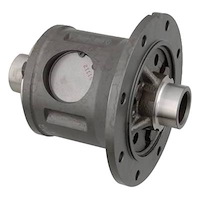
DETROIT TRUETRAC
Detroit Truetrac Limited-Slip Differential for 8.5 in. Rear Axle [28 Spline, 2.73 and Up Ratio]
Part Number: 363-912A556
Ships on Nov 16, 2026Lowest Price Guarantee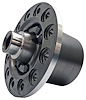

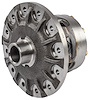
JEGS
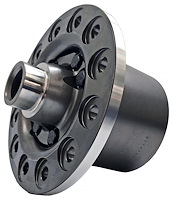
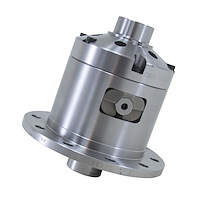
Posi Traction Differential for Chrysler 8.750 in. 30-Spline [All Ratios]
Part Number: 555-62820
Ships on Nov 16, 2026Lowest price guarantee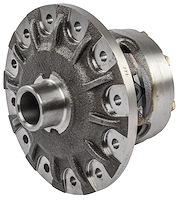
JEGS
Posi Traction Differential for Chrysler 8.750 in. 30-Spline [All Ratios]
Part Number: 555-62820
Ships on Nov 16, 2026Lowest Price Guarantee
YUKON GEAR
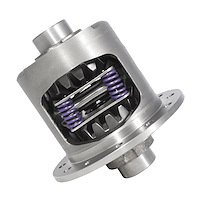
Dropout Assembly, Chrysler 8.75 in. Diff 489 Case W/Sure-Grip Lsd, 3.73 Ratio
Part Number: 807-13201
Ships on 11/16/2026Lowest price guarantee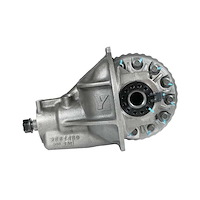
YUKON GEAR
Dropout Assembly, Chrysler 8.75 in. Diff 489 Case W/Sure-Grip Lsd, 3.73 Ratio
Part Number: 807-13201
Ships on 11/16/2026Lowest Price Guarantee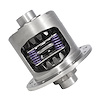
JEGS
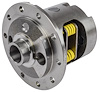
Posi Traction Differential for Ford 8.8 in. 31-Spline [All Ratios]
Part Number: 555-62816
Ships on Nov 16, 2026Lowest price guarantee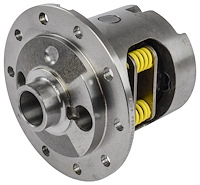
JEGS
Posi Traction Differential for Ford 8.8 in. 31-Spline [All Ratios]
Part Number: 555-62816
Ships on Nov 16, 2026Lowest Price Guarantee
Frequently Asked Questions About Differential Carriers
What Are the Disadvantages of a Limited Slip Differential?
A clutch-type limited slip can chatter in tight turns, and its clutches wear and eventually need a rebuild. It also takes more setup care than an open unit. Most clutch-type units need specific gear oil or an additive to stay quiet.
How Do You Identify a Differential Carrier?
Start with the axle tag or the code stamped on the housing, then count the cover bolts and measure the ring gear. Count the splines on an axle shaft to confirm spline count. The "Add a vehicle" selector can also narrow your options.
Do You Need Friction Modifier for a Limited Slip Differential?
Most clutch-type limited slip and posi units need friction modifier unless your gear oil already contains it. Without it, the clutches can grab and chatter in turns. Check your carrier's instructions, since gear-type units and spools usually don't need it.
What's the Difference Between a Limited Slip and a Locking Differential?
A limited slip biases torque toward the tire with traction but still lets the wheels turn at different speeds. A locker ties both axles together, either automatically or at the flip of a switch on selectable designs. Some shoppers search for a locking limited slip differential, but the two designs behave differently on the street and trail.
Can You Install a Differential Carrier Yourself?
You can if you have the tools and patience for setup. Swapping a differential carrier means setting backlash and checking the pinion pattern, often with shims and a dial indicator. If those steps are new to you, many builders have a driveline shop handle the setup.