


 Order Status & Returns
 Gift Cards
 Help Center
 1-800-345-4545

Harmonic Balancers
Harmonic balancers control the torsional vibration your crankshaft takes from every combustion pulse, and many also drive your accessory belts. You'll find OE-style replacements and performance dampers here for LS, small-block Chevy, big-block Chevy, Ford, Mopar, and diesel engines. Use the guide below to match balance type, damper design, and fitment before you order.
Show More
What Is the Difference Between Harmonic Balancers and Harmonic Dampers?
A harmonic damper controls torsional vibration, while a harmonic balancer is a damper that also carries a counterweight for an externally balanced engine. Each combustion pulse twists the crankshaft slightly. The damper's inertia ring absorbs that twist so it doesn't build up in the crank.
You'll see the two names used interchangeably on product listings. On many engines, the same part doubles as the accessory drive pulley. That means its diameter and belt grooves have to match your accessory drive.
The damper bolts to the front of the crank, so it's one of the rotating parts in our crankshafts and connecting rods category. Before you buy, confirm balance type, damper design, and pulley setup.
Internal vs External Balance: Which Damper Do You Need?
Your damper has to match how the rotating assembly was balanced. An internally balanced engine uses a neutral-balance damper, while an externally balanced engine needs a balancer with a counterweight built in. Externally balanced engines also carry a matching weight on the flywheel or automatic transmission flexplates.
Installing the wrong type throws the whole assembly out of balance and causes vibration. Check the part listing for "internal balance" or "external balance" before you order.
Balance can change when you swap parts. Installing performance crankshafts or rotating assembly kits can move you away from the factory balance spec. Confirm the spec with your machinist or the kit listing. For a quick reference by engine, see our engine balance cheat sheet.
Which Harmonic Damper Type Fits Your Build?
Most harmonic dampers use one of two designs: an elastomer ring or a viscous fluid chamber. Here's how the common options compare:
- OE-style elastomer balancers use a rubber ring between the hub and inertia ring to restore factory fit on stock rebuilds.
- Performance elastomer dampers, like ATI Super Damper harmonic balancers, use the same principle with serviceable elastomer kits.
- Viscous dampers use an inertia ring that shears silicone fluid inside the housing, the design behind Fluidampr harmonic dampers.
Pick the design that matches how you'll use the engine. A stock rebuild usually calls for an OE-style replacement, while modified street and race engines suit performance elastomer or viscous dampers. Then confirm diameter, belt grooves, and balance type.
How Do You Match a Balancer to Your Engine Family?
Start with your engine family, then narrow by year and accessory drive:
- For 1997-2005 and 2008-2013 GM Gen III/IV small-block engines, ACDelco OE harmonic balancers restore factory fit.
- For LS swaps, ATI offers LS serpentine conversion kits and a 7.5 in. steel 8-groove serpentine damper for LS1 F-body cars.
- For a 1969-85 small-block Chevy, Chevrolet Performance harmonic balancers include a 6.75 in. balancer.
- For a big-block Chevy, ATI offers internal-balance Super Dampers in undersize diameters.
- For a 302 HO small-block Ford, JEGS harmonic balancers include a 302 HO balancer.
- For other Ford builds, compare Ford Performance harmonic balancers or ATI's 6.780 in. aluminum shell for the 2011 Mustang GT 5.0L.
- For Mopar engines, start with Mopar Performance harmonic balancers.
- For diesel trucks and equipment, ATI Super Dampers fit Cummins and John Deere diesel engines.
Building an LS? See our LS engine specs and torque specs guide.
When Do You Need an SFI-Certified Harmonic Damper?
You need an SFI-certified damper when your car runs quicker than 10.99 seconds in the quarter-mile. The NHRA rulebook requires an SFI 18.1 damper at that level. Look for the SFI 18.1 rating in the product listing before you order.
If your build is close to that cutoff, buy an SFI 18.1 damper now so you don't replace a street damper later.
When you compare race dampers, check the same specs you would for a street engine: balance type, diameter, and pulley setup. Professional Products Powerforce harmonic balancers are another option to compare alongside ATI and Fluidampr. Confirm the SFI rating on each listing.
If you're deciding how much race hardware your engine needs, our budget vs performance engine build guide walks through the tradeoffs.
How Do You Handle Harmonic Balancer Replacement?
For a clean harmonic balancer replacement, confirm fitment first, then press the new damper on with an installer tool. Torque the crank bolt to factory spec. Hammering a balancer onto the crank can damage the damper and the crankshaft thrust bearing.
Before installation, line up the keyway and make sure the hub seats fully against the crank gear or spacer. After installation, check belt alignment across every pulley, especially if you've changed diameter or groove count.
A new diameter can also move your timing marks. Make sure your timing pointers match the new balancer diameter, then confirm top dead center before you set ignition timing.
If you're switching to a serpentine damper or a different pulley layout, plan the rest of the accessory drive with matching serpentine pulleys, belts, and brackets.

ADD A VEHICLE TO GUARANTEE PARTS FIT
See products that fit

ADD A VEHICLE TO GUARANTEE PARTS FIT
See products that fit

JEGS
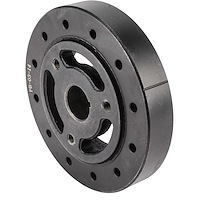
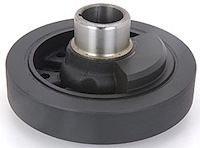
Harmonic Balancer for Small Block Chevy [6 3/4 in. Diameter]
Part Number: 555-51652
 Ships on Nov 23, 2026
 Lowest price guarantee
JEGS
Harmonic Balancer for Small Block Chevy [6 3/4 in. Diameter]
Part Number: 555-51652
Ships on Nov 23, 2026Lowest Price Guarantee
FLUIDAMPR
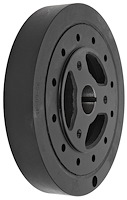
Performance Diesel Series Harmonic Damper 2011-Up GM Duramax 6.6L LML/LGH
Part Number: 388-830121
Ships on Nov 23, 2026Lowest price guarantee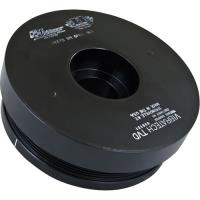
FLUIDAMPR
Performance Diesel Series Harmonic Damper 2011-Up GM Duramax 6.6L LML/LGH
Part Number: 388-830121
Ships on Nov 23, 2026Lowest Price Guarantee
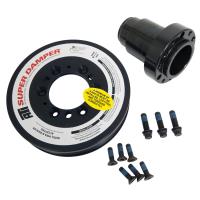
FLUIDAMPR
Harmonic Balancer for GM 6.2L/6.5L Diesel 1982-1993 [External Balance, 8 in., Black Zinc]
Part Number: 388-800191
Ships on 12/07/2026Lowest price guarantee
FLUIDAMPR
Harmonic Balancer for GM 6.2L/6.5L Diesel 1982-1993 [External Balance, 8 in., Black Zinc]
Part Number: 388-800191
Ships on 12/07/2026Lowest Price Guarantee
ATI
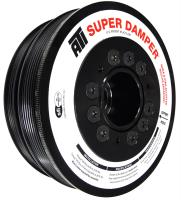
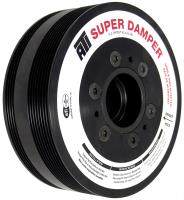
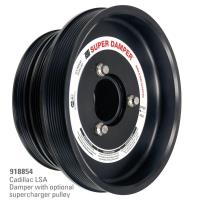
918628 Super Damper Serpentine Series Harmonic Balancer for 1999-2019 GM Gen III/IV LS Engines w/AC [7.480 in. O.D.]
Part Number: 085-918628
Ships on Nov 23, 2026Lowest price guarantee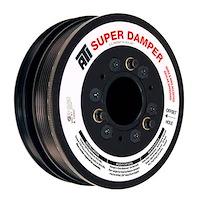
ATI
918628 Super Damper Serpentine Series Harmonic Balancer for 1999-2019 GM Gen III/IV LS Engines w/AC [7.480 in. O.D.]
Part Number: 085-918628
Ships on Nov 23, 2026Lowest Price Guarantee


JEGS
LT1 Harmonic Balancer/Damper Hub 1993-1995 Camaro/Firebird
Part Number: 555-51607
Ships on Nov 23, 2026Lowest price guarantee
JEGS
LT1 Harmonic Balancer/Damper Hub 1993-1995 Camaro/Firebird
Part Number: 555-51607
Ships on Nov 23, 2026Lowest Price Guarantee

FLUIDAMPR
Performance Diesel Series Harmonic Damper 2003-09 Dodge 5.9L for Cummins
Part Number: 388-920301
Ships on Nov 23, 2026Lowest price guarantee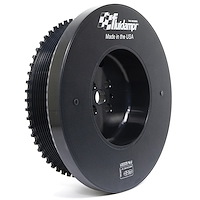
FLUIDAMPR
Performance Diesel Series Harmonic Damper 2003-09 Dodge 5.9L for Cummins
Part Number: 388-920301
Ships on Nov 23, 2026Lowest Price Guarantee

ATI
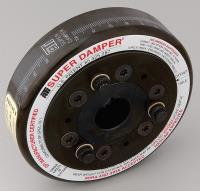
917740 Super Damper for Big Block Chevy 454-502 ci. Engines [Mark IV/Gen 5]
Part Number: 085-917740
Ships on Nov 23, 2026Lowest price guarantee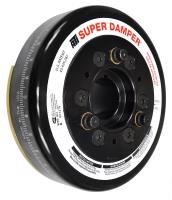
ATI
917740 Super Damper for Big Block Chevy 454-502 ci. Engines [Mark IV/Gen 5]
Part Number: 085-917740
Ships on Nov 23, 2026Lowest Price Guarantee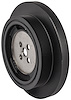
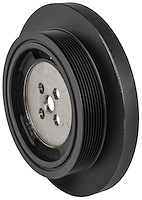

JEGS
Performance Harmonic Balancer for 1992-1997 GM LT1 [SFI 18.1, 7.520 in., Steel, Internal Balance]
Part Number: 555-51605
Ships on Nov 23, 2026Lowest price guarantee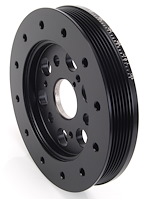
JEGS
Performance Harmonic Balancer for 1992-1997 GM LT1 [SFI 18.1, 7.520 in., Steel, Internal Balance]
Part Number: 555-51605
Ships on Nov 23, 2026Lowest Price Guarantee
JEGS
Small Block Ford 302-351W Harmonic Balancer/Damper 6.5"
Part Number: 555-51631
Ships on Nov 23, 2026Lowest price guarantee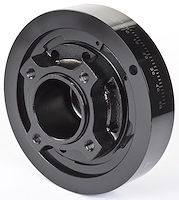
JEGS
Small Block Ford 302-351W Harmonic Balancer/Damper 6.5"
Part Number: 555-51631
Ships on Nov 23, 2026Lowest Price Guarantee
JEGS
LT1 Harmonic Balancer/Damper Hub 1996-1997 Camaro/Firebird
Part Number: 555-51609
Ships on Nov 23, 2026Lowest price guarantee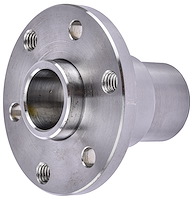
JEGS
LT1 Harmonic Balancer/Damper Hub 1996-1997 Camaro/Firebird
Part Number: 555-51609
Ships on Nov 23, 2026Lowest Price GuaranteeFrequently Asked Questions About Harmonic Balancers
What are the symptoms of a bad harmonic balancer?
Common signs include a wobbling outer ring, cracked or bulging rubber, and belts that squeal or walk off the pulleys. You may also notice timing marks that no longer line up at top dead center. If the outer ring has slipped, replace the balancer because its timing marks and damping can't be trusted.
Can I remove a harmonic balancer without a puller?
You shouldn't, because the right tool protects the damper. Use a puller that threads into the bolt holes in the damper hub. Prying on the outer ring or using a jaw-style puller can tear the elastomer or bend the shell. That's a risk even if you plan to reuse the old balancer.
What is an underdrive harmonic balancer?
An underdrive balancer has a smaller pulley diameter, so it spins your alternator, water pump, and other accessories more slowly. That reduces the power the accessories draw from the engine. Check that your charging and cooling systems keep up at idle before you commit to one.
Should I choose an aluminum or steel harmonic balancer?
Aluminum shells cut rotating weight, like ATI's 6.325 in. aluminum Super Damper. Steel shells add mass and are common on OE-style and serpentine balancers, like ATI's 7.5 in. steel damper for LS1 F-body cars. Choose the material that fits your engine's use, then confirm diameter and balance type.
How do I use balancer timing marks to find top dead center?
Bring cylinder number one to the top of its compression stroke and read the balancer mark against the timing pointer. If you're unsure, confirm true top dead center with a piston stop. A mismatch usually means the pointer doesn't fit the balancer diameter or the outer ring has slipped.