


 Order Status & Returns
 Gift Cards
 Help Center
 1-800-345-4545
Automatic Transmission Flywheel Covers & Flexplate Covers
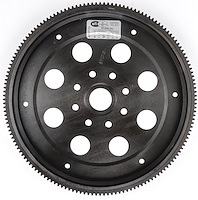
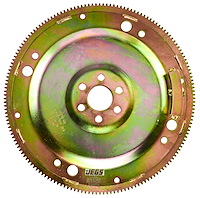
Transmission flex plate choices decide whether your automatic spins the converter smoothly, engages the starter cleanly, and passes tech at the track. This category covers SFI-rated and OE-style flexplates, flexplate shields, spacers, and transmission dust covers for street and strip builds. Use the SFI rating, material, tooth count, engine make, and balance filters to find the right fit for your engine and starter.
Show More
What Does a Transmission Flex Plate Do?
A transmission flex plate bolts your crankshaft to the torque converter and carries the starter ring gear. It's the link that sends engine power into your automatic, so it has to match your engine, starter, and converter. It's also lighter than the flywheel a manual transmission uses.
If you're replacing or upgrading one, plan the front of the transmission as a package. Your flexplate, bolts, and converter all have to agree on bolt pattern and balance. Shop torque converters at the same time, and read our guide on how to choose a torque converter before you order.
For a stock-style replacement, Chevrolet Performance offers an OE-style flexplate for GM LSA engines. It also sells matching flywheel/flexplate bolts, so you can replace the hardware in one order. You'll find filters, rebuild parts, and other supporting pieces in our automatic transmission parts category.
Flex Plate vs Flywheel: Which One Does Your Automatic Need?
If you're running an automatic, you need a flexplate. A flywheel is a heavier part built to work with a manual clutch, and it won't bolt up to a torque converter. So when you're shopping for a flywheel for an automatic transmission, the flexplate is the part you want. Converting to a stick instead? Shop manual transmission flywheels.
Engine swaps are where flexplate choice gets tricky. LS swaps are a good example, because the flexplate has to suit both the engine and the transmission behind it. JW Performance "The Wheel" flexplates include a dished LSA/LSX version for Powerglide, TH350/400/700-R4, and 4L60E/70E/80E transmissions.
The same lineup covers 168-tooth Chevy 305-350 engines with a 1-piece rear main seal and 157-tooth Ford 289-302 engines. B&M flexplates are another option for street and strip automatics. Still picking a transmission? Start with our list of the best automatic transmissions for LS engine swaps, then match the flexplate to it.
How Do You Choose the Right Flexplate for Your Engine?
Choose a flexplate by matching balance, tooth count, engine fitment, and SFI rating to your build. Get one wrong and you'll hear it, feel it, or fail tech. Check these four details before you buy:
- Match the balance to your engine, since internally-balanced and externally-balanced engines need different flexplates.
- Match the tooth count to your starter, such as 153 or 168 teeth for Chevy and 157 or 164 for Ford.
- Match the engine make, size, and rear main seal style to the flexplate's listed fitment.
- Choose an SFI 29.1 flexplate if you race where a sanctioning body requires one.
For racing, you've got several SFI-approved options. PRW Pro-Series flexplates fit 1991-1997 Chevy 454/502 Gen V/VI big blocks. Allstar Performance offers an SFI flexplate for big block Chevy 454 engines.
ATI builds an SFI flexplate for Chevy LS1/2/6/7 and L68 engines. Scat race flexplates cover small block Chevy and big block Ford. Building a big block Ford? Meziere also makes a true billet flexplate for it.
Why Run a Flexplate Shield or SFI Flexplate?
You run a flexplate shield and an SFI flexplate to protect yourself if the parts between your engine and transmission fail. A flexplate shield, or safety shield, protects the driver if a flexplate or converter lets go. SFI 29.1 is the flexplate spec racing sanctioning bodies commonly require, so check your class rules before tech day.
Quick Time Bellhousing flexplate shields fit all small block Chevy engines and small block Ford 289/302/351C/351W engines. TCI offers flexplate safety shields for Chevy applications. TCI also sells an SFI flexplate for BBC 454 and a Premium Series flexplate for Ford 221-302.
Running a Powerglide? The black JEGS Powerglide transmission shield is built for it. For Pontiac builds, the JEGS Heavy-Duty SFI flexplate fits 1967-1979 Pontiac 326-455 V8 engines. It has 166 teeth and is internally balanced, so confirm your engine matches before you order. Pair the right shield with an SFI-rated flexplate and you're covered on both safety and tech.
What Do Flywheel Covers and Transmission Dust Covers Do?
A flywheel cover, also called a transmission dust cover or inspection cover, closes the opening at the bottom of the bellhousing. It keeps debris away from your flexplate, converter, and starter ring gear. It's a small part, but skipping it leaves those spinning parts exposed to whatever your tires kick up.
The TCI universal dust cover fits 1965-96 GM RWD transmissions, so it works on a wide range of classic GM builds. If you've lost the original cover or the old one is bent, it's an easy fix. Check your transmission's year range before you order, and replace a damaged cover when you have the car on jack stands.
Working on the housing too? Browse transmission bellhousings and components for the parts around your flexplate. Want more build help first? Our transmission and drivetrain tech articles cover converter selection, swaps, and setup. Shop All transmission and drivetrain parts to finish your automatic from the crank back.

ADD A VEHICLE TO GUARANTEE PARTS FIT
See products that fit

ADD A VEHICLE TO GUARANTEE PARTS FIT
See products that fit
![Flexplate Bolts for GM LS Engines Using a Crankshaft Spacer [11 mm x 1.5 Thread 1.060 in. UHL]](https://www.jegs.com/images/mini_100/500/555/555-601011.jpg)
JEGS
Flexplate Bolts for GM LS Engines Using a Crankshaft Spacer [11 mm x 1.5 Thread 1.060 in. UHL]
Part Number: 555-601011
 Ships Today
 Lowest price guarantee
![Flexplate Bolts for GM LS Engines Using a Crankshaft Spacer [11 mm x 1.5 Thread 1.060 in. UHL]](https://www.jegs.com/images/mini_200/500/555/555-601011.jpg)
JEGS
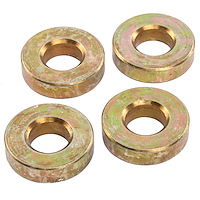
Flexplate Bolts for GM LS Engines Using a Crankshaft Spacer [11 mm x 1.5 Thread 1.060 in. UHL]
Part Number: 555-601011
Ships TodayLowest Price Guarantee
![High Inertia Quick-Launch SFI Flexplate for 1997-2016 GM LS1, LS2, LS6 Series Engines,168 Tooth [Internally Balanced]](https://www.jegs.com/images/mini_100/500/555/555-601106.jpg)
JEGS
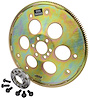
High Inertia Quick-Launch SFI Flexplate for 1997-2016 GM LS1, LS2, LS6 Series Engines,168 Tooth [Internally Balanced]
Part Number: 555-601106
Ships TodayLowest price guarantee![High Inertia Quick-Launch SFI Flexplate for 1997-2016 GM LS1, LS2, LS6 Series Engines,168 Tooth [Internally Balanced]](https://www.jegs.com/images/mini_200/500/555/555-601106.jpg)
JEGS
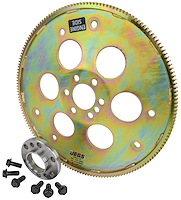
High Inertia Quick-Launch SFI Flexplate for 1997-2016 GM LS1, LS2, LS6 Series Engines,168 Tooth [Internally Balanced]
Part Number: 555-601106
Ships TodayLowest Price Guarantee
JEGS
Heavy-Duty SFI Flexplate for 1970-1990 Big Block Chevy 454 Mark IV
Part Number: 555-601075
Ships TodayLowest price guarantee
JEGS
Heavy-Duty SFI Flexplate for 1970-1990 Big Block Chevy 454 Mark IV
Part Number: 555-601075
Ships TodayLowest Price Guarantee![Heavy-Duty SFI Flexplate for 1986-1997 Small Block Chevy [Externally Balanced]](https://www.jegs.com/images/mini_100/500/555/555-601074.jpg)
![Heavy-Duty SFI Flexplate for 1986-1997 Small Block Chevy [Externally Balanced]](https://www.jegs.com/images/mini_200/500/555/555-601074.jpg)
![Heavy-Duty SFI Flexplate for 1986-1997 Small Block Chevy & 90 Degree V6, 153-Tooth [Externally Balanced]](https://www.jegs.com/images/mini_100/500/555/555-601073.jpg)
JEGS
Heavy-Duty SFI Flexplate for 1986-1997 Small Block Chevy & 90 Degree V6, 153-Tooth [Externally Balanced]
Part Number: 555-601073
Ships TodayLowest price guarantee![Heavy-Duty SFI Flexplate for 1986-1997 Small Block Chevy & 90 Degree V6, 153-Tooth [Externally Balanced]](https://www.jegs.com/images/mini_200/500/555/555-601073.jpg)
JEGS
Heavy-Duty SFI Flexplate for 1986-1997 Small Block Chevy & 90 Degree V6, 153-Tooth [Externally Balanced]
Part Number: 555-601073
Ships TodayLowest Price Guarantee![Heavy-Duty SFI Flexplate for 1970-1980 Small Block Chevy 400, 168-Tooth [Externally Balanced]](https://www.jegs.com/images/mini_100/500/555/555-601072.jpg)
JEGS
Heavy-Duty SFI Flexplate for 1970-1980 Small Block Chevy 400, 168-Tooth [Externally Balanced]
Part Number: 555-601072
Ships TodayLowest price guarantee![Heavy-Duty SFI Flexplate for 1970-1980 Small Block Chevy 400, 168-Tooth [Externally Balanced]](https://www.jegs.com/images/mini_200/500/555/555-601072.jpg)
JEGS
Heavy-Duty SFI Flexplate for 1970-1980 Small Block Chevy 400, 168-Tooth [Externally Balanced]
Part Number: 555-601072
Ships TodayLowest Price Guarantee
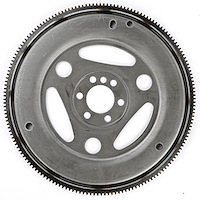
![Heavy-Duty SFI Flexplate & Bolt Kit for 1957-1985 Small Block/Big Block Chevy and 90 degree V6, 153-Tooth [Internally Balanced]](https://www.jegs.com/images/mini_100/500/555/555-601070k.jpg)
JEGS
Heavy-Duty SFI Flexplate & Bolt Kit for 1957-1985 Small Block/Big Block Chevy and 90 degree V6, 153-Tooth [Internally Balanced]
Part Number: 555-601070K
Ships TodayLowest price guarantee![Heavy-Duty SFI Flexplate & Bolt Kit for 1957-1985 Small Block/Big Block Chevy and 90 degree V6, 153-Tooth [Internally Balanced]](https://www.jegs.com/images/mini_200/500/555/555-601070k.jpg)
JEGS
Heavy-Duty SFI Flexplate & Bolt Kit for 1957-1985 Small Block/Big Block Chevy and 90 degree V6, 153-Tooth [Internally Balanced]
Part Number: 555-601070K
Ships TodayLowest Price Guarantee
JEGS
Heavy-Duty SFI Flexplate adapts Mopar, Jeep 5.7L, 6.1L; Mod Hemi to TF727, TF904 Transmission
Part Number: 555-601098
Ships TodayLowest price guarantee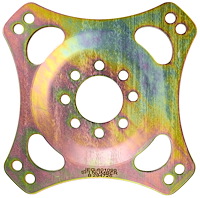
JEGS
Heavy-Duty SFI Flexplate adapts Mopar, Jeep 5.7L, 6.1L; Mod Hemi to TF727, TF904 Transmission
Part Number: 555-601098
Ships TodayLowest Price Guarantee![Billet Aluminum Flexplate for Small & Big Block Chevy [168-Tooth]](https://www.jegs.com/images/mini_100/500/555/555-601090.jpg)
JEGS
Billet Aluminum Flexplate for Small & Big Block Chevy [168-Tooth]
Part Number: 555-601090
Ships TodayLowest price guarantee![Billet Aluminum Flexplate for Small & Big Block Chevy [168-Tooth]](https://www.jegs.com/images/mini_200/500/555/555-601090.jpg)
JEGS
Billet Aluminum Flexplate for Small & Big Block Chevy [168-Tooth]
Part Number: 555-601090
Ships TodayLowest Price Guarantee![Billet Aluminum Flexplate for GM LS w/6-Bolt Crankshaft Flange [168-Tooth]](https://www.jegs.com/images/mini_100/500/555/555-601081.jpg)
JEGS
Billet Aluminum Flexplate for GM LS w/6-Bolt Crankshaft Flange [168-Tooth]
Part Number: 555-601081
Ships TodayLowest price guarantee![Billet Aluminum Flexplate for GM LS w/6-Bolt Crankshaft Flange [168-Tooth]](https://www.jegs.com/images/mini_200/500/555/555-601081.jpg)
JEGS
Billet Aluminum Flexplate for GM LS w/6-Bolt Crankshaft Flange [168-Tooth]
Part Number: 555-601081
Ships TodayLowest Price Guarantee![Heavy-Duty SFI Flexplate for 1967-1979 Pontiac 326-455 V8, 166 Tooth [Internally Balanced]](https://www.jegs.com/images/mini_100/500/555/555-601102.jpg)
JEGS
Heavy-Duty SFI Flexplate for 1967-1979 Pontiac 326-455 V8, 166 Tooth [Internally Balanced]
Part Number: 555-601102
Ships TodayLowest price guarantee![Heavy-Duty SFI Flexplate for 1967-1979 Pontiac 326-455 V8, 166 Tooth [Internally Balanced]](https://www.jegs.com/images/mini_200/500/555/555-601102.jpg)
JEGS
Heavy-Duty SFI Flexplate for 1967-1979 Pontiac 326-455 V8, 166 Tooth [Internally Balanced]
Part Number: 555-601102
Ships TodayLowest Price Guarantee![Powerglide Transmission Shield [Black]](https://www.jegs.com/images/mini_100/500/555/555-60950.jpg)
![Powerglide Transmission Shield [Black]](https://www.jegs.com/images/mini_200/500/555/555-60950.jpg)
![Heavy-Duty SFI Flexplate & Bolt Kit for 1970-1980 Small Block Chevy 400, 168-Tooth [Externally Balanced]](https://www.jegs.com/images/mini_100/500/555/555-601072k.jpg)
JEGS
Heavy-Duty SFI Flexplate & Bolt Kit for 1970-1980 Small Block Chevy 400, 168-Tooth [Externally Balanced]
Part Number: 555-601072K
Ships TodayLowest price guarantee![Heavy-Duty SFI Flexplate & Bolt Kit for 1970-1980 Small Block Chevy 400, 168-Tooth [Externally Balanced]](https://www.jegs.com/images/mini_200/500/555/555-601072k.jpg)
JEGS
Heavy-Duty SFI Flexplate & Bolt Kit for 1970-1980 Small Block Chevy 400, 168-Tooth [Externally Balanced]
Part Number: 555-601072K
Ships TodayLowest Price Guarantee
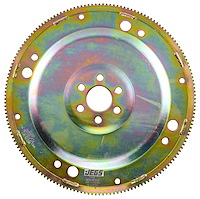
JEGS
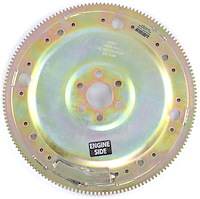
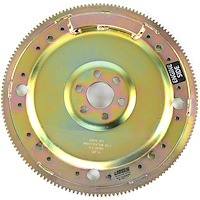
Heavy-Duty SFI Flexplate for 1996-2004 Ford 4.6L, 5.4L Modular V8
Part Number: 555-601094
Ships TodayLowest price guarantee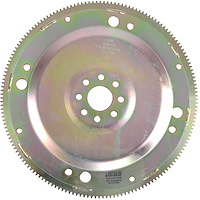
JEGS
Heavy-Duty SFI Flexplate for 1996-2004 Ford 4.6L, 5.4L Modular V8
Part Number: 555-601094
Ships TodayLowest Price Guarantee
JEGS
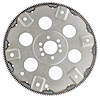
GM LS Flexplate For All 1999-2007 6.0L Engines with 4L80E Transmissions
Part Number: 555-601062
Ships TodayLowest price guarantee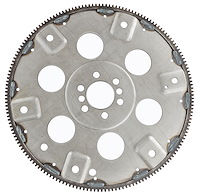
JEGS
GM LS Flexplate For All 1999-2007 6.0L Engines with 4L80E Transmissions
Part Number: 555-601062
Ships TodayLowest Price GuaranteeFrequently Asked Questions About Transmission Flex Plate
Can You Drive With a Bad Flex Plate?
You shouldn't. A cracked or damaged flexplate can get worse with every start and every drive. Replace it as soon as you confirm the problem to avoid a no-start or damage to nearby parts.
What Are Signs of a Bad Flexplate?
Listen for a ticking or knocking noise that changes with rpm. You may also notice starter grinding, a starter that won't engage, or vibration. Any of these means it's time to inspect the flexplate.
How Much Does It Cost to Replace a Flexplate?
Cost depends on the flexplate you choose and who does the work. An OE-style replacement costs less than an SFI-rated race piece. Labor is often the bigger expense, since the transmission has to come away from the engine to reach it.
Do I Need New Flexplate Bolts?
New bolts are smart insurance whenever you replace a flexplate, especially on a high-horsepower build. Use bolts made for your crank and flexplate, such as the Chevrolet Performance flywheel/flexplate bolts for GM applications.
Do I Need a Flexplate Spacer?
Some Chevy combinations need one to position the flexplate correctly. Quick Time flexplate spacers fit 1986-96 Chevy engines with a 1-piece rear main seal and 1974-85 Chevy engines with a 2-piece rear main seal. Check your transmission and converter instructions to confirm.