


 Order Status & Returns
 Gift Cards
 Help Center
 1-800-345-4545

Sway Bars & End Links
Sway bar end links connect your sway bar to the suspension, and this category pairs them with the bars, bushings, and kits that limit body roll. You'll find ball-joint-style and stud-type end links, polyurethane bushings, and front and rear sway bar kits for muscle cars and trucks. Use the guidance below to match parts to your vehicle, ride height, and driving style.
Show More
How Do Sway Bars and End Links Reduce Body Roll?
A sway bar, also called an anti-roll bar, ties the left and right suspension together so the body leans less in corners. When one side compresses, the bar twists and transfers load to the other side. That resistance keeps the chassis flatter and the tires working more evenly.
End links connect the bar to the control arm or axle. If a link wears out, the bar can't do its job, and you'll often hear clunking over bumps. Bushings hold the bar to the frame and let it pivot without slop.
A sway bar works with your springs and shocks, so plan upgrades as a system. Browse Chassis, Steering & Suspension Parts when you're building a complete handling package. Hotchkis sells sway bars alongside other suspension parts if you'd rather match components from one brand.
What Types of Sway Bar End Links Can You Choose?
Most sway bar end links fall into three designs, and the right one depends on your original setup and how you drive. As a rule, replace links with the same type your vehicle came with unless you're upgrading the whole bar. Length is the other choice you'll make.
- Ball-joint-style links use a sealed socket at each end for smooth, quiet articulation.
- Stud-type links use a bolt with rubber or polyurethane bushings stacked on each side.
- Heim or rod-end links use spherical joints for sharper response on track-focused builds.
- Fixed-length links match stock geometry on vehicles at factory ride height.
- Adjustable-length links let you set link length on lowered or lifted vehicles and remove preload.
For trucks that see hard use, Proforged makes severe-duty chassis parts. One example is the 113-10546 sway bar end link kit for select 1988-2016 Chevrolet/GMC trucks.
Should You Choose Rubber or Polyurethane Sway Bar Bushings?
Rubber bushings favor ride comfort, while polyurethane bushings resist deflection for sharper street performance. Spherical bushings remove nearly all flex and suit dedicated track cars. Pick the material that matches how you actually use the vehicle.
Polyurethane is firmer than rubber, so it holds the bar more precisely in its mounts. You may notice a bit more road feel, and poly bushings need grease at installation to stay quiet. Energy Suspension makes polyurethane sway bar bushings and end links, including link-flange-type bushing kits in 1.125" and 1.500" outer tube ID.
Check each bushing's size spec against your bar before you order. If you're refreshing the suspension, worn control arm bushings and shock mounts and bushings can cause similar clunks, so inspect them at the same time.
Front and Rear Sway Bar Kits for Muscle Cars and Trucks
A complete sway bar kit is the simplest upgrade when your stock bar is missing, undersized, or worn. Kits are built for a specific chassis, so the bar, mounts, and links fit together. Choose front, rear, or both based on how you want to tune handling balance.
QA1 offers front and rear sway bar kits for 1964-67 and 1973-77 GM A-Body (Big Wheel) cars. QA1 also offers a rear sway bar kit for 1965-1972 Ford F-100 trucks. Hellwig focuses on truck, SUV, and RV sway bars, such as a rear bar for 1995-2004 Tacoma 4WD and Pre-Runner 2WD models.
For hot rods and custom builds, Chassis Engineering sway bars include front bars for Pinto/Mustang II IFS. The line also includes rear bars for 1935-1940 Ford and 1948-1954 Chevy/GMC trucks. If you're installing Mustang II front suspension, our Mustang II upper and lower control arms guide covers the arms used in that IFS design.
How Do You Confirm Sway Bar End Link Fitment?
Confirm fitment by matching year, make, model, drivetrain, and ride height to the part's listed applications. Ride height matters because lowering or lifting changes the distance between the bar and its mount. That's when adjustable end links earn their place.
Measure the installed link length with the vehicle on the ground and the suspension loaded. Both links should sit close to vertical with no twist in the bar at rest. Do the final tightening at ride height on level ground so the bushings don't preload.
A height change can also affect steering geometry. Read our guide to bump steer causes and solutions if steering feels nervous after lowering or lifting. Review what caster and camber do before your alignment. Add steering linkage parts as needed, or Shop All Steering & Alignment Parts.

ADD A VEHICLE TO GUARANTEE PARTS FIT
See products that fit

ADD A VEHICLE TO GUARANTEE PARTS FIT
See products that fit
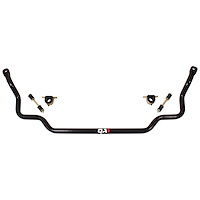
UMI PERFORMANCE
Solid Front and Rear Sway Bar Kit for 1964-1972 Chevy Chevelle, Pontiac GTO & Oldsmobile Cutlass [Black, 1-1/4 in./1 in.]
Part Number: 236-403534-B
 Ships on 03/04/2027
 Lowest price guarantee
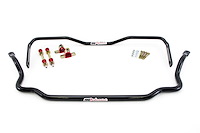
UMI PERFORMANCE
Solid Front and Rear Sway Bar Kit for 1964-1972 Chevy Chevelle, Pontiac GTO & Oldsmobile Cutlass [Black, 1-1/4 in./1 in.]
Part Number: 236-403534-B
Ships on 03/04/2027Lowest Price Guarantee
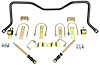
JEGS
1 in. Rear Sway Bar Kit for 1978-1997 Ford F-Series Trucks, Bronco for Improved Handling
Part Number: 555-92145
Ships on Nov 23, 2026Lowest price guarantee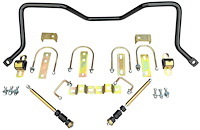
JEGS
1 in. Rear Sway Bar Kit for 1978-1997 Ford F-Series Trucks, Bronco for Improved Handling
Part Number: 555-92145
Ships on Nov 23, 2026Lowest Price Guarantee
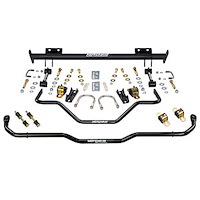
JEGS
Front and Rear Sway Bar Kit Fits Select 1964-1972 Buick, Chevrolet, Oldsmobile, Pontiac Models
Part Number: 555-90908
Ships on Nov 23, 2026Lowest price guarantee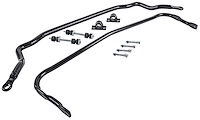
JEGS
Front and Rear Sway Bar Kit Fits Select 1964-1972 Buick, Chevrolet, Oldsmobile, Pontiac Models
Part Number: 555-90908
Ships on Nov 23, 2026Lowest Price Guarantee
JEGS
Rear Sway Bar Fits Select 1964-1972 GM A-Body Models [1 in. Solid Bar]
Part Number: 555-90906
Ships on Nov 23, 2026Lowest price guarantee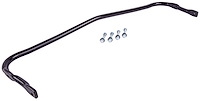
JEGS
Rear Sway Bar Fits Select 1964-1972 GM A-Body Models [1 in. Solid Bar]
Part Number: 555-90906
Ships on Nov 23, 2026Lowest Price Guarantee
QA1
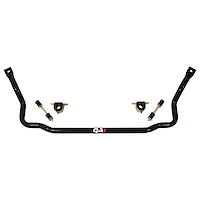
82886 Front Sway Bar for 1963-1987 Chevy C10, GMC C15 2WD Trucks w/QA1 Tubular Crossmember
Part Number: 122-52883
Ships on Nov 23, 2026Lowest price guarantee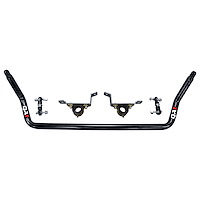
QA1
82886 Front Sway Bar for 1963-1987 Chevy C10, GMC C15 2WD Trucks w/QA1 Tubular Crossmember
Part Number: 122-52883
Ships on Nov 23, 2026Lowest Price Guarantee
UMI PERFORMANCE
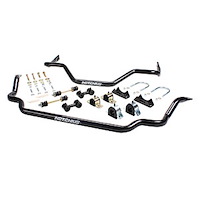
Solid Front and Rear Sway Bar Kit for 1978-1988 Chevy Monte Carlo, Buick Regal & Pontiac Grand Prix [Black, 1-1/4 in./1 in.]
Part Number: 236-303534-B
Ships on Nov 23, 2026Lowest price guarantee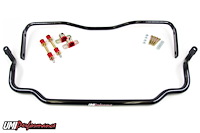
UMI PERFORMANCE
Solid Front and Rear Sway Bar Kit for 1978-1988 Chevy Monte Carlo, Buick Regal & Pontiac Grand Prix [Black, 1-1/4 in./1 in.]
Part Number: 236-303534-B
Ships on Nov 23, 2026Lowest Price Guarantee
JEGS
Front Sway Bar Fits Select 1965-1969 Mopar Vehicles [1.125 in. Diameter]
Part Number: 555-92144
Ships on Nov 23, 2026Lowest price guarantee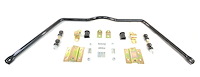
JEGS
Front Sway Bar Fits Select 1965-1969 Mopar Vehicles [1.125 in. Diameter]
Part Number: 555-92144
Ships on Nov 23, 2026Lowest Price Guarantee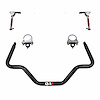
QA1
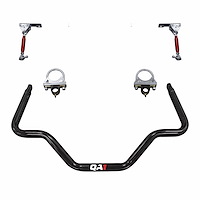
52827 Rear Sway Bar Kit for 1967-1969 Chevy Camaro, Pontiac Firebird w/QA1 F-Body Rear 4-Link Kit
Part Number: 122-52827
Ships on Nov 23, 2026Lowest price guarantee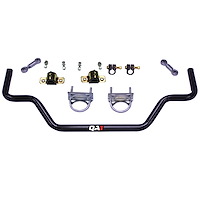
QA1
52827 Rear Sway Bar Kit for 1967-1969 Chevy Camaro, Pontiac Firebird w/QA1 F-Body Rear 4-Link Kit
Part Number: 122-52827
Ships on Nov 23, 2026Lowest Price Guarantee
UMI PERFORMANCE
Tubular Front and Rear Sway Bar Kit for 1993-2002 Chevy Camaro & Pontiac Firebird [Red, 35mm/22mm]
Part Number: 236-211213-R
Ships on 11/30/2026Lowest price guarantee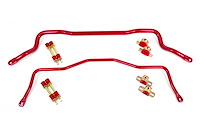
UMI PERFORMANCE
Tubular Front and Rear Sway Bar Kit for 1993-2002 Chevy Camaro & Pontiac Firebird [Red, 35mm/22mm]
Part Number: 236-211213-R
Ships on 11/30/2026Lowest Price Guarantee
UMI PERFORMANCE
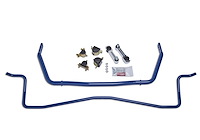
Solid Front Sway Bar for 1978-1988 Chevy Monte Carlo, Buick Regal & Pontiac Grand Prix [Black, 1-1/4 in.]
Part Number: 236-3035-B
Ships on 11/25/2026Lowest price guarantee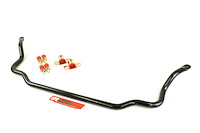
UMI PERFORMANCE
Solid Front Sway Bar for 1978-1988 Chevy Monte Carlo, Buick Regal & Pontiac Grand Prix [Black, 1-1/4 in.]
Part Number: 236-3035-B
Ships on 11/25/2026Lowest Price Guarantee
OER
FSB904 1974-78 Mustang II 3/4 in. Front Sway Bar; Measures 43-1/4 in. Wide; For Standard Crossmember
Part Number: 691-FSB904
Ships on 12/18/2026Lowest price guarantee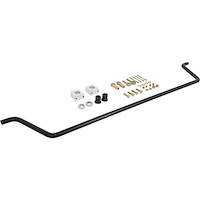
OER
FSB904 1974-78 Mustang II 3/4 in. Front Sway Bar; Measures 43-1/4 in. Wide; For Standard Crossmember
Part Number: 691-FSB904
Ships on 12/18/2026Lowest Price GuaranteeFrequently Asked Questions About Sway Bar End Links
What Are the Signs of Bad Sway Bar End Links?
Clunking or knocking over bumps is the most common sign of worn end links. You may also notice loose-feeling steering or extra body lean in corners. Inspect the joints and bushings for torn boots, play, or cracked rubber.
Do Sway Bar End Links Affect Wheel Alignment?
Replacing end links doesn't usually change wheel alignment. The links connect the sway bar to the suspension and don't set caster, camber, or toe. Schedule an alignment if you also replaced control arms or tie rods, or changed ride height.
Can You Drive With a Broken Sway Bar End Link?
A broken end link disconnects the sway bar on that side, so the vehicle leans more and handles less predictably. Drive cautiously and replace the link as soon as possible. A loose link can also strike nearby components.
Should You Replace Sway Bar Bushings With the End Links?
It's smart to inspect the bushings and usually replace them at the same time. Worn bushings let the bar shift in its mounts, which can cause the same clunks as a bad link. Doing both jobs together saves you a second teardown.