


 Order Status & Returns
 Gift Cards
 Help Center
 1-800-345-4545

Transmission Bellhousings & Components
Transmission bellhousing options at JEGS cover automatic and manual builds, with SFI 30.1 certified and non-SFI bellhousings in aluminum and steel. You'll also find the block plates, spacers, bolt sets and adapters that complete the engine-to-transmission connection. Compare parts from multiple drivetrain brands in one place, then narrow by engine family, transmission and material to match your build.
Show More
What Does A Transmission Bellhousing Do?
A transmission bellhousing bolts between the engine block and the transmission and encloses the rotating parts between them. In a manual car, it covers the flywheel and clutch. In an automatic, it surrounds the flexplate and torque converter.
That job means fitment drives every purchase. The bellhousing has to match your engine's bolt pattern, your transmission's case and the parts spinning inside it. If you're building a stick-shift car, start with manual transmission bellhousings and pair them with manual transmission flywheels that suit your clutch.
Automatic builds use a different set of parts. Flywheel and flexplate dust covers close off the opening below the bellhousing, and street torque converters need to suit your engine and gearing. Not sure which converter fits? Read how to choose a torque converter before you order.
SFI 30.1 Certified Vs. Non-SFI: Which Bellhousing Do You Need?
If you race at a sanctioned track, you'll likely need an SFI-certified bellhousing once your car passes certain performance levels. The cutoff varies, so check your sanctioning body's rulebook before you buy. SFI 30.1 is the certification you'll see on the automatic bellhousings in this category.
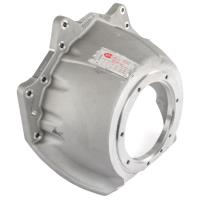
The JW Performance Ultra-Bell line includes SFI 30.1 bellhousings for TH350 and TH400 transmissions. Versions fit Chevy, Buick, Pontiac and Olds engines, plus small-block Ford and Ford Modular engines. The ATI 200044 is SFI 30.1 certified for GM 350/400 transmissions with an OEM case.
Running an aftermarket GM Powerglide or TH400 case? JEGS offers an SFI 30.1 certified bellhousing built for those cases. Non-SFI bellhousings are a common choice for street cars and builds that won't go through tech inspection.
Aluminum Vs. Steel Bellhousings: How Do They Compare?
Aluminum bellhousings save weight and usually bolt up with a cleaner fit. Steel bellhousings add weight, but many racers choose them for their strength. Your choice comes down to how you use the car and what your rules require.
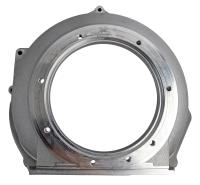
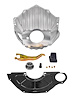
On the aluminum side, the McLeod 8520 is a non-SFI bellhousing for small-block and big-block Chevy engines, also sold as the 8520K kit. JEGS offers an aluminum bellhousing kit for 1955-1985 Chevrolet small-block and big-block engines. For Ford automatics, the TCI 513300 is a case-filled aluminum bellhousing for the C4 with a small-block Ford pattern.
For steel, Quick Time Bellhousing makes units for Ford 289, 302 5.0L, 351C and 351W 5.8L engines. It also offers a steel bellhousing for RX7 13B and 20B rotary engines. Plan on test-fitting any steel bellhousing, since some need trimming and you'll want to confirm starter fit.
How Do You Match Bolt Pattern, Transmission And Flywheel Tooth Count?
Match three things before you buy: the engine's bolt pattern, the transmission case and the flywheel or flexplate tooth count. Miss one, and the bellhousing won't bolt up or the starter won't sit where it should.
Bolt pattern follows the engine family, so a small-block Chevy bellhousing won't bolt to a small-block Ford. Transmission fit follows the case. Some bellhousings cover both TH350 and TH400 cases, while others fit a single case like the Powerglide or C4.
Tooth count affects where the starter has to sit. The JW Performance Ultra-Bell for small-block Ford to TH350/TH400, for example, is listed for a 157-tooth flywheel. If you're also changing the flywheel or flexplate, confirm your engine's balance with the engine balance cheat sheet.
Which Block Plates, Spacers, Bolts And Adapters Do You Need?
Most bellhousing installs need a few supporting parts to finish the job. Lakewood, for example, offers both the 15000LKW bellhousing for Chevrolet and a safety block plate. Use this list to fill in what your build is missing:
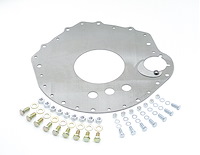
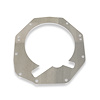
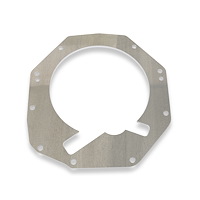
- Block plates sit between the engine and bellhousing, like the Lakewood safety block plate for most Chevy 90-degree V6 and V8 engines.
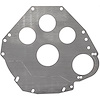
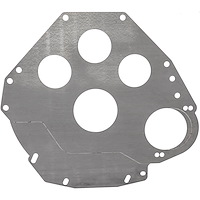
- Multi-fit block plates cover more than one engine, like the JEGS block plate for Ford 289, 302 and 351W.
- Spacers sit between the bellhousing and transmission, like the Quick Time Bellhousing T56 Magnum bellhousing-to-transmission spacer.
- Bolt sets secure the transmission to the block, like the JEGS set for GM Powerglide, TH350, TH400 and 700R4 transmissions.
- Adapters pair an engine and transmission with different patterns, so browse engine swap transmission adapters for plates and kits.
How Do You Install And Align A Transmission Bellhousing?
Check bellhousing alignment with a dial indicator before final assembly. Dial-indicating measures bore runout, so you know the transmission will line up with the crankshaft centerline. It's a quick check worth doing on every new bellhousing install, whether the car is built for street or strip.
Mount the indicator to the crankshaft, sweep the bellhousing bore and compare the reading to the spec in your instructions. If runout is out of spec, correct it before the transmission goes in. Then test-fit the starter and confirm clearance around the block plate.
For the full process, follow our guide on how to install a new transmission. When you're ready to finish the drivetrain, shop all performance transmission and drivetrain parts at JEGS.

ADD A VEHICLE TO GUARANTEE PARTS FIT
See products that fit

ADD A VEHICLE TO GUARANTEE PARTS FIT
See products that fit


JW PERFORMANCE
92451 Ultra-Bell Bellhousing for TH350, TH400 Transmission to Chevy, Buick, Pontiac, and Oldsmobile Engines [SFI 30.1]
Part Number: 564-92451
 Ships on Nov 16, 2026
 Lowest price guarantee
JW PERFORMANCE
92451 Ultra-Bell Bellhousing for TH350, TH400 Transmission to Chevy, Buick, Pontiac, and Oldsmobile Engines [SFI 30.1]
Part Number: 564-92451
Ships on Nov 16, 2026Lowest Price Guarantee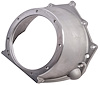
JEGS
SFI 30.1 Certified Bellhousing for Aftermarket GM Powerglide and TH400 Cases
Part Number: 555-60334
Ships on Nov 16, 2026Lowest price guarantee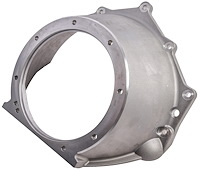
JEGS
SFI 30.1 Certified Bellhousing for Aftermarket GM Powerglide and TH400 Cases
Part Number: 555-60334
Ships on Nov 16, 2026Lowest Price Guarantee
JEGS
Automatic Transmission-to-Block Bolt Set for GM Powerglide, TH350, TH400 and 700R4
Part Number: 555-82510
Ships on Nov 16, 2026Lowest price guarantee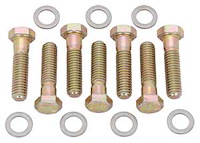
JEGS
Automatic Transmission-to-Block Bolt Set for GM Powerglide, TH350, TH400 and 700R4
Part Number: 555-82510
Ships on Nov 16, 2026Lowest Price Guarantee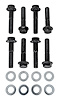
JEGS
High-Strength Bellhousing Bolts Fits GM LS Engines [M10 x 1.5 w/6-Point Head]
Part Number: 555-82511
Ships on Nov 16, 2026Lowest price guarantee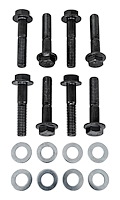
JEGS
High-Strength Bellhousing Bolts Fits GM LS Engines [M10 x 1.5 w/6-Point Head]
Part Number: 555-82511
Ships on Nov 16, 2026Lowest Price Guarantee

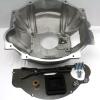
ADVANCE ADAPTERS
Bellhousing Adapter Kit for Ford NP435/T-18/T-19 Transmission to Chevy Small Block Engines [Aluminum]
Part Number: 050-712549
Ships on 11/30/2026Lowest price guarantee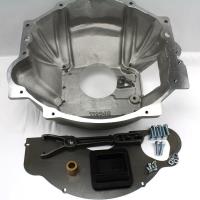
ADVANCE ADAPTERS
Bellhousing Adapter Kit for Ford NP435/T-18/T-19 Transmission to Chevy Small Block Engines [Aluminum]
Part Number: 050-712549
Ships on 11/30/2026Lowest Price Guarantee
JEGS
Aluminum Bellhousing Kit for 1955-1985 Chevrolet Small Block and Big Block Engines
Part Number: 555-60339
Ships on Nov 16, 2026Lowest price guarantee
JEGS
Aluminum Bellhousing Kit for 1955-1985 Chevrolet Small Block and Big Block Engines
Part Number: 555-60339
Ships on Nov 16, 2026Lowest Price Guarantee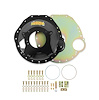
QUICK TIME BELLHOUSING
Steel Bellhousing Engine: Ford 289, 302 5.0L, 351C, 351W 5.8L
Part Number: 698-RM-6065
Ships on Nov 16, 2026Lowest price guarantee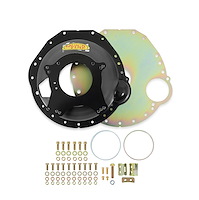
QUICK TIME BELLHOUSING
Steel Bellhousing Engine: Ford 289, 302 5.0L, 351C, 351W 5.8L
Part Number: 698-RM-6065
Ships on Nov 16, 2026Lowest Price Guarantee
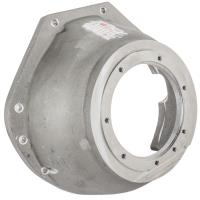

MCLEOD
8520K Aluminum Bellhousing Kit for Small, Big Block Chevy Engines [Non-SFI]
Part Number: 673-8520K
Ships on Nov 16, 2026Lowest price guarantee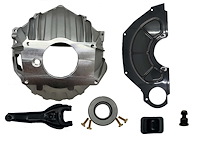
MCLEOD
8520K Aluminum Bellhousing Kit for Small, Big Block Chevy Engines [Non-SFI]
Part Number: 673-8520K
Ships on Nov 16, 2026Lowest Price Guarantee
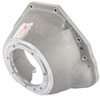
JW PERFORMANCE
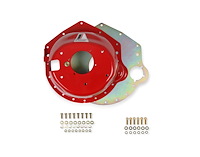
Ultra-Bell Bellhousing Small Block Ford to TH350/TH400 (157-Tooth)
Part Number: 564-92453-A157
Ships on 12/08/2026Lowest price guarantee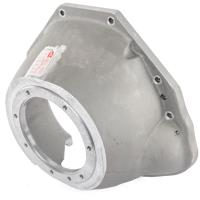
JW PERFORMANCE
Ultra-Bell Bellhousing Small Block Ford to TH350/TH400 (157-Tooth)
Part Number: 564-92453-A157
Ships on 12/08/2026Lowest Price Guarantee
QUICK TIME BELLHOUSING
Steel Bellhousing Engine: Ford 289, 302 5.0L, 351C, 351W 5.8L
Part Number: 698-RM-8031
Ships on Nov 16, 2026Lowest price guarantee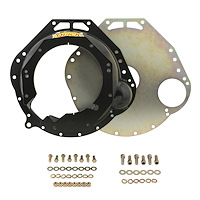
QUICK TIME BELLHOUSING
Steel Bellhousing Engine: Ford 289, 302 5.0L, 351C, 351W 5.8L
Part Number: 698-RM-8031
Ships on Nov 16, 2026Lowest Price Guarantee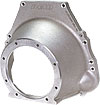
SILVER SPORT TRANSMISSIONS
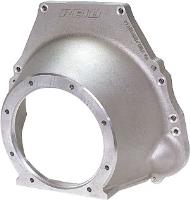
BHG-00104A Transmission Bellhousing Kit for Small/Big Block Chevy w/168-Tooth Flywheel
Part Number: 833-BHG-00104A
Ships on 11/16/2026Lowest price guarantee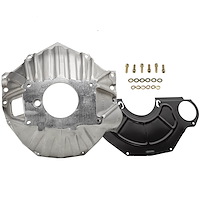
SILVER SPORT TRANSMISSIONS
BHG-00104A Transmission Bellhousing Kit for Small/Big Block Chevy w/168-Tooth Flywheel
Part Number: 833-BHG-00104A
Ships on 11/16/2026Lowest Price Guarantee

TCI
513300 Aluminum Case-Filled Bellhousing Ford C4 With Small Block Ford Pattern
Part Number: 890-513300
Ships on Nov 16, 2026Lowest price guarantee
TCI
513300 Aluminum Case-Filled Bellhousing Ford C4 With Small Block Ford Pattern
Part Number: 890-513300
Ships on Nov 16, 2026Lowest Price GuaranteeFrequently Asked Questions About Transmission Bellhousings
Do I need a scattershield for street driving?
Most street cars don't need one. Scattershield bellhousings are mainly a concern for drag strip use and high-horsepower builds. If your car will run at a sanctioned track, check your sanctioning body's rulebook.
Can one bellhousing work with more than one transmission?
Sometimes. Some bellhousings fit both TH350 and TH400 cases, and some designs use adapter rings to switch between cases like the Powerglide, TH400 and C4. Check the cases listed in the product details before you order.
Why does my starter not line up after a bellhousing swap?
The most common cause is a flywheel or flexplate tooth count that doesn't match the bellhousing. Tooth count changes where the starter has to sit. Steel bellhousings may also need trimming, so test-fit the starter before final assembly.
Do I need new bellhousing bolts?
Replace them if your old bolts are damaged, stretched or the wrong length for the new bellhousing. A transmission-to-block bolt set made for your transmission takes the guesswork out of the install.
What is the difference between a bellhousing and a transmission adapter?
A bellhousing joins the engine to the transmission and encloses the flywheel or flexplate. An adapter plate or kit lets you pair an engine and transmission with different bolt patterns, often during an engine swap. Some swaps use both.